@DrCarlosLomeli@Claudiashein El gobierno federal tiene la obligación de garantizarlo, no de anunciarlo como favor. Y cuando lo hace, suele ser tarde, parcial o por cálculo político mientras el presupuesto se concentra en la CDMX y el Sureste. El agua no debería llegar por concesión graciosa, sino por derecho
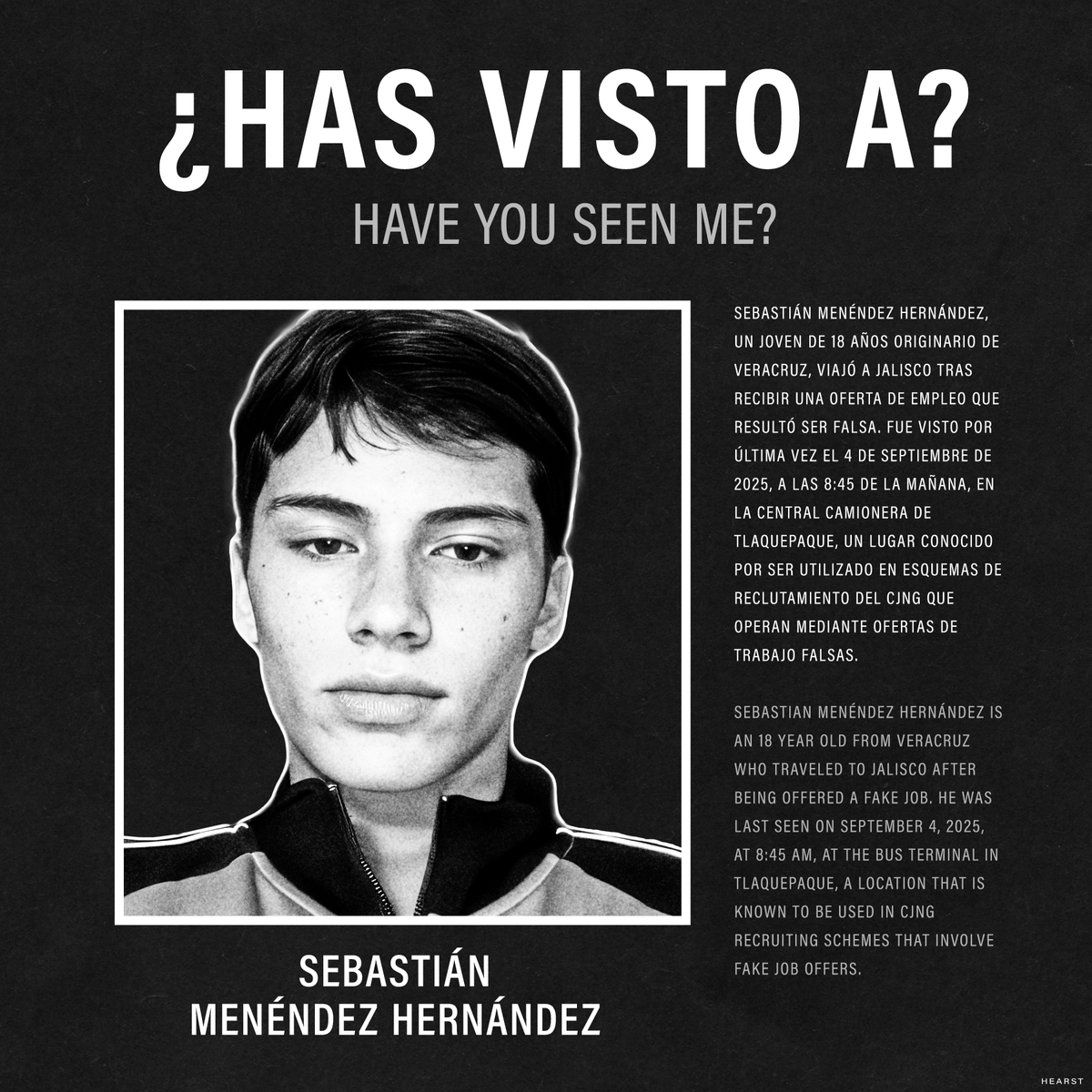
Sebastián Menéndez Hernández es un joven de 18 años que probablemente fue engañado en un esquema de reclutamiento del CJNG. Revisemos lo que ocurrió con él, ya que es un buen ejemplo del método de reclutamiento más común del grupo.
Sebastián trabajaba en un restaurante en Querétaro. Un día fue contactado por un conocido que le ofreció un empleo mejor pagado en Jalisco. Las ofertas falsas que suelen presentarse parecen trabajos legales y bien remunerados.
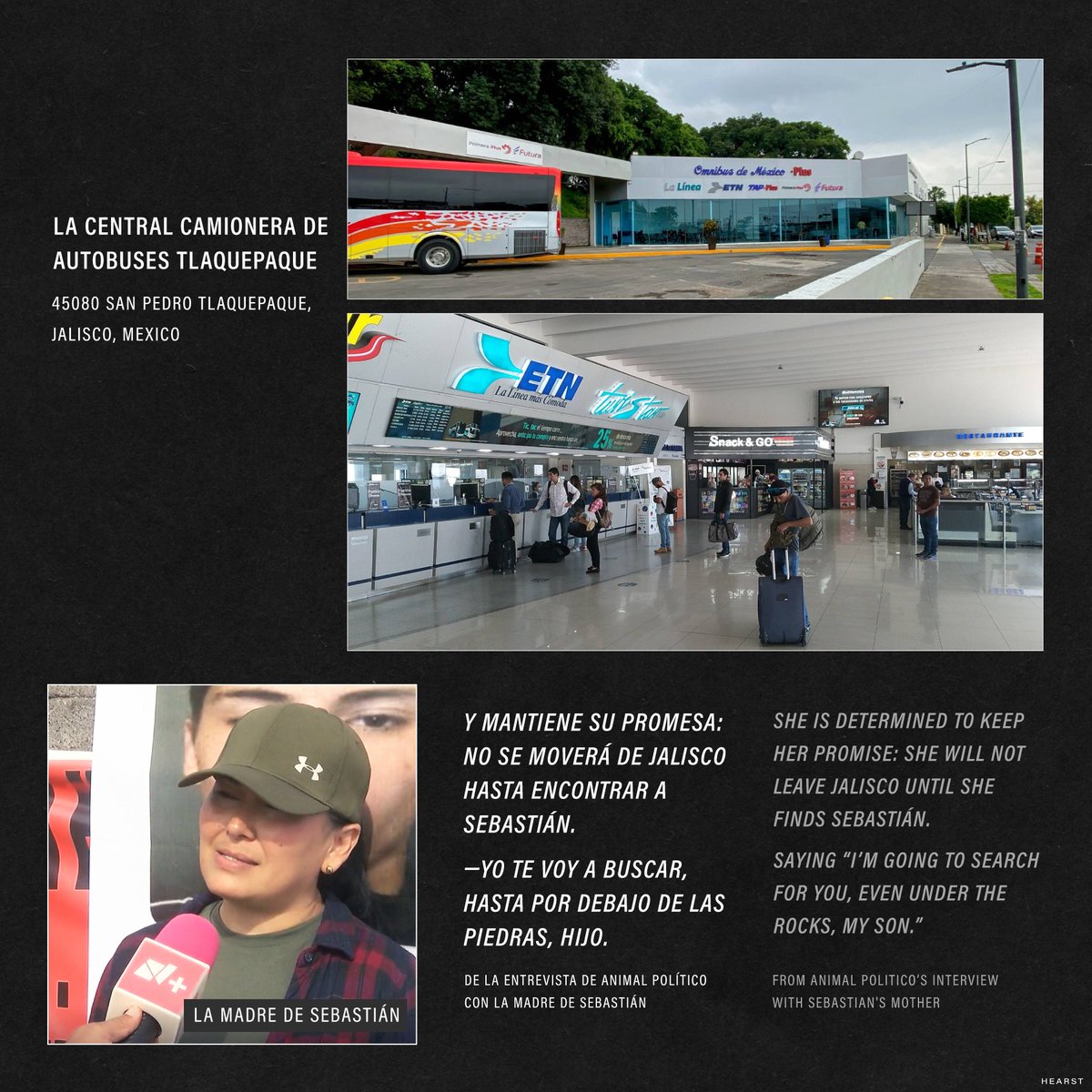
Cuando Sebastián mostró interés, el supuesto reclutador le pagó un boleto de autobús que lo llevaría desde Querétaro hasta la central camionera de Tlaquepaque, Jalisco.
Sin embargo, es posible que Sebastián tuviera dudas sobre la oferta, ya que decidió viajar mediante un servicio de viaje compartido (BlaBlaCar) para llegar a la terminal, en lugar de usar el boleto proporcionado.
Sebastián llegó a la central camionera el 4 de septiembre de 2025. A las 8:45 de la mañana (fuente), llamó a su madre para avisarle que había llegado y que estaba abordando un taxi rumbo a Zapopan, donde tendría la supuesta entrevista de trabajo. Poco después, su teléfono dejó de emitir señal y no se volvió a saber de él.
A partir de ese momento, es probable que el CJNG haya llevado a Sebastián y a otros jóvenes como él a un campo de adiestramiento, operado de forma similar al Rancho Izaguirre. Quienes muestran disposición y superan el entrenamiento son enviados a las líneas de combate en las guerras territoriales del cártel, donde suelen morir como carne de cañón; quienes se resisten, probablemente son asesinados para servir de ejemplo.
Tanto el gobierno federal como el gobierno de Jalisco han reconocido públicamente la existencia de estas ofertas falsas de empleo utilizadas por el CJNG, así como el uso de las centrales camioneras para captar víctimas. Ambos aseguran estar trabajando para frenar este tipo de reclutamiento, señalando como ejemplo el rescate de 29 jóvenes por parte del Ejército en la terminal de Tlaquepaque entre octubre de 2024 y abril de 2025.
Este es un problema que parecería fácil de resolver, si el gobierno realmente tuviera interés en hacerlo.
Una medida posible sería la siguiente: instalar cámaras de seguridad de alta calidad en todas las terminales de autobuses de Jalisco; colocar lectores automáticos de placas en las principales carreteras de acceso; asignar personal federal para monitorear en tiempo real cada terminal y revisar las grabaciones para identificar en qué autobuses viajaron las personas desaparecidas y hacia dónde se dirigieron.
Entonces, ¿por qué persiste este problema? La respuesta es evidente: porque las autoridades locales y los mandos militares reciben sobornos del CJNG para permitir que continúe. El incentivo económico para tolerar el reclutamiento forzado sigue siendo mayor que el incentivo para detenerlo.
El medio Animal Político entrevistó recientemente a la madre de Sebastián, Beatriz, quien viajó desde su estado natal, Veracruz, hasta Jalisco para buscar a su hijo.
Beatriz expresó su frustración ante la investigación del gobierno sobre la desaparición y mostró solidaridad con otras madres buscadoras que conoció a través de la Comisión de Atención a Víctimas.
Beatriz juró no regresar a casa sin su hijo, prometiendo: “Yo te voy a buscar, hasta por debajo de las piedras, hijo..”
—
Sebastián Menendez Hernandez is an 18 year old boy who was likely tricked in a CJNG recruitment scheme. Let’s review what happened to him because it is a good example of their most common recruitment method.
Sebastián worked at a restaurant in Querétaro. One day, he was approached by an unknown acquaintance who said he could get him a higher paying job in Jalisco. The fake jobs that are typically offered appear to be legitimate, legal jobs with a high salary.
When Sebastian showed interest in the job, a recruiter paid for a bus ticket that would take him from Queretaro to the bus terminal in Tlaquepaque, Jalisco.
Sebastian may have been concerned about the offer, because he chose to ride share (BlaBlaCar) to the bus station, rather than use the ticket.
Sebastian arrived at the bus terminal on September 4, 2025. At 8:45 am, Sebastian called his mother. He told her that he’d arrived and that he was getting into a taxi to go to the job interview in Zapopan. Soon after, all signal to his phone was gone and he was never heard from again.
From that point, it's likely the CJNG took Sebastian and other boys like him to a training camp, run much like the infamous Izaguirre Ranch. Those who show some willingness and make it through the training, are sent to the front lines of a cartel territory war to die as cannon fodder, and those who resist would likely be killed and made an example of.
The Mexican and Jaliscan government has acknowledged the fake job offers used by the CJNG and their use of the bus terminals in Jalisco many times. Both claim to be actively working to stop this kind of recruiting, pointing to the 29 young people who were rescued by soldiers from the Tlaquepaque bus station between October 2024 to April 2025.
This is a problem that seems easy to solve, if the government was actually interested in solving it.
Consider an option like this: Install high quality security cameras at every bus terminal in Jalisco. Ensure that there are Automated License Plate Readers on all the major roadways to and from the bus terminals. Assign federal manpower to monitor every bus terminal and review the footage to identify what buses the missing people got on and where the buses went with the License Plate Readers on the roadways. Investigate where the buses went.
So why does this problem persist? There’s an obvious answer: Because local law enforcement and the local military installations are being bribed by the CJNG to let it continue. The financial incentive for the government to allow this forced recruitment is still higher than the financial incentive for the government to stop it.
The news outlet Animal Politico recently interviewed Sebastian’s mother, Beatriz, who traveled from their home state of Veracruz to Jalisco so she can search for her son.
Beatriz spoke out about her frustrations with the government’s investigation into her son’s disappearance and she advocated for the other mothers searching for their children, who she met through the Victim Assistance Commission.
Beatriz vowed to her son that she will not return home without him, promising "I'm going to search for you, even under every rock, son."
Hilo.
Vamos a reconstruír el uso del helicóptero de la Fuerza Aérea Mexicana, en Palenque, Chiapas.
• El Helicóptero es un Agusta Westland AWS109s que vale como $6.5 millones de dólares nuevo.
• El helipuerto está en la Base Militar de Palenque, Chiapas, junto a su alberca