We are currently still recruiting young preschoolers with #DevelopmentalDelay and/or #ADHD. For more info visit https://t.co/DqjWpUnOhq. We look forward to hearing from you! 2/2
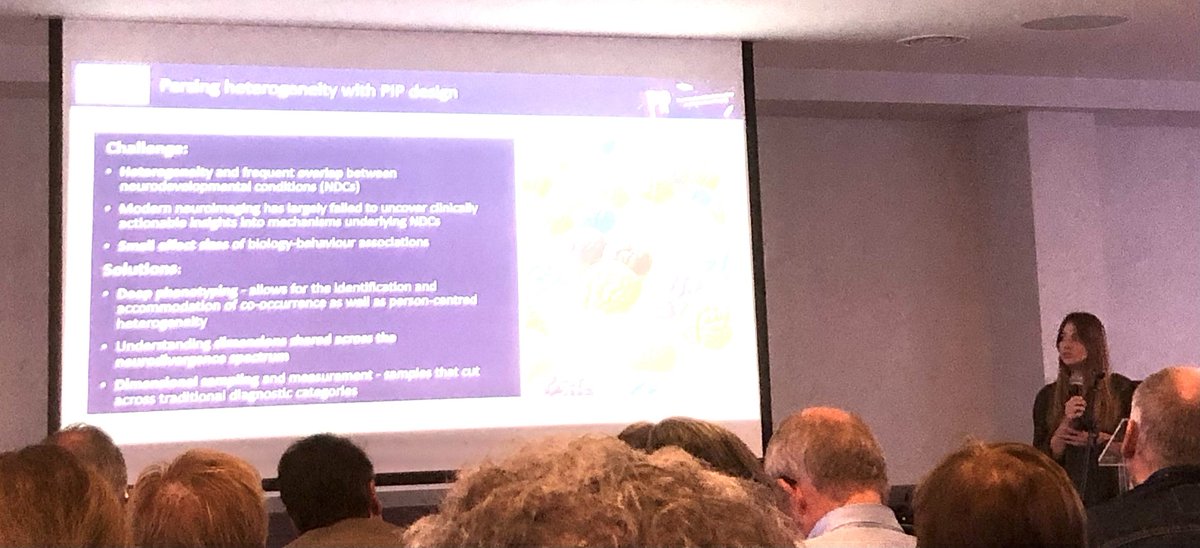
We are at the annual @Aims2Trials meeting, and @Julka_Koziel is updating attendees on PIP's progress over the last year. A HUGE thank you to all families who kindly give their time to help with our research to better understand the development of neurodivergent preschoolers! 1/2
🚨New #research by @graemejdobson raises concerns over proposed changes to qualifications required for #SENCOs in the UK that could decrease the quality of support for #SEND#children, and advocates for #evidence based policy decisions. Link to read:
https://t.co/DWtfBOX75Z
This year's @ITAKOM_CONF takes place on March 13-14 in Edinburgh! The conference brings together people from different backgrounds & perspectives for a deeper understanding of #neurodiversity & to create a more inclusive society. Tickets are still available for those interested!
"We cannot advocate for what we need until we know what it is."
In her article for @ADHD2eMB, Jillian Enright provides tips for #Neurodivergent people on how to build important self advocacy skills to better address their needs. Link below! https://t.co/OEPvwic1mb
In this year’s @CRAE_IOE annual lecture, Pete Wharmby @commaficionado will discuss ways to make #schools safer &more inclusive for #autistic students, outlining why changes are essential &how they can be easily implemented. Link below to reserve a spot!
https://t.co/MGIyeJR5Ro
Recent #research by @SanneteMeerman, Justin Freedman, & @LBatstra identifies 4 ways in which #ADHD is mistaken as a disease rather than a descriptive classification, & the negative implications for #children. Link below to read!
https://t.co/Jf01n434A9.
Edmund Sonuga-Barke, Sylvan Baker and Susie Chandler are an absolute dream team!
at the forthcoming Salvesen Lecture hosted online by @SMRCResearch they'll be talking about their co-produced work in neurodiversity & mental health
register for free here: https://t.co/LH4C8JcUD5
Microschools allow #children to flourish by giving them the freedom to learn at their own pace & supporting their social & emotional needs. @Kerry_edu article for @Forbes highlights the positive impact Wildflower Community School is making for children with and without #SEND
A common criticism of microschools and similar learning models is that they don't work well for, or exclude, children with special needs. In reality, the opposite is true.
My latest today @Forbes:
https://t.co/fiaiNDn504
Important work by @CogNeurothemis & @congabonga highlighting how #autism is primarily represented through negative attitudes in the British press. Changing this is crucial to building a truly inclusive society that celebrates its #neurodiversity!
https://t.co/cuBgu0GQov
In this interview, prof Francesca Happé @HappeLab discusses how advancements in #research have helped us understand #autism better, and it's our turn to do better at accepting & accommodating #neurodivergence to allow people to be themselves. Link below!
https://t.co/VxDqw6I9Bv
This editorial explains the importance of using #strengthbasedapproaches when diagnosing #autism. The authors offer suggestions on how to improve #diagnosticexperiences & empower families with #developmental and diagnostic information. Link below to read!
https://t.co/xcMmGLnnq2
#Stimming behaviours, or ‘self-stimulatory behaviours’, help #autisticpeople regulate themselves in different situations. Watch this video from @AmbitiousAutism where autistic people discuss what stimming means to them in their everyday life!
https://t.co/tP4r28PdQW
[3/3] The earlier we can support these kinds of needs, the better chance these children will have at developing skills that will help them succeed in life and reach their full potential!
[1/3] When more of us understand what #ADHD is, we can create a more supportive& #inclusiveenvironment. ADHD is a developmental condition impacting the ability to focus, remain still, or control impulses. Those with ADHD may experience some or a combination of these features
[2/3]Oftentimes, ADHD is diagnosed in #childhood or #adolescence, which is important for identifying areas for #earlysupport. Children with ADHD may find tasks like studying & organising difficult, which can build up over time & lead to problems living independently in the future






![pip_project_KCL's tweet photo. [1/3] When more of us understand what #ADHD is, we can create a more supportive& #inclusiveenvironment. ADHD is a developmental condition impacting the ability to focus, remain still, or control impulses. Those with ADHD may experience some or a combination of these features https://t.co/llNUtCw6hx](https://pbs.twimg.com/media/Fh2D8HzXEAQbhjJ.jpg)


