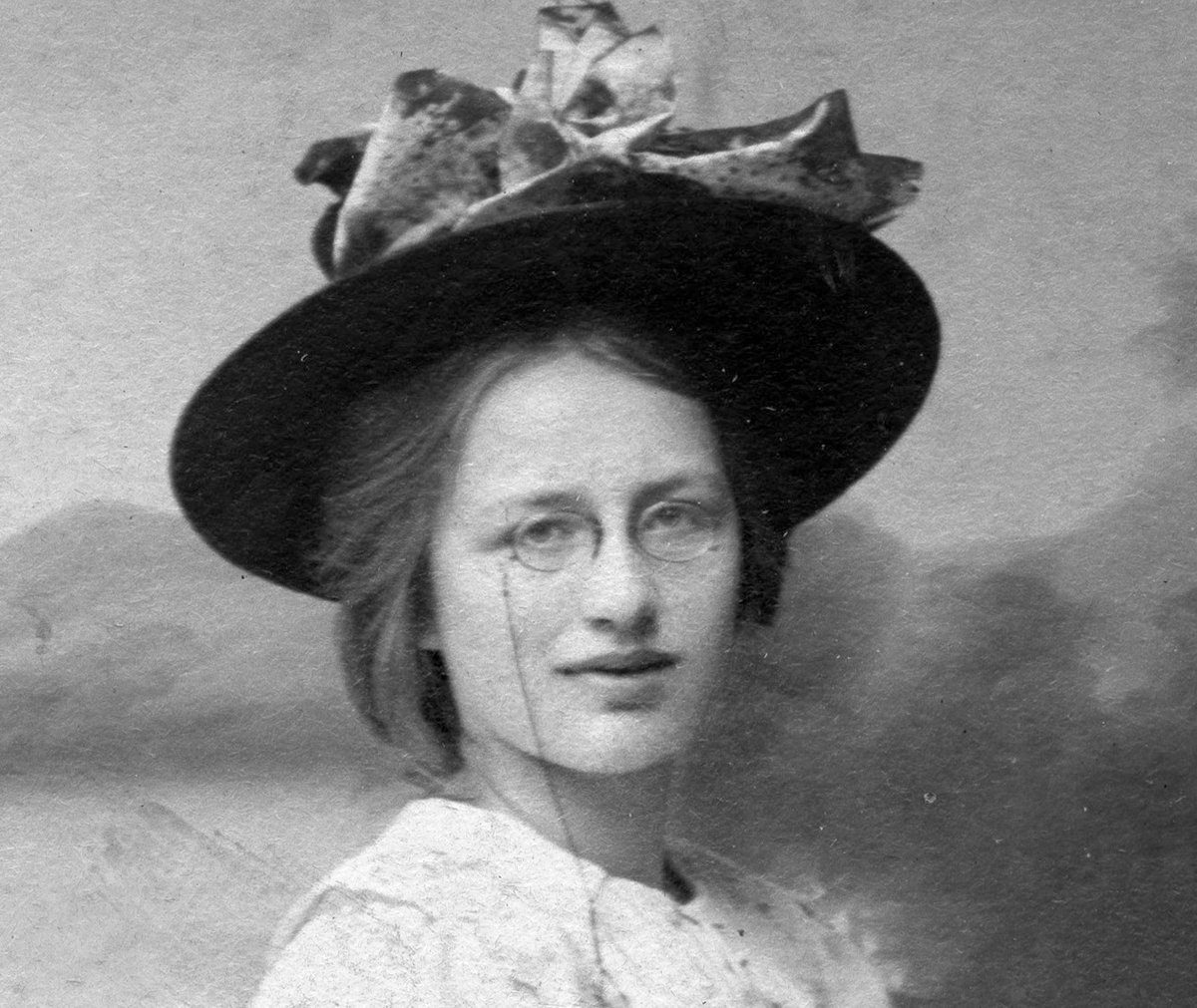
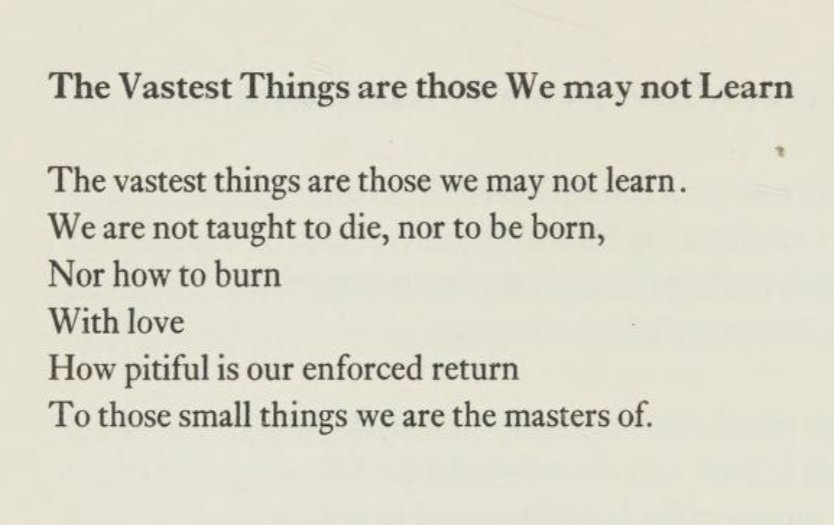
A thread for Finnish-Swedish poet Edith Södergran.
Feminist, cat lover, rumored bisexual, goddess of the mic drop ending.
“you are disappointed.”
#womenintranslation
“I do think that we largely delude ourselves with the knowledge that we think we possess, that we make it up as we go along, that we make it fit our desires and anxieties and that we invent a straight line of a trail in order to calm ourselves down.”
— W. G. Sebald (1997)
The people in this photo aren't friendlier than you. Their apartments are just smaller. So small that Parisians basically gave up on living indoors and moved their living rooms onto the sidewalk. And that was the whole plan.
In the 1850s, a city planner named Baron Haussmann tore apart medieval Paris and rebuilt it. He widened streets into boulevards, capped every building at five stories, and added one rule that explains this entire photo: the ground floor of every building had to be a café, a bakery, or a shop. The apartments above were intentionally tiny. Some were single rooms carved out of old mansions. No garden. Barely any sunlight. A private balcony was something most Parisians would never have.
So the café became home. You ate breakfast there. Held meetings there. Received your mail there. By the late 1700s, Paris already had close to 2,000 of them. In 2002, there were still 1,907. Even now, after years of closures brought that number to about 1,410, the coverage is absurd: a 2020 city study found 94% of Parisians live within a five-minute walk of a bakery. When COVID shut indoor dining in 2020, Paris ripped out parking spaces, turned them into outdoor terraces, and let 9,800 cafés and restaurants keep them permanently.
An American sociologist named Ray Oldenburg wrote a book in 1989 called The Great Good Place. He had a name for spots like the Parisian café: "third places." Not your home, not your office, but the casual in-between spots where you actually get to know people. Cafés, pubs, barbershops, the corner store where the owner knows your name. His whole argument was that American suburbs were built with only two zones, your house and your job, connected by a car. No sidewalk café, no place to bump into a neighbor by accident.
The U.S. Surgeon General declared loneliness a national health epidemic in 2023. Being alone all the time is as bad for your body as smoking 15 cigarettes a day. Half of American adults say they feel lonely. Weekly socializing dropped from 5.5 hours in 2003 to just 4 hours in 2023, and it never bounced back after COVID. Americans between 15 and 29 now spend 45% more time alone than they did in 2010.
The scene in this tweet looks like a personality trait. It is a 170-year-old engineering project that works exactly as designed.
Isolde gives birth at the end of Yuval Sharon’s new Tristan at the Met. I wrote about why that’s a profound betrayal of the opera’s deepest commitments—& also the only part of the production I liked. Free post, no paywall. https://t.co/WGN6JmWBWV
Winnicott: ‘Artists enable us to keep alive, when the experiences of real life often threaten to destroy our sense of being alive and real in a living way.’
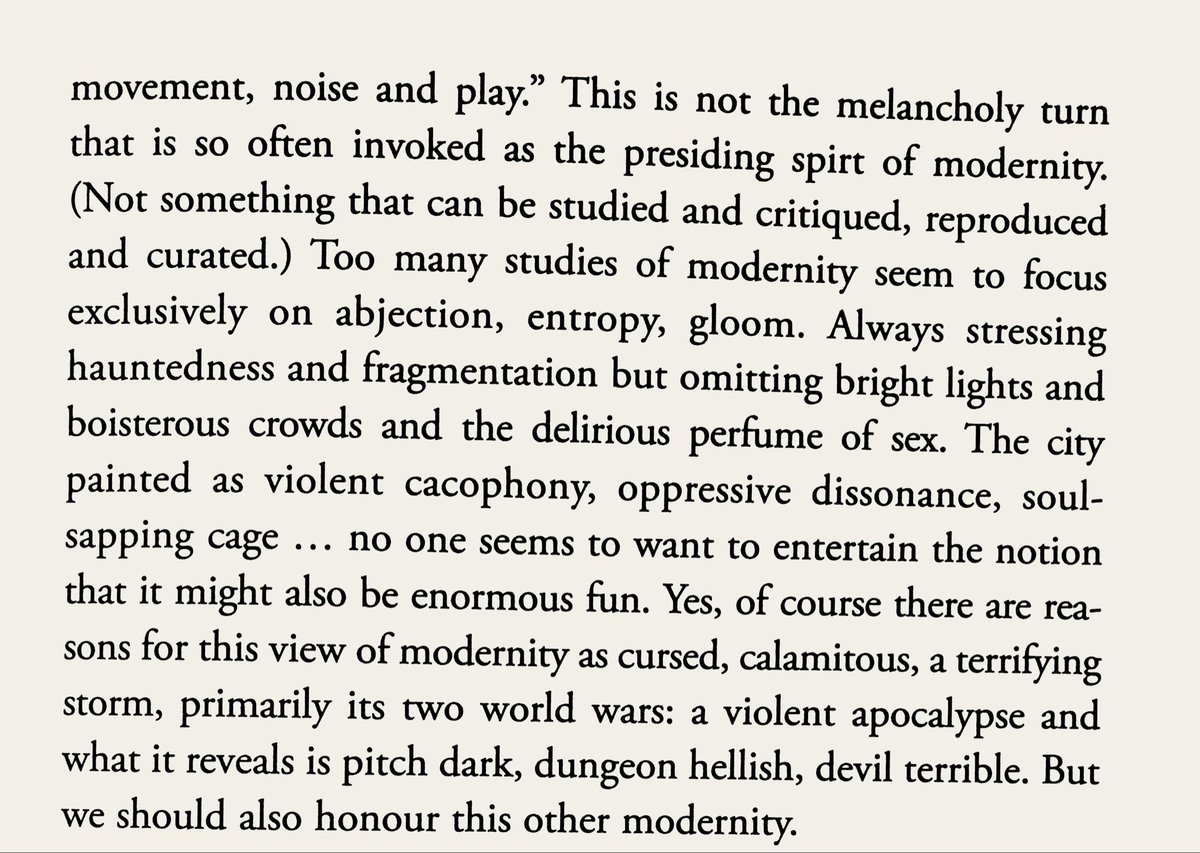
Thinking of this paragraph from Ian Penman’s book on Erik Satie: “Too many studies of modernity seem to focus exclusively on abjection, entropy, gloom . . . no one seems to want to entertain the notion that it might also be enormous fun.”
the gap in my resumè is from when i was sobbing over this excerpt of james baldwin writing about the world being divided between madmen who remember and madmen who forget.
in college i was in a poetry workshop that culminated in Louise Gück critiquing 1 poem by each student
i selected my most gut-wrenching poem about my older sister’s death in a freak accident 2 years before
she read it, looked me in the eye, and said “so she died. what else?”
“…the soul does not need to be free of symptoms. It doesn’t require that life be lived perfectly … What the soul needs and craves is the experience of the world, taking it in as it presents itself.”
Thomas Moore