WHAT!? $XRP AT $3,300?
Boyd Roberts put “THE GREAT SOVEREIGN RESET” into the SEC’s official rulemaking files.
I went through the entire model, and the $3,300 number isn’t even the craziest part.
First, understand what this actually is.
This is Rulemaking Petition 4-867, with a revised 41-page paper written by Boyd Roberts, Group Director of Big Picture Group, dated July 22, 2026.
It is Roberts’ scenario.
Not an SEC XRP price target.
And that distinction actually makes the paper more interesting, because he explains the machinery that would have to exist for something this extreme to work.
His architecture is surprisingly simple:
Gold = the stock.
Oil = the flow.
XRP = the bridge.
He is not proposing that XRP replaces the dollar.
He is not saying XRP becomes gold-backed.
He is imagining a system where sovereign assets, commodities, currencies, stablecoins and tokenized deposits all exist separately, while XRP provides liquidity between them.
That is much closer to XRP’s actual design.
Then you reach the number everyone screenshots.
Roberts models:
261.5M ounces of U.S. gold at $25,000/oz = $6.54T
10B XRP at $3,300 = $33T
Combined = roughly $39.54T.
Again, he explicitly calls that illustrative scale, not a price forecast.
The fascinating part is what would have to support that XRP valuation.
Not retail FOMO.
Not people smashing buy on exchanges.
He describes things like:
central-bank collateral eligibility,
official conversion facilities,
sovereign settlement demand,
multinational reserve allocations,
deep market-making pools,
and controlled XRP supply.
That changes the entire question.
It becomes less:
“Can XRP naturally pump to $3,300?”
and more:
“What happens if XRP ever becomes recognized institutional collateral and sovereign liquidity infrastructure?”
Now look at what already exists today.
The U.S. already has a Digital Asset Stockpile.
XRP is explicitly identified as a digital commodity under the SEC’s March 2026 interpretation.
RLUSD has reached roughly $2.3956B circulating, backed by about $2.5177B in reserves.
Ripple Prime clears $3T+ annually across more than 300 institutional customers.
And on September 17, the SEC created a five-year pathway for tokenized U.S. stocks to trade through permissioned liquidity pools running on public permissionless blockchains.
Read that again.
Public blockchain underneath.
Controlled institutional markets above it.
That is extremely close to the architecture Roberts describes.
The one catalyst that would take this thesis into another category is very clear:
official sovereign recognition of XRP as collateral, reserve, settlement or strategic-liquidity infrastructure.
That has not happened.
But Boyd Roberts did something useful.
He showed exactly what the system would need to look like if it ever did.
And that is why Petition 4-867 is worth understanding beyond one crazy-looking $3,300 XRP screenshot.
What do you think about this?
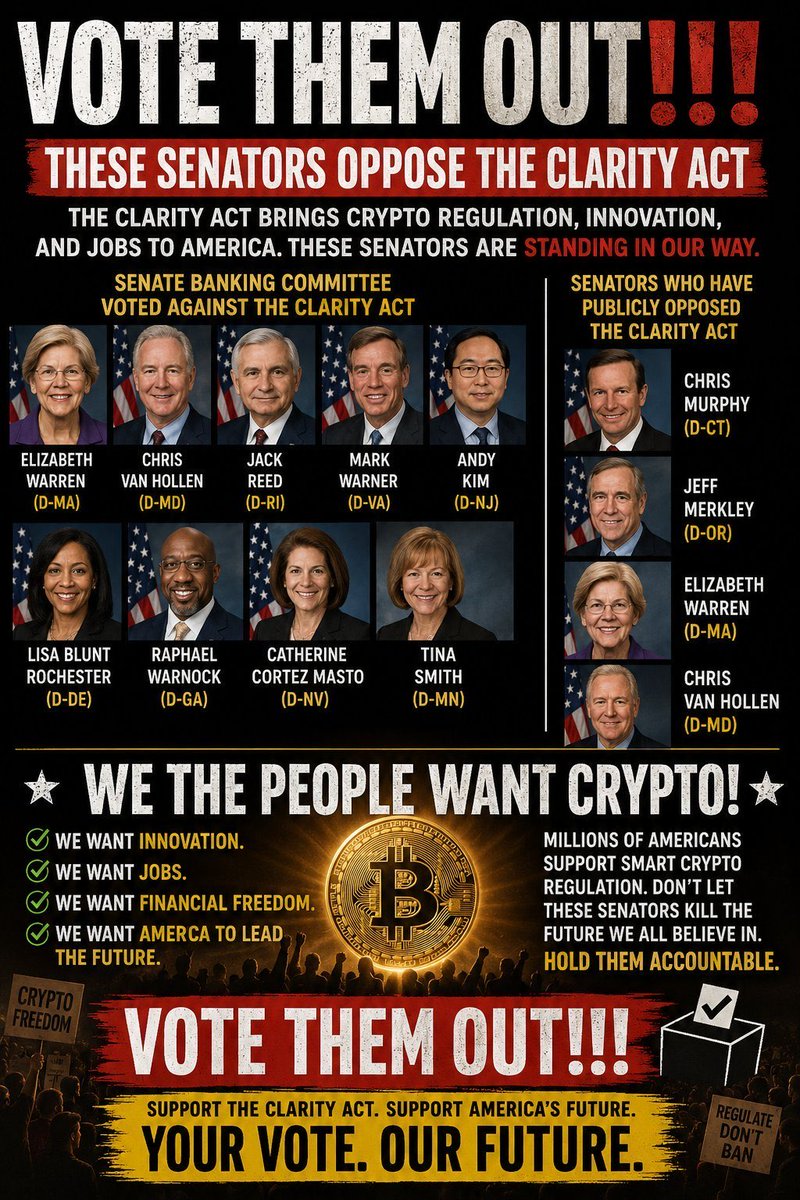
This afternoon, Senate Democrats proved they were never truly serious about protecting consumers and preserving American leadership. I sat at the table with Senate Democrats working in good faith to get this done while they played games.
For over a year, they presented demands and the second we met them, they made new demands and moved the goal posts. Today they voted against real limitations on politicians’ personal crypto investments. They voted against protecting American consumers from the scammers and fraudsters this bill would have shut down. They voted against American leadership, and handed China and every one of our foreign competitors exactly what they wanted. Democrats chose politics over the American people—again. That’s not leadership on their part, that’s surrender to their radical, socialist base.
The once-proud Democratic party is anti-consumer and pro-illicit finance, anti-ethics, anti-free enterprise, anti-worker, anti-livable wage jobs, and pro-socialism. The Democrats are now anti-American. Sad!
Tomorrow, my colleagues have a choice to make: American leadership, real consumer protections, and giving law enforcement the tools they need to address illicit finance, or drive the digital asset industry overseas, leaving consumers vulnerable, and sidelining American leadership knowing full well that no other country is capable of regulating this industry as well as the United States. The choice really is that clear. The Clarity Act is right in front of us and this moment won’t come along again for years. Let’s take the win and get this done.
Part2
The Truth Behind BitMart: A Historic Crypto Scam or Industry Complicity?
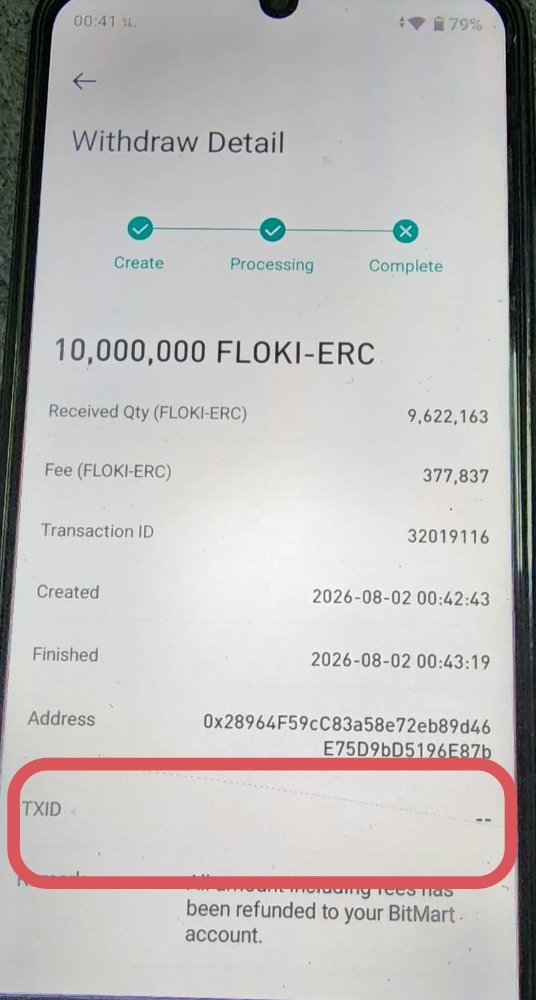
Ever since BitMart announced its shutdown and instructed investors to withdraw their assets, the reality has been the exact opposite. To this day, practically no users have been able to successfully withdraw their funds. The most painful part is that the withdrawal process claiming to be "Completed" is nothing but an illusion—verifying the TXID reveals absolute emptiness. This is not a technical glitch; it is a deliberate deception of investors.
This situation raises massive questions about the individuals and capital groups behind the scenes:
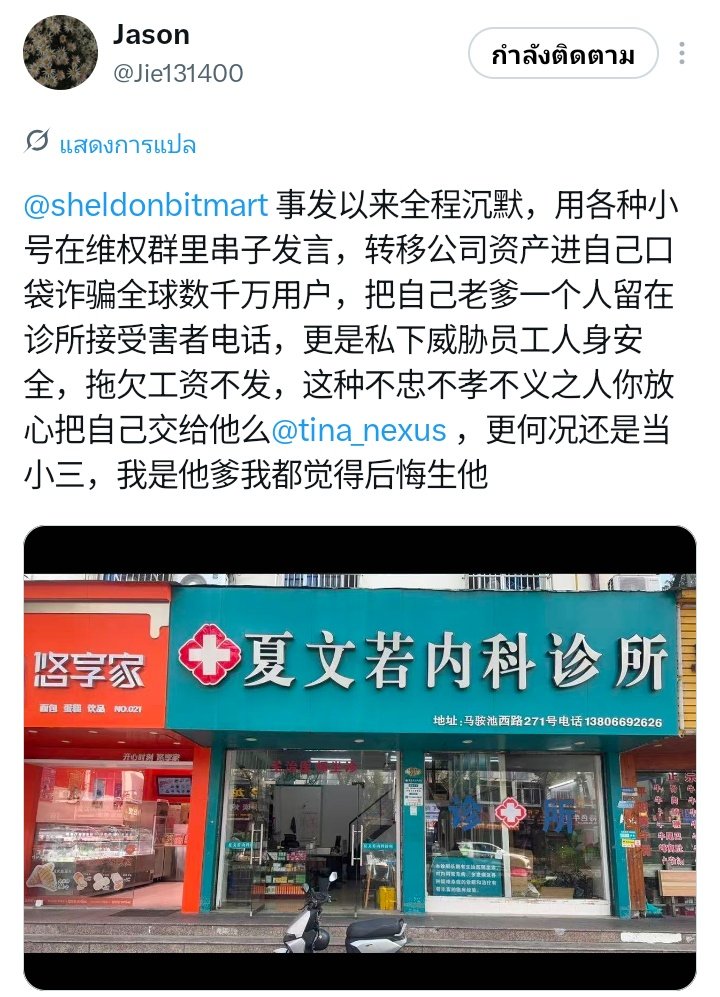
@Sheldon Xia (CEO): A man who might be etching his name as one of the biggest scammers in the digital finance world.
Yuen Wong @Yuenwonglabs (Former Managing Partner of BitMart): The individual who played a crucial role in expanding BitMart's network in Asia. Today, he is the founder of the Staynex project, which is preparing for an IPO. The question society must ask is: Should we really trust and invest with individuals directly tied to the collapse of BitMart?
Alexander Capital Ventures: As a venture capital firm, they didn't just provide funding. They hold binding legal rights to a Board Seat, auditing privileges, strategic oversight, and Veto power over major company decisions. Did BitMart's shutdown—which closely resembles an outright asset heist—happen with the knowledge and approval of the board of directors?
Missing Justice Amidst the Silence of Industry LeadersEqually disappointing is the stance of crypto industry leaders and influencers (including prominent figures like CZ), who remain dead silent as if this daylight robbery is perfectly normal. They encourage people to invest, yet show zero responsibility when it comes to advocating for strong governance and regulatory oversight.
Time to Expose the Money TrailWe currently hold deep insights and comprehensive evidence of BitMart’s financial trails. If released, this information will undoubtedly shake the entire industry.
Here is our ultimatum: If BitMart continues to ignore us and fails to transparently return investors' assets, we will release all these financial trails to the public. We refuse to be silent victims, and we will do everything in our power to drag the perpetrators into the light and hold them accountable. We must ensure no other investor falls prey to these groups again.
Time to Fight Back: We Need Your Power!
We will not surrender to those who deliberately exploit us. If you are a BitMart user affected by this:
Expose Your Evidence: We urge all victims to publicly share screenshots of suspended withdrawal histories or "Completed" statuses showing an empty TXID (drop them in the comments below). We must compile this critical evidence so they can no longer deny the truth.
REPOST for the World to See: Do not let this fade away with time! Please Repost / Retweet / Share this message as far as possible. Let the media, international regulators, and the global investor community know exactly how these individuals operate.
We must show them that they cannot just steal our money and walk away to start new businesses as if nothing happened!
#BitmartScam #CryptoJustice #WhereIsOurMoney #Staynex #CryptoFraud
@sheldonbitmart@NenterChow@BitMartExchange@Cipholio
@ACV_US
@WOO_ecosystem@Woody_Global@Yuenwonglabs@cz_binance
🌐 Inside BitMart: From Chinese Leadership and Global Capital to Withdrawal Red Flags and the Final Chapter
Recent shifts in the digital asset landscape serve as a stark reminder: "The crypto market does not exist in isolation from global financial machinery." Examining the trajectory of BitMart under the leadership of Sheldon Xia offers a vital case study—revealing the interplay between Chinese executive leadership, backing from heavyweight institutional venture capital, and the liquidity bottlenecks inherent to Centralized Exchanges (CEXs).
👨💼 1. Key Executive Leadership
Sheldon Xia (Founder & Group President)
Background & Role: Founded BitMart in 2017/2018 and served as Global CEO for seven years before transitioning to Group President in April 2025.
Global Recognition (Forbes): Prominently featured by Forbe in a leadership spotlight, Xia was recognized as a prominent young executive who scaled BitMart from an early-stage startup into a global exchange serving over 10 million users worldwide—highlighting his vision for product innovation and crisis management following BitMart's 2021 hot wallet security breach.
Academic Foundation: Holds a Master’s degree in Computer Science from Stevens Institute of Technology and an MBA from Columbia Business School, combining deep technical capabilities in financial software development with international asset management expertise.
Role Ahead of Closure: As the primary decision-maker at the parent company, he spearheaded the organizational restructuring and set the timeline for the platform’s orderly shutdown.
Nenter (Nathan) Chow (Global CEO)
Role: Succeeded Sheldon Xia as Global CEO in April 2025.
Role Ahead of Closure: Oversaw day-to-day operations, managed institutional client relations, and coordinated regulatory compliance efforts during the platform's transition phase.
🏦 2. Institutional Capital & Key VC Backers
Alexander Capital Ventures (ACV)
Role:A U.S.-based venture capital firm focusing on high-growth technology ventures.
Connection to BitMart: Acted as the Lead Investor in BitMart’s Series B funding round in late 2021—a pivotal deal negotiated under Xia's tenure.
Investor Significance: ACV’s entry pushed BitMart’s valuation past $300 million. This institutional capital provided critical liquidity, credibility, and operational runway following the 2021 security incident, supporting the exchange prior to its eventual wind-down
Fenbushi Capital
Role: One of Asia’s earliest and most influential blockchain venture capital firms.
Connection to BitMart: Served as an early investor and strategic partner, providing crucial infrastructure support, regional project deal flow, and access to Asian capital networks.
Cipholio Ventures
Role: A global venture fund targeting early-stage Web3, DeFi, and core blockchain infrastructure.
Connection to BitMart & Sheldon Xia: Co-founded by Sheldon Xia as Founding Partner in 2021, serving as an investment arm within the broader BitMart ecosystem. Despite BitMart's exchange phase-out, Cipholio continues its primary mission of managing Web3 portfolio investments globally
🏛️ 3. The Power of Chinese Entrepreneurs in Global Financial Systems
Chinese crypto founders have historically played a foundational role in constructing the liquidity architecture** for both Asian and global digital asset markets.
Capital Bridge Strategy: Securing early-stage deal flows through Asian funds like Fenbushi Capital and leveraging that momentum to attract tier-one Western capital like Alexander Capital Ventures (ACV) became a blueprint for rapid international expansion.
Structural Pressures: Despite rapid growth, mid-sized centralized exchanges have increasingly faced regulatory tightening across Western jurisdictions alongside broader liquidity drains, putting mounting pressure on operational sustainability
@sheldonbitmart@NenterChow@BitMartExchange@Cipholio @ACV_US @WOO_ecosystem @WOOX_global
1/2
Today, @The_DTCC and SDF are announcing plans to enable the tokenization of DTC-custodied assets on Stellar.
The connection supports the rapid conversion of traditional assets into tokenized form, and the full asset lifecycle, including corporate actions and reporting.
XLM Surges 18% Following DTCC Integration
$XLM is among the top-trending assets on CoinGecko, following @StellarOrg's integration with @The_DTCC.
The DTCC and SDF announced plans to enable tokenization of DTC-custodied assets on the Stellar Blockchain.
The asset is now up 19% in the past 7 days following the recent surge, but is still down 80% from its all-time high in 2018.