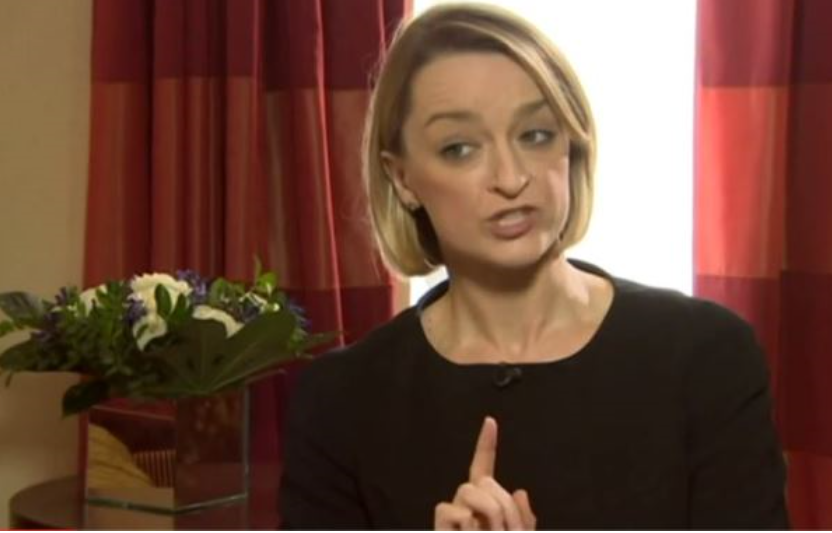
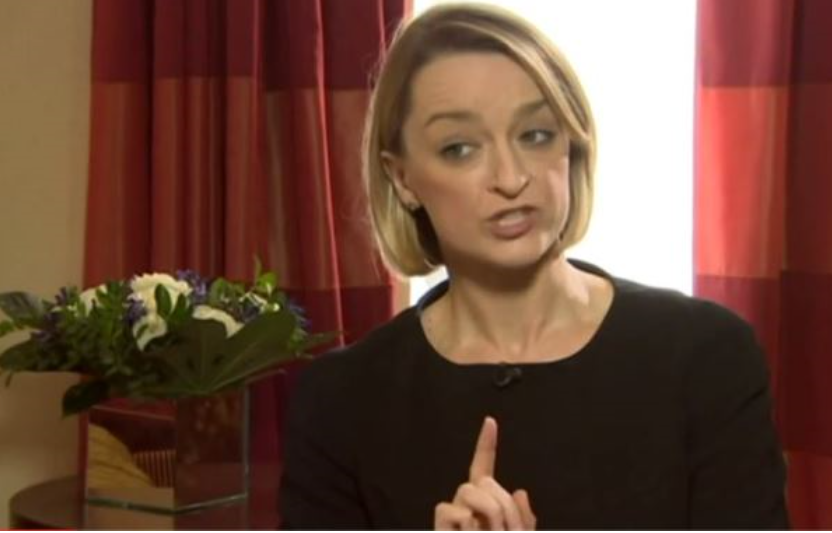
In ‘Pay Attention’, Laura Kuenssberg refers to ‘the conflict in Gaza’. (p.85). As Norman Finkelstein has pointed out, Gaza is not a conflict, a war. In a war, there is often collateral damage, and of course massacres of civilians, but the primary goal is the destruction of the opposing army.
By contrast, in a genocide, the primary target is the civilian population itself, as has been the case in Gaza. This is one reason why Amnesty International, Human Rights Watch, the International Federation for Human Rights, the Lemkin Institute for Genocide Prevention, the International Association of Genocide Scholars, as well as Israeli and Palestinian Human Rights Groups like B’Tselem and Physicians for Human Rights–Israel, and UN Bodies and Special Rapporteurs, have all described Gaza as a genocide. In January 2024, in response to a detailed submission from South Africa, the International Court of Justice issued a landmark preliminary ruling that there was a ‘plausible risk’ of genocide.
Kuenssberg mentions Gaza just five times in passing. One of the mentions appears in a reference to ‘Hamas’s abhorrent attacks on Israel on 7 October 2023 and Israel’s subsequent flattening of Gaza…’ (p.45)
If Hamas’s attacks were ‘abhorrent’, what adjective should we use to describe Israel’s literal obliteration of Gazan society? Certainly, ‘genocidal’ could be added to describe ‘Israel’s subsequent genocidal flattening of Gaza’. But the words ‘genocide’ and ‘apartheid’ do not appear in relation to Gaza in Kuenssberg’s book. The word ‘civilian’ is also absent, so there is no mention of the deliberate, even gleeful generation of vast Palestinian civilian casualties, including 20,000 children killed and 44,000 injured, that has shocked the world...
Read the rest of our latest media alert here: https://t.co/4nNSLAWLHd
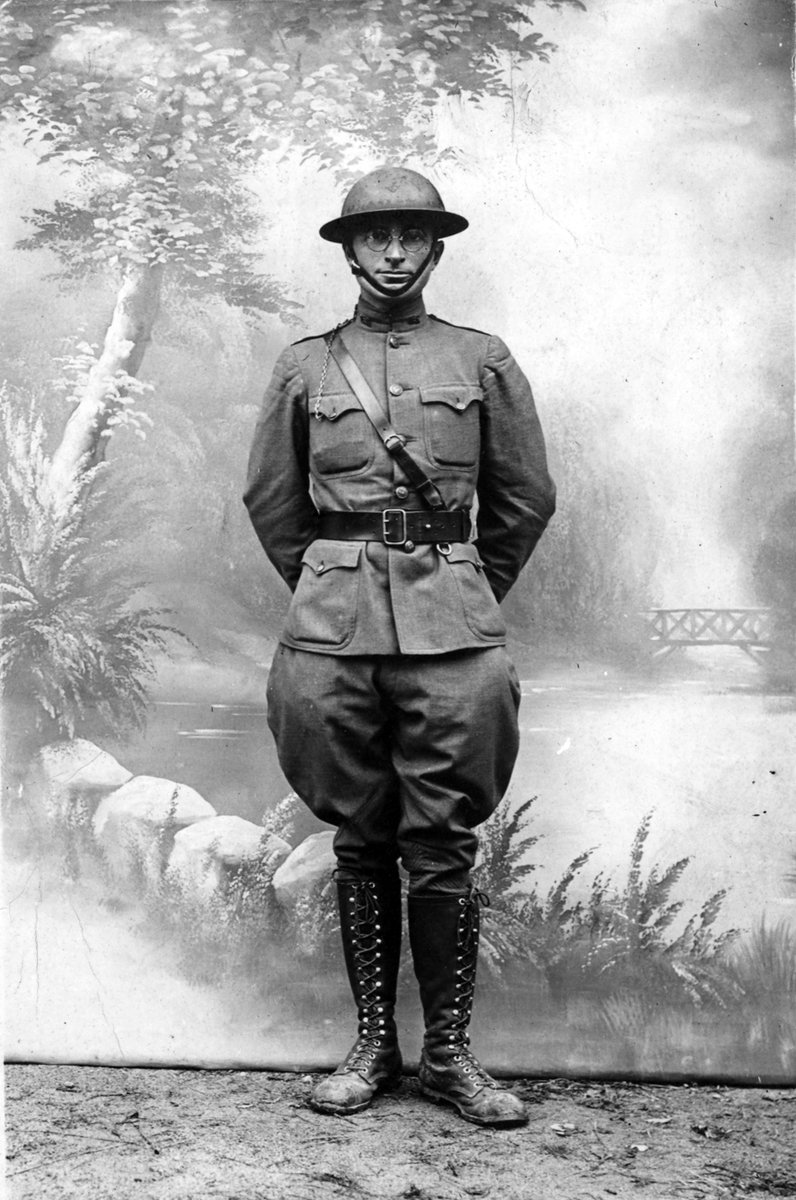
This is a photograph, from his earlier days, of - arguably - the most powerful man ever to have lived; briefly. Perhaps the closest thing to a world-Emperor.
Pop quiz: who is it, and why could it be argued he was, for a while, the most powerful man ever to have lived?
두번째 생존법.
겨울철 대정전이나 국가 비상사태가 터졌을 때, 집 안에서 저체온증으로 사망하는 사람들의 90%는 ‘보일러가 꺼져서’ 죽는 게 아닙니다.
다들 패딩을 입고 침대에 누우면 버틸 수 있을 거라 착각하지만, 그 방식은 가장 빠르게 체온을 빼앗기는 지름길입니다.
극한의 추위 속에서 난방 없이 72시간을 살아남는 5가지 절대 생존 법칙. 🧵
1.
가장 치명적인 실수는 거실이나 방 전체를 어떻게든 버티려는 것입니다.
공간이 넓을수록 사람 몸의 복사열은 허공으로 흩어집니다. 살아남으려면 즉시 집 전체를 포기하고 공간을 극한으로 줄여야 합니다.
거실 한가운데에 실내용 텐트를 치거나, 식탁 밑에 두꺼운 담요와 암막 커튼을 둘러 '초소형 격리 공간(Microclimate)'을 만드세요. 사람 1~2명의 체온과 호흡만으로도 1평 남짓한 공간은 바깥보다 10~15℃ 이상 따뜻해집니다.
2.
얼어 죽는 사람들은 대부분 위에서 덮는 이불만 신경 쓰다, 바닥의 전도 냉기에 체온을 다 뺏깁니다.
이불은 사람이 눕는 순간 솜이 눌려 공기층이 사라지고, 바닥의 냉기를 그대로 빨아들이는 차가운 돌판이 됩니다.
바닥에는 이불 대신 반드시 '골판지(택배 박스)'를 2~3겹 깔거나 스티로폼, 알루미늄 은박 매트를 깔아야 합니다. 골판지 내부의 공기 구멍이 지열 냉기를 차단하는 최고의 단열재입니다.
3.
춥다고 창문 틈을 비닐로 완전 밀봉한 채, 실내에서 가스버너나 촛불을 켜두는 것은 자살 행위입니다.
매년 한파 재난 때마다 얼어 죽는 사람보다 일산화탄소에 중독되어 자는 도중 사망하는 사람이 훨씬 많습니다.
연소 기구(난로, 버너, 촛불)를 실내에 둘 때는 잠들기 전에 무조건 꺼야 합니다. 아무리 추워도 공기가 순환할 수 있도록 손가락 굵기만 한 환기 구멍은 반드시 열어두어야 합니다.
4.
군사 생존학의 제1철칙: "Sweat Kills (땀은 사람을 죽인다)."
추위를 막겠다고 옷을 잔뜩 껴입고 움직이다 땀을 흘리는 순간 끝장납니다. 특히 면(Cotton) 소재 내의는 땀을 흡수한 채 마르지 않아, 몇 시간 뒤 얼음장 같은 냉각팩으로 돌변합니다.
폴리에스터, 플리스, 울(양모) 소재를 헐렁하게 여러 겹 입고, 몸에 조금이라도 열이 오르면 지퍼를 열거나 겉옷을 벗어 '절대 땀을 흘리지 않는 상태'를 유지하세요.
5.
체온이 급격히 떨어질 때 핫팩이나 온수병을 손발 끝에 두는 것은 낭비입니다. 손발은 혈관이 수축해 있어 온몸으로 열이 돌지 못합니다.
반드시 '경동맥(목 뒤)', '액와동맥(겨드랑이)', '대퇴동맥(사타구니)' 등 심장에서 뿜어져 나오는 굵은 혈관 부위에 열원을 대야 따뜻한 피가 전신을 돕니다.
그리고 물을 마시지 않으면 탈수로 혈액순환이 멈춥니다. 미온수를 마시고, 단백질 대신 '지방(버터, 땅콩버터, 초콜릿, 견과류)'을 드세요. 지방은 몸 안에서 가장 오래 타오르는 최고의 생체 난로입니다.
겨울철 생존의 핵심은 '열을 만드는 것'이 아니라 '체온을 뺏기지 않는 것'입니다. 가족을 위해 이 타래를 북마크해 두세요. 📌
To be fair to Laura Kuenssberg, she admits that her new book, ‘Pay Attention’, is not ‘an academic tome’. (Kuenssberg, ‘Pay Attention’, Corsair, 2026, p.10). Even so, it beggars belief that someone who was BBC political editor (2015-2022) and who currently hosts BBC One’s flagship Sunday morning politics show, Sunday with Laura Kuenssberg, could say this of the Israel-Palestine crisis:
‘If you started reading all the books, watching all the documentaries and listening to all the podcasts that seek to get to the bottom of the decades-old clash, you would be busy for the rest of your life. And I don’t propose to add to those arguments here.’ (p.45)
If the public isn’t paying Kuenssberg between £395,000–£399,999 (as of 2025) to ‘get to the bottom’ of the crucial issues of our time and ‘to add to those arguments’, what on earth is it paying for?
On her show last year, Kuenssberg said this of the genocide in Gaza:
‘Often when it comes to the debate about Gaza, it gets very binary and very aggressive very, very quickly and there’s sort of no room for nuance.’
But how can anyone be in a position to judge what does or does not constitute ‘nuance’ if they haven’t read the books and watched the documentaries ‘to get to the bottom of the decades-old clash’? If Kuenssberg had done that research, she might feel shocked that she ever suggested that one should respond to a genocide with ‘nuance’. And she might feel ashamed that she had ever described a classic case of genocidal settler colonialism as a ‘clash’...
Read the rest of our latest media alert here:
The Art Of Not Taking A View – ‘Pay Attention’ By Laura Kuenssberg
https://t.co/zVE23Hy1is
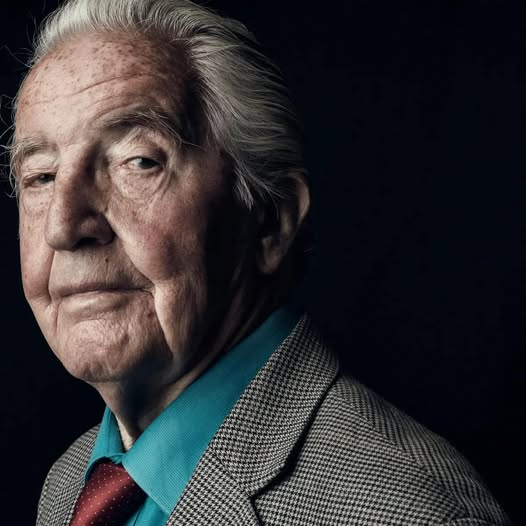
From Dennis Skinner.
This is lovely from Dennis Skinner on Jeremy Corbyn. It just hits the spot exactly, I think.
Dennis Skinner on Jeremy Corbyn:
"I don't think Corbyn's the best leader ever. I appreciate that he's not the best at appealing to a lot of demographics. he's crap with soundbites; not good at speaking straight to camera. Better in real situations with real people. I appreciate that he's not got a great deal of, what would you call it, zing. I don't agree with him on everything by any means.
Still, you know something I know? If Labour lose the election, Jeremy Corbyn will probably go back to being a local MP. He'll carry on holding speakers up for people at meetings, and helping people with their chairs, and thanking people for making the sandwiches.
He'll carry on having talks and doing constituency surgeries and attending debates and asking questions and campaigning on various issues and staying behind to carry on talking about stuff with ordinary people after the event's finished. If he weren't the leader now, he'd be campaigning on behalf of the party. He'd be standing at the back helping.
He's not going to swan off to a career of after-dinner speaking and corporate events and non-executive directorships and consultancies. He's not going to edit the Evening Standard. It's not his personal ambition that's brought him here.
He wasn't ever that keen on being a leader. The only reason he stood when he did was that, to paraphrase another Labour front-bencher, every other remaining left-wing MP in the party had already stood as the token socialist candidate in a previous leadership election, and it was basically his turn.
And here's the thing: his apparent lack of charisma notwithstanding (and what is this charisma that apparently Tim Farron and Theresa May possess? It's like nothing I've ever seen described using that term before), he's the exact opposite of what everyone seems to agree they're sick of in politicians.
The meaningless soundbites and stock phrases and glib dog-whistle oversimplifications don't sit naturally with him. He's better at sitting down calmly and talking about things like a grown-up. He's visibly irritated when interviewers push him to answer stupid, meaningless or leading questions, and, to me, that irritation seems remarkably restrained considering that I'd probably be unable to put up with such bollocks without flying into an expletive-laden rant.
He reminds me of a Scandinavian politician, and that's nothing but a compliment. Politicians aren't supposed to be evangelists or salespeople; they're supposed to be people of substance, not just a mass of superficially appealing tics, right? Right?
In short, he's a real human person, like you get in real life, not whatever kind of thing most politicians are where you just cannot imagine them existing in any normal situation alongside real people without getting punched in the face.
I've seen people like him, working in various capacities, usually doing something socially responsible, sometimes voluntary. They help. They support. They sympathise. They don't usually get to the top of organisations because they're not naturally competitive.
And here he is, in a position he probably never expected to be in, and his expression is, for me, the right one: he's grim; a touch uncertain; perhaps somewhat daunted. Quite right too. Anyone who's not daunted by the prospect of being Prime Minister shouldn't be allowed anywhere near the job.
I want whoever leads the country to feel the responsibility as keenly as possible. The Prime Minister is the servant of millions of masters, not the master of millions of servants, as Theresa May seems to think she is. It's a horrible job, but if nobody else is going to do it, he'll have to.
Because someone's got to. You can't just stand there and do nothing. You have to try to help; to do what you can. That's what he's like. And if the election's lost as the last two were, he'll go back to helping in whatever other ways are available. And if he loses his seat (which he won't), he'll go and try to help somewhere else.
The fact that this man is considered unelectable when the alternatives are as they are is itself an indictment of our society. The UK needs to be careful who they shake hands with."
[Jonathan Connell]
I literally loled at this. Start the article with how Iranian hackers like to leave messages and then move to the main substance with no message and no evidence of Iranian involvement.
https://t.co/3IlGFZ1Eus
@PadraigBelton Bringing in foreign foods is how the buffalo became extinct throughout Ireland. Also eagles. And maybe beavers. And toads? Never seen one. That's due to US beef hormones, I read somewhere.
@kylegawley Except they won't be devs. They'll be business-people with a network who can hustle and raise money. This has been increasingly happening over the past few years but will accelerate with AI.
A portable music playing device that did nothing but play music, that you only had to pay for once, that worked perfectly with or without wifi, that was an unambiguous upgrade over what came before it with no drawbacks, that never ever made you listen to commercials between songs
The West spent decades waging illegal wars, imposing illegal sanctions, and running illegal color revolutions across the Global South pure power moves dressed up as “rules-based order.” Most people in the West still treat that history as noble and call any pushback “aggression” or “propaganda.”
Now that Russia and China may play the same game, suddenly it’s unthinkable, illegal, and existential.
We invented the playbook, refined it past recognition, and are shocked anyone else learned it.