I'm dumping #Microsoft for #Linux Mint. I've had enough of my computer getting slower update after update, enough of paying subscriptions and enough of copilot interfering.
So far the move to Linux has been smooth, no searching for drivers, it all just worked. I use LibreOffice instead of Microsoft 365. The trading programs I use are all available on Linux 😀
Would you consider dropping Microsoft for Linux?
I believe the majority of consumers have had their fill of subscriptions.
Look at the IT world where people are dumping Microsoft office for open source solutions. Even hardware companies are dropping Microsoft windows on some laptops and successfully selling them with Linux instead.
Markets just flipped from war panic to relief mode:
• S&P 500 +0.80% to ~7,258
• Nasdaq +0.89% to ~25,114
• Dow +0.69% to ~49,253
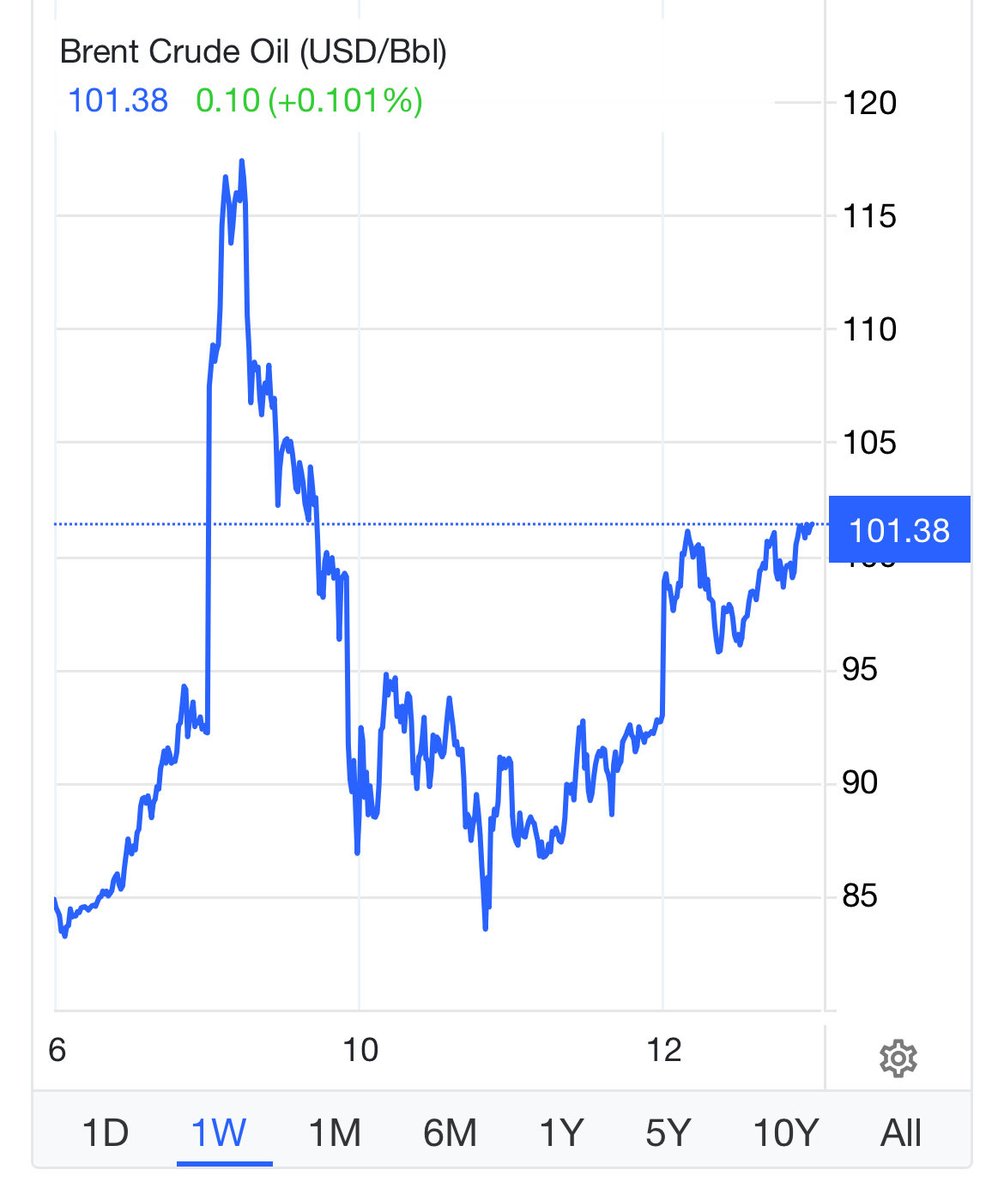
Oil reversed sharply (Brent -3% to ~$103, WTI -3.6%) as traders price in lower supply disruption risk from the fragile truce.
Gold cooled to ~$4,557 (-1.2%).
A classic “sell the rumor, buy the news” geopolitical day’s trading. Short wars historically deliver +2.9% S&P gains in the following 12 months, but any truce violation could send oil back to $110+ and reignite stagflation fears. Earnings season + truce = perfect setup for rotation out of defense/energy into tech.
A real truce or just a pause?
#USIranCeasefire #StockMarket #Oil #Trading
USD Losing Global Power: From Gold-Backed King to Fiat Shadow (1971 vs March 2026)
The US dollar’s dominance is eroding fast. Lets look at the hard data on why its value and global leverage are slipping.
1. Collapse in Gold-Backed Value
When Nixon ended the gold standard on Aug 15, 1971, the USD was fixed at $35 per ounce of gold.
Today (March 2026): Gold trades around $4,500–$4,860/oz (March average ~$4,860).
→ One dollar bought ~0.0286 oz of gold in 1971.
→ Today it buys ~0.00021 oz.
That’s a ~99.3% loss in purchasing power vs gold in just 55 years.
2. Explosion in Dollar Supply
1971: Currency in circulation ~$60 billion.
March 2026: M2 money supply $22.686 trillion (currency alone ~$2.4 trillion).
→ Over 377x more dollars now exist. Supply has ballooned while gold backing vanished classic recipe for long-term devaluation.
3. Death of the Petrodollar
The 1974 US-Saudi deal that forced oil sales in USD is unraveling:
Saudi Arabia quietly did not renew the exclusive petrodollar pact in 2024 and signed a $7B currency swap with China.
UAE exited OPEC in May 2026 after 59 years, seeking production flexibility.
Russia, Iran, and Venezuela have shifted oil/settlements to yuan/RMB since 2022 sanctions.
BRICS nations (China, India, Brazil, etc.) are accelerating non-USD trade and mBridge digital payments.
Result: ~80% of global oil is still USD denominated by habit, but the flow is breaking. Petrodollar recycling into US Treasuries has “more or less dried up.”
The Big Picture
The USD has long been not “as good as gold” and no longer the undisputed king of oil trade. This weakens its reserve status, raises long-term inflation/import costs for Americans and reduces US leverage over global finance. De-dollarization isn’t overnight but the trend is clear and accelerating.
What’s your view, is the USD’s reign ending or will it hold?
#USD #Petrodollar #GoldStandard #DeDollarization #Trading
Today’s clothing and packaging contains a large amount of recycled materials. When you look at batteries there is a lot of catch up to be done to raise the amount of recycled content.
$AQMS makes high quality recycled metals easily available without shipping them around the world for processing. 💡
Battery demand is surging.
Costs are the real bottleneck.
Most lithium, nickel, and cobalt still come from expensive, overseas processing.
Aqua Metals is building a lower-cost, cleaner, domestic path to battery materials.
That shift matters.
https://t.co/hohJD8drfi
@Raphfel A very smart move from China to bring green energy on top without pushing the price of energy through the roof.
Something the EU could have done too instead of creating an energy bubble and driving production away.
Insights from the Weekend: Urea Traders Bullish, Arable Farmers Face Tough Choices & Higher Food Prices Ahead?
Traders think they are on a winner riding urea/fertilizer prices higher. Little do they understand the dynamics of Agriculture. Urea jumped from $400 to $599 /T due to US Iran war disrupting supplies.
The reality at farm level. Last year (2025): Arable farmers struggled with low corn ($3.86-4.88/bu) & wheat ($5.50/bu) prices, avg. losses $150/acre for corn, $80/acre soybeans (AFBF/USDA). Breakeven often $4.75-5.60/bu corn, well above markets.
Planting Behavior: Arable farms split crops, autumn planting (e.g., winter wheat) needs urea now to get growing, but spring (corn/spring grains) could see cuts. Farmers often reduce acres or rates when margins tight: Switch to low-N soy, lower apps (10-20% less), or skip fields altogether.
The Knock-On: Reduced planting/supply = tighter global food stocks and less Urea/Fertiliser demand. USDA/analysts warn: Less acres could push 2026 food prices up 3-5% (stagflation risk if oil/fert spikes persist). Even if prices rise, farmers hold back unless profits become clear. Get ready for scarcity & higher consumer prices.
Ps. for the traders chasing urea without understanding agriculture, you are trying to take trousers from a bare ass 🤣
#Fertilizer #AgMarkets #FoodPrices #Trading #Commodities
@BRICSinfo Trump thinks he’s fighting a physical war. Iran are just doing a minimum to keep him engaged in that mindset. Meanwhile Iran have the US in an economic chokehold.
Market Deep Dive: US Indices Down Amid Oil Surge, Precious Metals Slip.
What's Driving Dynamics & Knock-On Effects?
US stocks closed sharply lower today: S&P 500 down 1.22% to ~6,693, Dow -1.6% shedding ~750 points to ~46,832, Nasdaq -1.7% to ~22,571. Oil spiked: Brent +10% above $100, WTI +9% to ~$96. Gold slipped 2.1% to ~$5,070, silver -2.7% to ~$83.
Key Drivers Changing the Dynamics:
- Geopolitical escalation: US-Iran war closes Strait of Hormuz (20% global oil flow), Iran's new leader vows shutdown and supply fears dominate.
- Inflation resurgence: Oil rally stokes "stagflation" risks, delaying Fed cuts (~60bps priced for 2026); Treasury yields near 5%.
- Economic data: Hot PPI reinforces "no cut" narrative; job losses add weakness.
Knock-On Effects for US Consumers & Businesses:
- Consumers: Higher gas/heating bills erode spending capacity (energy ~4% household budget, but could add 0.6-0.7% to inflation); younger households hit hardest via credit constraints.
- Businesses: Elevated input/transport costs squeeze margins (airlines/tech down 2-4%); potential GDP shave 0.5-1% if prolonged, but limited consumer pullback if shock transitory.
My thoughts Hedge with gold dips above $5,000 (safe-haven rebound prob 65%). War de-escalation could reverse fast, keep a close watch on PCE data.
What are your thoughts on stagflation ahead or quick rebound?
#Stocks #Oil #Gold #Trading
US Stocks Rebound as De-Escalation Bets Trump War Fears
US markets staged a strong comeback today with the S&P +0.83% to 6,796, Nasdaq +1.38% to 22,696, Dow +0.50% to 47,741 recovering from early dips as Trump hints at a quick end to Iran conflict.
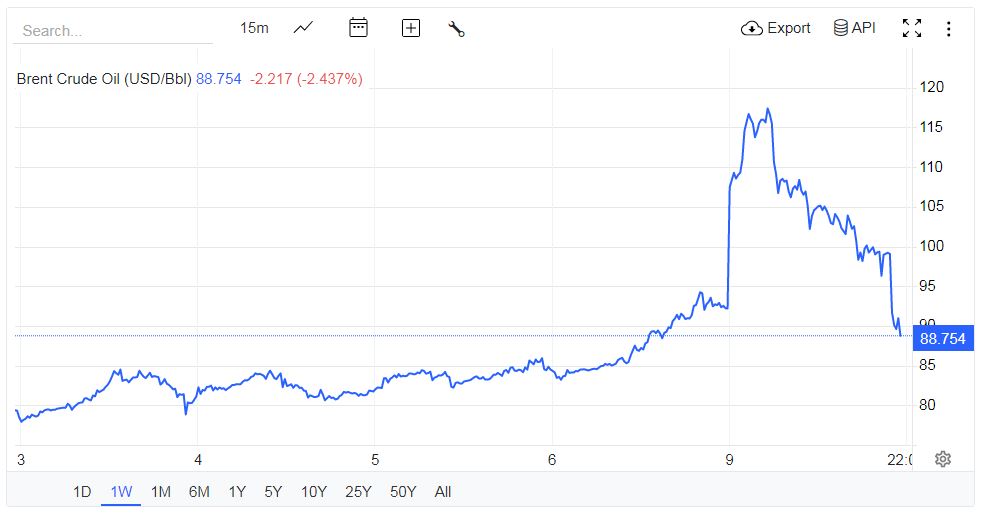
Oil surge slows (Brent $85 after $116 peaks), easing stagflation worries.
Deep Insight: Short wars historically boost stocks (+2.9% S&P avg. 12 month post ware) and a prolonged war may shave 0.5-1% GDP via higher energy costs. Continue watch defense/energy rotation if Hormuz stays open. A moderate to aggressive idea might be: Buy Nasdaq dips above 22,500 support (70% rebound prob).
#Stocks #USIranWar #Trading