When students struggle, the most common response is to slow down, review, and reteach.
But repeating instruction that didn't work the first time rarely makes it work the second time. Tier 2 requires genuinely different approaches—not the same lesson with fewer students: https://t.co/9cFdVULcyg
I own a small bakery. Business has been slow. Rent is up. I was thinking about closing.
Last Friday, a teenager came in. He looked nervous. He counted out change for a cookie. He was short 50 cents.
"It's okay," I said. "Take it."
He ate it at a table, looking at his math homework. He looked stuck.
I used to be a math tutor.
I walked over. "Quadratic equations?"
He nodded. "I don't get it."
I sat down and helped him for 20 minutes. He got it. He left smiling.
The next day, he came back with two friends. They bought cookies.
The day after that, five kids came.
Apparently, he told the school, "The lady at the bakery helps with homework."
Now, my bakery is the after-school hang-out spot. It's loud. It's messy. There are backpacks everywhere.
Yesterday, I found a note in the tip jar. It was wrapped around a $20 bill.
"Thanks for helping my son pass math. A Mom."
I'm not closing the bakery.
I think I finally found my purpose.
It's not cookies. It's community.
A teacher gave a balloon to every student, who had to inflate it, write their name on it, and throw it in the hallway.
The teacher then mixed all the balloons. The students were given 5 minutes to find their own balloon.
Despite a hectic search, no one found their balloon, At that point, the teacher told the students to take the first balloon they found and hand it to the person whose name was written on it.
Within 5 minutes, everyone had their own balloon. The teacher said to the students, "These balloons arelike happiness.
We will never find it if everyone is
looking for their own. But if we care about other people's happiness, we'll find ours too."
May your day be filled with happiness!🎉
When nursing home residents were asked "If you could have any three things, what would they be?" their answers were surprising -- and with the help of one young girl, those wishes came true.
If you want you and your team to get better then you have to commit to getting better by asking these three questions every day.
1. What went well?
2. What can we do better?
3. What did we learn?
Truth + accountability = growth.
Could your team use a boost of motivation to connect with families around student celebrations? Here's a template from P @CrecArtsMiddle1's "power hour"!
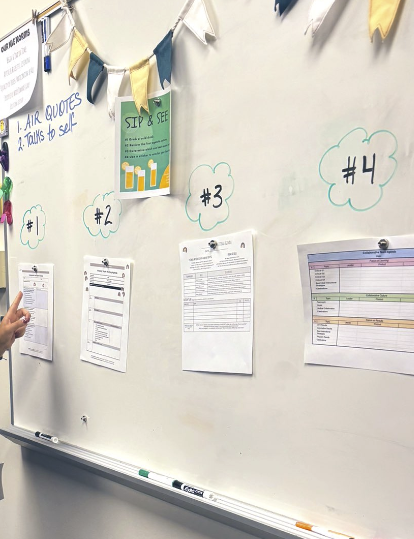
🥤 With a cold drink in hand, teachers take a look at PLC protocols and give feedback on the approaches that will shape team learning this year!
(Via P @MLEPrincipal)
🔎 When your staff looks at data about your school, do they surface the most important stories about student learning?
Explore data literacy tools from @NewLeadersOrg to guide your discussions this year.
https://t.co/KKZLKR0bso
As your staff connects for back-to-school professional learning, this reflection tool can help them turn ideas into action.
Get the template from educator @MzMcKeown here: https://t.co/id6KV242MG
Data meetings should feel personal — because they are.
They’re about real students with real lives. Every name on the list deserves our attention, our belief, and our best effort.
But just naming kids won’t move the needle.
And naming kids without naming actions? That just becomes an excuse.
Behind every data point is a child.
And behind every plan should be a team of adults committed to doing something about it.
Let’s make sure our data conversations don’t stop at who’s behind.
Let’s talk about what we’re going to do — and do it.
No blame. No excuses. Just next steps.