Most people still think Go is only for infrastructure.
• Go + Fiber → Blazing fast APIs
• Go + Gin → Lightweight backends
• Go + gRPC → High-performance services
• Go + PostgreSQL → Reliable data layer
• Go + Redis → Caching & rate limiting
• Go + Docker → Easy deploys
• Go + Kubernetes → Scale with confidence
Built for concurrency. Not for comfort.
i realized people think switching to rust automatically makes their app fast.
true in most cases but,
a database query that executes in 400ms is still 400ms even if you like write it in assembly.
you probably won't reach the point where you will need that level of optimisation
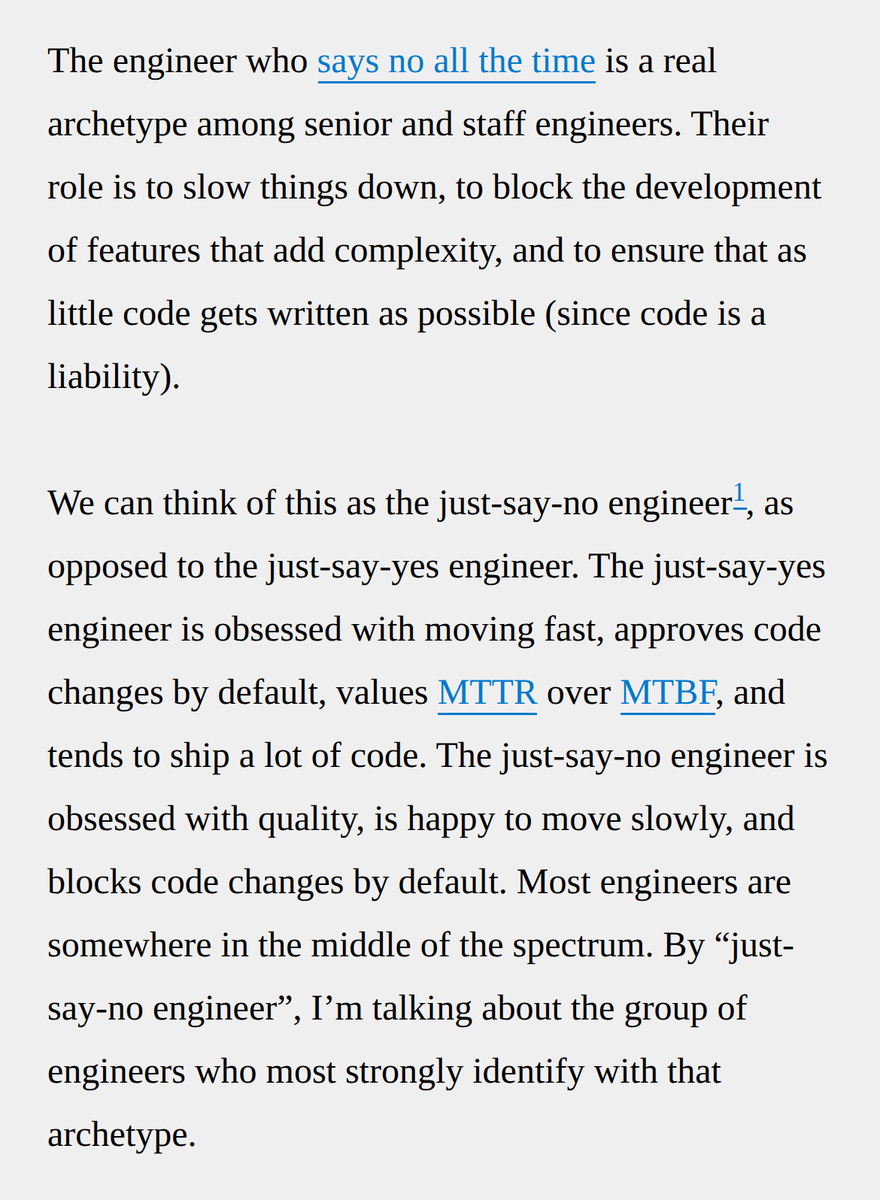
The engineer who says no all the time is a real archetype among senior and staff engineers. Their role is to slow things down, to block the development of features that add complexity, and to ensure that as little code gets written as possible (since code is a liability).
A lot of people are in my DM about knowing how to differentiate original from fake solar products.
So I will be discussing how to differentiate real from fake solar panels because that's another thing solar suppliers and installers do.
They can charge you for 550 or 600w meanwhile the panels they get you is 400w or less.
These panels are not sold the same and they don't do the same thing.
10 panels of 400watts is not same as 10 panels of 650watts
If you make that mistake, your system will start struggling and then you'd come and be complaining on twitter.
To be honest, knowing real panels and their real ratings is the easiest thing. You don't need any fancy gadget but your phone and the internet.
The first thing you have to do is buy only from the trusted the international brands. They are: Jinko, Longi, Trina, Canadian and JA
Neither is better than each other in my book. I use JA. My dad uses Jinko. I have friends that use Canadian. They are all good.
So when you're getting them or ordering them, ask your supplier to snap the serial number for you.
And you have to be careful, don't take the serial number on the sticker.
Every panel has a serial number embedded in the front, inside the glass. This is the original serial number!
Once you get this, simply type "Verification Jinko panels (or the brand you got) on Google and you'd be directed to the companies website.
If you put the serial numbers in, you'd be able to know if it's an authentic product and the real specs such as manufacturing date, power rating, grade and the likes.
However, don't make the mistake of testing the serial numbers in stickers because that can be easily changed.
That's it about knowing original panels.
You can go away now.
buffered vs unbuffered channels in go.
when creating a channel, we have two options. we can either give it a size or leave it unbuffered.
a buffered channel allows the sender to send values until the buffer is full. the sender doesn't have to wait for the receiver to receive each value immediately. it only blocks when there's no space left in the buffer.
an unbuffered channel, on the other hand, creates a synchronous interaction between the sender and receiver. the sender has to wait until the receiver is ready to receive the value.
Which Golang repository would be best for someone who has just learned Go, understands the basics, and now wants to dive deeper into backend development using Go?
A lot of developers are spending thousands of dollars learning skills that are already available for FREE.
Full-stack development, Python, machine learning, cybersecurity, cloud computing, and more.
There is an entire university-level computer science curriculum available on GitHub.
And you can follow it at your own pace.
https://t.co/SWINJk5waT
how to reset your life in 2 weeks (practically tried and tested)
1. if your sleep cycle is messed up, wake up at the same time every day. no matter what, let your body adjust.
2. don't touch your phone as soon as you wake up. get some sunlight, stretch, go for a walk ( optional ) and make your bed.
3. before sleeping, make a to-do list for the next day. stop wasting your mornings figuring out what to do.
4. clean your room, organize your desk and get rid of unnecessary stuff. a clean environment means fewer excuses.
5. start exercising. go to the gym, run, walk or do pushups. stop treating your body like a decorative object.
6. reduce your social media consumption. you don't have to quit it completely, just stop spending your entire day scrolling. everything is fine in moderation.
7. start reading every day. your attention span needs rehabilitation. and no, reading doesn't necessarily mean picking up some random self-improvement book. blogs, tech articles or literally anything that interests you works.
8. eat properly, drink enough water and stop surviving on caffeine and whatever you find in your kitchen. try to maintain a balanced diet with enough protein, carbs, fibre, vitamins and minerals.
9. dedicate at least 2 hours every day to learning something useful. consistency matters more than anything. if you're building something, sure, vibe code it, but also spend some time understanding how things actually work. explore new things that excite you, whether it's tech, a hobby or anything else.
10. stop comparing your progress with people on the internet. everyone's timeline is different, and half of them are just posting highlights. MOST IMPORTANTLY, people here on X are doing some crazy stuff, so take inspiration from them and work harder, but don't turn their progress into a reason to doubt yours.
give yourself 2 weeks. don't expect a completely new life, just build some discipline and get a little more control over your days.
and if nothing's working, just give up...