19 Ugandans have received kidneys from their relatives since 2023, and in under 20 attempts, we have crossed the Jordan; we can confidently say that, 'Ugandans are having transplant surgery, In Uganda, by Ugandan.'
You can take this statement to the bank and cash it.
Congratulations to The Ugandan team, Mulago @MulagoReferral Management, @MinofHealthUG Leadership, and the combined leadership of @mkainerugaba and @KagutaMuseveni .
I know why am choosing the persons to twit about, so convulse sparingly and stay fine.
UGANDA's Independence Came in September.
@Fireliglntfi , @ntvuganda , @ubctvuganda please come for the full story
The world map you've known all your life is wrong! Nearly every country at the UN voted to adopt a new map that shows a more accurate size of Africa after ~500 years of "symbolic minimization."
Only the US voted against it.
I explained why this is important on CNN
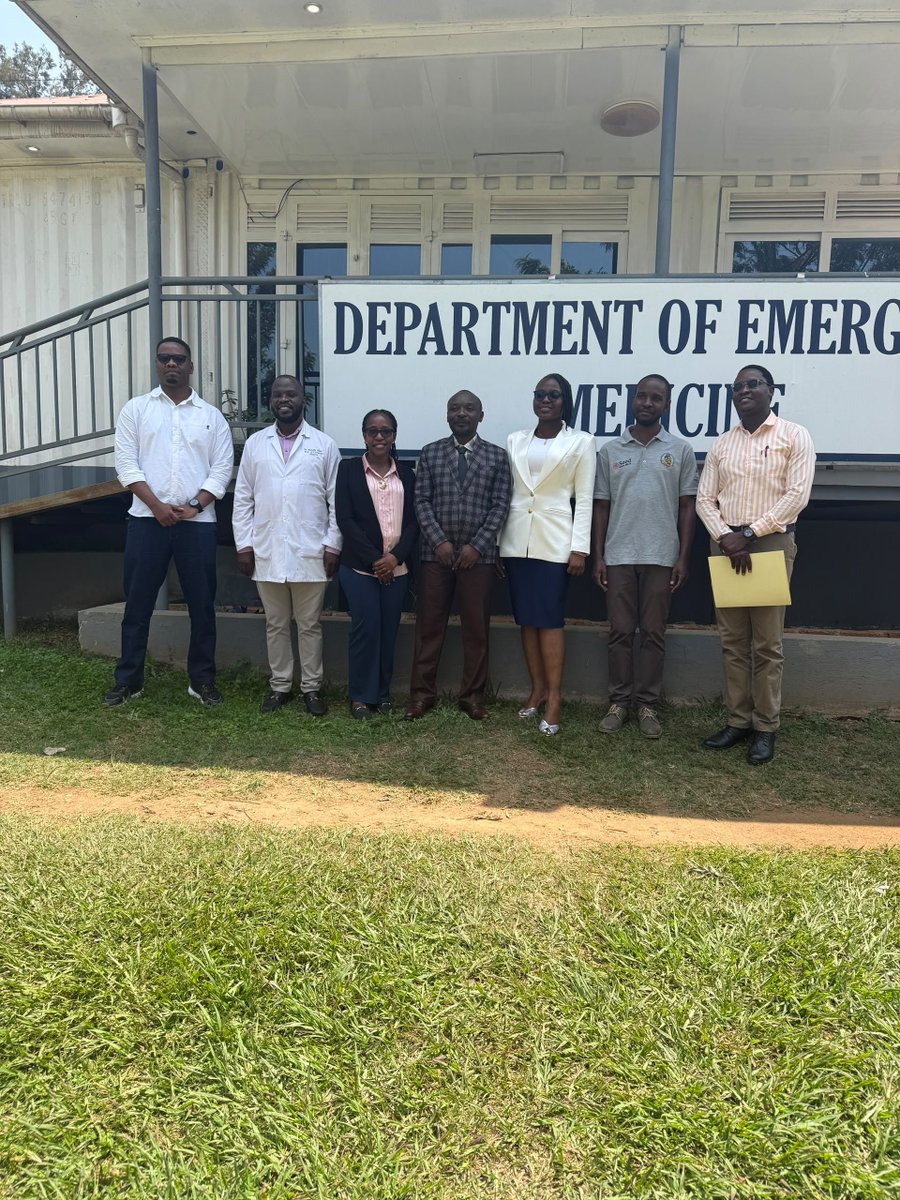
Happening now: An insightful discussion on the physiology, recognition and emergency management of Sympathetic Crashing Acute Pulmonary Edema (SCAPE). #MUSTGrandRounds#EmergencyMedicine
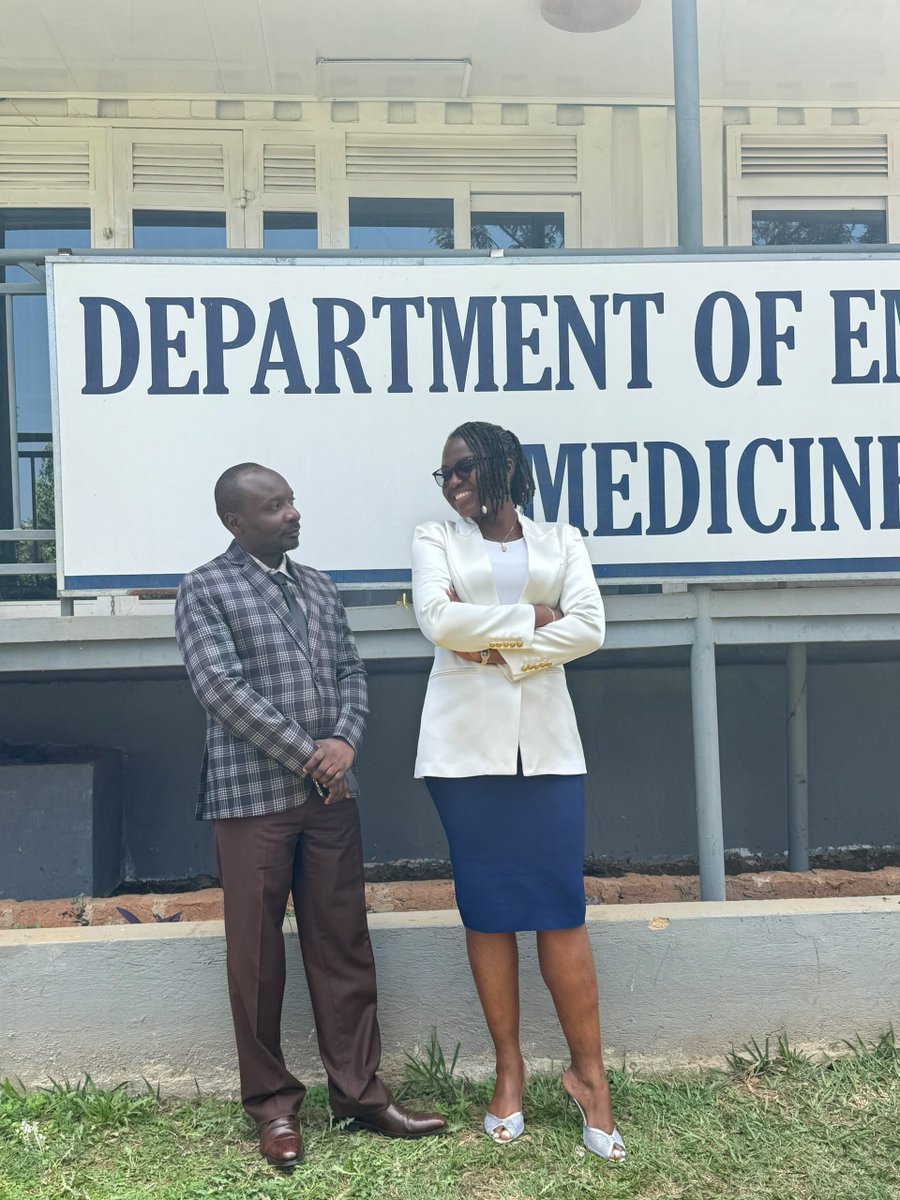
Welcoming our new first-year Emergency Medicine residents to MUST! 🩺✨
Our incoming residents kicked off their journey with orientation from senior residents & faculty. Exciting times ahead as we grow EM in Uganda!
#EmergencyMedicine#MbararaRRH#MUST_FOHS#ECAU#MOH#MUST_EMIG
Two successful dissertation defenses. Two future Emergency Physicians. One stronger future for emergency care. Congratulations to our residents on this well-earned achievement! 🎉 #EmergencyMedicine#MUSTEM
I think sermons and instructions telling Africans to "decolonize your minds!!" are moralistic, nd evangelical, and absolutely not helpful. At all. What Africans need to do is read, think and work. Not in order to decolonize, but to be a human being living in dignity. Screaming at people telling them to decolonize is confusing medicine for health. The point of taking medicine is to get well, not to take the medicine. Decolonization is the medicine, it is not human dignity, and human dignity is the goal.
And if I go by Kenya's example, anti-intellectualism is a big part of our colonial problem. People can't decolonize just by dancing and singing traditional songs. We must analyze, specialize and most of all, PRODUCE. Anything short of that will never arrive at decolonization.
Prosperity gospel and divine providence are myths, which are not the same thing as lies.
Myth is depoliticized speech that takes a political situation - your rent, joblessness, or debt & describes it as a spiritual matter.
You're not being exploited, you're just being tested
Wanjiru Njoya and Wandia Njoya (often styled as Dr. Wandia Njoya or Mwalimu Wandia) are sisters from the same Kenyan intellectual family. Their stark opposition on land (and broader cultural/political issues) stems from diverging intellectual journeys after shared early influences, amplified by their very different higher-education paths and professional environments.
Shared roots but early signs of divergence
Both grew up in Kenya in a household that valued books and ideas.. family shelves reportedly included Chinua Achebe, Martin Luther King Jr., Malcolm X, Frantz Fanon, and Paulo Freire. They both attended Kenyatta University for undergraduate studies (Wandia earned a B.Ed. in French there in 1994 and an MA in 2000). This common foundation exposed them to African literature, anti-colonial thought, and social critique. Yet even early on, subtle differences appeared. Wandia has recounted in her writing how her younger sister (Wanjiru) once gave her pragmatic advice during university about not regretting honest academic effort, hinting at contrasting temperaments from a young age.
Wandia Njoya’s path: Decolonial, communal, and Kenya-centered critique
Wandia pursued advanced studies abroad but stayed rooted in Kenyan and African intellectual traditions:
- She earned a PhD in French from Pennsylvania State University (2007), with a dissertation on African migration narratives.
- She encountered “brute racism” in the US and France, which sharpened her engagement with postcolonial thinkers.
- She returned to Kenya, becoming an associate professor of literature and former head of the Department of Language and Performing Arts at Daystar University. Her work focuses on education policy, decolonization, and the socio-political realities of ordinary Kenyans.
Her views on land emphasize it as communal, sacred, or “God’s work, not ours” (drawing on biblical ideas alongside anti-commodification critiques)—not a permanent private commodity to be bought/sold without regard for historical dispossession or collective stewardship. On culture, she critiques Westernization, neoliberalism, and elite capture, advocating for critical consciousness, indigenous knowledge, and resistance to systems that alienate people from their heritage. Her popular blog (https://t.co/AoJ7sYO79T) and public commentary reflect this consistent anti-imperialist, pro-social-justice stance.
Wanjiru Njoya’s path: Libertarian, individualist, and Western-influenced absolutism
Wanjiru took a markedly different trajectory:
- She earned her PhD in Law from the University of Cambridge (as a Rhodes Scholar at St. Edmund’s College).
- She built an academic career teaching law at elite Western institutions (University of Oxford, LSE, University of Exeter, Queen’s University in Canada).
- She is now the Walter E. Williams Research Fellow at the Mises Institute (a libertarian/Austrian economics think tank in the US) and identifies explicitly as a “property rights absolutist.”
Her scholarship defends individual liberty, economic freedom, and private property as foundational—arguing that historical claims (e.g., to “stolen” land) are often settled by effective settlement, homesteading, and productive use rather than perpetual redistribution. She has critiqued policies like Zimbabwe-style land reform as inefficient and has spoken against DEI initiatives, racial grievance narratives, and state overreach in markets. On culture, she leans toward universalist classical liberalism: individual rights over group-based or traditional communal claims.
Why the total opposition?
- Educational and geographic fork: Both left Kenya for doctoral work, but in contrasting intellectual ecosystems. Wandia’s US/France experience reinforced critical theory, postcolonialism, and race/colonialism analysis. Wanjiru’s Cambridge/UK path (and later Mises alignment) immersed her in law-and-economics, libertarian thought, and property-rights theory.
- Professional milieus: Wandia built her career in Kenyan academia and public commentary, engaging local issues like education and decolonization. Wanjiru spent decades in Western universities and think tanks, engaging debates on liberty, regulation, and historical injustice through a free-market lens.
- Ideological self-selection: The same radical family library that radicalized Wandia toward Fanon-style critique appears to have prompted Wanjiru to reject collectivist or grievance-based frameworks in favor of individualism and formal equality under law.
- Public personas: Wandia is the “Mwalimu” (teacher) of Kenyan socio-political critique, often anti-capitalist on land and culture. Wanjiru is the property-rights defender who sees markets and private ownership as the path to justice and prosperity. X users frequently note the irony of the “Cramp twins” dynamic or call them polar opposites within one family.
In short, they started from a similar Kenyan intellectual home but chose paths that led them to opposite poles of the land-and-culture debate: one prioritizing communal/historical redress and decolonial reclamation, the other prioritizing absolute individual property rights and market-driven settlement. Sibling differences like this are common in families with strong ideas.. exposure abroad simply crystallized them into public, uncompromising positions. Their clash mirrors broader Kenyan (and global) tensions over land, colonialism’s legacy, and whether culture should be defended as collective heritage or navigated through individual liberty.
There are so many girls & young women without access to sanitary pads in Uganda, I think that’s something that you should be crowd funding for….not a talk to teach them how to be wives.
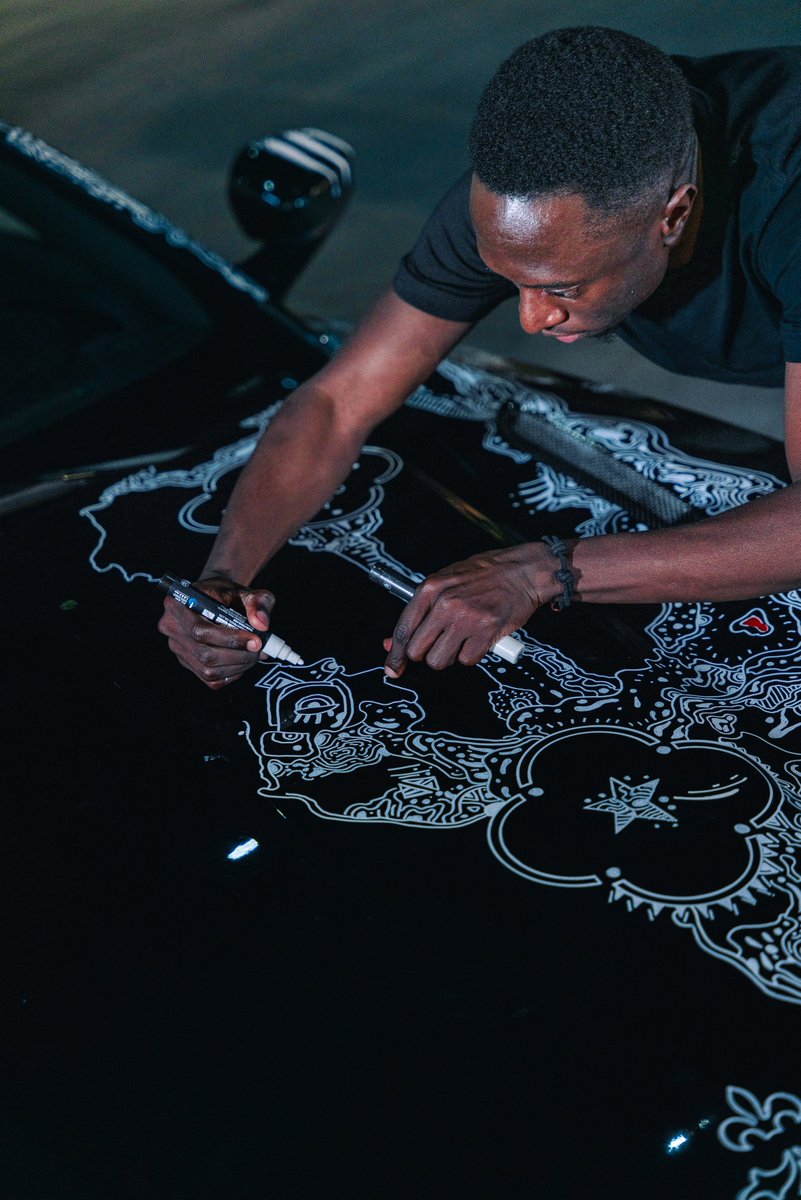
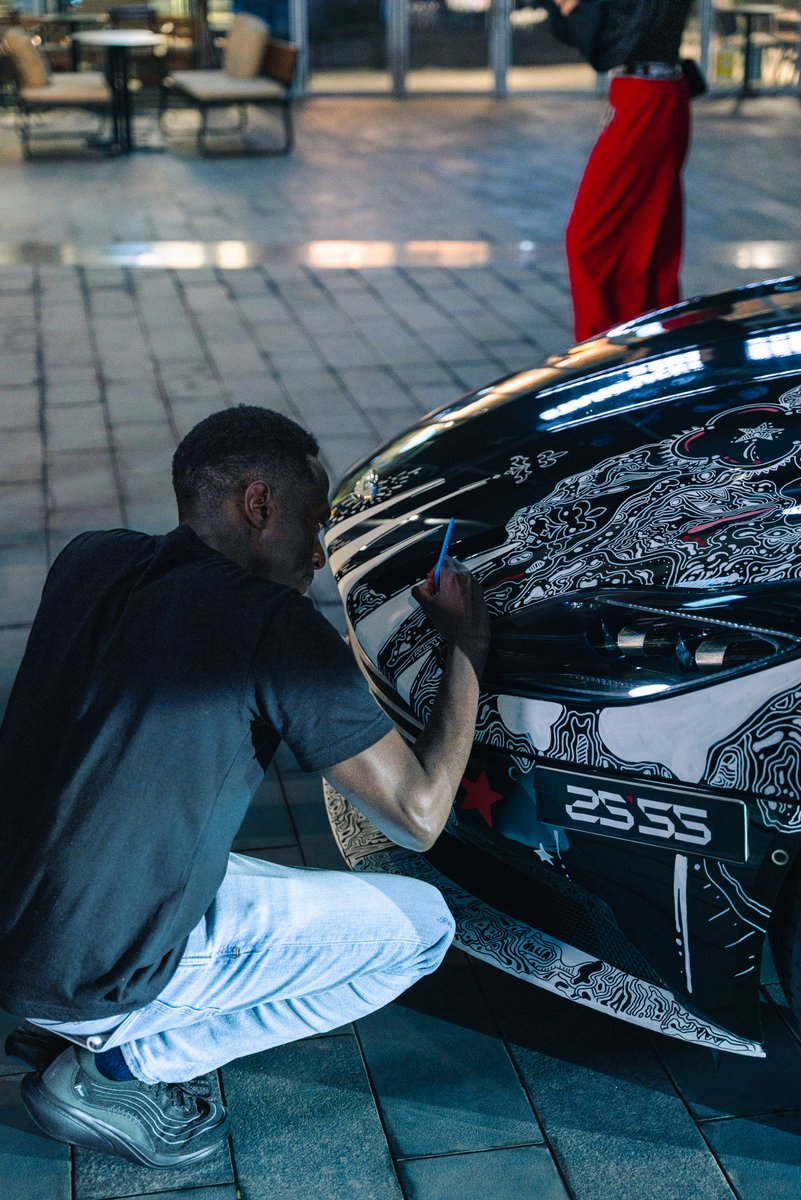
Being the first Ugandan artist to paint live on a supercar in Dubai , was a milestone. Doing it at the Dubai Design District, a hub of creativity, made it even more special as it was the first time a supercar was ever being drawn on there too
Traditions are powerful, but are they all worth keeping? This week on #PPJ-A, we're challenging the old ways.
Joel discusses the continued exclusion of African traditional religions from government spaces. South Africa has made room for indigenous faiths. Why are other countries still lagging?
Are we ready to stop treating our indigenous beliefs as second-class and finally make room for everyone?
Tune in: https://t.co/EvdRqaRkIc
#Podcast #WhatTheTheory
TUVUDDE WALA!
In 1927, Uganda's first Makerere-trained medical practitioners walked out of lecture halls, not with stethoscopes dangling but with colonial job titles longer than their pay slips -Senior Native Medical Assistants (SNMA). A mouthful, yes, but it came with a respectable salary of Uganda Shillings 130 per month. I am not sure if it could afford a Rolex and a soda today, with change for airtime.
The first three heroes of the Ugandan medical frontier - Yakobo Baziwane, Dionysius Bamundaga, and Antonio Bamugye - (where did they get those names from?) weren’t just trailblazers; they were underpaid icons of resilience. For context, their Indian counterparts earned 2-3 times more, and European Medical Officers made six times as much - without the “Native” part on their titles.
But tuvudde wala, indeed.
Fast forward nearly a century later, and today’s Makerere-trained medical specialists operate MRI machines, may soon perform laparoscopic surgeries -if they aren't already, and file complaints on X about unpaid internships with hashtags like #UgandaHealthCrisis. We’ve got neurosurgeons doing TikTok dance challenges to raise awareness on epilepsy, and medical interns who can argue down an MP on national television using WHO guidelines and memes. That’s progress.
From colonial clinics with leaky roofs to Mulago Super Specialized Hospital with elevators that (sometimes) work, Uganda has traveled a journey worthy of a Netflix mini-series.
Yes, the path has had its bumps-brain drain, strikes, and the occasional health minister on a donor-funded world tour - but the journey from SNMA to MSc, MBChB, MPH, PhD is not to be sneezed at (unless it’s hay fever, then please see a professional).
Yakobo, Dionysius, and Antonio would be proud. Or at least mildly impressed.
In Swa they say "Tumetoka mbali sana". In Luganda "Tuvudde wala". (We have come from far).
We just need to finish the journey with medicine in stock.
#UgandanLegends #EastAfrican