The absence of evidence is not the evidence of absence. There are known unknowns and there are unknown unknowns.Things which you don’t know that you don’t know.
Africa is building more ways to move money across borders without depending on a single traditional financial rail.
✅The Angolan kwanza became the second settlement currency in the SADC-RTGS system, after the South African Rand.
✅Standard Bank Group joined China’s Cross-Border Interbank Payment System (CIPS) as a direct participant.
✅Angola’s second-largest bank, BFA, is preparing to join China’s CIPS payment system to facilitate direct yuan settlement.
✅Nigerian exchange Quidax announced on July 28 that its stablecoin infrastructure had expanded to more than 21 countries and 14 currencies.
That means there are several different financial rails developing across Africa at the same time:
1️⃣SADC-RTGS: For regional currencies
2️⃣CIPS: for yuan-based settlement
3️⃣Stablecoins: for digital, 24/7 settlement
For years, moving money between African countries often meant relying on correspondent banks, multiple FX conversions and, frequently, the US dollar sitting somewhere in the middle.
However,
it’s clear to me that the landscape is changing. Africa isn’t necessarily trying to replace the dollar.
It’s building optionality for itself, and improving its own financial plumbing.
The central banks of South Africa and Angola on Monday announced that the kwanza would join the rand as a settlement currency in the Southern African Development Community (Sadc) real-time gross settlement (RTGS) system, in a move https://t.co/MKKplbz0WY
Africa’s largest economy takes major step towards local-currency trade as Angola’s🇦🇴 kwanza joins regional payment system
South Africa🇿🇦 has taken a major step towards expanding local-currency trade in Southern Africa after the Angolan kwanza became the second settlement currency on a regional payment system that had operated exclusively in rand for 13 years.
South African Reserve Bank Governor Lesetja Kganyago said on Monday that the Angolan kwanza has become the first new settlement currency added to the Southern African regional payment system since its 2013 launch, marking a milestone in the expansion of the platform beyond the South African rand.
Read the full article here: https://t.co/h4HcDfEdbR
#CNBCAfrica #DSTV410
The Angolan 🇦🇴 kwanza has been added to the Southern African Development Community (SADC) regional cross border payment system, becoming the first new settlement currency introduced since the platform launched in 2013.
The system previously settled transactions only in the South African 🇿🇦 rand.
Businesses can now settle eligible cross border payments directly in kwanza, reducing the need for multiple foreign exchange conversions.
The move strengthens regional financial integration and supports greater use of African currencies in trade.
The announcement was made by the South African Reserve Bank and Banco Nacional de Angola.
The South African Reserve Bank has announced that the Angolan kwanza will be added to the SADC regional payment system, making it the first new settlement currency to join the platform since it was introduced in 2013.
This move means businesses will be able to settle qualifying cross-border transactions directly in Angola’s local currency, cutting out some of the foreign exchange conversions that were previously required.
It’s a significant step towards strengthening regional financial integration and encouraging greater use of African currencies in trade between SADC member countries.
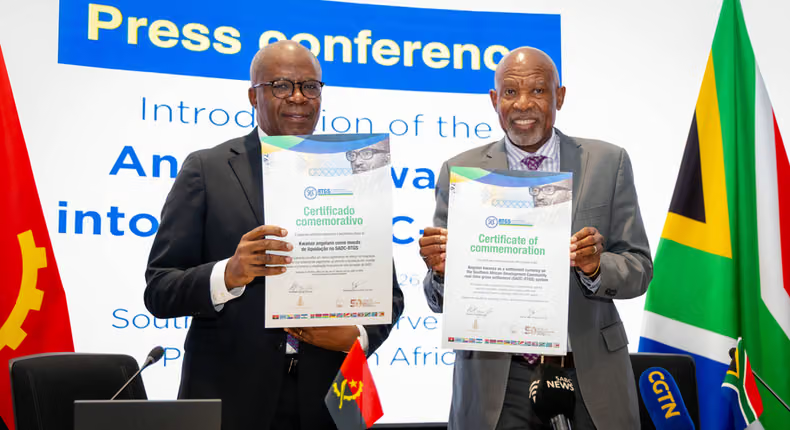
[IN PICTURES] A new chapter for SADC regional payments: The Angolan kwanza has joined the SADC-RTGS system as a settlement currency. Governor Lesetja Kganyago and Manuel Tiago Dias, Governor of the Banco Nacional de Angola, made the announcement today.
This means:
✅ Eligible participants transacting in kwanza can settle directly in the currency.
✅ There is less need for multiple currency conversions, lowering transaction costs
✅Cross-border payments become simpler, safer and more efficient.
✅ Regional trade is strengthened.
The SADC-RTGS system is operated by the South African Reserve Bank on behalf of participating SADC central banks and processes approximately R250.7 billion worth of transactions every month. Adding more currencies to the system will encourage greater use of regional currencies and deepen financial integration across SADC.
For more information contact: [email protected]
#SADC #SARB #Payments #RegionalTrade #FinancialIntegration
[WATCH] Governor Lesetja Kganyago announced the introduction of the Angolan kwanza as a settlement currency in the SADC-RTGS system. The Angolan kwanza is the second settlement currency to be introduced in the SADC-RTGS system, which has settled transactions exclusively in South African rand since its inception in 2013.
This means participants transacting in kwanza can settle directly in the currency. Governor Kganyago says the kwanza’s inclusion supports regional payments modernisation efforts and aligns with the Group of Twenty’s cross-border payment goals of improving efficiency in cross-border transactions.
#SADC #SARB #Payments #RegionalTrade #FinancialIntegration
Global imbalances are widening again, raising risks for economic growth and financial stability. Tariffs and narrow industrial policies rarely help, as our latest blog details. Rebalancing starts at home, with sound macroeconomic policies.
https://t.co/UfYUGEjUVy
Unemployment in South Africa exceeds 30% overall and is close to 60% among young people. Removing business constraints, including licensing and permitting burdens, can help firms grow and hire. Read our Country Focus blog: https://t.co/GC7jpoZlke
Amid global turbulence, South Africa demonstrated remarkable economic resilience. South Africa's new 3% inflation target is a key policy milestone. Prudent fiscal policies and structural reforms could boost real output by up to 9% over the medium term. https://t.co/zLZPoijnCN
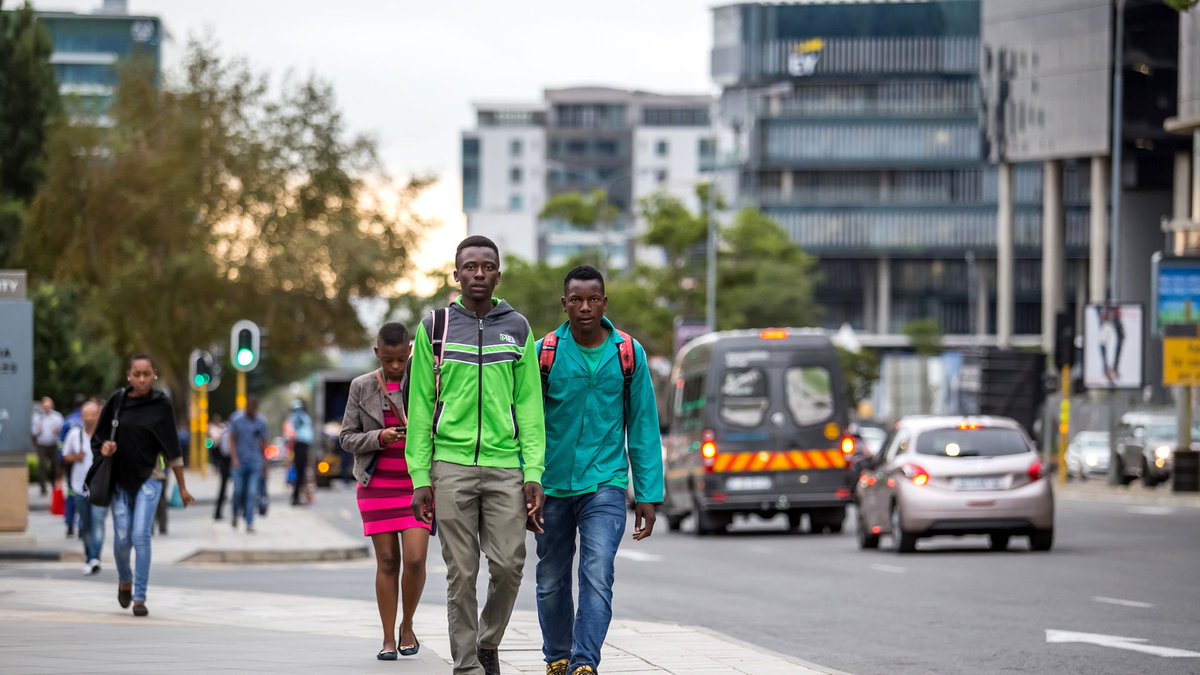
[ICYMI] The South African Reserve Bank (SARB) has published a consultation paper on discontinuing the prime lending rate and designating the SARB policy rate, commonly known as the repurchase (repo) rate, as a replacement rate. This will ensure a clearer link between monetary policy and lending rates, and improve public understanding of loan pricing mechanisms.
All stakeholders are invited to provide comments and suggestions on the proposed cessation of the prime lending rate by 20 March 2026.
Read the paper here: https://t.co/Js9IuatoGY
Please post for me, "our daughter was hijacked and kidnapped in Pretoria East by a black male yesterday. Now the guy his refusing to release her, He's demanding R200k for her return."
The last location is Mamelodi East
[ICYMI] In the lead-up to the G20 Leaders’ Summit, the South African Reserve Bank and the Bank for International Settlements Committee on Payments and Market Infrastructures hosted the Advancing Cross-Border Payments Conference.
Today, Governor Lesetja Kganyago delivered the keynote address, in which he noted that South Africa’s G20 Presidency has placed cross-border payments high on the Finance Track agenda. “Cross-border payments are the lifeblood of international trade, investment, capital and remittance flows and economic integration,” he said.
Read the Governor’s full address and all the conference papers here: https://t.co/X4EbkD2pmd
#G20South Africa #Rekaofela




![SAReserveBank's tweet photo. [IN PICTURES] A new chapter for SADC regional payments: The Angolan kwanza has joined the SADC-RTGS system as a settlement currency. Governor Lesetja Kganyago and Manuel Tiago Dias, Governor of the Banco Nacional de Angola, made the announcement today.
This means:
✅ Eligible participants transacting in kwanza can settle directly in the currency.
✅ There is less need for multiple currency conversions, lowering transaction costs
✅Cross-border payments become simpler, safer and more efficient.
✅ Regional trade is strengthened.
The SADC-RTGS system is operated by the South African Reserve Bank on behalf of participating SADC central banks and processes approximately R250.7 billion worth of transactions every month. Adding more currencies to the system will encourage greater use of regional currencies and deepen financial integration across SADC.
For more information contact: SADC-RTGS-CSC@resbank.co.za
#SADC #SARB #Payments #RegionalTrade #FinancialIntegration](https://pbs.twimg.com/media/HOPDBw1XIAAYMTb.jpg)
![SAReserveBank's tweet photo. [IN PICTURES] A new chapter for SADC regional payments: The Angolan kwanza has joined the SADC-RTGS system as a settlement currency. Governor Lesetja Kganyago and Manuel Tiago Dias, Governor of the Banco Nacional de Angola, made the announcement today.
This means:
✅ Eligible participants transacting in kwanza can settle directly in the currency.
✅ There is less need for multiple currency conversions, lowering transaction costs
✅Cross-border payments become simpler, safer and more efficient.
✅ Regional trade is strengthened.
The SADC-RTGS system is operated by the South African Reserve Bank on behalf of participating SADC central banks and processes approximately R250.7 billion worth of transactions every month. Adding more currencies to the system will encourage greater use of regional currencies and deepen financial integration across SADC.
For more information contact: SADC-RTGS-CSC@resbank.co.za
#SADC #SARB #Payments #RegionalTrade #FinancialIntegration](https://pbs.twimg.com/media/HOPDBwlXsAAQFXJ.jpg)


![SAReserveBank's tweet photo. [ICYMI] In the lead-up to the G20 Leaders’ Summit, the South African Reserve Bank and the Bank for International Settlements Committee on Payments and Market Infrastructures hosted the Advancing Cross-Border Payments Conference.
Today, Governor Lesetja Kganyago delivered the keynote address, in which he noted that South Africa’s G20 Presidency has placed cross-border payments high on the Finance Track agenda. “Cross-border payments are the lifeblood of international trade, investment, capital and remittance flows and economic integration,” he said.
Read the Governor’s full address and all the conference papers here: https://t.co/X4EbkD2pmd
#G20South Africa #Rekaofela](https://pbs.twimg.com/media/G389VbiWMAAhPeW.jpg)
![SAReserveBank's tweet photo. [ICYMI] In the lead-up to the G20 Leaders’ Summit, the South African Reserve Bank and the Bank for International Settlements Committee on Payments and Market Infrastructures hosted the Advancing Cross-Border Payments Conference.
Today, Governor Lesetja Kganyago delivered the keynote address, in which he noted that South Africa’s G20 Presidency has placed cross-border payments high on the Finance Track agenda. “Cross-border payments are the lifeblood of international trade, investment, capital and remittance flows and economic integration,” he said.
Read the Governor’s full address and all the conference papers here: https://t.co/X4EbkD2pmd
#G20South Africa #Rekaofela](https://pbs.twimg.com/media/G389VbeXEAA7X64.jpg)
![SAReserveBank's tweet photo. [ICYMI] In the lead-up to the G20 Leaders’ Summit, the South African Reserve Bank and the Bank for International Settlements Committee on Payments and Market Infrastructures hosted the Advancing Cross-Border Payments Conference.
Today, Governor Lesetja Kganyago delivered the keynote address, in which he noted that South Africa’s G20 Presidency has placed cross-border payments high on the Finance Track agenda. “Cross-border payments are the lifeblood of international trade, investment, capital and remittance flows and economic integration,” he said.
Read the Governor’s full address and all the conference papers here: https://t.co/X4EbkD2pmd
#G20South Africa #Rekaofela](https://pbs.twimg.com/media/G389VbXWQAAl4ZF.jpg)



![SAReserveBank's tweet photo. [IN PICTURES] A new chapter for SADC regional payments: The Angolan kwanza has joined the SADC-RTGS system as a settlement currency. Governor Lesetja Kganyago and Manuel Tiago Dias, Governor of the Banco Nacional de Angola, made the announcement today.
This means:
✅ Eligible participants transacting in kwanza can settle directly in the currency.
✅ There is less need for multiple currency conversions, lowering transaction costs
✅Cross-border payments become simpler, safer and more efficient.
✅ Regional trade is strengthened.
The SADC-RTGS system is operated by the South African Reserve Bank on behalf of participating SADC central banks and processes approximately R250.7 billion worth of transactions every month. Adding more currencies to the system will encourage greater use of regional currencies and deepen financial integration across SADC.
For more information contact: SADC-RTGS-CSC@resbank.co.za
#SADC #SARB #Payments #RegionalTrade #FinancialIntegration](https://pbs.twimg.com/media/HOPDBw6WkAAu7Au.jpg)



![SAReserveBank's tweet photo. [ICYMI] The South African Reserve Bank (SARB) has published a consultation paper on discontinuing the prime lending rate and designating the SARB policy rate, commonly known as the repurchase (repo) rate, as a replacement rate. This will ensure a clearer link between monetary policy and lending rates, and improve public understanding of loan pricing mechanisms.
All stakeholders are invited to provide comments and suggestions on the proposed cessation of the prime lending rate by 20 March 2026.
Read the paper here: https://t.co/Js9IuatoGY](https://pbs.twimg.com/media/HBbNpr0XkAEcH-x.png)
![SAReserveBank's tweet photo. [ICYMI] In the lead-up to the G20 Leaders’ Summit, the South African Reserve Bank and the Bank for International Settlements Committee on Payments and Market Infrastructures hosted the Advancing Cross-Border Payments Conference.
Today, Governor Lesetja Kganyago delivered the keynote address, in which he noted that South Africa’s G20 Presidency has placed cross-border payments high on the Finance Track agenda. “Cross-border payments are the lifeblood of international trade, investment, capital and remittance flows and economic integration,” he said.
Read the Governor’s full address and all the conference papers here: https://t.co/X4EbkD2pmd
#G20South Africa #Rekaofela](https://pbs.twimg.com/media/G389VbmWsAAVW6r.jpg)





