@billions_ntwk scheduling TGE for Q1 shows they’re focused on infrastructure.
By prioritizing identity as a trust layer for humans and AI, they ensure integrations and real usage precede financialization
So At token lauch, identity will already be embedded, proving serious intent
Cheaper infrastructure means more diverse operators can join the network profitably. As onchain activity grows, data acceleration layers like this won’t be optional (they’ll be core infrastructure)
Blockchain scaling isn’t just about faster consensus, it’s about moving data smarter. The hidden bottleneck? Bandwidth. Without solving it, true decentralization stays out of reach (Thread)
@get_optimum
Optimum tackles this with RLNC (instead of blasting raw blocks across the network, nodes share lean encoded packets). Less bandwidth, more resilience, lower costs for validators everywhere
Collaboration across industries is accelerating breakthroughs. What once felt futuristic is already being built today. Events like this prove the next generation of tech isn’t far off (it’s happening in front of us)
Robotics, AI and blockchain are no longer separate worlds. At NY Tech Week, the PrismaX community showed how these forces are converging to shape the next wave of innovation. The future of physical AI is unfolding now (Thread)
@PrismaXai
Smarter robots aren’t just about advanced AI. They rely on strong infrastructure, clean data and human-guided systems to thrive in real-world environments. Progress is as much about foundations as intelligence
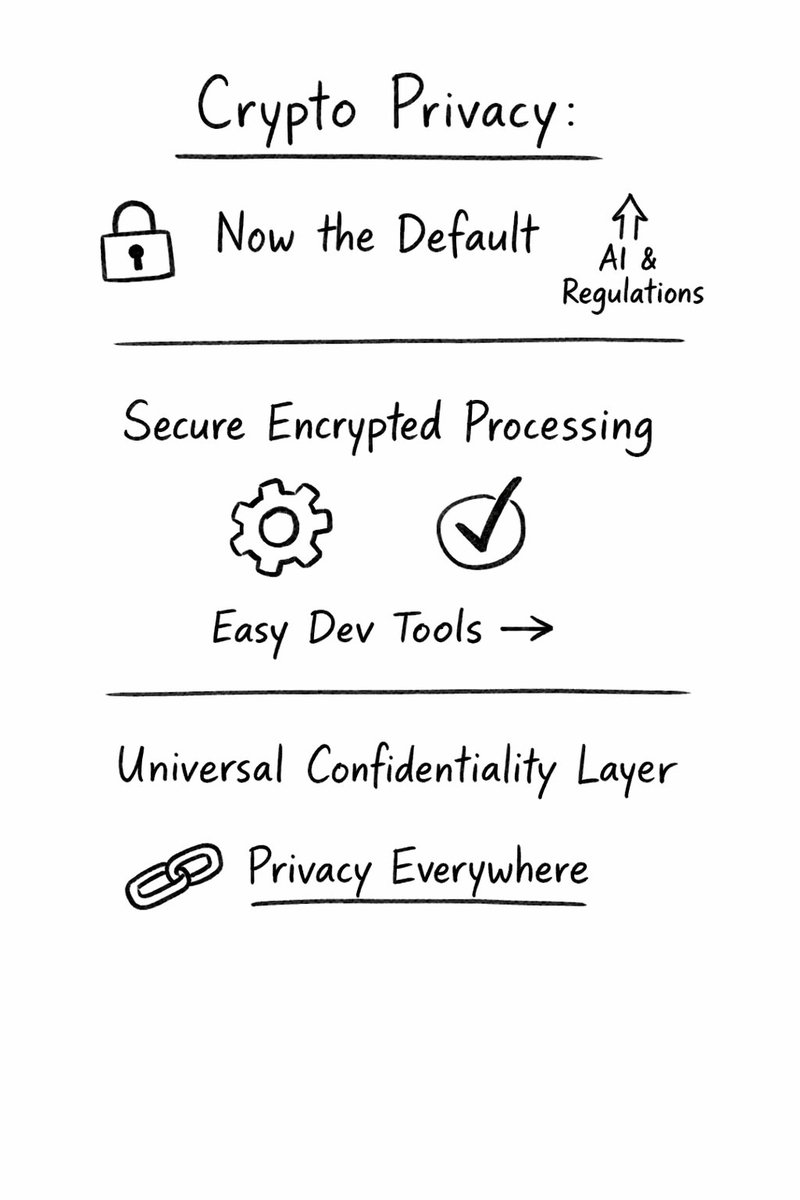
Fluton’s vision as a Universal Confidentiality Engine fits perfectly here. As users move across chains, privacy must move with them. The next era of crypto isn’t about adding privacy, it’s built on it
Privacy in crypto is no longer a side feature, it’s becoming the backbone. With AI growth, tighter rules, and rising data awareness, users now expect confidentiality as the default, not the exception (Thread)
@FlutonIO
Advances in confidential computing let systems process encrypted data securely while still proving trust. Combined with better SDKs and AI tools, developers can now build privacy-first apps without needing deep cryptography skills
The result gives a leaner, faster, more resilient blockchain backbone. Optimum is turning network coding theory into real world acceleration for global decentralized systems
Blockchains are fast evolving, but data still crawls through outdated pipes. Optimum is introducing a “memory layer”, a fresh approach to how information moves across decentralized networks. (Thread)
@get_optimum
Instead of shipping bulky blocks and attestations, Optimum uses RLNC to break data into smart fragments. These pieces mix, spread, and reassemble seamlessly (cutting duplication, slashing latency, and resisting packet loss)
That’s why I’m obsessed with clean sessions. Reliability checks, accurate queues, and consistent operator flow aren’t optional, they’re the shield against bad data.
Clean inputs gives smarter robots
I’ve learned the hard way that one sloppy teleop session can ruin everything. A shaky hand, laggy network, or random obstacle, and suddenly the robot’s movements look chaotic instead of precise (Thread)
@PrismaXai
The danger isn’t just the messy run. It’s that the bad data gets logged. Feed that into training, and the AI starts copying mistakes instead of mastering the task. Not every “completed” session deserves to be learned from
Submission → routing → execution → settlement. No exposed strategies, no public flows, no intent revealed until settlement. Privacy without anonymity, closer to how finance truly operates
Most financial systems leak value the moment intent is visible. Strategy exposure happens before execution even begins. What if coordination could stay private, yet still verifiable?
(Thread)
@FlutonIO
Fluton is building a new model (encrypted intents, encrypted routing, and confidential execution powered by FHE). Not just hidden balances, but protected interaction across the full lifecycle