«Країні X не слід дозволити вступити до НАТО. Схід країни X контролюють підтримувані Росією сили. Приєднання країни X до НАТО було б провокаційним для Росії. Країна X нещодавно виникла як демократія».
Країна X – це, звичайно, Німеччина в 1955 році, коли вона вступила в НАТО.
“Country X should not be allowed to join NATO. The east of Country X is controlled by Russia-backed forces. Having Country X in NATO would be provocative to Russia. Country X only recently emerged as a democracy.”
Country X is of course Germany in 1955 – when it joined NATO.
Kyiv is under heavy bombardment as I write this. I keep getting updates from a journalist group in Kyiv that I belong to on X.
Sho Kyiv, a Telegram channel, just posted a video of the world famous Kyiv Pechersk Lavra get hit by Russian missiles or drones.
Putin is evil.
Kyiv is under heavy bombardment as I write this. I keep getting updates from a journalist group in Kyiv that I belong to on X.
Sho Kyiv, a Telegram channel, just posted a video of the world famous Kyiv Pechersk Lavra get hit by Russian missiles or drones.
Putin is evil.
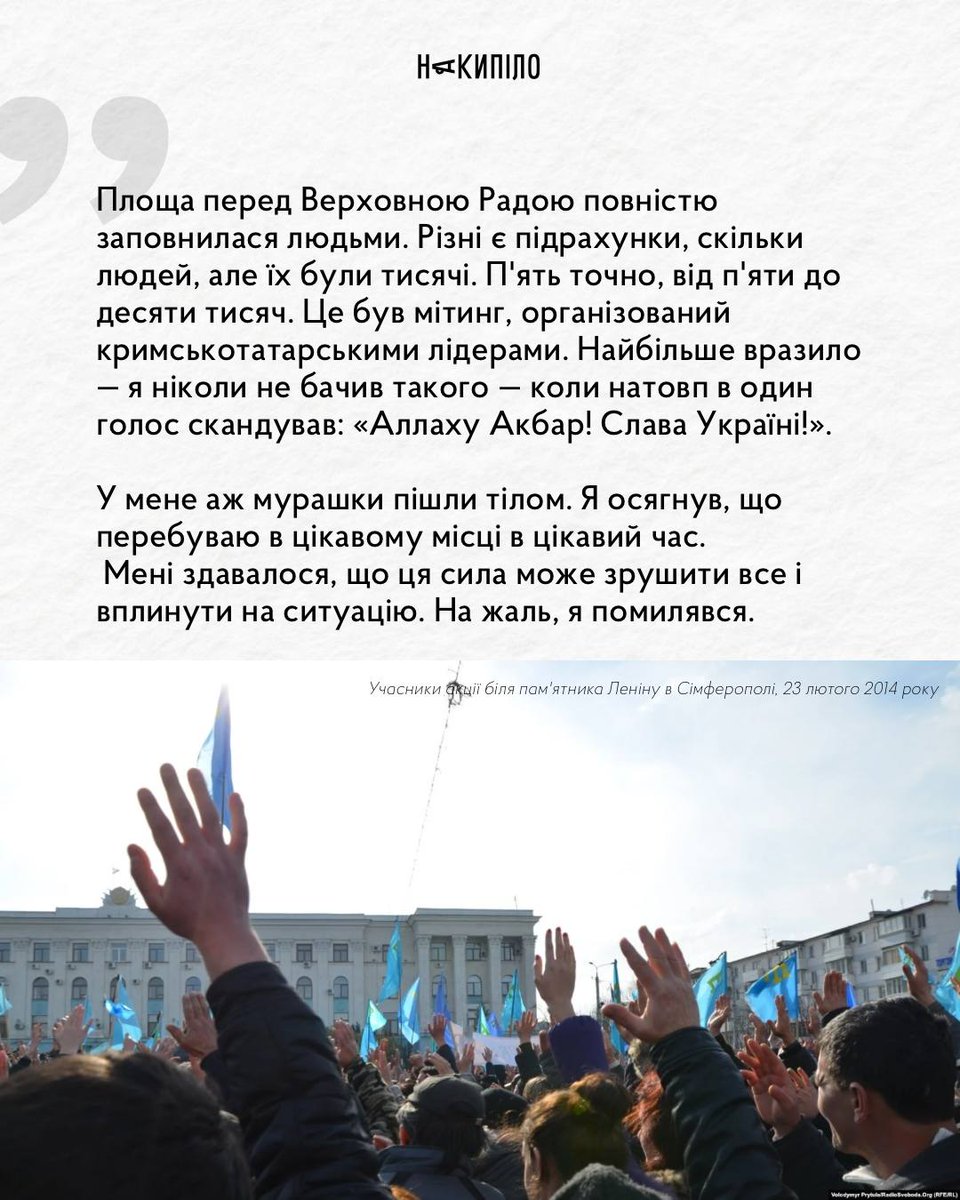
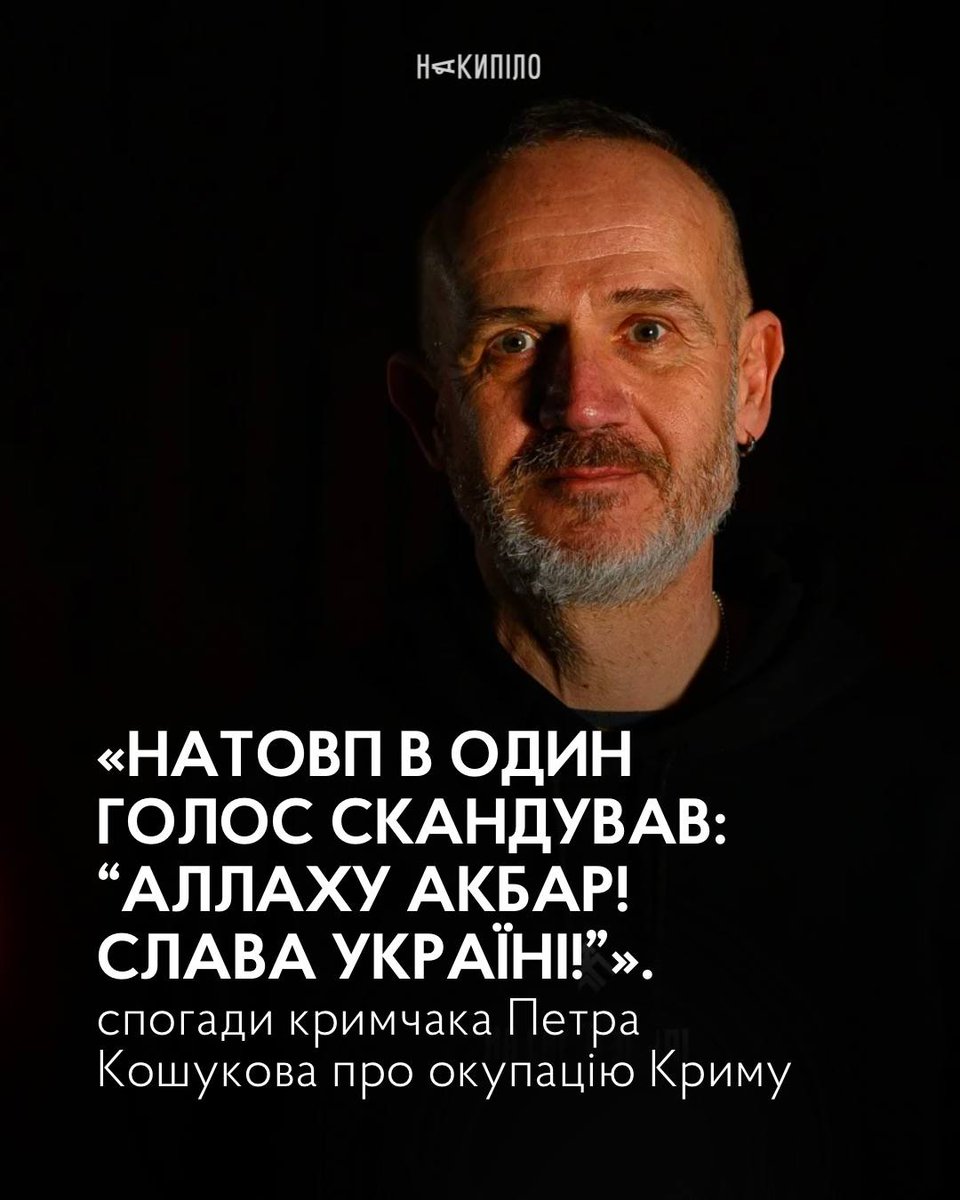
«Мене тримає в армії мрія зайти в Крим у військовій формі», — військовослужбовець 13-ї бригади НГУ «Хартія» Петро Кошуков.
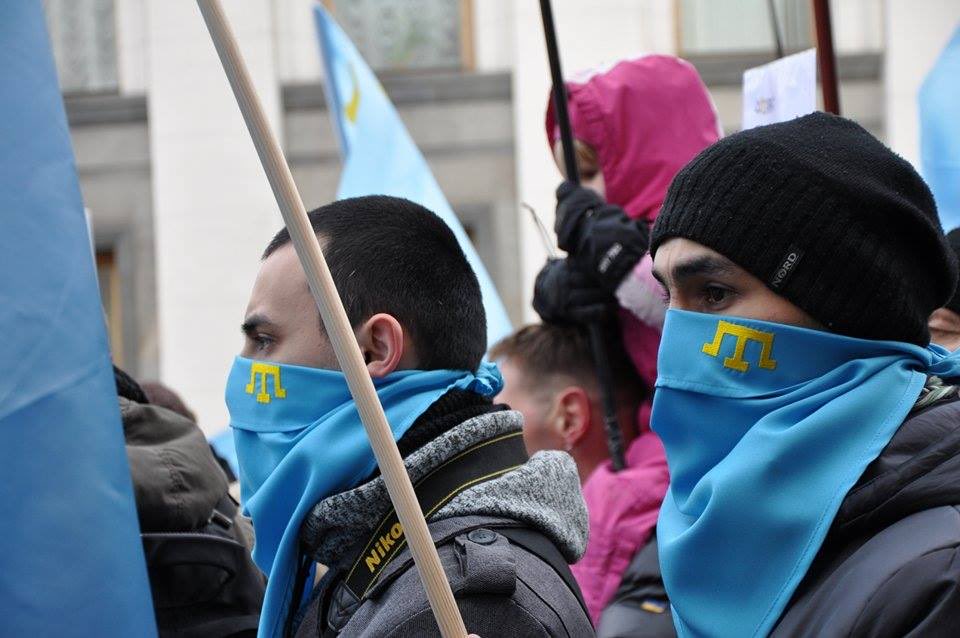
Кримчак за походженням, у лютому 2014 року Петро опинився у вирі подій на півострові.
https://t.co/d69BjvuFCZ
“1,500,000 about which a huge question mark can be placed.”
— Russian military expert Maksim Klimov pretends to wonder what happened to 1.5 million Russian soldiers.
Steve Witkoff ran away when I confronted him about his financial ties to Russia.
His real estate company has been bankrolled directly by a former advisor to Vladimir Putin's sovereign wealth fund.
He’s been making pro russia statements for months.
Kupiansk update 🇺🇦
13th Brigade Khartia of National Guard of Ukraine continues to tighten the grip around Kupiansk.
According to Chief Sergeant “Ayaccio” of the brigade @khartiia_eng:
👉 Enemy forces are being destroyed on the approaches and in the northern part of the city
👉 Several nearby settlements and forest areas have been liberated
👉 Around 1,000 russian troops eliminated during the operation
👉 Approximately 200 enemy soldiers remain trapped inside the city — their numbers are shrinking daily
👉 A pipeline used by russia to move reinforcements has been cut off and placed under Ukrainian fire control
The mission is clear: block the advance, isolate the enemy, and destroy them before they reach Kupiansk.
🇺🇦Ukraine’s forces are not just holding the line — they are systematically dismantling russian tactics and defending what is theirs.
#Kupiansk #UkraineDefends #StandWithUkraine #KhartiaBrigade #FrontlineUpdate #StopRussianAggression #DefendingOurHome #UkraineWar
🇺🇸🇺🇦He came to Ukraine for 6 months. A russian soldier ripping down a flag made him stay forever.🧵
1/6
Michael “Tex” — a 57-year-old U.S. Army veteran, two-time Purple Heart and two-time Bronze Star recipient — spent more than 20 years serving America.
Panama. The Gulf. Latin America. Africa.
A lifetime of answering the call.
In 2022 he travelled to Ukraine “just for a few months.”
War had other plans.👇
#StandWithUkraine #USA #Veterans #Freedom
⚡️ ДБР повідомило про підозру командиру одного з батальйонів, який попри заборону Генштабу зібрав особовий склад для проведення урочистостей на Дніпропетровщині 1 листопада.
Під час цього заходу російські війська завдали комбінованого ракетно-дронового удару по скупченню людей (зокрема там були присутні понад 100 військових) — внаслідок атаки загинули 12 військовослужбовців та 7 цивільних. Також поранення отримали ще 36 військовослужбовців.
🔻 Командиру повідомили про підозру за ч. 4 ст. 425 Кримінального кодексу України — недбале ставлення до військової служби, вчинене в умовах воєнного стану.
Як зазначається, вирішується питання обрання запобіжного заходу — тримання під вартою.
📷: ДБР
Brilliant must-read column in the @NYPost from my good friend @DVKirichenko. David is reporting from Ukraine & is an unmatched expert on Ukraine’s use of drones.
https://t.co/UeSNmWslq0
Dutch F-35 fighter jets shot down russian drones over Poland with $2.8 million missiles, media reports say.
The cost of a Gerber drone is around $10,000. The fighter jets used $2.8 million AIM-9X missiles to destroy it.
The difference between the cost of the target and the method of destruction is 280 times higher.
And:
NATO has a worse success rate in shooting down russian drones than Ukraine, the BBC reports.
While Ukraine shot down 93% of 415 drones today and regularly achieves similar figures, the Poles, with the support of allies from other countries, destroyed only four of 19 russian drones.
That's hardly an impressive result for Poland, especially considering how much more equipment they had at their disposal compared to Ukraine, the BBC summarizes.
Bruno Beeckman, Belgian freelance reporter, has been covering Kherson since the full-scale invasion.
Known for his breezy but compassionate style, he chats with locals, sips lemonade on drone-infested terraces, and keeps returning despite danger.
A brief interview 🎥 1/2
38% of “Polish” online comments blame the drone invasion on Ukraine.
This is a clear example of a Russian influence and manipulation campaign in action.
A food for thought article IMHO: We as humanity screwed up the ancient social structure, and eventually, that is the very reason why so many of us suffer from being lost in identifying our individual purpose. A call for a modernized religion? https://t.co/wSfZZr3vGc
A list of the methods Russia employed to prevent the Baltic nations of Latvia, Lithuania and Estonia from joining NATO is exactly what Russia is now doing to prevent Ukraine from joining NATO. The only difference is that now, Moscow has a global propaganda machine to convince the world that Russia's threats are real.
1. Threats of Force and Escalation
Russian officials repeatedly warned that NATO enlargement to the Baltics would “undermine European stability” and force Russia to deploy more troops and weapons near their borders.
Moscow spoke of a “red line” in the Baltics — portraying NATO’s presence there as intolerable.
Military exercises were staged near the Baltic borders as a show of force, intended to intimidate both the Baltic states and Western capitals.
2. Diplomatic Initiatives
In the 1990s, Russia pressed for the Baltic region to be a neutral security zone, outside of both NATO and Russian control.
Moscow pushed proposals for “pan-European security structures” under the OSCE (Organization for Security and Co-operation in Europe) to replace NATO expansion.
Russia lobbied NATO members, particularly Germany and France, to slow or block enlargement by portraying Baltic accession as reckless and destabilizing.
3. Creation of Counter-Structures
Russia strengthened the CIS (Commonwealth of Independent States) and security ties with Belarus to show it had its own regional bloc.
Kaliningrad was militarized as a forward Russian stronghold, with Moscow warning that NATO in the Baltics would force a “fortress Kaliningrad” strategy.
4. Propaganda Campaigns
The Kremlin launched information campaigns claiming that NATO entry would turn the Baltics into “launchpads” for U.S. military aggression.
Russia also painted the Baltic states as hotbeds of fascism, highlighting Soviet-era narratives about “Nazi collaborators” to delegitimize their independence and security aspirations.
Moscow pushed stories about discrimination against Russian-speaking minorities in Latvia and Estonia, portraying NATO as protecting “anti-Russian regimes.”
5. Pressure on Allies
Russia directly pressured Western European leaders to reject NATO expansion, framing it as a betrayal of verbal assurances allegedly given to Gorbachev in 1990 (“NATO will not move one inch eastward”).
Moscow hinted that cooperation on arms control, counterterrorism, and energy supplies would collapse if NATO moved into the Baltics.
Russia tried to exploit divisions within NATO, aiming at France, Germany, and Italy, who were more skeptical of enlargement than the U.S. and UK.
Russia used the same toolkit as in the West German case — threats, diplomatic “alternatives,” propaganda, and pressure on Western allies. But after 9/11, U.S. influence was decisive: Washington pushed strongly for Baltic accession, seeing it as cementing democracy and deterring Russian revanchism. In March 2004, Estonia, Latvia, and Lithuania entered NATO, despite Moscow’s fierce opposition.
Same old methods, same old Evil Empire.