Project assistant professor (NAOJ fellow) at NAOJ/JSPS overseas research fellow at UCSC/PhD at TokyoTech/Modeler of grain growth and exoplanetary atmospheres.
I was too lazy for SNS in these days, but just want to convey that our GJ1214b paper is finally out!
https://t.co/RP5iX8LQcZ
This is a part of MANATEE collaboration and companion paper of @sockitpocket ‘s great work that detected CO2 feature in GJ1214b.
Our new paper has been posted on arXiv.
The framework enables fully differentiable microlensing calculations in JAX, supporting binary and triple lenses with limb-darkened sources.
https://t.co/Fr2pRYq7cT
Excited to share my student’s first publication! 🎉
This study explores how atmospheric carbon species and stellar type shape the climates of terrestrial planets — shedding light on the diversity of exoplanetary environments and climate feedback.
👉 https://t.co/A3v3SNEqNV
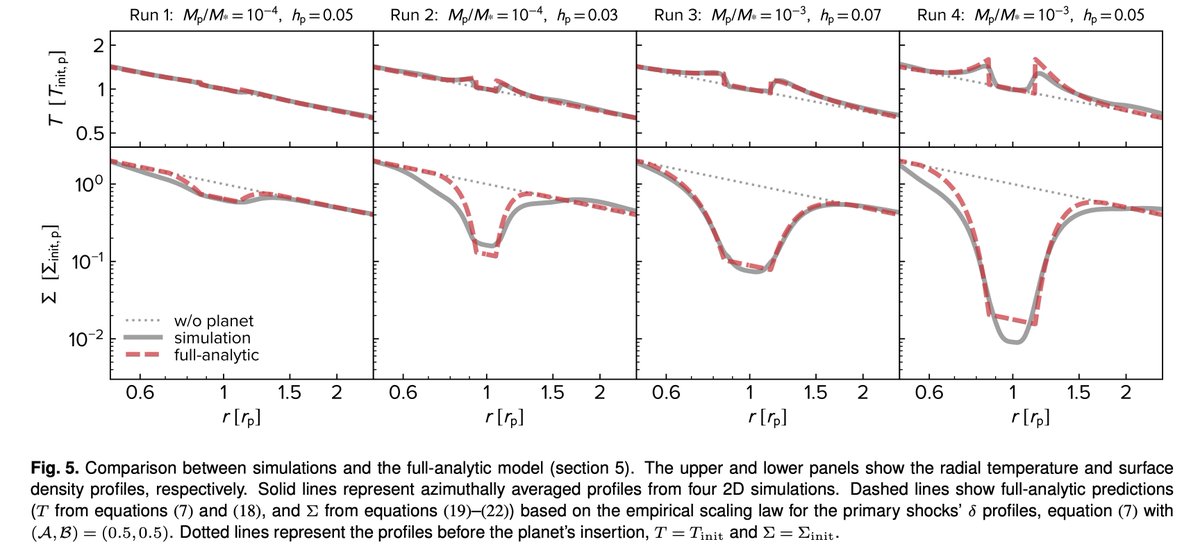
Paper day!! We propose a self-consistent model for the surface density and temperature profiles of protoplanetary disks with giant planets. The model links gap opening and heating by planet-induced spiral shocks through a single quantity: the entropy jump. https://t.co/c9KfubCRBq
New paper is submitted!
https://t.co/qVprJzLMhp
We used planet formation model to investigate the possible trends of atmospheric metallicity, highly relevant to JWST observations. We found that emerging mass-metallicity relation depends on typical planet formation location.
The bouncing barrier is back! 🪨💥 In a new ApJ paper led by Haruto Oshiro, we simulate how compressed dust aggregates bounce at intermediate collision velocities, and derive the threshold velocity for bouncing as a function of mass and filling factor. https://t.co/CL6zhgYgP8
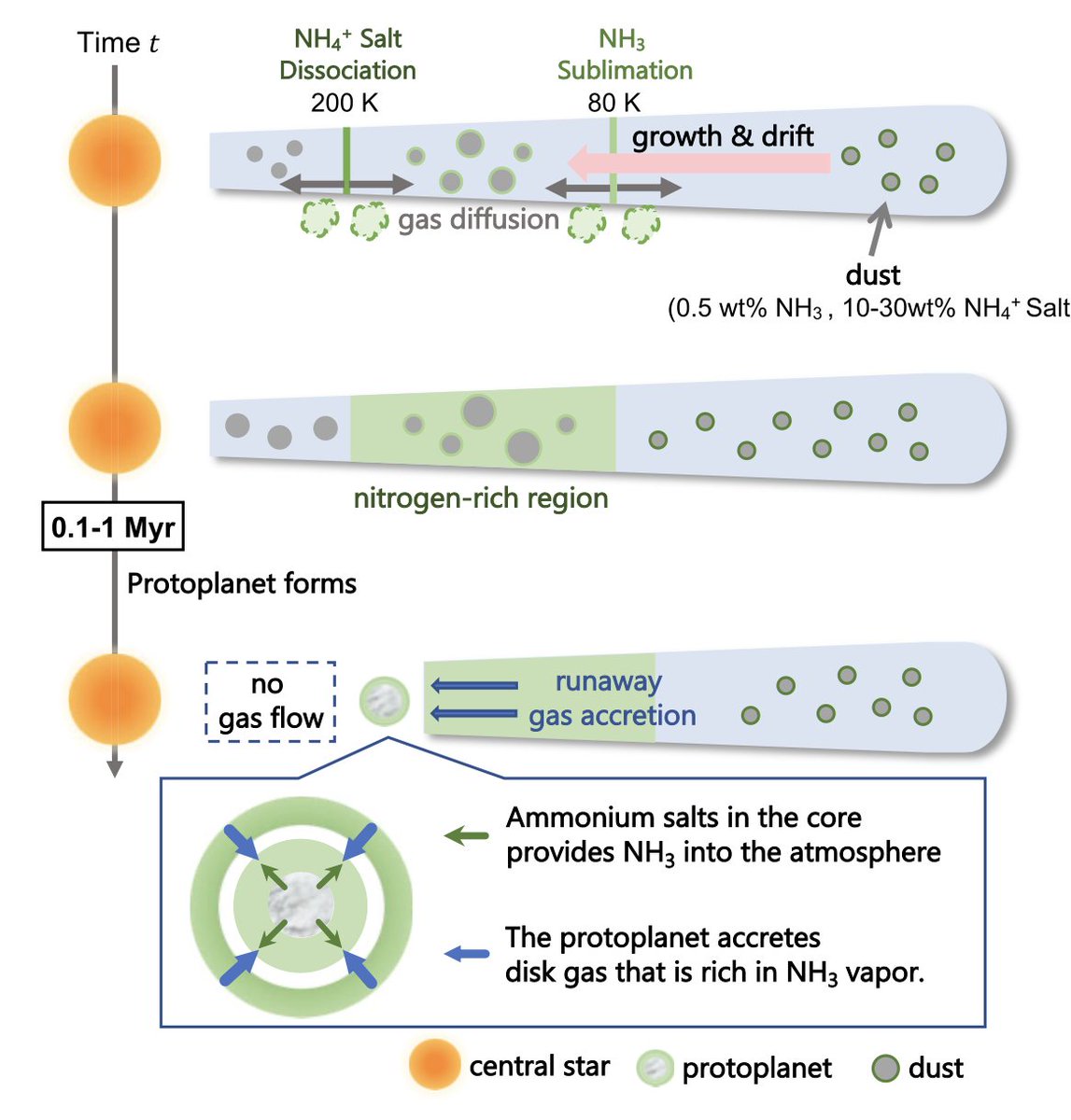
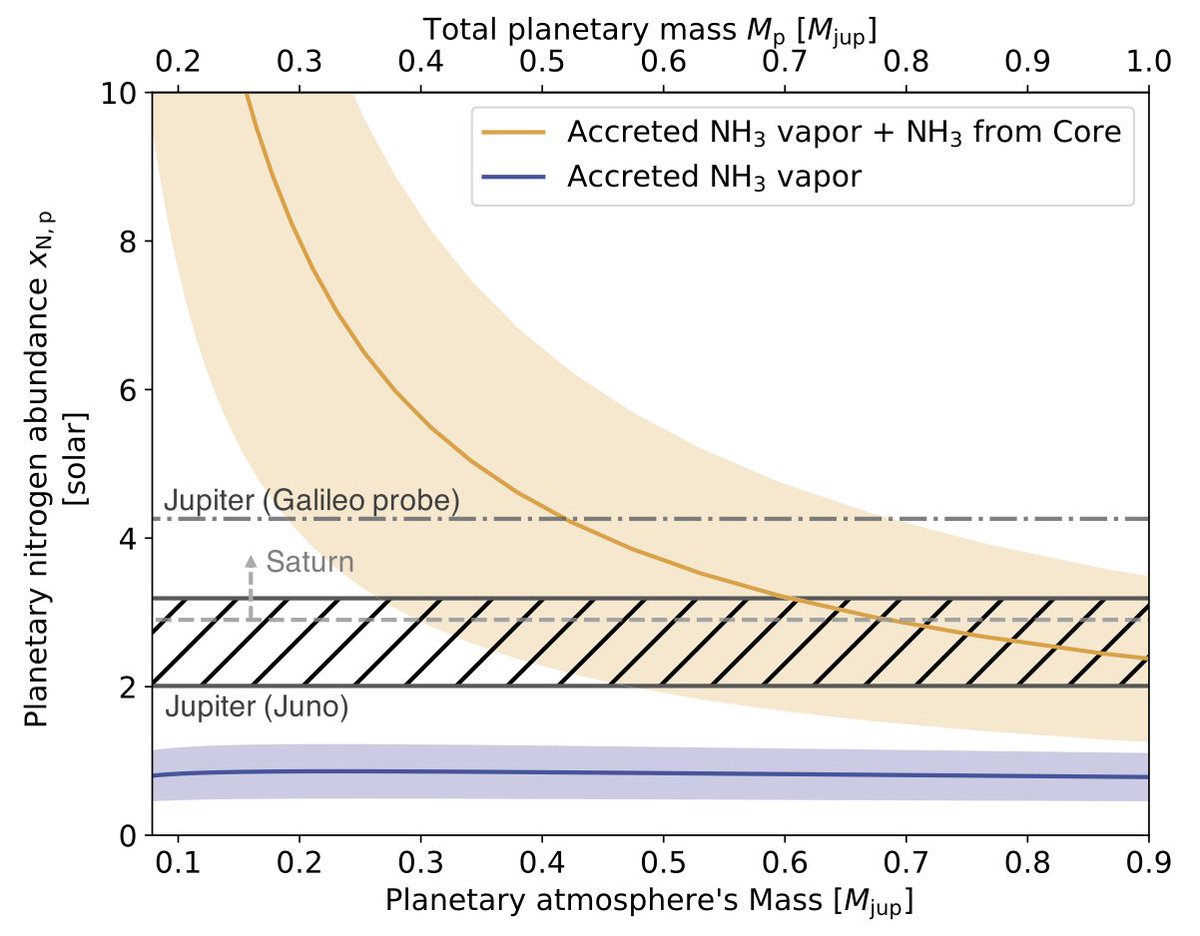
New paper led by Kanon Nakazawa, who just got his PhD from our lab! We explore how semi-volatile ammonium salts in protoplanetary disks deliver nitrogen to forming planets. These salts could help explain Jupiter’s nitrogen enrichment. Just out in PASJ. https://t.co/Zk2vq4ZxpV
Our paper on a differentiable spectral model, ExoJAX2, has been accepted by ApJ. In this paper, we use HMC-NUTS to analyze JWST’s native-resolution transmission, high-dispersion spectra of a brown dwarf from Subaru, and Jupiter’s reflected light. https://t.co/WqwMNXMtO5 1/N