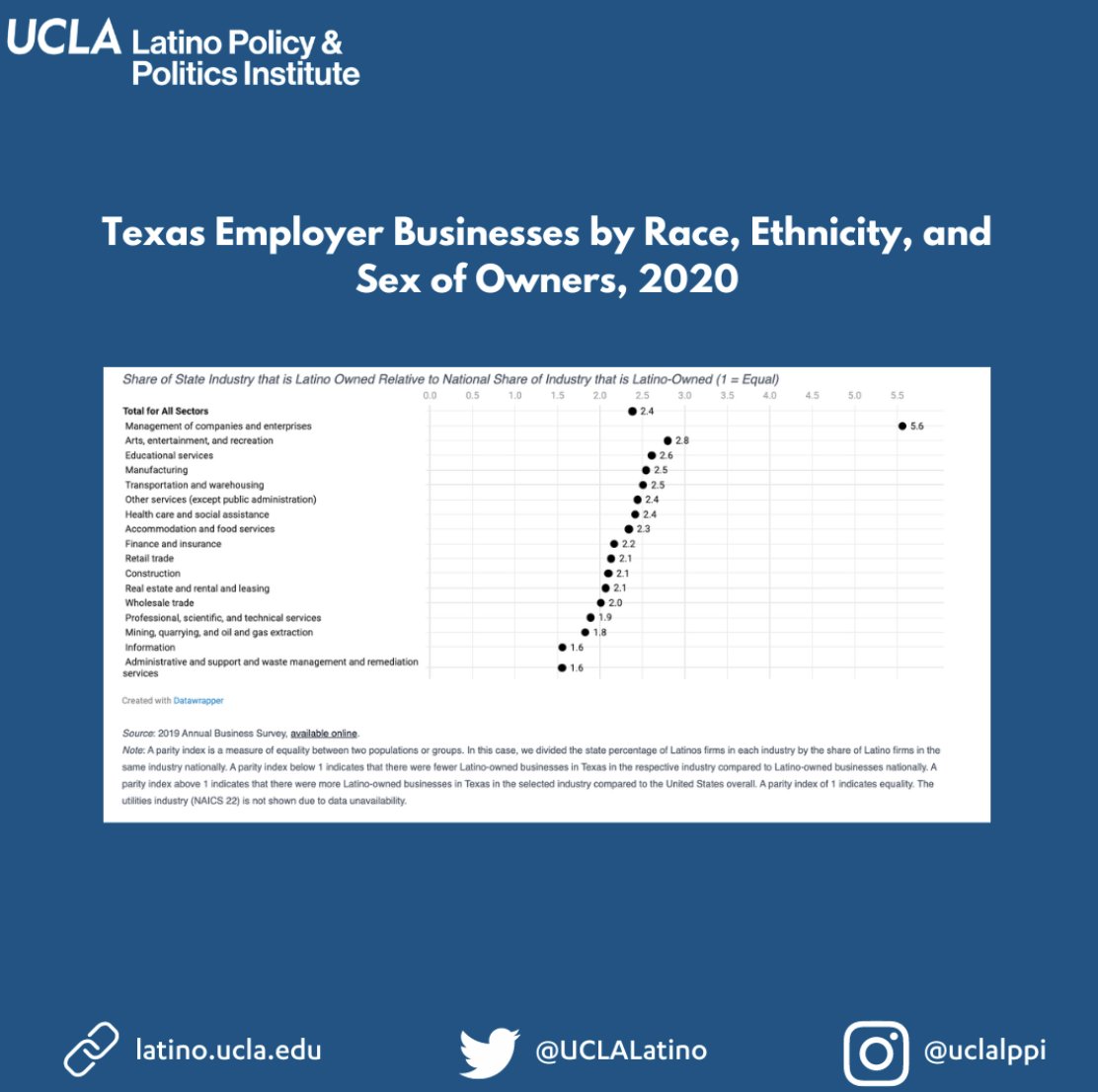
Despite the disparities, compared to the national Latino population, Texan Latinos are more likely to own a business across all industries.
This may indicate that business ownership and entrepreneurship are more accessible for Latinos in Texas than in other states.
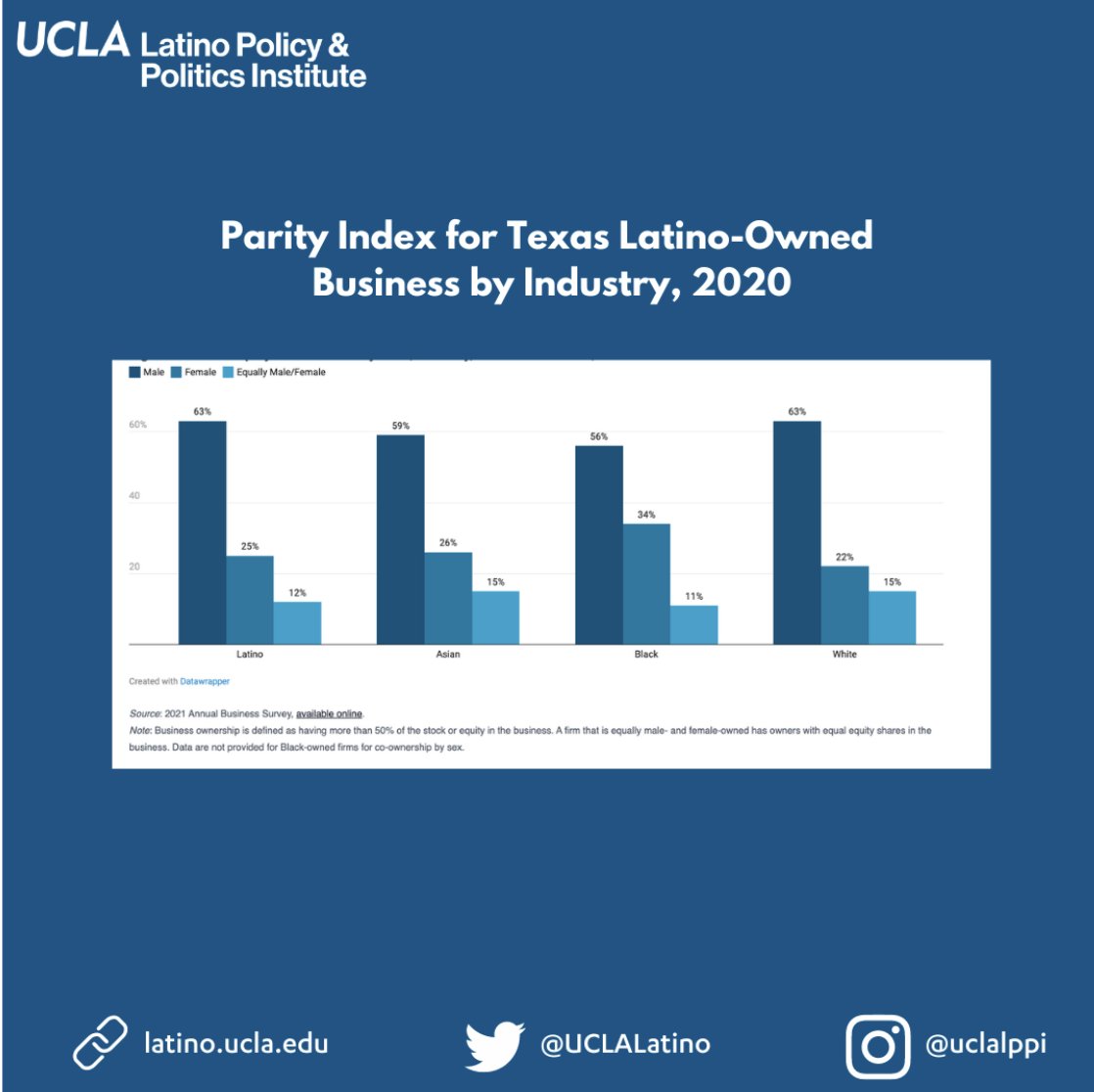
Latino-owned businesses in Texas were more likely to be concentrated in the construction, accommodation, and food services industries, relative to white-owned businesses—two industries that were highly impacted by the COVID-19 pandemic.
While Latinas owned only 25% of Latino-owned businesses, they were 3 percentage points more likely to own a business than non-Hispanic white women, who owned 22% of white-owned businesses, highlighting the entrepreneurial spirit of Latinas.
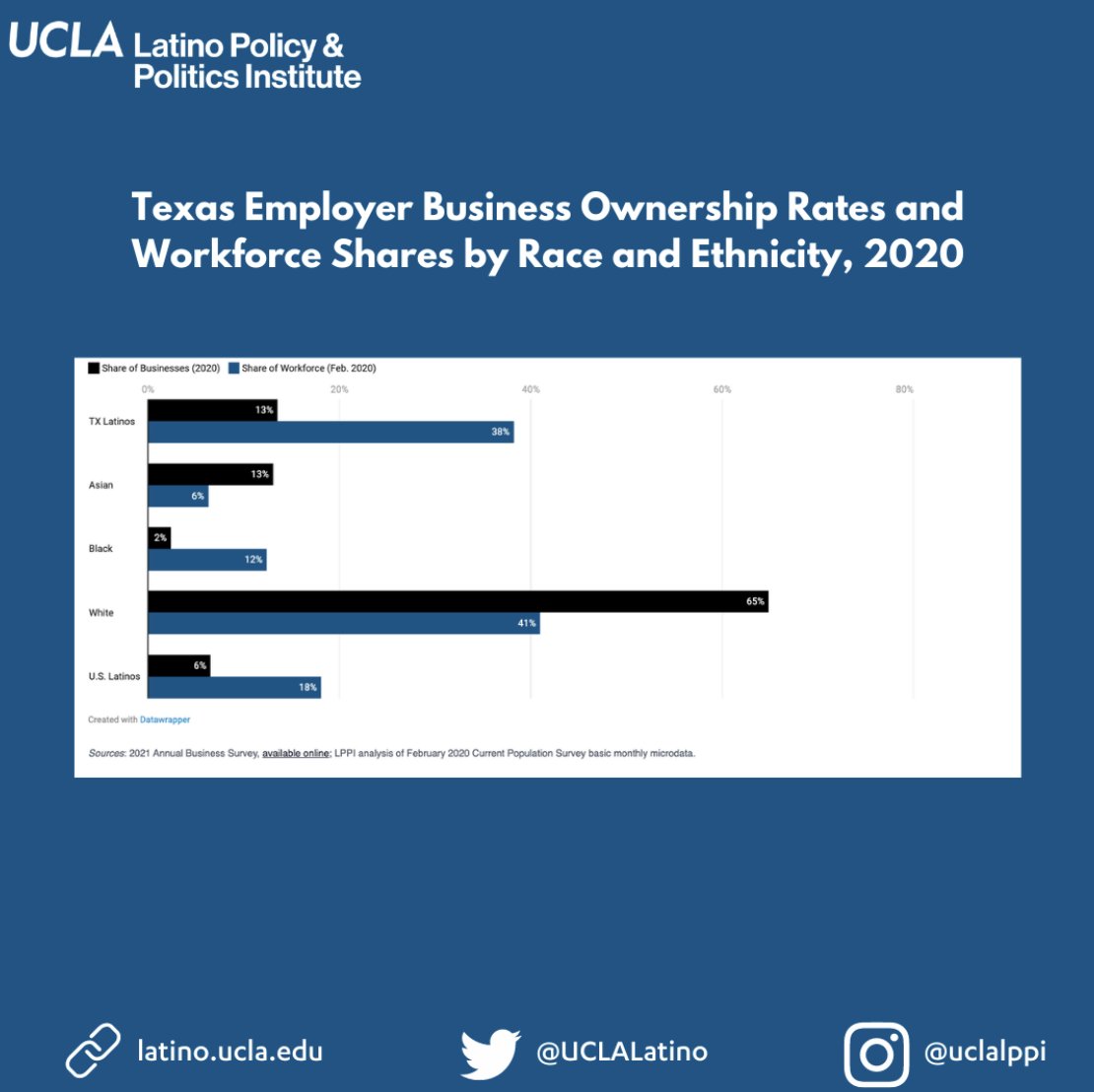
Despite accounting for 38% of the workforce and 39% of the state population, Latinos owned just 13% of employer businesses in TX in 2020.
In contrast, white Texans represented 41% of the workforce but owned 65% of businesses.
Latinos owned 59k firms in 2020.
@UCLAlatino 10 Facts About LOBs in Texas - Understanding Latino-owned businesses’ overall condition (and potential) in Texas can help guide the discussion about using policy and programmatic interventions to address these social, political, and economic barriers to opportunity.
📰NEW @UCLALatino Research: Our latest brief by LPPI Policy Fellow Victor Tran found that while Latino business owners face many challenges in Texas, they also created more than 600,000 jobs and over $19.8 billion in payroll income for the state in 2020. https://t.co/zXIywXObyl
Big thanks to UCLA Strategic Communications for the opportunity for us to tell our story and share the program with the UCLA community! It's always a fun and engaging time to play basketball and be a part of such an inclusive community.
“When I played in a sports wheelchair for the first time, it was like a rebirth for me,” said Michael Garafola, coordinator for UCLA's Adaptive Recreation Program. See how @UCLARec is expanding access to individuals with and without disabilities. https://t.co/2xgzZRpRGT
@UCLAlatino: Health care systems and providers must address the digital literacy and technology barriers that patients of different races, ethnicities, ages and spoken languages face by investing in telehealth navigation programs that can provide technology support
🚨New research by @UCLALatino finds that the adoption of #telehealth was experienced differently by patients based on their age, race/ethnicity, and language spoken. (1/10)
Read more: https://t.co/9bUfX40NIY
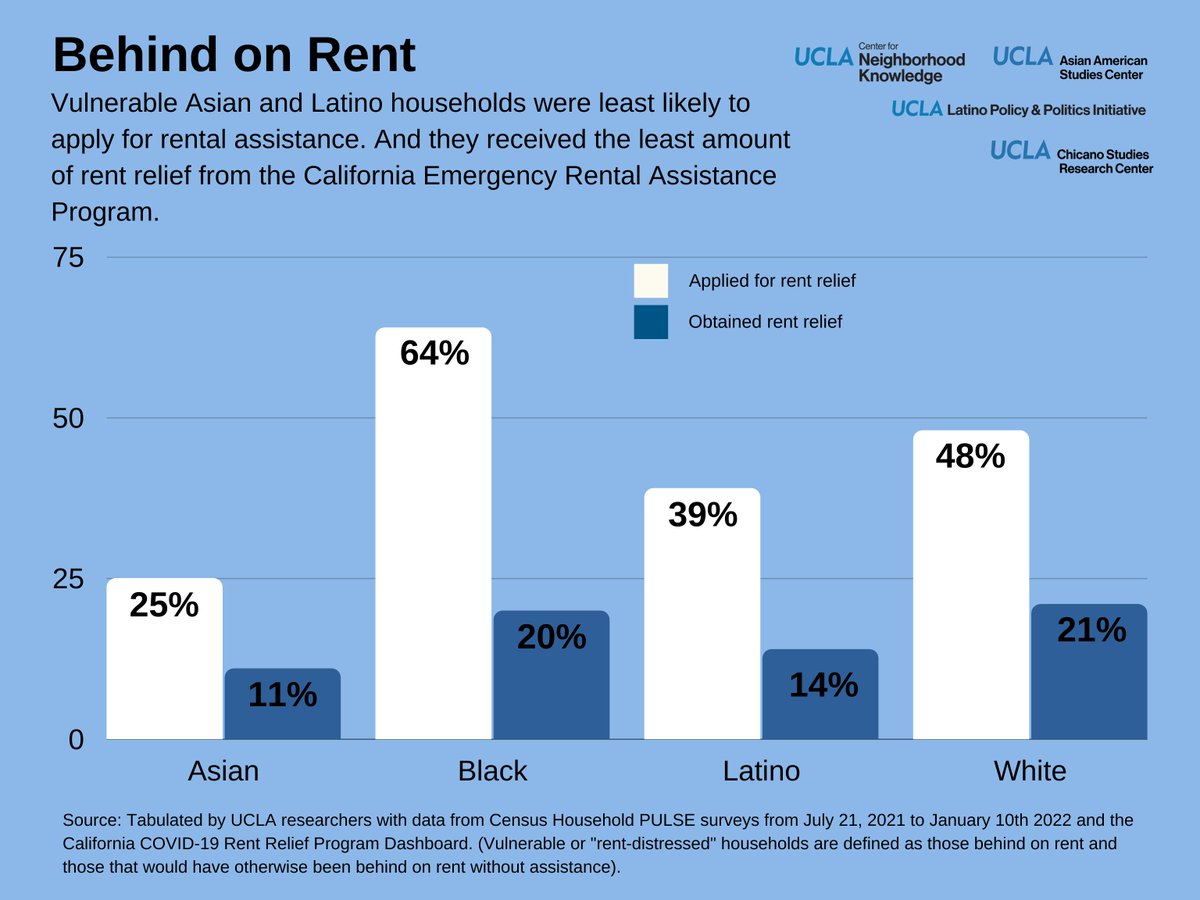
The study found persistent racial inequities in who applied for & received assistance.
Asian & Latino renters in CA were more likely than non-Latino whites to be behind on rent. Yet, they were the least likely groups to actually apply for & obtain rent relief.
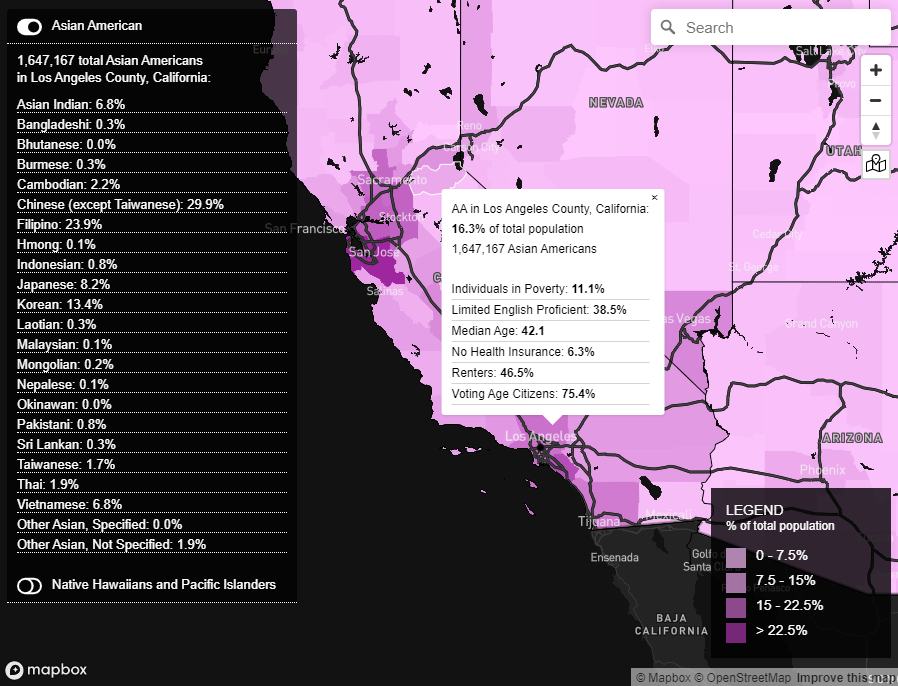
Movement Hub's SEE THE DATA includes our newly revamped Census Map, providing AAPI demographic profiles at the state and county levels and helps illuminate the experiences of our diverse communities.
https://t.co/R80BUF2oBn #AAPIMovement#TogetherWeHavePower#WeAllBelong
With our relaunch, Movement Hub continues to a powerful tool for AAPI organizers, activists & community members. Check out our resources, data, stories and services for AAPI movement building!
w/ @aapifund and @KnowledgeLuskin#AAPIMovement#TogetherWeHavePower#WeAllBelong
Had the opportunity to work on this project, looking at currently publicly available data on indigenous populations in Los Angeles and the critical need for more data that can inform educational needs!
Our Census 2020 Factsheet was featured in articles by the @latimes, @AP, and @LongBeachPost on the results of the U.S. #Census and its impact on communities of color and low-income neighborhoods in particular. #Census2020 https://t.co/UMi7Afs2bu
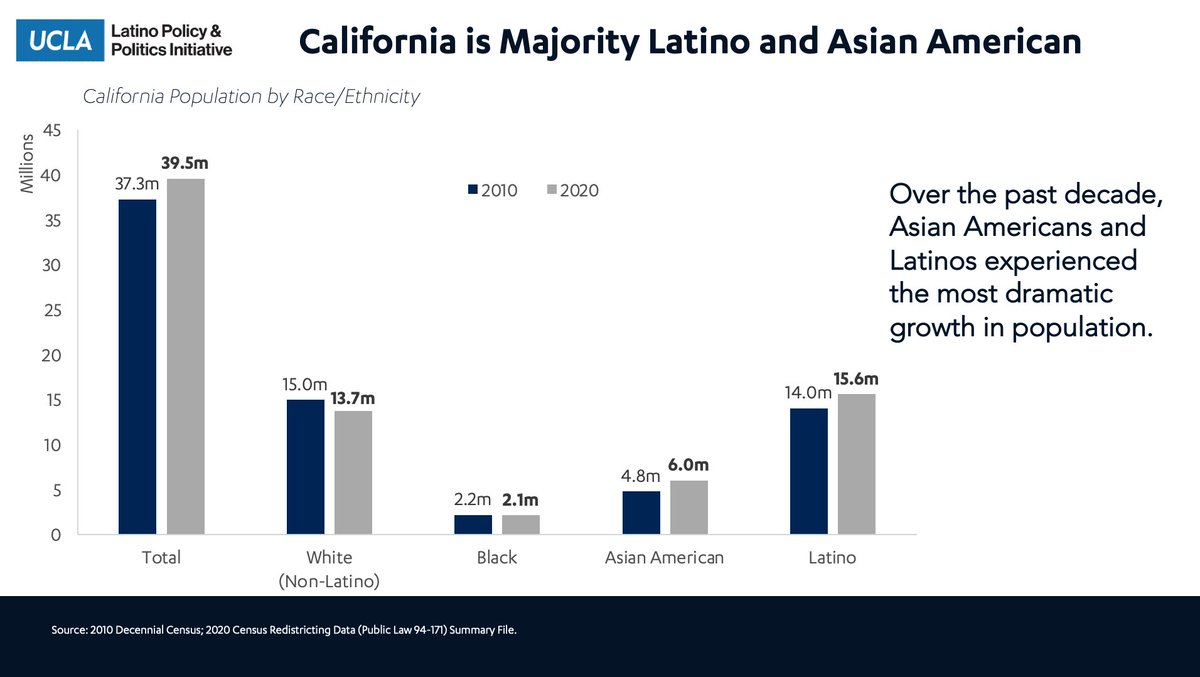
New @UCLAlatino analysis on the #2020Census numbers in CA shows that the state continues to grow more multi-ethnic/multi-racial but in some interesting ways:
➡️Latinos and Asian Americans are fueling CA’s growth and together make up 54.5% of the population
Enjoyed the opportunity to facilitate our workshop on https://t.co/MmtAi6cXfw and share how the anti-racism resource hub, data, and maps can help amplify AAPI on-the-ground activism and organizing! @aapifund @KnowledgeLuskin
Asian Americans are still perceived as the “model minority.”
But this is a myth — one that flattens diverse experiences and doesn’t align with current statistics.
Here are misconceptions that have arisen from the trope.
https://t.co/TAh2RtfnMW
A new website developed by the #UCLA Center for Neighborhood @KnowledgeLuskin serves as a centralized platform to amplify on-the-ground activism and organizing by Asian Americans and Pacific Islanders. Read more here: https://t.co/snDMMBdqTP.
#AAPIHeritageMonth
#AAPIHeritageMonth Happy to see @APA_Planning recognize @UCLALuskin's Professor Paul Ong as an AAPI who has advanced the field of urban planning! It's been a great honor to work with him and learn about his contributions towards greater equity and inclusion in our cities.
To celebrate AAPI Heritage Month, @APA_Planning honors 12 AAPI planners, architects, historians, and community organizers who have advanced the field of planning, one of them being our CNK Director Paul Ong for his own contributions to the field. https://t.co/gnRsLy1rjM
As the largest refugee community ever resettled at once in the US, Southeast Asian Americans understand how necessary it is for us to maintain our commitment to those seeking safety and refuge from persecution and fear in their home countries. (1/4)
https://t.co/a2MaBvd4d1
Today faculty experts from UCLA, USC, UCI, Oxy wrote to @MayorOfLA @heidimarstonLA @MitchOFarrell & CMs expressing grave concern about the violent police-led eviction of the #Echoparklake homeless community & calling into question claims of housing. Read https://t.co/qaZ0LzYsdD
https://t.co/lzYQVZdU7T continues to provide valuable information on AAPI demographic data, policy protections, and community resources to address anti-AAPI racism and increase activism, allyship, and racial solidary across all communities of color