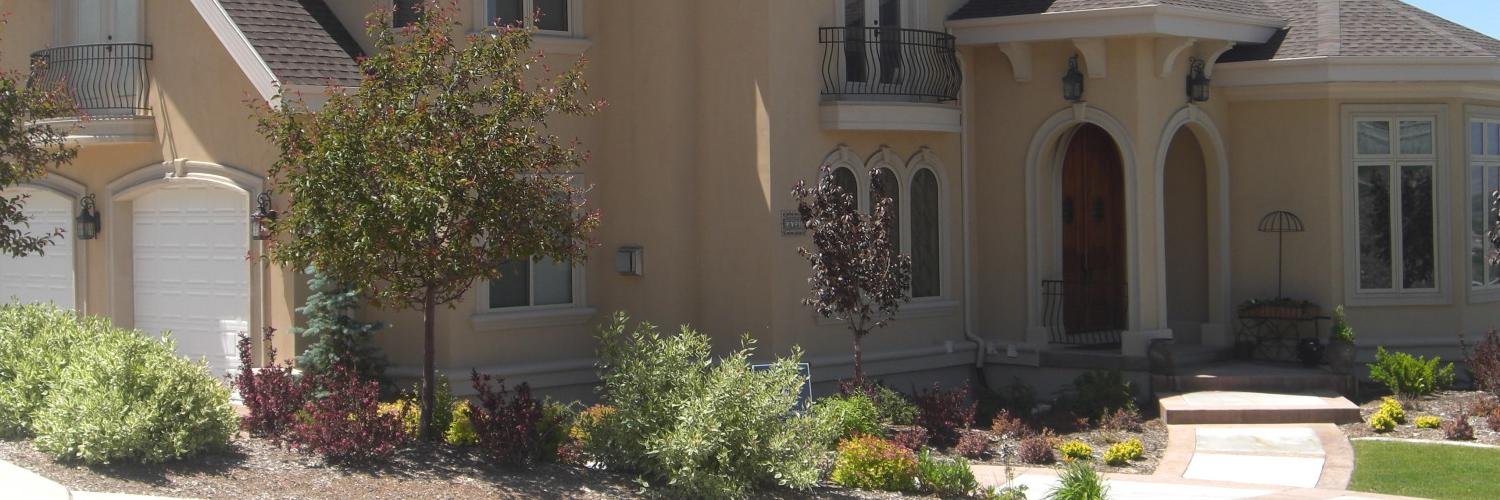
30 years of experience. Busch Plastering and Stucco's success is due in part to their willingness to please the customer! Let your walls be our masterpiece!
Once the drywall has been installed, it needs to be finished. The level, or quality of finish depends on the location of the drywall, the characteristics of the surface lighting, panel orientation, the paint or wall covering that will be used, and how it will be applied.
The first coating of stucco that’s applied is generally going to be a heavy Portland cement mixture that’s been mixed with lime and fine-grained sand. This first coat is applied roughly, so that there are many ridges present that the remaining coats of stucco can adhere to.
The finishing process is going to be an important part of any drywall installation project. Basically, after all the boards are screwed into place, all nail and screw holes along with any gaps or dents in the board need to be filled in and leveled.
We recognize that even relatively small holes in your stucco can give the outdoor elements the foothold they need to create large cracks. If you need to ensure that your stucco stays in good condition, we’re always ready to lend a hand.
Do you have an unfinished basement you’ve always wished was more usable space in your home? One of the first steps is adding the drywall to cover the exposed studs. If you’re ready to take that step, we’re always ready to lend a hand.
Did you know that the main ingredient in drywall is gypsum? Gypsum rock was first used by the Egyptians to construct the massive pyramids and has been used ornamentally in carvings and monuments for centuries. Who knew your drywall held such history?
Synthetic stucco, or exterior insulation and finish systems (EIFS), consists of three component layers. The innermost is an insulation board (usually made of polystyrene), the second layer is a base coat applied directly to a reinforcing fiberglass mesh, and the final layer...
Neither sheetrock nor lath and plaster can be used in every application. For example, in enclosed pools, spas, saunas, and other areas exposed to constant humidity, a cement-based backer board is needed because it will not deteriorate.
EIFS stucco applications use a final coat of stucco that can be tinted to match any color of the rainbow. This provides the you with an opportunity to add a splash of color to suit the environment in which you live,
Did you know that properly installed drywall can make your building much more efficient? In fact, the thermal insulation that drywall provides can be up to 5 times better than what you’ll get with brick or block walls, which will make a big difference in utility bills.
When the only way to make certain electrical repairs to your home involves drilling holes through your stucco, your home’s exterior can be left in disarray. Let’s talk about how we can help you to restore its original appearance.
It’s important to remember that adding drywall to an unfinished basement or attic could be the first step to adding that square footage to your home. Let’s talk about how you plan to use the space so that we can better determine your drywall needs.
In masonry stucco, the surface of the stucco is porous and absorbs water; however, the surface is also breathable, and the stucco dries without damaging the surface.
The most common form of plaster used for interior walls is gypsum plaster. These plaster walls are generally created through a three-coat process over a lath (made of wood, metal, or plasterboard strips) secured to the framing.
One advantage of choosing newer one-coat stucco mixes is that they contain acrylic fibers and various chemicals, so you can use one coat for the entire stucco application.
While we tend to only see drywall in sheets, it doesn’t start out that way in the factory. When the wet gypsum mixture is first put onto the paper, it’s made in much longer sheets. Once the plaster has hardened, they’re cut down to a size contractors can use.
Stucco stands the test of time. It is durable and breathable, meaning it will have a much longer-lasting life than other sidings. It is water shedding, hard, impact-resistant, and fire-resistant.
One of the benefits of using plaster for interior walls is its strength. When the lathing and framing are done correctly, plaster provides a much more rigid wall, reducing the likelihood of buckling or breaking.
Did you know that stucco is naturally fire-resistant? Since it is composed of lime, sand, and water (all fire-resistant materials), stucco is non-combustible and can even prevent a house fire from spreading.