Papi. 🇩🇴 New Yorker. Assistant Prof of Public Affairs, University of Utah. PhD @UMassEcon @Center4EconDem. He/him. Just assume the University disagrees.
"Since launching, @econ4freedom's website has already attracted over 11,000 people—this tells us there is indeed a hunger for liberatory economics education."
Sarah Wang from @Center4EconDem and I in @npquarterly urging movements to prioritize pop ed 💭
https://t.co/3GKl6qctw8
1/ I agree the axiom is innocuous. Completeness and transitivity on their own say very little. That is the point: the ideology isn’t in the axiom. It’s in what the axiom is then asked to carry. Three moves usually follow it, and none of them is innocuous. 🧵
Economists: How dare people accuse us of being shills for the very rich and big business!
Prominent economist: Based on my comical measure of individual productivity, one of the world's richest men might actually be underpaid
This is why @JakeMGrumbach and others say it's nearly impossible to use statistical effects to prove that moderates are more electable. Clearly there were spillovers from Abdul's race to everyone else.
I still remember economists uniting as a profession against the $15 minimum wage. It went far beyond explaining likely tradeoffs--they acted like we needed their permission to try it
The question on university campuses should now be how to get rid of all the administrators who caved to and collaborated with a grossly unpopular political agenda, including curricular changes, reversals on diversity mandates, buying into AI hype, clamping down on Gaza protests…
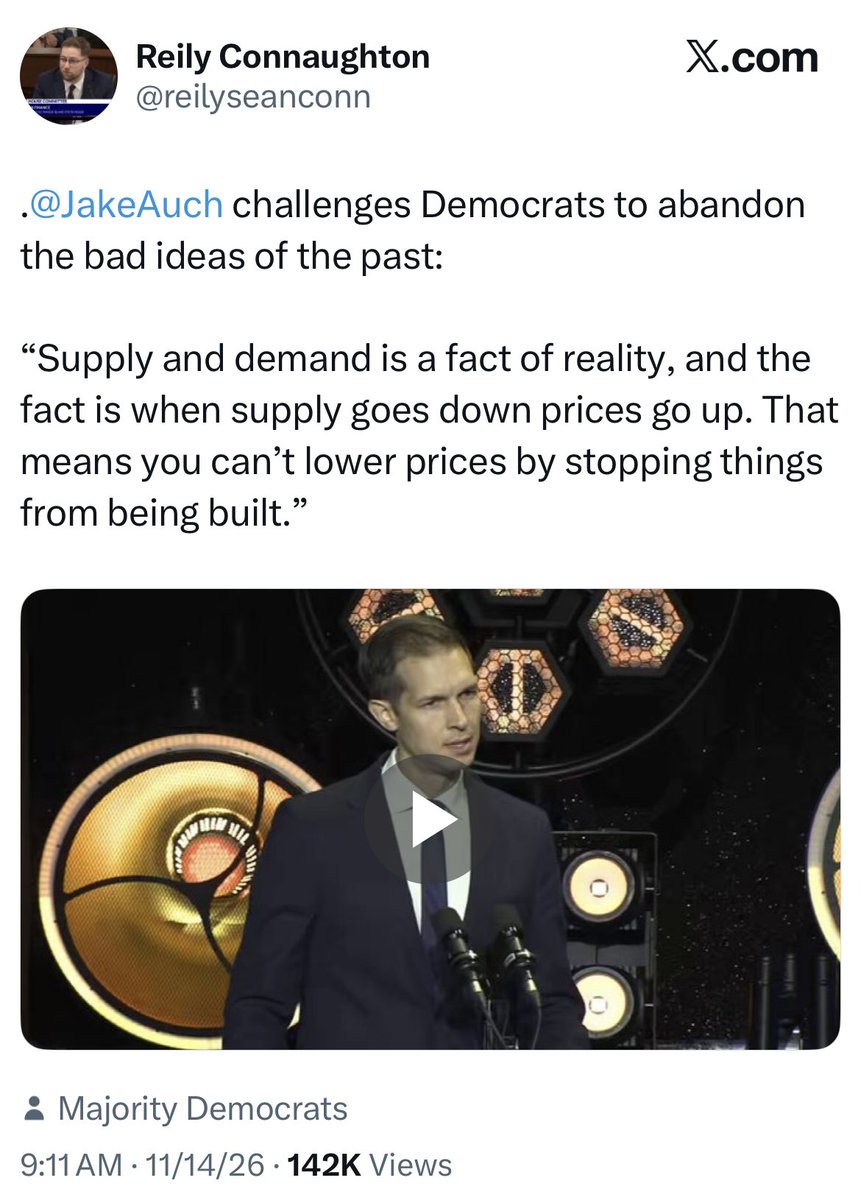
Affordability just revived democracy. But to safeguard it, Democrats have to change the playbook, not just the slogans. The economy needs to be rebuilt from the essentials up — to restore public power, put a floor under livelihoods, and a ceiling on private wealth.
"When it takes longer to reach the airport than it does to fly halfway across the continent, it is clear that the benefits of the megacity are much reduced in low-income countries." - @CharlieTTEcon
https://t.co/JDem354p31 via @fDiIntelligence
So if you want to understand capitalism, you need to be talking to small business owners, portfolio managers, and Marxists. Nobody else can really talk about it with any substance.
@florianederer asks a fair question, but the counterfactual is unobservable, b/c nobody publishes rejection letters (unless Florian is asking authors to share those).
What we can observe is impact. So here’s a different test. 🧵 1/
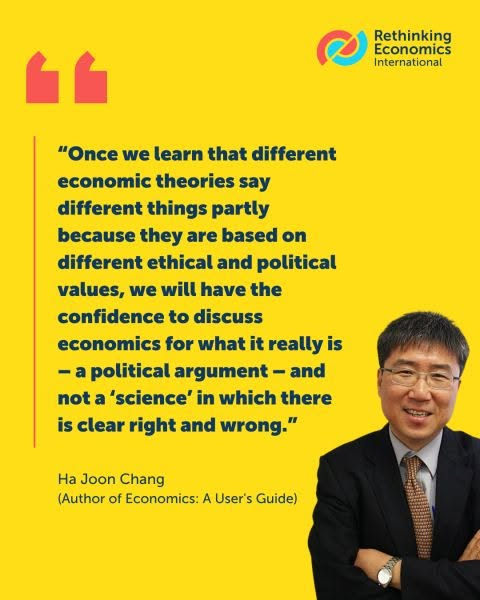
@goescarlos You can't explain why certain models e.g. Keynes went in and out of vogue without some political and economic history. It's not about some "rap battle" but helping students better understand how and why economic models and policies change over time.
I think the issue here is that most normies think of economics as macro (unemployment, inflation, growth, etc.) when the large majority of economists are applied microeconomists. While micro is ideological too (the questions asked and not asked, the interventions tested, etc.)
Can you tell me where in my reseach or anywhere else in my work I have used a DGSE model?
More generally, what motivates you to make such a broad statement about our entire discipline?
For some reason, I quite often see similar statements by persons who call themselves "heterodox". Strong assertions about what we mainstream economists supposedly do that are completely at odds with the reality of mainstream econ research I see every day.
This leads me to lose confidence in other statements by that person. It raises doubts about whether the person cares about getting the facts right when making any assertion.
I think there is much to Francisco’s observation about normies vs. economists here. But it highlights another interesting development. On the one hand, economists (as individuals) probably come from much father left of the political spectrum than a few decades ago (although still less so than the other social sciences/humanities). On the other hand, there has been an interesting – and perhaps unexpected --flip between micro and macro.
@RiccardoIorio4 I can't speak to other other social sciences but evolution of macro has definitely been in part driven by major political/economic trends. The rise of RBC/DSGE models is tied to stagflation in 1970s and Reagan-Thatcher Revolution, HANK models to financial crisis of 2008.
@RiccardoIorio4 The debates e.g Keynesianism vs monetarism, have always been at least partly ideological. Competing schools don't have to be ideological but in this case they have been historically.