@SudsG5 A variety of wines... The ancient Indian carried is virtually wiped out... Or can't combine their form of logic to generate such types of wines
There is nothing modern or post modern here, if anything these women could be transported to VIjayanagara and no one would bat an eyelid. Portuguese travelers who visited Hampi in the 16th century observed that the royal court employed thousands of women as palace guards, wrestling athletes, musicians, and administrative clerks. They documented that during the grand Mahanavami festival, these palace women, along with the royal family, consumed massive quantities of wine and spirits during state celebrations.
Incels pushing this theory of "women don't drink saar' are just pushing Islamic and Victorian codes of morality. Our history pre Mlecha has detailed records of women (nobility and commoners) drinking freely.
In the work Manallosa, written by Chalukyan king Khamboja in the 12th century, there is an entire chapter on how drinking fine wines (both men and women) is a courtly and elite pursuit.
IN Madura Vijayam (written by the Vijayanagara queen, Gangadevi) there is a chapter in which she talks about thesensory descriptions of royal lovers reposing in palace gardens, where the women drink fine liquor to wash away their natural inhibitions, flush their cheeks a rosy red, and prepare for romantic trysts with their partners.
Kalingattu Parani (written by Cholar court poet Jayamkondar) references the romantic rituals of the courtly elite, where couples pass cups of sweet fermented palm toddy (Kallu) or sugar-based spirits to one another as a standard prelude to making love.
Naiṣadhīya Carita (written by Sri Harsha, the court poet of the Chalukyans) has a highly detailed description of a grand royal feast and wedding banquet. It features elite men and women indulging in exotic wines (Madira). Sriharsha uses intricate wordplay to describe how the wine glass acts as a medium for courtship with lovers playfully admiring the reflection of each other’s eyes in the ruby-colored liquids and comparing the sweetness of the wine to the sweetness of their lover's lips.
Purananuru describes women who actively drink potent, mature Kallu from communal jars. The poems detail them eating roasted meats and field fish alongside their husbands, laughing and singing under the shade of neem trees to celebrate the community's prosperity.
In the Perumpanarrupadai female farmers (Uzhavathiyar) finishing a grueling day of harvesting paddy or crushing sugarcane. To celebrate the yield, they sit with their husbands on the threshing floors and consume Thoppi (a thick, highly intoxicating rice-wine/toddy brew that had been fermented inside hollow bamboo shoots or earthen pots buried in the ground).
The Pattinappalai describes how fishermen and fisherwomen gather on the white sands of the beach under the shade of coastal trees. The literature explicitly notes that both men and women drink fermented palm toddy (Kallu) until they are heavily intoxicated, after which they dance hand-in-hand (Kuravai Koothu) to the beating of folk drums.
No surprise, in the name of God or sector of metaphors, they isolated all forms of obstructive ideas that makes them a retarded pseudo intellectual
Greatest philosopher are hedge fund manager, detective or mostly lawyers
No surprise, in the name of God or sector of metaphors, they isolated all forms of obstructive ideas that makes them a retarded pseudo intellectual
Greatest philosopher are hedge fund manager, detective or mostly lawyers
Okay here is the formal announcement and conceptual itinerary for my forthcoming essay due February 1st, which will be for paid subscribers to my Substack only (see my pinned post for the link). The working title is “The Rationalist Ideology & the Xenosystem of Confessional Dialectic.”
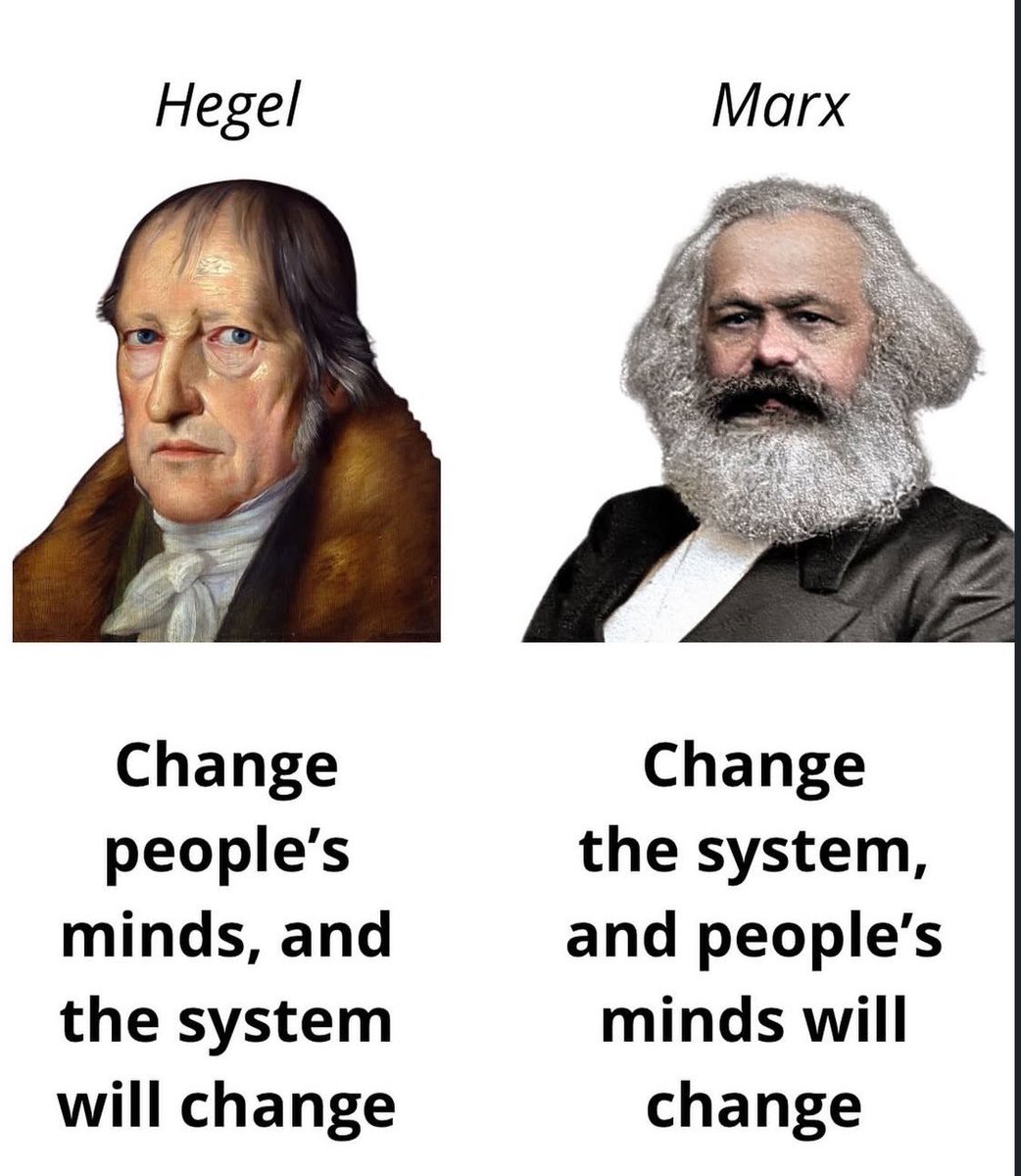
My methodology, in drawing out a response to Reza Negarestani’s polemic against @xenocosmography, will be to draw heavily on David Gray Carlson’s unique (and uniquely ambitious) psychoanalytic-diagrammatic interpretation of Hegel’s Science of Logic (as well as A. Kiarina Kordela’s critique of Wittgenstein; we shall return to this) to try to argue why Hegel effectively “reterritorializes” Kantian transcendental reason into what I will describe as an insuperable “confessional dialectic” through which Christianity neutralizes all possible opposition on the most fundamental ontological level of the concrete dialogical kenosis of “the self’s place,” as Jean-Luc Marion puts it in his reading of St. Augustine (of course there is also a Lacanian topological interpretation of this).
This “confessional dialectic” can be traced through the entire history of what became known by the time of Kant as the “ontological proof” of God’s existence, passing through the visionary medieval Scholastic work of St. Anselm of Canterbury and St. Bonaventure to its subjectively mediated radicalization at the dawn of modernity by René Descartes. I will proceed to a “deconstructive” reading of Reza Negarestani’s Intelligence & Spirit alongside Nick Land’s Xenosystems, in a sort of re-Hegelianization of Jacques Derrida’s anti-Hegelian style in Glas, showing both how Negarestani fails to be genuinely Hegelian and how Land fails to be genuinely anti-Hegelian.
I will conclude with a re-interpretation of A. Kiarina Kordela’s criminally overlooked, highly visionary text “$urplus: Spinoza, Lacan.” In this book, she quite convincingly makes the case that the theological essence of what she calls “secular capitalist modernity” inheres in the Spinozist ontological deformation of Cartesianism, in which the priority of final causality, or divine providence, is entirely suspended as a genuine philosophical methodology in favor of an overwriting of the very Godhead Himself in the naturalizing terms of Aristotelian efficient causality.
Kordela turns to Lacan in recognizing that final causality continues to be effective regardless, specifically on the level of the unconscious, complicating Spinoza’s methodological reduction. In the course of this argument, she also takes Wittgenstein to task (which implicates also all of Sellarsianism through to Negarestani) for confusing, in his distinction of causes and reasons, the genuine register of the interpretation of the allegedly “imaginary” effect of forms of finality in the constitution of the subject with an inert cultural horizon in which a formalization of justificatory “reasons” for behavior (always ex post facto, unlike final causes) parallels a similarly ego-projective account of ontological “causes” on precisely this model of fictional ex post facto subjective rationality.
In precisely this way, Sellars’ Wittgensteinian scientific realism entirely falls to Quentin Meillassoux’s critique of “correlationism” in After Finitude. I will argue that the only thing that doesn’t is, in fact, the ontological principle formalized in Roman Catholic thought as the “analogia entis,” which exists as a systematic apophatic technique of qualification over all univocal terms of rational explanation which would reduce the divine “outside” to a conceptually graspable idol.
It’s high time for the speculative frontiers of contemporary continental philosophy, stumbling blindly in nihilistic confusion, to confront the radical “Catholicity of Reason” which they have wrongly scorned. To quote @Grimezsz in “Artificial Angels”: this is what it feels like to be hunted by something smarter than you.”
https://t.co/jUJMKJrNBH
Most AI users still don't have a proper workflow.
They open ChatGPT, get an answer. Open Claude, ask something else. Repeat across 4 tools.
Here's how a multi-model workflow actually works.
ChatLLM - Use The Best AI For Your Use Case
Front-end coding - Opus 4.7
Back-end coding - GPT 5.5 xHigh
Visual understanding- Flash 3.5
Cheap - DeepSeek Flash
Video - Seedance 2.0
Image - GPT Image-2.0
Voice - Flash Live
Writing - Gemini 3.1 Pro
Real Time - Grok 4.3
ALL IN ONE PLACE
all that ass-licking done by ASIANS (Koreans / Japanese) of WHlTE people still ends up in them facing so many racist attacks by WHlTES 🥀
here this woman got harassed so much by some WHlTE boys that she was literally crying while filming them