January not only marked our 5th anniversary but it was also our best month yet in terms of MRR growth! We’re celebrating these milestones with our first logo redesign in all this time. Here’s to the next 5 years! 🙏😍🎉
We redesigned Plausible Funnels. ✨
Before: simple bar graph with useful info at a glance.
Now:
✓ more elegant
✓ easier to scan
✓ gives more useful info at a glance
You see what percentage of visitors reached each step, how many continued, and how many dropped off.
The gray area shows the drop-off visually, making each step easier to compare.
Already available in your dashboards, try now and share your thoughts!
Hey! Agent visits may become important, but mixing them with human visits would make your dashboard much less reliable.
Worth noting that bot filtering doesn’t stop AI agents from visiting your site at all. It only keeps their visits out of your Plausible dashboard by filtering them on the Plausible script level only.
We agree that viewing this traffic separately could be useful. There’s a feature request you can follow and upvote here: https://t.co/gAoHiSXtJ1
We improved our bot filtering over night so your stats won't get polluted.
What's new? Bots have gotten smarter. They run real browsers, use residential IPs, and have become better at mimicing actual visitor behavior.
We identified several new patterns like these and updated our filters.
We already block ~2 billion bot visits every month. As bots evolve, our detection evolves with them.
The goal is simple: keep bots out of your analytics without filtering out real visitors.
✔️ Our bot filtering is not limited to premium plans as it is a matter of principle for us
✔️ Happens automatically at the script level, no need to do any special settings
Hello and good catch! The references remain in the script, but those features won’t run or track anything while they’re switched off.
Keeping them in the configurable bundle means you can enable or disable these features from your settings without having to update the snippet on your site.
A feature-specific build could save a few bytes, but it would come at the cost of that flexibility. We’re always mindful of keeping the script as lightweight as possible. Thanks for taking such a close look!
Hey Jacob and thanks for being a Plausible subscriber! The visitor count is the same in both views, so you can be assured that no data is missing. The difference is in the comparison: the Sites page uses the previous 24 hours, while the detailed dashboard remembers your previously saved comparison preference, even when comparison mode is switched off.
Could you try selecting “Previous period” and “Match exact date,” then switch comparison off again and see if the percentages match?
Please do reach out to us if you need any more help: https://t.co/NdYcmQu4mQ.
In a time where SaaS customers are automatically migrated to new plans costing up to 20x more, we still honor our grandfathered plans.
Seven years in, some subscribers are still paying the price they signed up for years ago.
We manually maintain those plans for them even as our pricing evolves.
It’s the era of acquisitions and fancy exits. We don’t plan on having one.
There are no investors pushing us toward one either. Just you, us, and a product we believe in.
We’re building Plausible for the long term, not the next quarter.
European companies prefer Plausible.
You can host your website in Europe, choose European infrastructure and take GDPR seriously.
Then load Google Analytics on every page and send your visitors’ data to Google.
For companies trying to keep more of their stack and data in Europe, that increasingly doesn’t make much sense.
One of our subscribers put it simply:
“Plausible being built in the EU matters to us too... it would be odd to route our own visitors through Google.”
Plausible is built and operated in the EU. Visitor data stays in the EU. Sometimes the choice is that simple.
You don't need a hidden business model if you can keep a simple, clear relationship with your customers.
You pay for a product. We build the product for you.
We don’t need to monetize the personal data of the people visiting your website, and make the economics work.
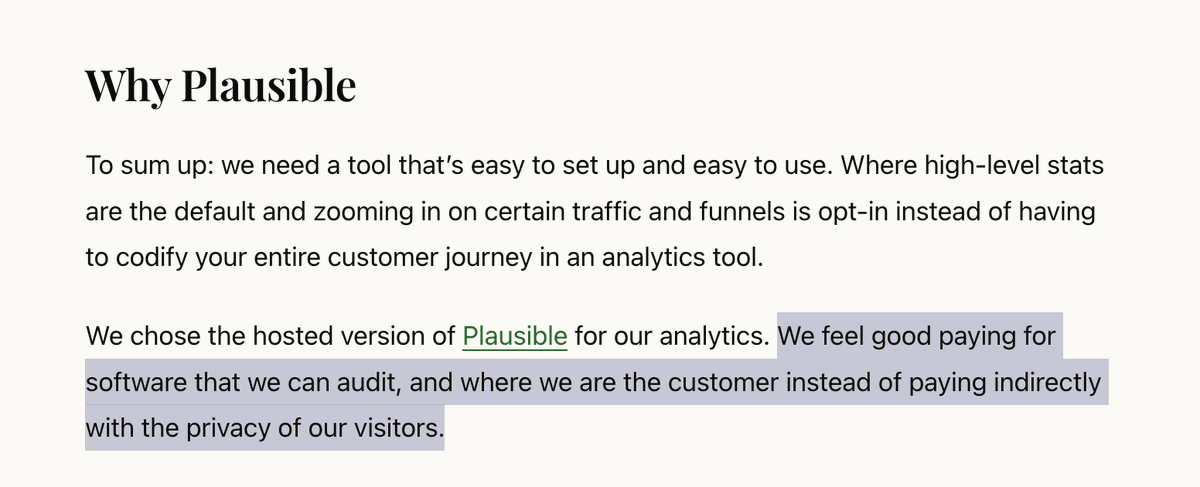
Plausible is open source, so you don’t have to trust our word either. You can verify it for yourself.
Sometimes paying for software isn’t the compromise. It’s what makes the incentives clear.
A happy Plausible subscriber:
Patience + trust in the process play a role here too. It took us 324 days to reach $400 MRR.
Not $400k. $400.
Another 9 months: $10k MRR.
And 3 years after launching: $1M ARR.
Today, more than 20k teams pay for Plausible. Still open-source. Still fully user-supported.
If you are in year one and progress feels painfully slow, remember: slow is not the same as stuck.
Customers make an open-source business financially stable, not donations.
We tried to fund Plausible through donations.
In 6 months, we got 6 donations. $5 each. $30 total.
In the same 6 months: paid subscriptions grew from $400 to $8,500 MRR.
People didn't pay because they believed in the project. They paid because it solved their problem.
Open source needs a business model, not a tip jar.
@colinize Hey! It's in progress. You can follow (and optionally subscribe for updates) its progress and share any feedback regarding it here: https://t.co/jSl8dPrMVF
Customers make an open-source business financially stable, not donations.
We tried to fund Plausible through donations.
In 6 months, we got 6 donations. $5 each. $30 total.
In the same 6 months: paid subscriptions grew from $400 to $8,500 MRR.
People didn't pay because they believed in the project. They paid because it solved their problem.
Open source needs a business model, not a tip jar.
A VC firm accidentally became our press team.
We’ve received hundreds of emails from investors over the years. We’ve said no every time.
Being 100% subscriber-funded means we answer to the people paying for Plausible. No investor agenda to balance against theirs.
The funny part?
The TechCrunch story about us came from a ranking of the fastest-growing open-source startups created by a VC firm. We topped the list.
Two analytics companies. Two data policies.
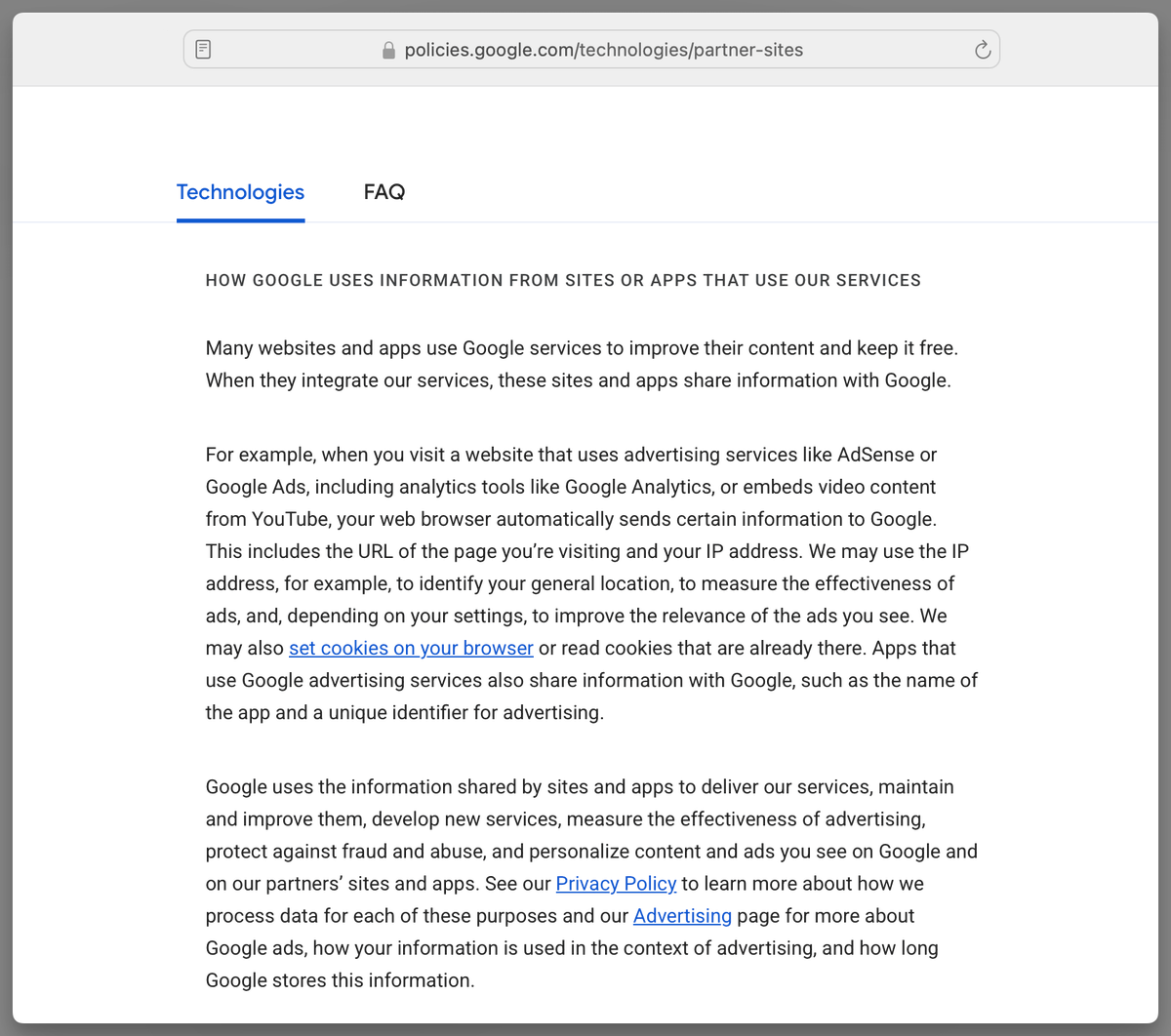
Google:
“...measure the effectiveness of advertising... and personalize content and ads...”
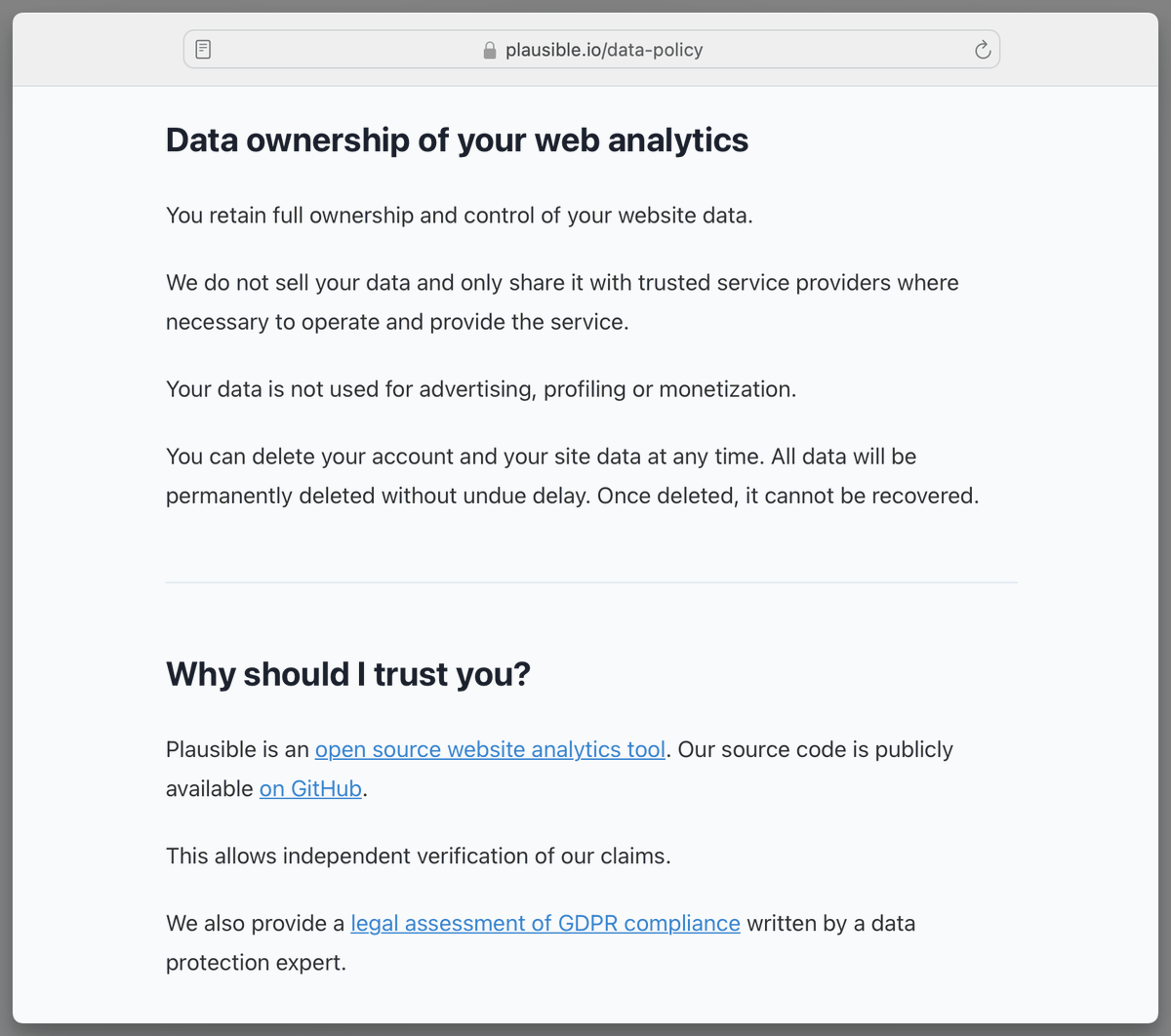
Plausible:
“Your data is not used for advertising, profiling or monetization.”
Privacy isn’t a setting. It starts with the business model.
Schrems I ended Safe Harbour in 2015. Schrems II ended Privacy Shield in 2020.
noyb is preparing what could become Schrems III against the EU-US Data Privacy Framework and asked the European Commission to withdraw it.
Google Analytics uses it for EU-US transfers. Plausible keeps visitor data in the EU on EU-owned infrastructure.
@stepbrobd Hey! You can follow this particular feature request here: https://t.co/wRLfSMWTTt. You can also upvote and subscribe to receive its updates on your inbox if you prefer. Thanks for supporting Plausible!
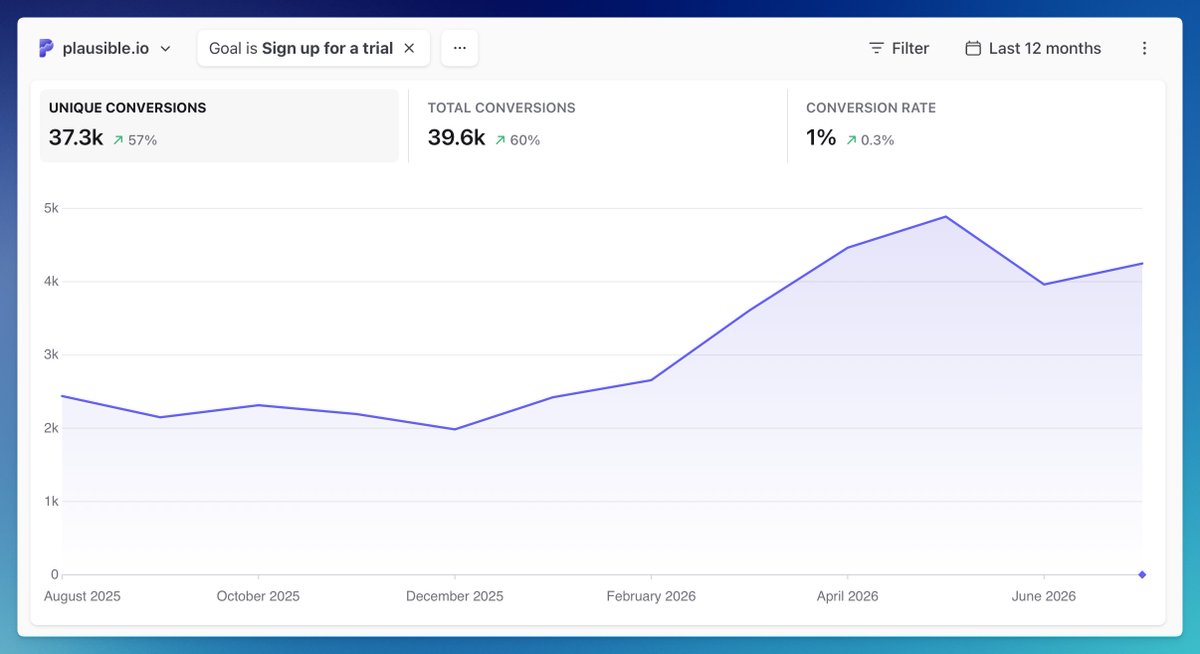
One July number we left out: 4,248 trial signups, our third-best month ever.
That’s the final point on the chart.
The chart isn't a mockup. It's our real, public dashboard. You can follow the August numbers live here: https://t.co/o6ZiNuEZc7
While indie hacker Twitter debated whether SaaS is dying, our July:
• $22.2k in new MRR, our best month ever
• MRR up 28.5% year over year
• 20,183 paying subscribers
The argument is that AI has made every product easy to clone.
Our code has been open source and free to clone since 2019.
Turns out the code was never the moat.
Hey! Along with regular marketing and product updates, we believe a major reason for increased revenue in July was the introduction of our new annotations feature.
So far as trial sign ups are concerned, direct (word of mouth for instance) and organic channels were the main contributors to that.
While indie hacker Twitter debated whether SaaS is dying, our July:
• $22.2k in new MRR, our best month ever
• MRR up 28.5% year over year
• 20,183 paying subscribers
The argument is that AI has made every product easy to clone.
Our code has been open source and free to clone since 2019.
Turns out the code was never the moat.