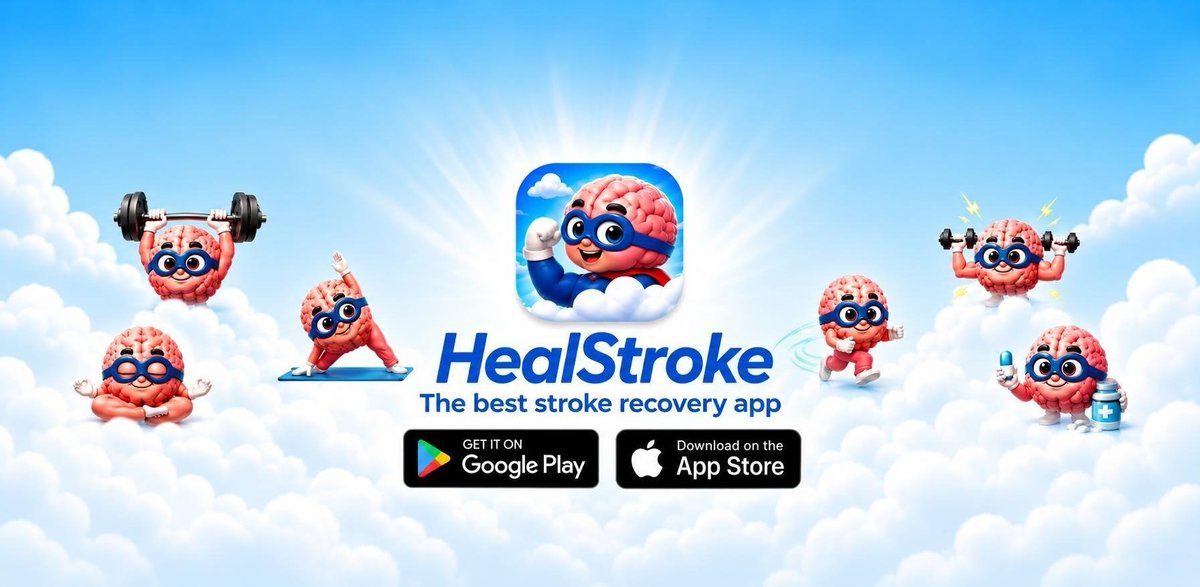
🧠💙 HealStroke is now live on iPhone & Android!
This one is personal.
After my dad had a stroke, I became one of his primary caregivers. I saw firsthand how difficult and fragmented recovery can be once you leave the hospital.
So we built HealStroke.
One place for stroke survivors & caregivers to support recovery at home — speech, movement, mobility, swallowing, vision, blood pressure & more.
🍎 iPhone/iPad:
https://t.co/IZJrxofVpf
🤖 Android:
https://t.co/vD7gRNtfEz
🌍 https://t.co/49RLsw9WW3
If you know a stroke survivor, caregiver, therapist, doctor, nurse, or family member affected by stroke, please share HealStroke with them. 💙 @stroke_tech
Helius CEO @mert has joined the NEAR Foundation Council, NEAR Foundation’s governing body.
An early NEAR Intents user and leading voice on privacy, Mert brings an operator’s view to how NEAR builds and grows.
“For crypto to win, we need connected, unstoppable liquidity at planetary scale. A market of markets. Neither Solana, Zcash, or Bitcoin can win on their own, we must work together. And NEAR is how."
https://t.co/BG9gKqDKIU
@mariafreitasPhD@Artizen prayers, for Rene, as a public goods funding founder that pivoted to building around stroke recovery after my dad had a stroke, lmk if there is anything i can do
nairobi #1 fun city, #last into any infrastructure ive seen. If CBD is your litmus for pedestrian friendly then super cooked. Poll 100 people from all classes; ask them whether they care more about a faster commute or having neighborhoods they can safely walk in. Usually, when people bring up light rail, it's indicative of why doesn't Sub-Saharan Africa have a light rail, since around the world other megacities have it, which is more comparative to modern expectations, which is actually what is fueling self-colonization. People assume that, because of population trends, Africa is guaranteed as the future; but I argue that the current trajectory of Africa's future is new-age colonialism. From first principles, really think about what type of society builds upon the social fabrics that are unique to African culture that values community, the elderly, and makes pleasant. Nairobi will never be a place for the elderly with these priorities, and therefore will not be a place where those outside the corrupt capital would want to build generational wealth. Trash, lack of sidewalks, fragrant pollution, and corruption lead to a demoralized population that doesn't want to tackle problems at hand and makes people idolize the West, either through escaping or mimicking what they perceive as success. Nairobi the type to spend more energy on protesting about corruption comparing to neighboring african countries as success than actually putting minds to directly tackling corruption. From a technical feasibility and financing problem, it's actually much easier to tackle these direct solutions than it is to implement a light rail. I bring this up because I know you alone could tackle one of these more direct problems, and it would change Nairobi's landscape. In a day and age where a workspace will be integrated into daily life, being able to walk around with your phone safely is NOT COMMUTING; it is the workspace.
It’s impossible. It will ultimately destroy more pedestrian pathways. Name 1 project in Nairobi that catered to motorized transport that led to increase in pedestrian friendliness. Lower income disabled and elderly people are often sacrificed to emulate western cities perception of modern. Same reason why autonomous vehicles won’t come to India and Brazil in a decade on uber. Unit economics of AVs won’t beat current rides soon. Look up the broken windows theory of criminology, sidewalks, greenery and trash apply to this