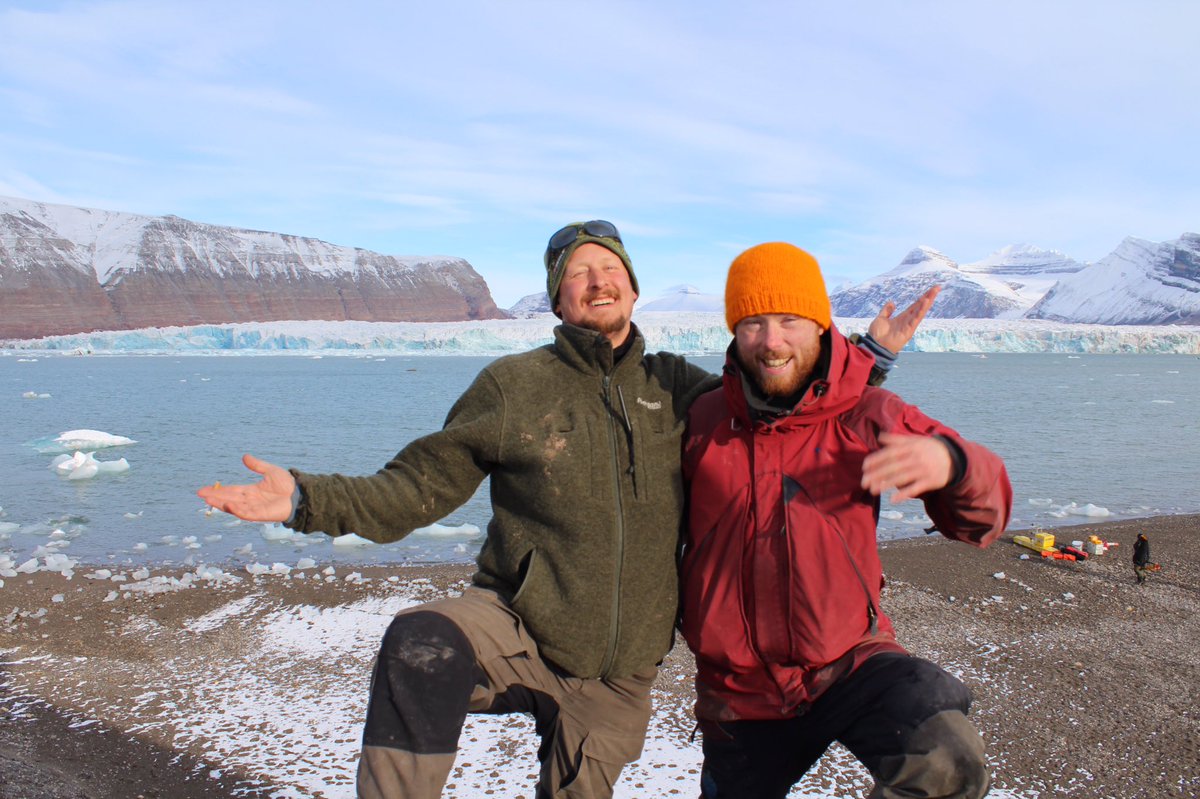
Watch our search and rescue operation using recco markers to recover an automatic weather station, lost in 2020. Read here https://t.co/3oQ80qt8Qk
V.C.: Pierre-Marie Lefeuvre #Svalbard#NyÅlesund#Kongsvegen#Weather#Glacier#AWS#Snow
New Research: A new approach to meteorological observations on remote polar glaciers using open-source internet of things technologies https://t.co/EE2L4VuDdM #Envsci
@nathr94 @egg_igs To show different types of caling, check this time lapse from the CalvingSeis project, https://t.co/pk7fXRL7j5 from Kronebreen, Svalbard.
Leaving #COP26, it is tough to find the words to hope for a deal. The #Finns may have one, though untranslatable, #Sisu: that is extraordinary determination in the face of extreme adversity, and #courage that is presented typically in situations where success is unlikely. #Wiki
Excellent surprise to hear @HeidiSevestre on FranceInter, telling about glaciers, climate change and her expeditions! Go Go Heidi!
https://t.co/7aM4du0Ogr
The most alpine peak of Isfjorden, Western Norway and in the background two beautiful glaciers with no names on official maps and retreating slowly but not studied... just numbers in the glacier database GLIMS: 353207 and 353212.
And, there are even more #IPCC online resources:
Regional fact-sheets for climate information: https://t.co/RyuoOqCjQg
FAQs about the climate: https://t.co/cxBfkuMDkQ
Data for SPM figures: https://t.co/8CRqjtZYpU
Outreach slides to use: https://t.co/6SQxd11cl1
Lots of resources online to learn about the #IPCC report.
Trailer video: https://t.co/D9ROmTiv49
Headlines: https://t.co/2yUFv1pLtg
Summary for Policymakers: https://t.co/UZbE2mWM0c
All the detailed Chapters: https://t.co/2Y0eSJ4mqD
Interactive Atlas: https://t.co/UnEE2jfWIp
Updated location of iceberg #A68a near 🇬🇸 showing further clockwise rotation. It will be interesting in the coming days to see if the western tip bumps into the shallower ocean floor or if it just continues eastward with the current 🌊
Completely agree! It keeps repeating itself as in 2003 ACAN named the ice streams A,...,F in Antarctica from great american researchers (which I admire too). A better approach is to use descriptive names instead of "honoring someone" as done for new names in Svalbard.
While I know and admire several of the scientists who have had places named after them, I do wonder how the Brits can just decide to introduce new place-names in a region covered by an international treaty, in an area also claimed by other countries?