Dear socialist friend,
Nothing is stopping you.
If collective ownership works so much better, you can prove it by next Tuesday. Pool your savings with your comrades. Elect a planning committee. Run a bakery, a farm, a repair shop – shared ownership, equal pay, decisions by vote. All of it is fully legal, today, everywhere in the West. No revolution needed.
And yet.
You want the workers to seize the factories – but you won’t open a food truck with three people from your group chat. You demand collective housing – but you won’t sign a joint lease with people who agree with you about everything.
People have tried voluntary socialism for two hundred years. The communes keep dissolving – the members simply walk out. The only socialist countries that lasted were the ones that locked the borders.
That’s the whole story. Where leaving is allowed, everyone leaves. Socialism only survives where leaving is banned. The people voted – on foot.
Just do it. Or admit that "collective" was always just a word for other people’s property.
@MiltonFriedmanW I can't imagine Milton Friedman being interviewed in today's climate. I watched his "Free to Choose" weekly show, and read his best-selling books. The legacy media would do their best to ignore him now. We need someone like him who can explain things clearly to the masses.
Milton Friedman casually dismantles the “capitalism = greed & exploitation” narrative on national television:
“Tell me, is there some society you know that doesn’t run on greed? You think Russia doesn’t run on greed? You think China doesn’t run on greed?
The world runs on individuals pursuing their separate interests. The great achievements of civilization have not come from government bureaus. Einstein didn’t construct his theory under order from a bureaucrat. Henry Ford didn’t revolutionize the automobile industry that way.
The only cases in which the masses have escaped from the kind of grinding poverty you’re talking about are where they have had capitalism and largely free trade. If you want to know where the masses are worst off, it’s exactly in the kinds of societies that depart from that.
The record of history is absolutely crystal clear that there is no alternative way, so far discovered, of improving the lot of the ordinary people that can hold a candle to the productive activities that are unleashed by free enterprise.”
Socialism destroys wealth before it even builds it, because it severs the link between effort and reward at the root.
Consider the Soviet collective farms. When the Bolsheviks forced peasants onto kolkhozy after 1929, grain output collapsed almost immediately. Why would a farmer work sixteen-hour days when the state claims the harvest? He wouldn't. He didn't. Soviet agricultural output remained so depressed that the USSR imported American grain through the 1970s and 1980s, paying in hard currency its own system couldn't generate. The incentive to produce disappears the moment production stops belonging to the producer.
You see this everywhere socialism touches. Venezuela's Chávez nationalized over 1,200 private companies between 1999 and 2012. Output in those sectors didn't rise; it cratered. PDVSA, the state oil company, produced 3.2 million barrels per day in 1998. By 2020 it produced under 400,000. Managers stopped caring because the profit signal, the one mechanism that communicates what people actually want, got switched off.
The incentive problem is only half the indictment. The other half is the destruction of choice.
When the British National Health Service controls your healthcare, you don't negotiate price, quality, or timing. You wait. In August 2026, NHS England carries a waiting list of roughly 7.5 million people. You get what the committee decided you deserve, when they get around to it. A market lets you trade your own resources for the care you value most. A bureaucrat's judgment replaces yours, permanently.
Central planners cannot possess the dispersed, local, constantly changing knowledge that prices carry automatically. Destroying price signals evaporates wealth.
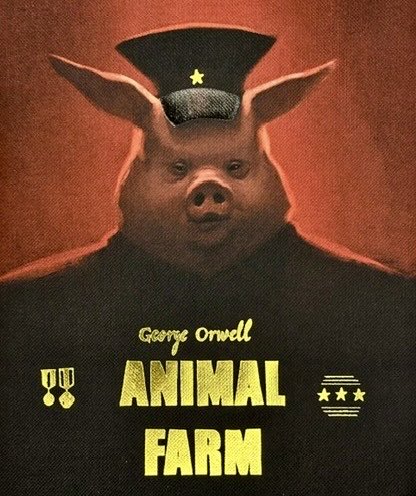
Animal Farm by George Orwell, in short:
1. Old Major, the fattest pig on the farm, delivers a sermon about "liberation." He has never missed a meal in his life – but he is the most envious of the Man – the producer, the entrepreneur…
2. “Whatever goes upon two legs is an enemy” – the ideology is manufactured from the start, designed not to free the animals but to direct their resentment away from the pigs and toward a useful target. Every revolution needs an enemy. The pigs chose the farmer.
3. The revolution’s commandments were never a constitution. They were a management tool – sacred enough to motivate, vague enough to rewrite, and controlled from the beginning by the only ones who could read – the pigs.
4. Boxer the horse, the most honest creature on the farm, decent, loyal yet naive, totally devoted, responds to every setback with the same answer: “I will work harder!” He means it completely. He works himself half to death. It is the most heartbreaking sentence in the book – because the new system is perfectly designed to absorb exactly that kind of devotion and give nothing back.
When he finally collapses from exhaustion, he is sold to the knacker. For cash. The pigs buy more whisky with the proceeds.
The other animals are told he died in a hospital receiving the best care. The most useful animal on the farm is the one who never once suspects he is the product.
5. The commandments get rewritten at night not because power corrupted the revolution – the rewriting was always the plan. Language was the weapon from the first speech Old Major ever gave.
6. “All animals are equal, but some animals are more equal than others” – this is not the system’s failure. It is the system’s true face, finally visible once the animals are too exhausted and confused to object.
7. Orwell’s message: the lie came first. And the "liberation" it promised delivered something far worse than what came before – because the fattest pig was merely selfish at the start, but by the end is selfish and fluent in the language of "justice." He took all the eggs. He took everything. And made the hens thank him for it.
The fattest pig knew what he was doing all along…
Here are the most important lessons from the Austrian School of Economics in one post:
The entire edifice of modern economic policy rests on a lie: that a group of planners can manage an economy better than the people living in it.
Start with value. Nothing has value in the abstract. You value a glass of water differently when you're drowning than when you're dying of thirst in the Sahara. Value lives inside individual human minds, not in objects, not in labor hours, not in government decree. Every price control, every subsidy, every centrally administered wage floor ignores this and produces predictable wreckage.
Money didn't come from a government committee. It emerged spontaneously from markets, as traders across centuries converged on commodities like gold and silver because they held value across time and space. Governments didn't invent money; they hijacked it.
Inflation is the expansion of the money supply itself. Rising prices are the symptom. When the Federal Reserve expanded its balance sheet from roughly $4 trillion to nearly $9 trillion between 2020 and 2022, the price explosion that followed wasn't a mystery. It was the direct, mechanical consequence of that expansion. The Fed caused it.
Prices do something irreplaceable: they transmit information across millions of actors simultaneously. When lumber prices spiked in 2021, builders across North America cut waste and sought alternatives without a single bureaucrat issuing a memo. No central planner can replicate that signal, because no central planner possesses the knowledge embedded in it.
This connects directly to the knowledge problem. You know your neighborhood, your suppliers, your customers, your own tolerance for risk. Your competitor knows his. A bureaucrat in Washington knows none of it. The knowledge required to run an economy is dispersed, personal, and contextual. It cannot be extracted, aggregated, and fed into a planning model. The Soviet Union ran that experiment for seventy years and produced chronic shortages of basic goods.
Bad businesses must be allowed to fail. When they fail, they release labor, capital, and resources to producers who will use them more effectively. When Washington handed General Motors $49.5 billion in 2009 to prevent exactly that process, it kept misallocated capital locked inside a failing structure and punished every competitor who had managed their business responsibly.
Every function government performs, a voluntary market arrangement performs better: faster, cheaper, and responsive to actual human preferences rather than political incentives. Education, roads, security, dispute resolution, all of it. Government agencies face no profit and loss signal, no competition, and no mechanism to reward performance. They optimize for budget preservation and political survival, and the people using the service have no exit option.
The political class and the central banking apparatus that sustains it are the villains. Both benefit directly from the idea that expert management beats voluntary exchange. They will not surrender that idea willingly.
What would you add?
The debate over definitions is the longest-running distraction in political history, and you fell for it.
Socialists say fascists are right-wing. Fascists said they weren't socialists. Communists denounced both. Meanwhile, in Venezuela in 2016, people were hunting pigeons for food in Caracas while the state controlled flour prices. The label on the ideology didn't matter to the man eating a pigeon.
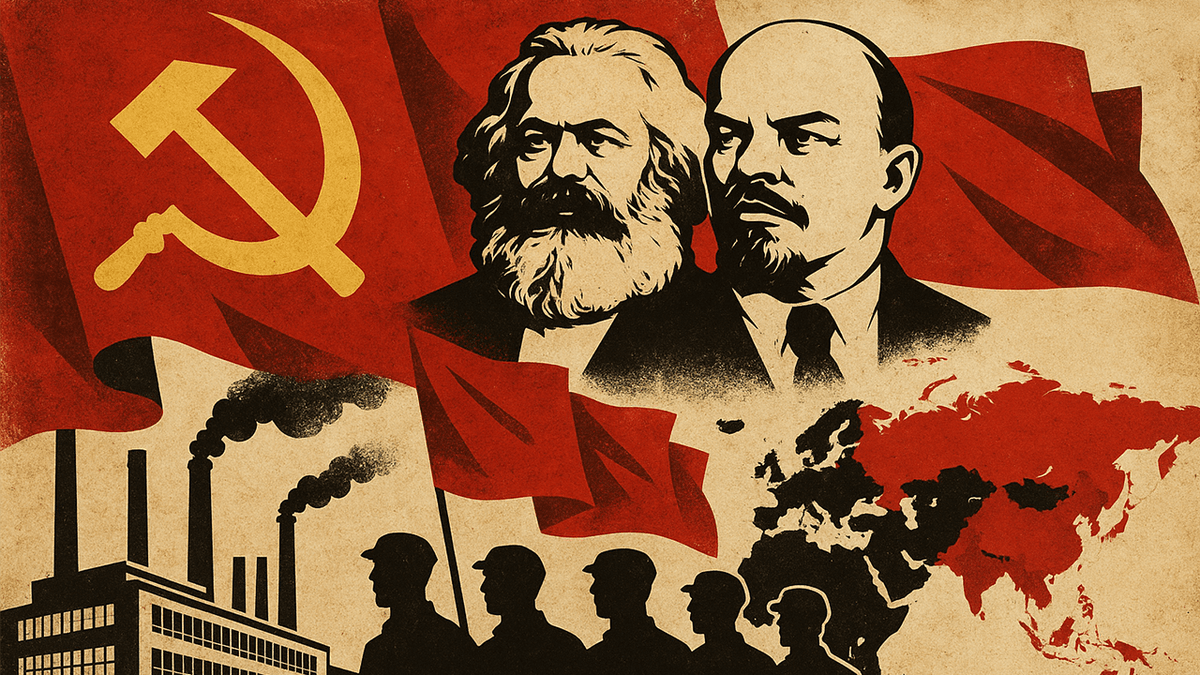
Call it what it is: collectivism. The organizing principle is identical across every variant. A group of people with guns decides how resources get allocated, overriding the voluntary choices of individuals. Whether that group calls itself the vanguard of the proletariat or the national corporatist council changes nothing about the mechanics. You still can't say no.
Without private property in the means of production, you eliminate the price signal. Without prices, planners guess. They always guess wrong, at scale, with consequences that pile up in morgues and bread lines. Mao's planners guessed their way through the Great Leap Forward, killing somewhere between 15 and 55 million people between 1959 and 1961.
The naming debate serves one purpose: it lets each new collectivist generation disown the last one's catastrophes. "That wasn't real socialism." Of course. It never is, until it is, and by then you've surrendered the institutions that would have let you resist.
Central planning requires information no central planner possesses. You cannot aggregate the distributed, local, constantly-changing knowledge of millions of individuals into a committee's spreadsheet. The Soviet Union tried for 70 years. Cuba is still trying. The score is not ambiguous.
Stop arguing about which flavor of coercion deserves sympathy. Voluntary exchange or compulsion. Pick one.
Art Subsidies Are Unjust and a Violation of Free Speech
In this episode of the Ayn Rand Institute podcast, Onkar Ghate and Tristan de Liège discuss Zohran Mamdani’s record $323 million culture budget for NYC aimed at supporting the arts, and why government attempts to fund artistic endeavors are unjust and ineffective in creating thriving conditions for artists.
"Animal Farm" doesn't criticize socialism—it only critiques Stalin while fundamentally defending socialism’s basic premise. By contrast, Ayn Rand’s "Anthem" exposes the deadly moral root of the whole ideology. Explore the contrast with our new article: Anthem versus Animal Farm.
Learn more below 👇
La plupart des Occidentaux pensent comprendre le communisme.
Ils voient des files d’attente, des goulags, des plans quinquennaux ratés et l’effondrement de l’URSS.
Ils le rangent dans la catégorie « théorie économique discréditée ».
Case closed.
C’est la plus dangereuse erreur intellectuelle de notre époque.
Le communisme n’a jamais été principalement un système économique.
L’économie n’était que la surface.
En dessous, il y avait quelque chose de bien plus radical : un engagement total, systémique, institutionnalisé, contre la vérité elle-même.
Pas le mensonge occasionnel. Pas la propagande ordinaire.
Une guerre civile contre le réel, menée dans chaque école, chaque journal, chaque conversation, jusqu’à ce que la réalité devienne négociable et que le mensonge devienne l’air qu’on respire.
Le polonais a deux mots pour ça que l’anglais (et le français) n’ont jamais vraiment traduits :
Zakłamanie : l’état de mensonge total, diffus, socialement enraciné, où une société entière est saturée de fausseté au point que la vérité devient presque inaccessible.
Obłuda : l’hypocrisie profonde, performative, l’écart permanent entre ce qu’on proclame et ce qu’on pratique réellement, le masque porté si longtemps qu’il finit par ressembler à un visage.
Ce ne sont pas des mots pour des menteurs individuels.
Ce sont des mots pour un système.
Une organisation sociale fondée sur le mensonge organisé, où le mensonge n’est pas l’exception mais la fondation.
Et parce que l’Occident n’a jamais vraiment vécu ça, il n’a pas le vocabulaire.
Et parce qu’il n’a pas le vocabulaire, il ne le reconnaît pas quand il revient sous un nouveau costume.
Ce qu’on appelle aujourd’hui le wokisme, ou la gauche radicale contemporaine, n’est pas un phénomène nouveau.
C’est le même système d’exploitation qui tourne sur un matériel mis à jour.
Au lieu du prolétariat, des groupes identitaires marginalisés.
Au lieu des ennemis de classe bourgeois, des racistes et des transphobes.
Au lieu du réalisme socialiste, des déclarations DEI.
Mais la structure profonde est identique :
La vérité n’est pas découverte. Elle est assignée.
La réalité n’est pas quelque chose qu’on comprend honnêtement. C’est quelque chose qu’on narre stratégiquement.
Le langage n’est plus un outil de communication. C’est une arme de pouvoir.
Et celui qui résiste au récit officiel n’est pas simplement dans l’erreur. Il est dangereux. Il doit être réduit au silence, humilié, ou détruit.
C’est le zakłamanie sous sa forme moderne.
C’est l’obłuda qui porte un badge de droits de l’homme.
Ceux qui ont grandi dans la liberté ont tendance à croire, au fond, que les acteurs de mauvaise foi savent qu’ils mentent.
Qu’il y a, derrière la performance idéologique, un cynique qui, en privé, reconnaît encore le réel.
Cette hypothèse est fausse.
Et c’est pour ça que l’Occident sous-estime systématiquement ce à quoi il a affaire.
Le mensonge totalitaire, à maturité, n’est plus cynique.
Il est cru.
Ou plutôt : il crée une condition où la distinction entre croire et jouer s’effondre complètement.
Les gens apprennent à dire des choses qu’ils ne pensent pas, si longtemps et si fluide, qu’ils perdent finalement l’accès à ce qu’ils pensent réellement.
Ça produit aussi une adaptation cognitive qu’on appelle doublethink : la capacité de tenir deux croyances contradictoires en même temps et de les accepter toutes les deux comme vraies quand le système l’exige.
Ce n’est plus seulement mentir aux autres.
C’est apprendre à tolérer la contradiction à l’intérieur de soi-même, parce que la survie en dépend.
Les Polonais, les Tchèques, les Hongrois et tous ceux qui ont vécu ça reconnaissent le pattern immédiatement quand ils le voient dans les institutions occidentales aujourd’hui.
Les procès publics sur les réseaux.
Le discours forcé.
Les tests idéologiques pour l’emploi.
L’effacement des faits gênants.
Les confessions rituelles de privilège.
Pour un œil post-communiste, c’est indubitable.
Pour un œil qui n’a connu que la liberté, ça ressemble encore à un mouvement social passionné, même s’il est maladroit.
Ce décalage de perception — entre ceux qui ont le vocabulaire du zakłamanie et ceux qui ne l’ont pas — est probablement l’une des lignes de faille les plus lourdes de conséquences dans le monde occidental actuel.
Parce qu’on ne combat pas une maladie qu’on ne sait pas nommer.
Et on ne nomme pas ce que sa langue n’a jamais été construite pour décrire.
La première tâche, donc, c’est la traduction.
Pas seulement des mots.
De la compréhension vécue que ces mots portent.
Le mensonge n’est pas un bug dans ce système.
Il est le système.
Jusqu’à ce qu’on le comprenne, l’Occident continuera d’arriver, perpétuellement surpris, devant des institutions qu’il croyait solides et qui ont été calmement vidées de l’intérieur.
Nommer.
Refuser de jouer.
Et construire.
Britain forced 60 of its 350 richest people off the Rich List by abolishing non-dom tax status.
They left for lower tax countries instead of staying to bankroll the system that targeted them.
In Atlas Shrugged (1957), Ayn Rand shows what happens when governments seize more control over industry in the name of the common good and the country’s most productive minds simply stop producing.
The inventors and industrialists vanish one by one because they refuse to keep working for a system that punishes success and demands they sacrifice it.
The productive class only gets exploited because it tolerates the exploitation.
Withdraw that tolerance and the structure built on top of it collapses.
Who changes the world? Is it innovators, the producers of wealth, and giants of industry? And what does that have to do with you and your happiness? In this presentation, Tal Tsfany will review the forces that shape the world at large and our own individual lives.
Register today » https://t.co/xRDz0c7HFo
ARU Core: Study Ayn Rand's Ideas with Expert Instruction
In this episode of The Ayn Rand Institute Podcast, @donswriting, Onkar Ghate, and @lockitch discuss the Institute's recently announced educational program on Objectivism: ARU Core.
A SpaceX engineer once described what happens when Elon Musk finds an error in your work.
The engineer had submitted a thermal analysis for a component on the Raptor engine. The document was 80 pages. It passed review from three senior engineers. It was approved and scheduled for implementation.
Two days later an email arrived from Elon at 11pm. One line. "Your heat flux calculation on page 34 assumes steady state conditions but the duty cycle is transient. Redo it."
The engineer said he stared at the email for five minutes. Not because it was harsh. Because it was correct. The assumption was buried in a sub calculation that none of the three reviewing engineers had caught. Elon found it in a document he had no obligation to read, on a page nobody expected him to reach, at 11pm on a Tuesday.
He said the culture at SpaceX exists because of moments like this. Not because Elon motivates people with speeches. He doesn't give many speeches. The culture exists because every engineer knows that any document they submit might be read line by line by a man who will find the one error they missed. Not to punish them. To prevent the error from reaching the hardware. Because errors in hardware explode.
The fear isn't being fired. The fear is submitting work that isn't your absolute best and having the CEO of a six company empire find the mistake you should have caught. That fear produces better engineering than any motivational poster ever could.
They smashed babies against trees and murdered nearly 2 million Cambodians in under 4 years chasing a pure agrarian communist utopia with no cities, no money, and no private property.
On April 17 1975, the Khmer Rouge rolled into Phnom Penh and within hours emptied the entire city, marching hospital patients and the elderly into the countryside on foot as they declared Year Zero and set out to erase every trace of the old society.
Anyone tied to the past became a target and wearing glasses alone could get you killed because it proved you could read, while doctors, teachers, engineers, and monks were executed as enemies of the revolution.
They turned a high school into a prison where roughly 20,000 people were tortured into confessing crimes that never happened, after which they were trucked to mass graves in the killing fields where executioners smashed infants against the killing tree to save bullets.
But they never achieved a classless utopia so it wasn’t like real communism.
A new intellectual arena is open for those aged 16 to 22. It’s for those:
* Curious enough to question the status quo
* Disciplined enough to follow the evidence rigorously
* Courageous enough to examine controversial truths
* Driven enough to compete at the highest intellectual level
It challenges young minds to think deeper, argue better, and prove that their ideas can withstand real scrutiny. Winners will walk away with big prizes and incredible opportunities.
If you’re capable of confidently ranging off the beaten mental track, then get the details and compete here: https://t.co/KMDrBF6vKK