Met with Dutch Consul General @nlinkri Adriaan IJsselstein. We discussed regional developments and the conclusion of the Coalition mission by late September. We agreed to strengthen trade and agricultural ties, learning from their experience in various fields.
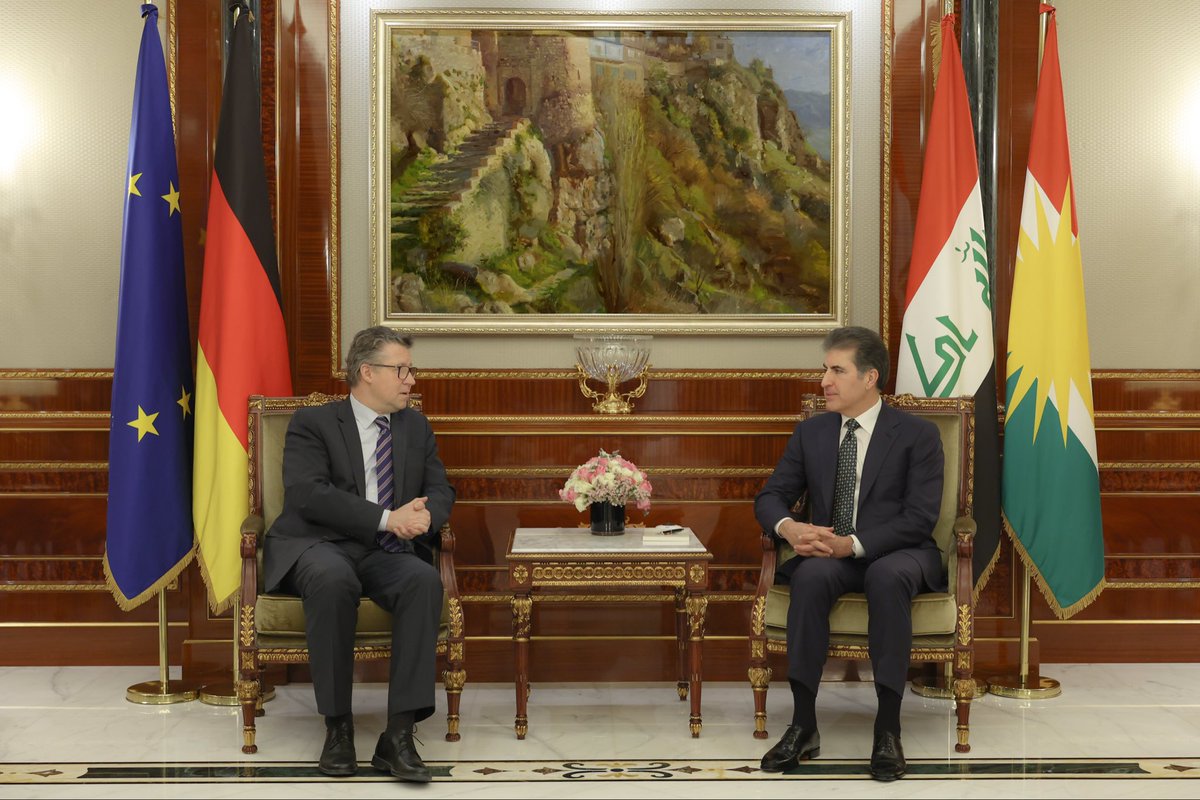
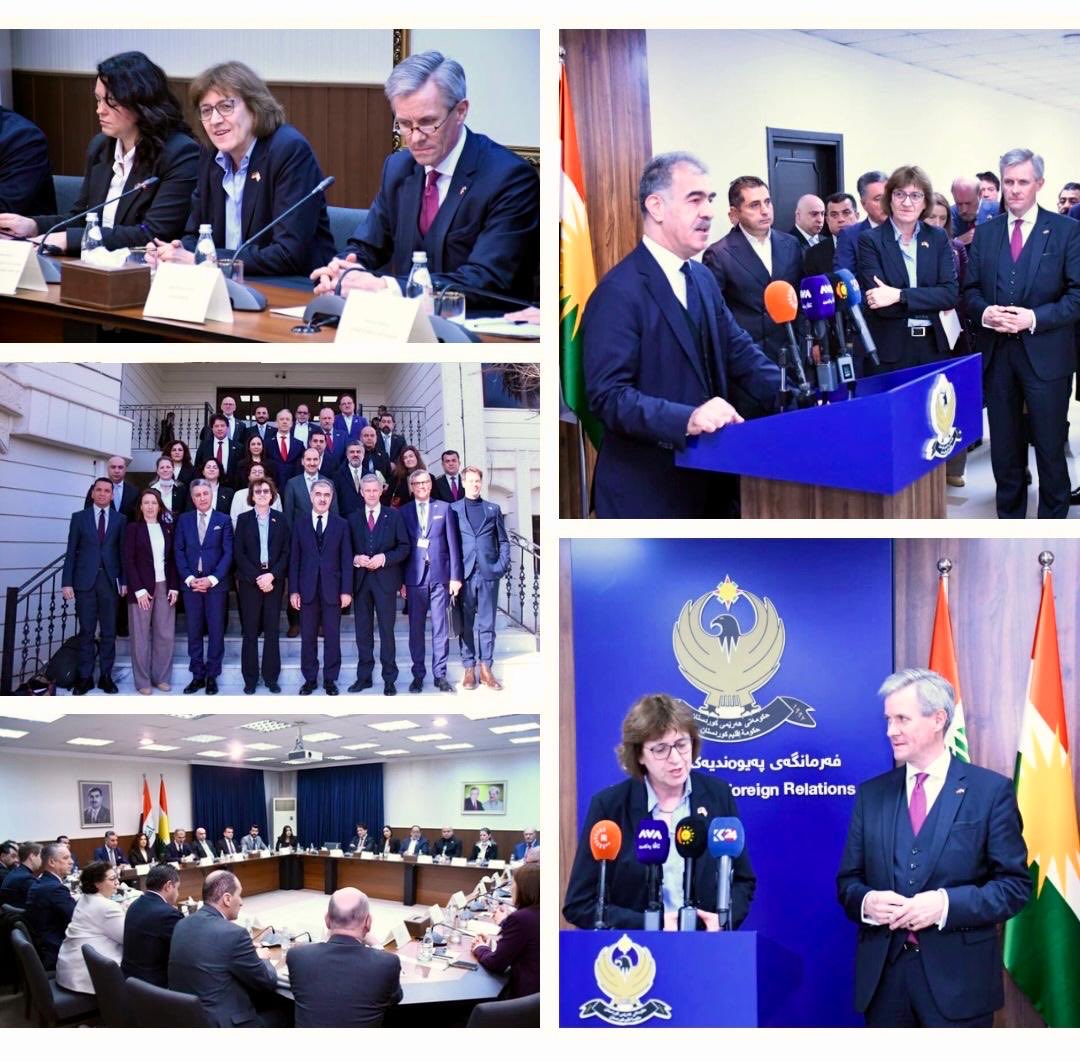
Welcomed new @GermanyInKRI Consul General Dr. Christian Oelfke. Expressed full support for his tenure and continued strengthening of bilateral ties.
We strongly condemned the drone attack on PM @masrourbarzani’s office, reviewed regional developments and Erbil-Baghdad relations.
Strongly condemn Iranian drone attacks on PM @masrourbarzani’s office & the home of the Security & Intelligence Agency head.
Kurdistan is not party to the current conflict, yet continues to be indiscriminately targeted by Iran & affiliated militias.
#KRI’s progress continues!
Following an investigation by the Kurdistan Counter-Terrorism Unit, my personal office and the home of the head of the Security and Intelligence Agency were targeted by Iranian drone attacks earlier today.
I condemn these reckless and unacceptable attacks in the strongest terms. This is a dangerous escalation and a direct threat to the security and stability of the Kurdistan Region.
These attacks will not deter us from carrying out our duties and protecting our citizens -mb.
Wishing a very happy Republic Day to the people and Government of Italy, and Consulate General in Kurdistan @ItalyinKRI! We look forward to strengthening our invaluable relationships.
Held a meeting with EU Representative, and Consul Generals from EU member states in the Kurdistan Region. We discussed regional dynamics, and I outlined the KRG’s position, recent engagements abroad and thanked the EU for its continued support for stability and partnership.
Prime Minister @masrourbarzani speaks with Belgian Deputy Prime Minister Jan Jambon about strengthening relations, and developments in Iraq and the wider region.
https://t.co/c8uiwa5zCv
At @AssembleeNat, I briefed the French MPs @FlorenceGoulet4 and @ClaireBeuil on the unfolding events in Kurdistan and Iraq, including Erbil–Baghdad issues and drone attacks targeting our civilians and infrastructure.
We reaffirmed our strong partnership and close cooperation.
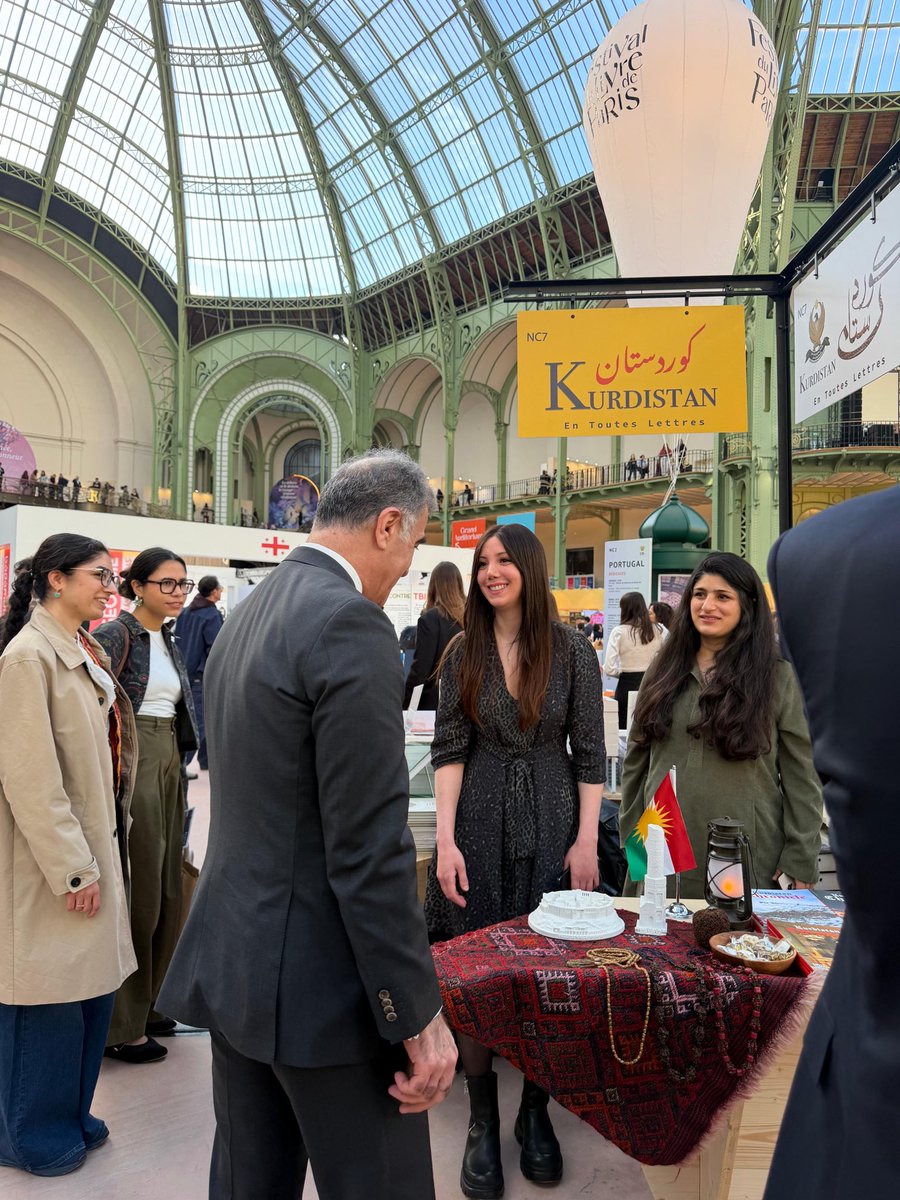
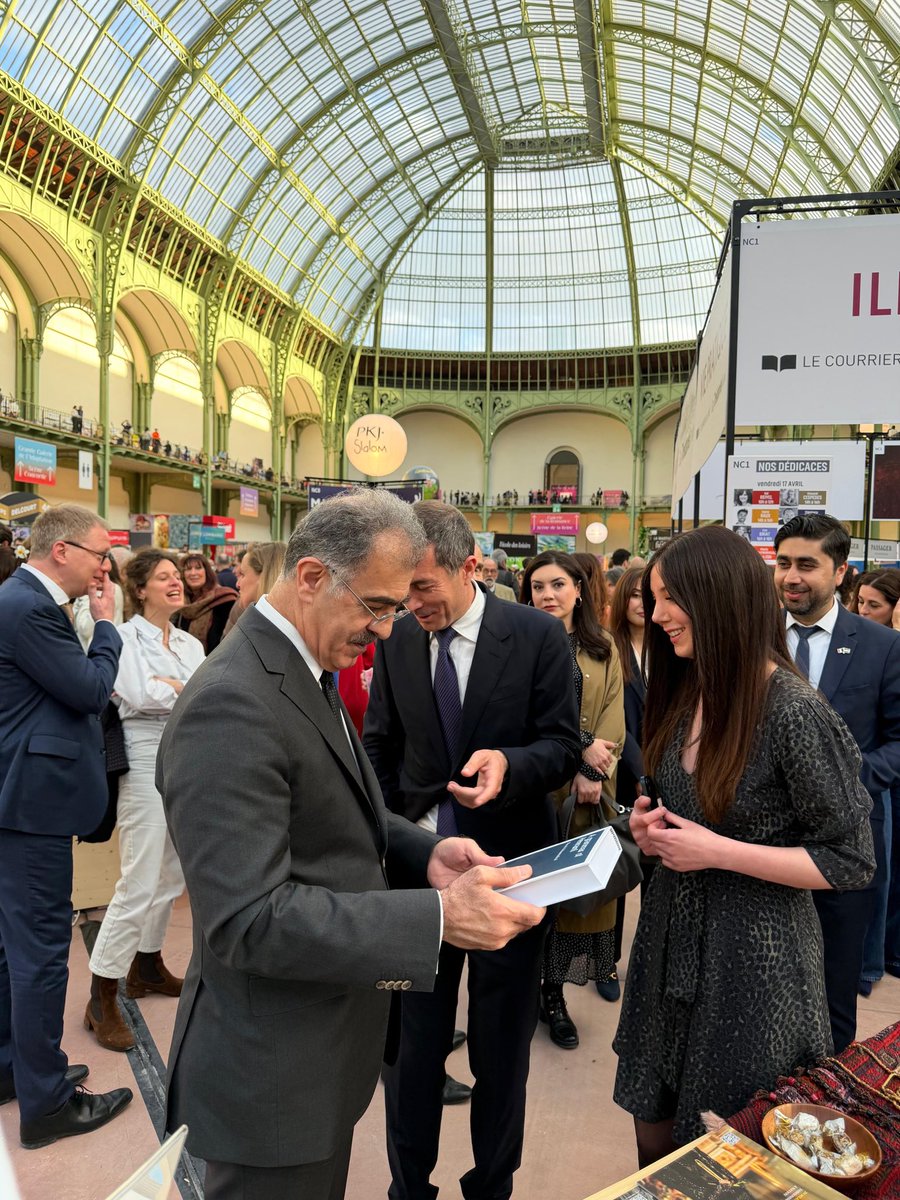
I visited the Kurdistan stand at the Paris Book Fair.
I commended the Kurdistan Regional Government representation @KrgFrance and staff for organizing the stand and presenting Kurdistan to French readers.
I am in Paris, and today at @Senat I met with the French Senators @NicoleDuranton, Head of France-Iraq Friendship Committee and @RemiFeraud, Head of the Kurdish Studies. We discussed challenging situations in the Middle East, security threats against Kurdistan and bilateral ties.
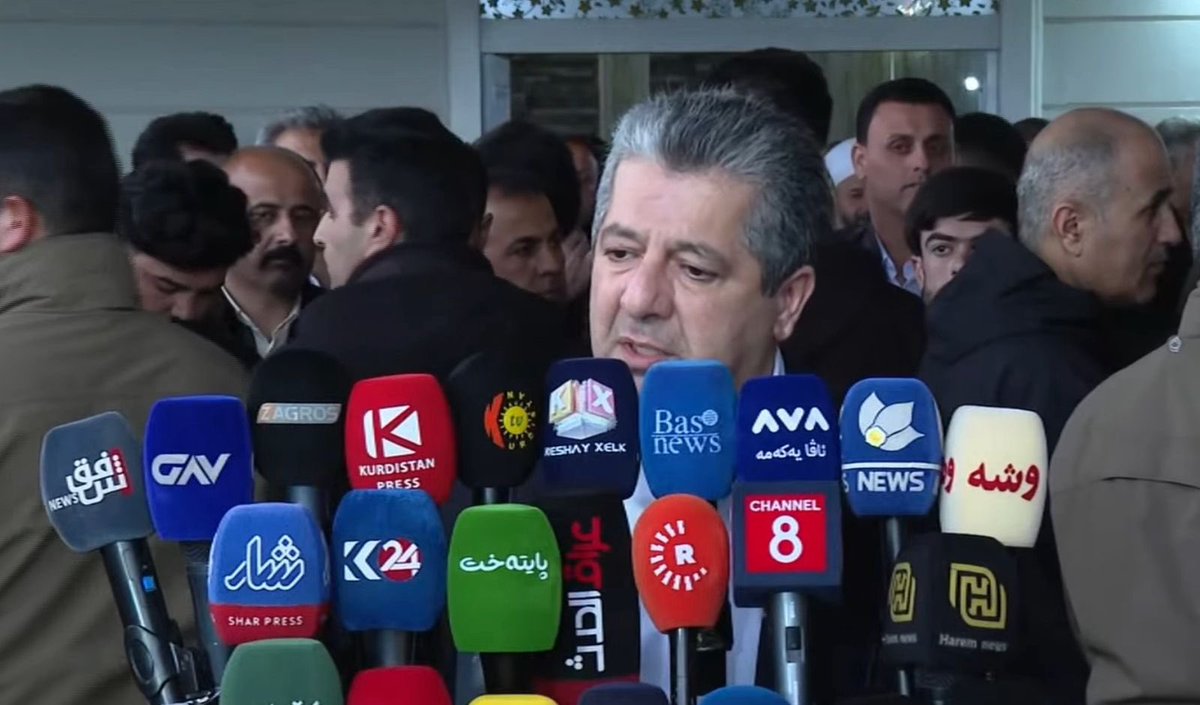
#BREAKING: PM Masrour Barzani says the Iraqi government “knows very well” who the parties behind the attacks on the Kurdistan Region are
“They roam freely, and they are being funded and authorized by the government, but the government says we are unable to confront them. Whether they don’t want or they don’t have the power to, the responsibility still lies with the federal government”
I’m delighted to have received German State Secretary Géza Andreas von Geyr. I thanked Germany for its longstanding support to the Kurdistan Region and Iraq. We discussed the latest developments in the Middle East and reiterated our shared commitment to regional stability.
This was a predictable and preventable outcome.
The KRG counselled against this aggressive approach in the summer last year — with U.S. diplomats in the room.
Rather than take stock of our advice, the federal government introduced three major measures on 1st Jan — each a shock to the market:
1. Up to a 30% increase in customs duties
2. The introduction of a customs system at the borders
3. The coupling of dollar transfers to customs clearances.
There was no phased or incremental roll-out. No advance notice to allow the market to adapt to new tariffs. And an over-dependence on ASYCUDA — UN proprietary customs software — to tackle structural, operational and policy gaps in the customs regime.
The execution has proven reckless in their economic impact.
The market was not given sufficient time to adjust. Goods already en route to Iraq are now sit idle at border crossings, incurring penalties everyday. There was little public communication around ASYCUDA — particularly to brokers, importers etc. Banks, ostensibly operating under an independent regulatory framework, have also been drawn into customs-related implementation challenges and disputes between Erbil and Baghdad.
The effects have been acute.
Cross-border dollar trades has dropped by approximately 70% across Iraq compared to last year, prior to the introduction of these measures. Customs revenue has fallen by nearly 50%, further hurting federal coffers.
In the Kurdistan Region, the situation is far more severe given the absence of ASYCUDA. Formal dollar access through banks for imports have flatlined, literally.
The parallel market — Hawala/exchange houses— for dollar access has re-emerged. Market demand has driven the price up from 1380 to 1520. Inflation 15% has translated into higher food prices, affecting households across Iraq, including in the Kurdistan Region. One kilogram of meat has increased by 15% in the local market in the last two weeks alone. Stores are closing in Baghdad, importers have staged national boycotts against new tariffs, and families are facing higher food costs in Ramadan.
What was intended to increase non-oil revenues has instead contributed to liquidity pressures. Importers are depositing fewer dinars in Iraqi banks, delaying — for the first time — payroll payments to millions in the public sector.
At the same time, the hard work over the past three years with the Central Bank of Iraq and the U.S. Treasury on AML/CTF, card usage and cross-border trades through formal (bank) channels is gradually being undone by policy decisions whose full economic impact may not have been — and is still not — fully appreciated. This is personal for me given the work we’ve done together with partners in CBI and licensed-banks to encourage financial inclusion and increase bank deposits.
We urge the federal government to immediately review these measures carefully. Facts don’t care about opinions; the data paints a stark picture on trade volumes, customs revenues, inflation, and liquidity, warranting an urgent review to stop the widening spread between the formal and parallel dollar market.
The objective was customs reform and more non-oil revenue. The result has been market contraction, liquidity problems, and increased cost-of-living pressures.
This is a very good example of the need to sequence reform with clear communications. Markets require time to adapt. And policy shocks, introduced without preparation or communication, carry real life consequences.
Why should families across the country have to pay more for poor planning?
We have advised colleagues in the federal government and CBI to exercise caution. We propose a roadmap that is gradual, aligns tariffs, implements customs technology at all borders, and restores dollar access.
I hope wisdom and pragmatism prevails.
#Iraq
Held a roundtable meeting with a German business delegation headed by Dr. Dorothea Schütz and attended by @GermanyInKRI. I presented an overview on the regional situation, highlighted the KRG’s vision for FDI and welcomed the delegation’s engagement and initiatives.
Met with the Consul General of Italy @ItalyinKRI, Tommaso Sansone. We touched on regional dynamics and broader environment, including Erbil–Baghdad relations, formation of federal and regional cabinets, and prospects for expanding bilateral economic ties.
👉 Agenda del #Senado para mañana #28Enero:
➡️ Visita del Ministro-Jefe del Departamento de Relaciones Exteriores de la Región del Kurdistán iraquí, Safeen Mohsen Dizayee
📄 https://t.co/LvNh2PHvfb
At @M_Presidencia’s Spanish Center for Political and Constitutional Studies @cepcgob, I met with Director General Rosario García Mahamut. We discussed regional developments, political reforms and constitutional rights in Kurdistan, emphasizing coordination with @KurdistanParl.