Pointing some of my extract parameters i could use for a new goldengate deployment:
TRANLOGOPTIONS EXCLUDEUSER System/Sys
TRANLOGOPTIONS EXCLUDETAG 00
REPORTCOUNT
STATOPTIONS
REPORTROLLOVER
DISCARDROLLOVER
BR BRDIR
CACHEMGR
find more details in my blog , link in profile desc.
People are realizing that AIs are nowhere near human intelligence and learning abilities.
Yet they have become very useful by compensating for their lack of common sense, lack of understanding of reality, and limited reasoning and planning abilities, by the accumulation of enormous amounts of declarative knowledge.
How to start learning or practicing Oracle Golden Gate23ai
1. Oracle Live Labs : https://t.co/HqnefL4Iy2
2. Official 23ai document : https://t.co/VijwjFjehW
#Oracle#CloudMigration#Goldengate
Oracle GoldenGate isn't just for Oracle-to-Oracle replication.
You can stream real-time data across heterogeneous environments—like Oracle to Mysql, Postgres , Mongodb , Kafka and many more.
#TechTips#DataReplication#Oracle#CloudMigration#Goldengate
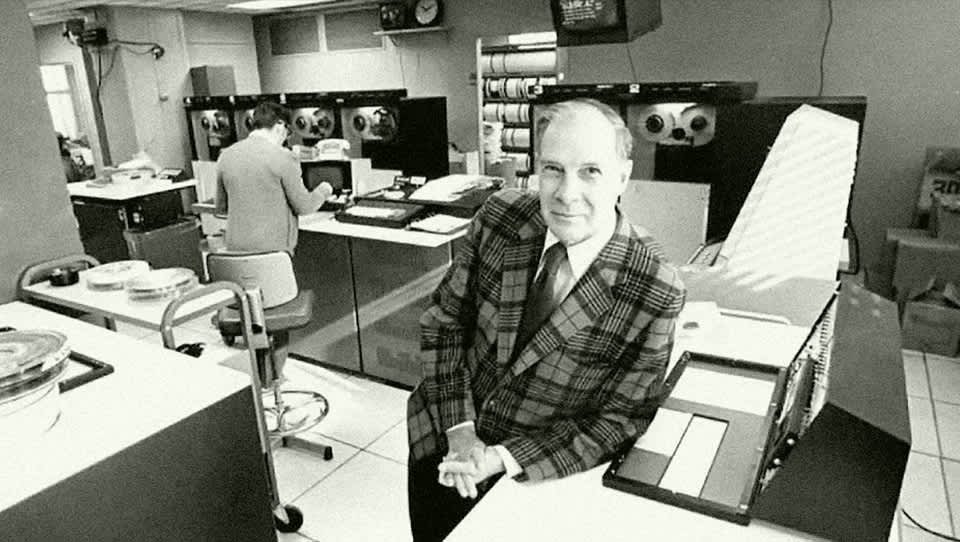
A mathematician who shared an office with Claude Shannon at Bell Labs gave one lecture in 1986 that explains why some people win Nobel Prizes and other equally smart people spend their whole lives doing forgettable work.
His name was Richard Hamming. He won the Turing Award. He invented error-correcting codes that made modern computing possible. And he spent 30 years at Bell Labs sitting in a cafeteria at lunch watching which scientists became legendary and which ones faded into nothing.
In March 1986, he walked into a Bellcore auditorium in front of 200 researchers and told them exactly what he had seen.
Here's the framework that has been quoted by every serious scientist for the last 40 years.
His opening line landed like a punch. He said most scientists he worked with at Bell Labs were just as smart as the Nobel Prize winners. Just as hardworking. Just as credentialed. And yet at the end of a 40-year career, one group had changed entire fields and the other group was forgotten by the time they retired.
He wanted to know what the difference actually was. And he said it wasn't luck. It wasn't IQ. It was a specific set of habits that almost nobody is willing to follow.
The first habit was the one that hurts the most to hear. He said most scientists deliberately avoid the most important problem in their field because the odds of failure are too high. They pick a safe adjacent problem, solve it cleanly, publish it, and move on. And because they never swing at the hard problem, they never hit it. He said if you do not work on an important problem, it is unlikely you will do important work. That is not a motivational line. That is a logical one.
The second habit was about doors. Literal doors. He noticed that the scientists at Bell Labs who kept their office doors closed got more done in the short term because they had no interruptions. But the scientists who kept their doors open got more done over a career. The open-door scientists were interrupted constantly. They also absorbed every new idea passing through the hallway. Ten years in, they were working on problems the closed-door scientists did not even know existed.
The third habit was inversion. When Bell Labs refused to give him the team of programmers he wanted, Hamming sat with the rejection for weeks. Then he flipped the question. Instead of asking for programmers to write the programs, he asked why machines could not write the programs themselves. That single inversion pushed him into the frontier of computer science. He said the pattern repeats everywhere. What looks like a defect, if you flip it correctly, becomes the exact thing that pushes you ahead of everyone else.
The fourth habit was the one that hit me the hardest. He said knowledge and productivity compound like interest. Someone who works 10 percent harder than you does not produce 10 percent more over a career. They produce twice as much. The gap doesn't add. It multiplies. And it compounds silently for years before anyone notices.
He finished the lecture with a line I have never been able to shake.
He said Pasteur's famous quote is right. Luck favors the prepared mind. But he meant it literally. You don't hope for luck. You engineer the conditions where luck can land on you. Open doors. Important problems. Inverted questions. Compounded hours. Those are not traits. Those are choices you make every single day.
The transcript has been sitting on the University of Virginia's computer science website for almost 30 years. The video is free on YouTube. Stripe Press reprinted the full lectures as a book in 2020 and Bret Victor wrote the foreword.
Hamming died in 1998. He gave his final lecture a few weeks before. He was 82.
The lecture that explains why some careers become legendary and others disappear is still free. Most people who could benefit from it will never open it.
If you feel lost, build something.
A business. Your body. A skill set. Anything that gives you a reason to learn and focus.
Don't worry about choosing the right thing. Don't think about how difficult it will be.
Just start moving forward and you'll find a path that feels right
Stripe offered to acquire us for $1.2 billion when we had $2M in revenue.
Today, we've raised $330M at an $8B valuation and reached $1B ARR.
We could've died three times during this journey.
This is the story I've never told anyone before:
Stanford's Courses on AI & ML (FREE):
❯ CS221 - AI
❯ CS229 - ML
❯ CS229M - ML Theory
❯ CS230 - DL
❯ CS234 - RL
❯ CS236 - Deep Generative Models
❯ CS336 - LLM from Scratch
❯ CS224N - NLP with DL
Course links inside:
The 20 best horror movies of all time:
1. The Exorcist (1973)
2. The Shining (1980)
3. The Texas Chain Saw Massacre (1974)
4. Alien (1979)
5. Psycho (1960)
6. The Thing (1982)
7. Rosemary's Baby (1968)
8. Halloween (1978)
9. Dawn of the Dead (1978)
10. Jaws (1975)
11. Suspiria (1977)
12. Night of the Living Dead (1968)
13. Don't Look Now (1973)
14. The Innocents (1961)
15. Carrie (1976)
16. An American Werewolf in London (1981)
17. Evil Dead II (1987)
18. The Fly (1986)
19. Let the Right One In (2008)
20. A Nightmare on Elm Street (1984)
According to TimeOut, 2024
Everything that AI hypermarketers claimed was going to be dead by now is very much alive:
• CS degree — do it if you can
• Coding — learn it, period
• RAG & prompt engineering — roughly all you need
• Evals — no pain, no gain
• Wrapper startup — pay close attention to your users
What else?
LLMs were never the final stop.
AI is entering a new arc, and we need more (not less) engineers and builders than ever before.
Fake AI narratives are out of control, but those who are building in the space know of the challenges and opportunities ahead.
It's not clear all the changes that are coming, but a solid foundation shouldn't be optional in this epic new world.
Get the experience. Take the time you need to properly learn new stuff and skills, and always be building things as you explore. Use AI as your companion.
There wasn't a better time to go deep and accelerate learning with AI than today.
This is not advice; it should be common sense.
Engineering is the bridge between imagination and reality, and every great innovation starts with an engineer who dares to dream big. Here's to the engineers who are changing the world and making a difference in people's lives. Let's keep pushing the limits of what's possible!