A few more expanded thoughts on the current situation. I'll start from a distance and gradually move toward the center of the issue.
We live in an era where the battlefield evolves so rapidly that if you fall out of the information cycle for even 6–12 months, you'll be shocked by how much has changed. New technologies emerge, geopolitical balances shift, financial situation changes, producing a completely different battlefield dynamics. In such an environment, you need people who can not only adapt quickly, but also systematize those changes and, far more importantly, implement them.
Mykhailo Fedorov was one such minister. Within months, he helped introduce several adaptations that had a tangible impact on the battlefield. Unfortunately, this kind of talent is rare. Yet perhaps even more important than the practical results was the hope he brought to the troops. Hope that things could improve. Hope that change was possible. Hope that someone at the top understood that yesterday's solutions would not solve tomorrow's problems.
This hope was not baseless. It was actively helping shape the conditions for victory.
Now let's zoom out from the Ministry of Defense and look at the broader picture.
Since 2023, I have consistently argued against promoting General Syrskyi to the position of Commander-in-Chief. Even back then, as commander of the Ground Forces and the Khortytsia operational grouping, he was displaying three major flaws that, in my view, outweighed his strengths.
The first was an unwavering top-down approach to command. In this system, even sergeants are not treated as independent tactical decision-makers but as instruments for enforcing the will of higher command. It is a model commonly associated with the worst traditions of the Russian military. Such systems tend to produce higher losses, lower morale, and an environment that can only be sustained through coercion and, in some cases, physical abuse. A brigade commander who refuses to impose such practices is seen as weak and is eventually replaced by someone more willing to enforce "iron discipline," regardless of the human cost.
The second was the systematic construction of a network of loyal officers throughout the Armed Forces. Like many senior figures in politics or military institutions, Syrskyi built a power base. However, in this case, it reached unusually high levels. Officers whose loyalty was unquestioned advanced through the system, while individuals perceived as potential rivals or threats were marginalized. The story surrounding General Drapatyi is one example. Cases involving units such as Skelya, the 155th Brigade, and the Assault Troops under Man'ko further illustrate the consequences of such a system. When loyalty becomes the primary criterion, even poor decisions can be executed without meaningful opposition. And when problems emerge at lower levels, the mechanisms described in the first point ensure they rarely travel upward.
The third was a strong resistance to systemic change. This is largely an extension of the previous two points. Individuals who proposed new approaches, new structures, or new ways to break the operational deadlock were often viewed not as assets but as threats. A loyal network of officers can then create an environment where reformers are either pushed out, sidelined, or forced to leave on their own.
Unfortunately, it appears that Fedorov managed to irritate many entrenched interests. This likely included individuals within the Ministry of Defense involved in procurement, traditionally one of the most corruption-prone areas of government, as well as figures within the military command structure itself. After all, from their perspective, who is this civilian in his thirties to interfere in matters they consider exclusively military?
This brings us to the core issue.
General Syrskyi does not possess the formal authority to appoint or dismiss ministers. However, because of his loyalty to the Presidential Office, his extensive network of loyal officers, and his willingness to execute virtually any task assigned to him, his opinion carries significant weight. Apparently, together with other influential figures who are deeply uncomfortable with change, that weight proved greater than the benefits Fedorov had brought.
Ultimately, however, the decision belongs to the President. Whether to remove Fedorov, whether to retain Syrskyi, whether to continue along the current path, those are presidential decisions. Responsibility therefore rests with him.
And that brings us to a more uncomfortable point.
Despite the concentration of power created by wartime conditions, President Zelensky has often shown an ability to hear public opinion. He reacted to public pressure over NABU. He has, on multiple occasions, adjusted course when political pressure became too great to ignore.
Yet power has a tendency to influence even the most disciplined individuals. No one is entirely immune to it. Years of authority, especially authority exercised under extraordinary circumstances, can slowly distort one's judgment and narrow the range of voices one is willing to hear.
I continue to support the President and believe he should remain in office in accordance with the Constitution. But I am increasingly concerned by the direction in which some decisions are pointing. It is a road that begins with good confidence in one's own judgment, but can gradually evolve into something else entirely.
A road well known from the myth of Icarus, who flew too close to the sun
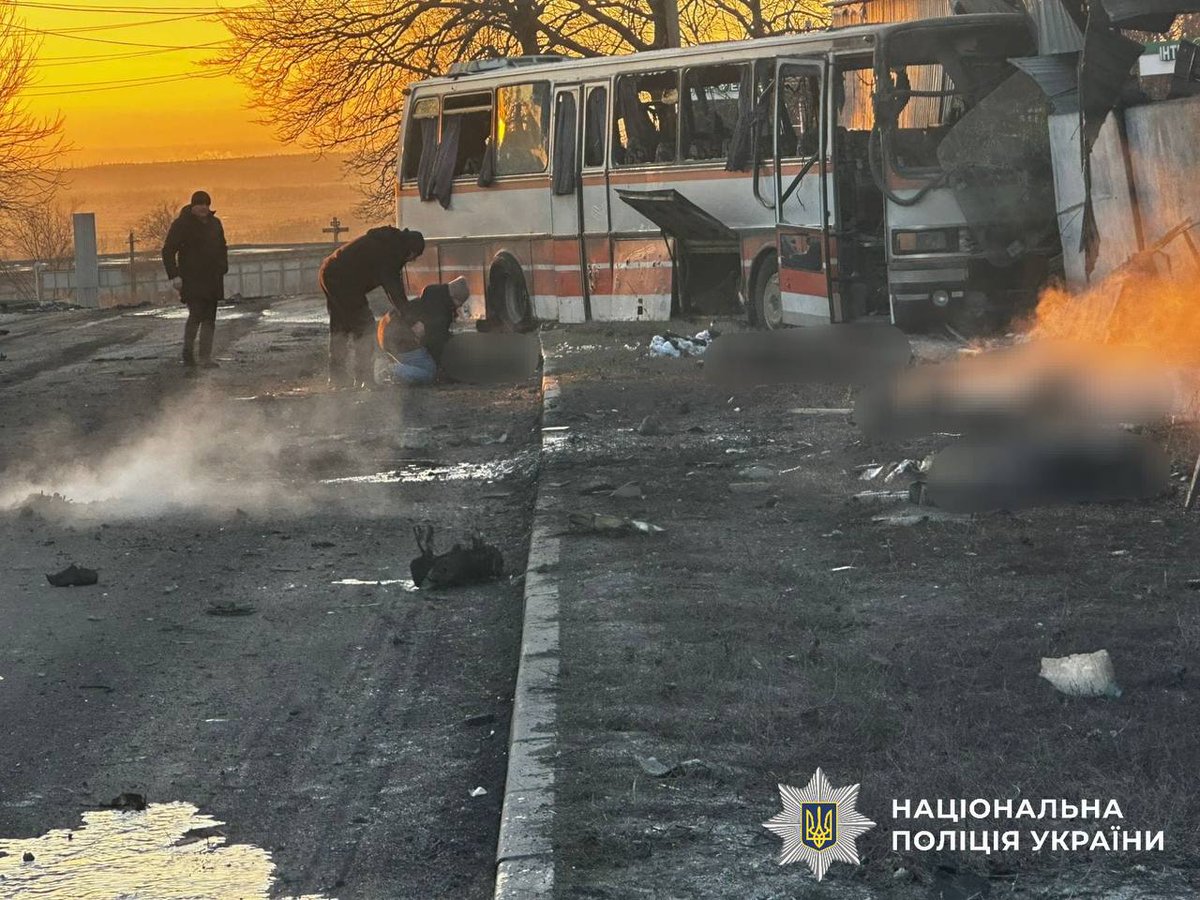
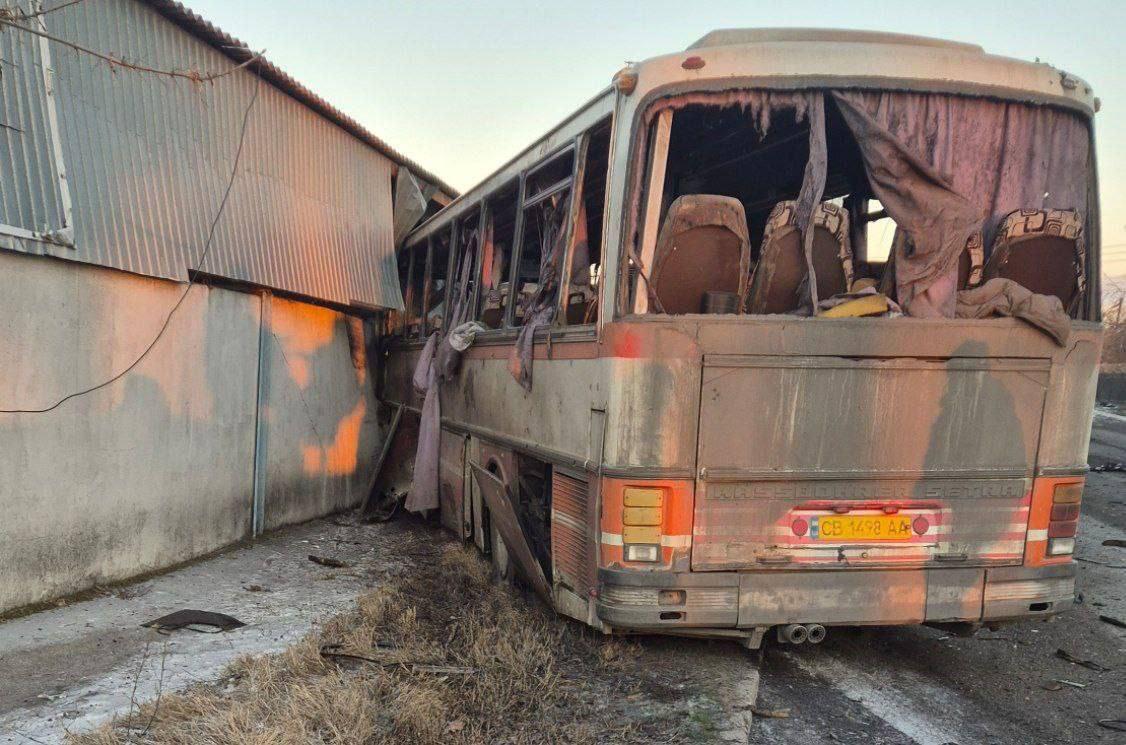
Russia struck a bus carrying Ukrainian miners returning home after their shift, killing 12.
The first "Shahed" struck near the bus, causing the driver to lose control and crash into a fence. People began to climb out of the bus, and at that moment, the operator of the second "Shahed" aimed the drone directly at them.
Dear and most respected @NYPost, please kindly let your audience know about this story. Thank you.
Sources:
@NPU_GOV_UA (X)
https://t.co/fiAsvMdKS4 (Telegram)
"Why didn't Trump's security try to negotiate with the shooter?"
Ukrainian paramedic asks a stupid question to demonstrate how stupid people sound when they say: “Why doesn’t Ukraine try to negotiate with russia?”
Hello, dear partners of Ukraine!
My name is Andrii. I warn the residents of Kharkiv and Ukraine as a whole about air attacks and aggression from the Russian Federation.
I started doing this from the beginning of the full-scale invasion in 2022.
Please, read full massage 👇🏻
Дмитро «СИН» Павлов, який з перших днів повномасштабного вторгнення повернувся з-за кордону і приєднався до оборони Харкова, є колишнім військовим спецпідрозділу KRAKEN.
Тищенко не розуміє, чому така увага до цієї історії і вважає, що Павлов взагалі не військовий, а був хіба що фельдшером.
У цьому відео «Син» під час однієї з операцій KRAKEN надає кваліфіковану допомогу побратиму, який отримав поранення, а також він, разом з Сергієм Величко (ЧІЛІ), на даху місцевої адміністрації змінюють триколор на прапор України. Ці та інші операції є у відео.
Тищенко бреше, завжди і всюди, тож поширюйте це відео, щоб кожен знав про це.
Відео: @dmitrula_nik (інст)
My grandfather landed at Normandy 80 years ago today. He was 23 at the time.
When I was in school (late 1980s), the teacher gave us an assignment to interview a WWII veteran. I went to my grandfather’s house to ask him about it.
The Greatest Generation had survived the Great Depression, the Dust Bowl, and WWII. They had seen incredible hardship. Yet, they never talked about it. My grandfather was very much of that stoic mindset.
That day, though, he decided to open up.
He described wading from the boat while the Germans poured absolute hellfire down on them from all directions. He told me he had never seen carnage like that. He described it as a “slaughterhouse.”
He said, “I knew I was going to die that day, so I sat on top of a Donald Duck [amphibious tank] and we rode straight up the hill into machine gun fire. I was very surprised when I survived.”
I asked how he felt about saving the world.
He said, very simply, “That’s hindsight. At the time, we didn’t know how the war would end, or if it would ever end. [D-Day] was self-preservation; we were trying to stop Hitler in Europe before he came across the ocean. We had a job to do, so we did it.”
I’ve been mulling this lately, given the situation in Ukraine. Once again, autocracy is fashionable and Europe is staring down a gun barrel. We are distracted with domestic issues and we’re pretending the situation overseas doesn’t concern us - just like we were in 1940.
But it does concern us. We may not think we’re at war with the powerful totalitarian regimes of the world, like Russia, Iran, and China, but THEY believe they’re at war with US.
They are using a new strategy, unimaginable in previous generations, called “hybrid warfare.” Hybrid warfare is a combination of cyberwarfare, terrorism, information warfare, political warfare, and physical warfare. The idea is to cause constant chaos, even far from the battlefield, to destroy an enemy’s cohesion and to wear down its ability and will to fight.
Isn’t that what’s happening? Russia and China are buying our politicians and influencers. Daily, they are attacking our computer systems, undersea cables, energy supplies, manufacturing abilities, and shipping lanes. They are destabilizing places like Venezuela, the Middle East, and Africa. They are loading our news networks and social media sites with disinformation, propaganda, and conspiracy theories to cause political chaos and intentionally break down trust in Western societies. They want us spread thin, confused, exhausted, and not knowing whom to trust. The autocratic regimes cannot beat us on the physical battlefield - YET - but kinetic war becomes unnecessary if their enemies collapse internally.
WWIII has already started. We’re in it now.
Poor Ukraine just happens to be the crossroads of this new global conflict, the place where old-fashioned combat overlaps with these newer warfare methods. Many of us want to ignore the plight of the Ukrainians. We think Putin will stop when he gets what he wants in Ukraine. But we’re confusing what we want with what Putin wants. We may want peace, or to not be bothered, but Putin wants conquest. Putin has stated his goal is to rebuild the Russian Empire. He’s telling us his ambitions, so we’d be fools not to listen.
Beyond Ukraine, Putin wants Moldova. He’s already planning for that; Russia has established a large colony in the eastern part of that country. Via political interference, Putin has installed governments sympathetic to him in Hungary and Austria. Looking at a map, one could imagine Putin’s army marching through those four countries right into the heart of central Europe. While we were sleeping, Putin has spent his 25 years in power setting his chess board up.
We need to start dealing with this menace head-on by not letting the first country in that chain fall. That means Putin’s advance must be stopped in Ukraine. Should he taste victory there, Putin will continue pushing West. He will use the victory as a propaganda trophy to further wear down Western morale and drive a wedge between NATO countries.
We don’t know how this war will end, or if it ever will. But we have a job to do - and an opportunity to prevent this situation from getting worse.
Let’s give Ukraine everything she needs to win.
Russia’s invasion of Ukraine breaks the biggest taboo of the international order. Since 1945, no internationally recognized state was wiped off the map by external conquest. Russia is trying to do just that to Ukraine. Putin is following the imperial principle that any territory conquered by the Russian army is annexed by the Russian state. If Russia wins, no state and no border could feel secure, and the world will enter a new era of imperialist wars of conquest. The Global Peace Summit that will convene on June 15 in Switzerland is a crucial chance to restore peace and order. I urge world leaders to attend the summit, and together bring peace to Ukraine and to the world. Without peace in Ukraine, humanity cannot defend itself against climate change, out-of-control AIs, or any of the other existential threats that endanger our species.
#Peace #Ukraine #GlobalPeaceSummit
"20 Days in Mariupol" just won the BAFTA for Best Documentary.
It's much more than a film, it's a raw and horrifying look into the pure evil of russia's war against Ukraine.
Watch it, share it with friends, and help build support right now while Ukraine needs it most.
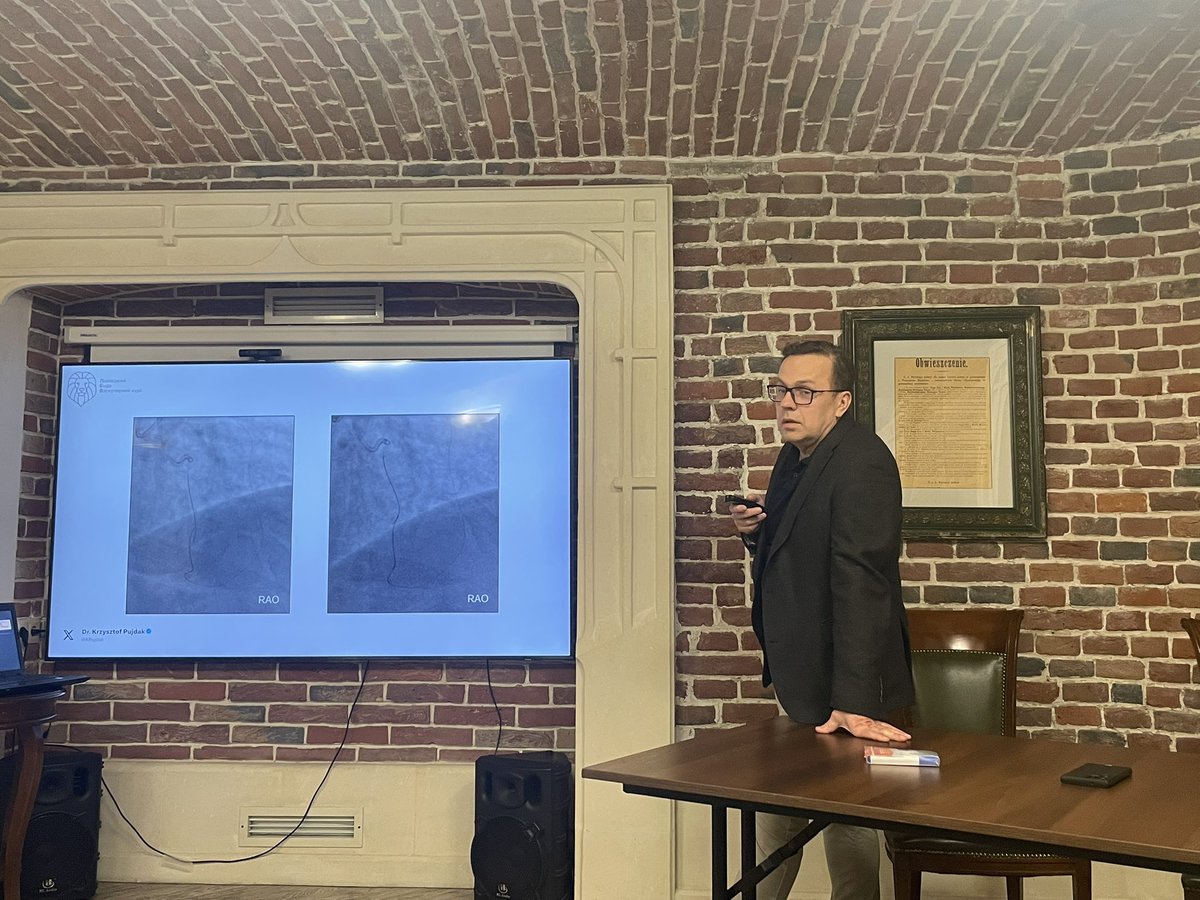
@DrIHHashmi1 looks like there is not much flow to PA, despite prominent PDA, so it's probably substantial pulmonary hypertension. Cath it to make a decision.









![gaughen's tweet photo. My grandfather landed at Normandy 80 years ago today. He was 23 at the time.
When I was in school (late 1980s), the teacher gave us an assignment to interview a WWII veteran. I went to my grandfather’s house to ask him about it.
The Greatest Generation had survived the Great Depression, the Dust Bowl, and WWII. They had seen incredible hardship. Yet, they never talked about it. My grandfather was very much of that stoic mindset.
That day, though, he decided to open up.
He described wading from the boat while the Germans poured absolute hellfire down on them from all directions. He told me he had never seen carnage like that. He described it as a “slaughterhouse.”
He said, “I knew I was going to die that day, so I sat on top of a Donald Duck [amphibious tank] and we rode straight up the hill into machine gun fire. I was very surprised when I survived.”
I asked how he felt about saving the world.
He said, very simply, “That’s hindsight. At the time, we didn’t know how the war would end, or if it would ever end. [D-Day] was self-preservation; we were trying to stop Hitler in Europe before he came across the ocean. We had a job to do, so we did it.”
I’ve been mulling this lately, given the situation in Ukraine. Once again, autocracy is fashionable and Europe is staring down a gun barrel. We are distracted with domestic issues and we’re pretending the situation overseas doesn’t concern us - just like we were in 1940.
But it does concern us. We may not think we’re at war with the powerful totalitarian regimes of the world, like Russia, Iran, and China, but THEY believe they’re at war with US.
They are using a new strategy, unimaginable in previous generations, called “hybrid warfare.” Hybrid warfare is a combination of cyberwarfare, terrorism, information warfare, political warfare, and physical warfare. The idea is to cause constant chaos, even far from the battlefield, to destroy an enemy’s cohesion and to wear down its ability and will to fight.
Isn’t that what’s happening? Russia and China are buying our politicians and influencers. Daily, they are attacking our computer systems, undersea cables, energy supplies, manufacturing abilities, and shipping lanes. They are destabilizing places like Venezuela, the Middle East, and Africa. They are loading our news networks and social media sites with disinformation, propaganda, and conspiracy theories to cause political chaos and intentionally break down trust in Western societies. They want us spread thin, confused, exhausted, and not knowing whom to trust. The autocratic regimes cannot beat us on the physical battlefield - YET - but kinetic war becomes unnecessary if their enemies collapse internally.
WWIII has already started. We’re in it now.
Poor Ukraine just happens to be the crossroads of this new global conflict, the place where old-fashioned combat overlaps with these newer warfare methods. Many of us want to ignore the plight of the Ukrainians. We think Putin will stop when he gets what he wants in Ukraine. But we’re confusing what we want with what Putin wants. We may want peace, or to not be bothered, but Putin wants conquest. Putin has stated his goal is to rebuild the Russian Empire. He’s telling us his ambitions, so we’d be fools not to listen.
Beyond Ukraine, Putin wants Moldova. He’s already planning for that; Russia has established a large colony in the eastern part of that country. Via political interference, Putin has installed governments sympathetic to him in Hungary and Austria. Looking at a map, one could imagine Putin’s army marching through those four countries right into the heart of central Europe. While we were sleeping, Putin has spent his 25 years in power setting his chess board up.
We need to start dealing with this menace head-on by not letting the first country in that chain fall. That means Putin’s advance must be stopped in Ukraine. Should he taste victory there, Putin will continue pushing West. He will use the victory as a propaganda trophy to further wear down Western morale and drive a wedge between NATO countries.
We don’t know how this war will end, or if it ever will. But we have a job to do - and an opportunity to prevent this situation from getting worse.
Let’s give Ukraine everything she needs to win.](https://pbs.twimg.com/media/GPXKGxZXQAEy9lB.jpg)


