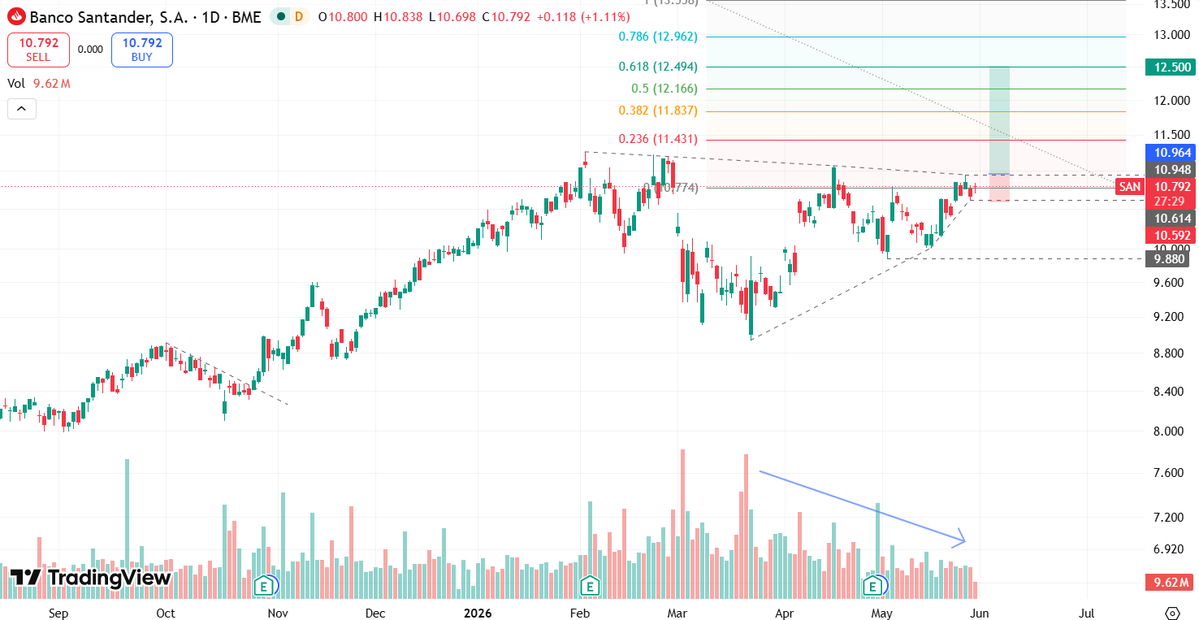
$CTY on the #LSE is holding the 558 level so far after the mini inv.H&S. Early entry looking for a triangle break to the upside eventually. What do you guys think of this?
@SteveDJacobs The theory behind triangles/wedges is to buy a break out at a low volatility phase into an expanding volatility move in the trend direction which would allow for a higher RRR. This concept made sense to me but not applicable if there is no wedge/triangle. What do I do then? 😂
@SteveDJacobs That is very true, struggling with it myself. Which is why I stayed out of some very hot stocks, just could not find a entry that I feel comfortable with. Which is why I am very curious on how people trade these.
@SteveDJacobs Ah ok. I am used to breakouts of triangles/wedge where I always placed the stop at the last low and sized it 0.5-1% loss at SL. but with some of the "hot stocks" I did not find a good entry so I am looking for "alternative approaches"
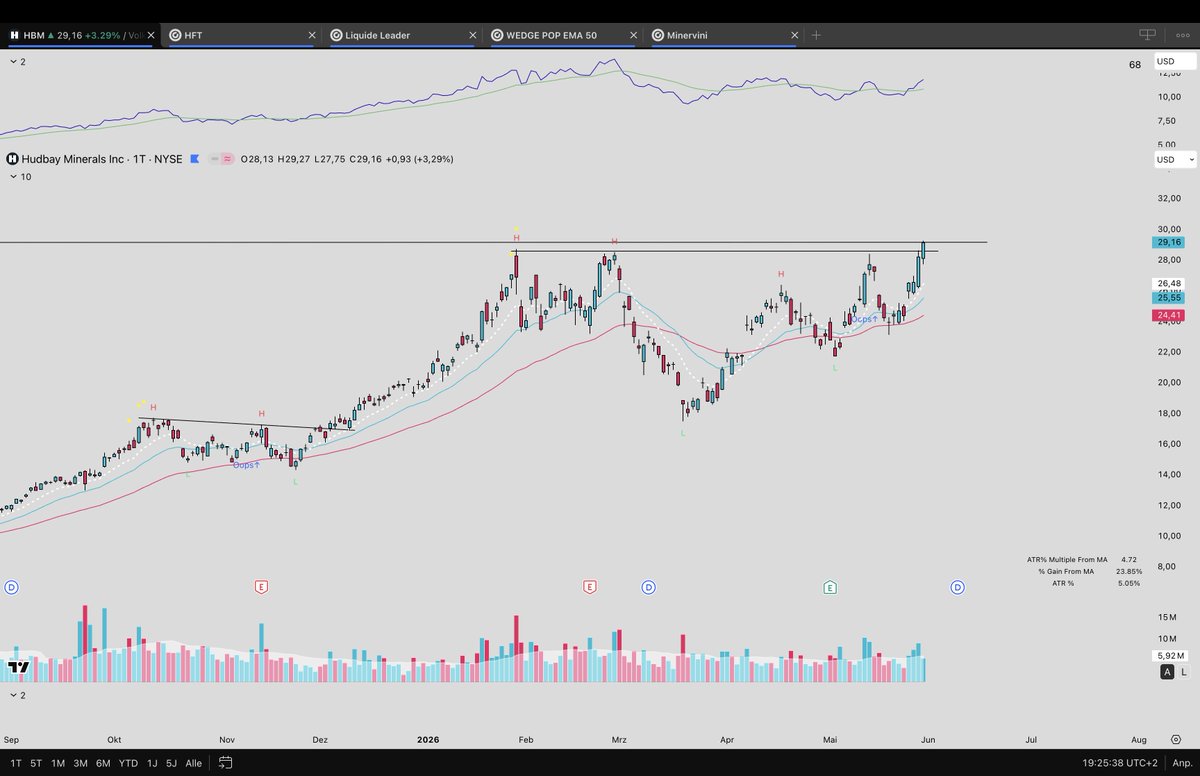
$HBM – Hudbay Minerals
Genau solche Charts liebe ich.
Monatelange Base, steigendes Volumen, relative Stärke nimmt zu und jetzt der Angriff auf ein mehrjähriges Hoch.
Der Monatschart zeigt: Wenn so eine lange Seitwärtsphase nach oben aufgelöst wird, kann daraus oft ein neuer großer Trend entstehen.
Im Tageschart sieht man den sauberen Breakout-Bereich um ca. 28–29 USD. Wichtig ist jetzt nicht, blind hinterherzuspringen, sondern zu schauen, ob der Ausbruch hält oder ob ein Pullback Richtung Breakout-Zone kommt.
Für mich ein klassischer Stage-2-Kandidat:
✅ neues Hoch
✅ Volumen zieht an
✅ gleitende Durchschnitte steigen
✅ starke Relative Stärke
✅ sauberer Breakout aus langer Base
Ich suche nicht den perfekten Tiefpunkt. Ich suche Aktien, bei denen Angebot und Nachfrage sichtbar kippen.
Genau da entstehen oft die besten Trends.
@invistoren@TheProfInvestor Thx for the cmmnt. I am used to trade break outs with tight stops. It gives me a clear frame work where to get out in the worst case. But I rarely find a good entry by my setup in these typs of stocks (very volatile). I feel like I am missing out 😂😂
@JMillerZ4 To add to it. In audio for example signal to noise is about energy not frequency. You need the guitar signal to have more energy than the amp noise level to be able to hear it clearly