For fifty years the economic establishment has told you that deflation is a disease. Falling prices, they warn, freeze spending, crush wages, spiral the economy into a tomb. Then there's Switzerland, which has spent decades doing the forbidden thing and somehow refuses to die.
The Swiss franc bought you roughly 0.23 dollars in 1970. Today it buys you about 1.20. The currency appreciated against the dollar by a factor of five while Swiss living standards rose to among the highest on earth. Consumer prices in Switzerland have repeatedly turned negative: 2015, 2016, 2020. Each time the Keynesian commentariat predicted catastrophe. Each time the Swiss kept buying watches, building tunnels through the Alps, and running a current account surplus that would envy any German.
Here's what a strong currency actually does to you. Your savings grow without you lifting a finger. The chocolate bar that cost five francs holds its value or gets cheaper as Lindt's productivity improves. You are not robbed in your sleep by a central bank printing your purchasing power into the pockets of the politically connected. A Swiss worker who stuffs francs under the mattress is rewarded for thrift, the oldest bourgeois virtue, the one Washington and Frankfurt have spent a century punishing.
Free market thinkers explained this generations ago. Prices fall because production rises. When a factory makes more shoes per hour, shoes get cheaper. This is not a malfunction. This is the entire point of an economy. The "deflationary spiral" the IMF dreads requires people to indefinitely postpone eating, heating, and clothing themselves in anticipation of a 0.8 percent price drop. Humans don't do this. The Swiss certainly don't.
So when the European Central Bank tells you it must hit two percent inflation forever to keep you employed, understand what it is confessing. It needs your money to lose value because its entire model depends on debtors outrunning savers, on stimulus over thrift, on the quiet transfer running underneath the floorboards. The Swiss declined the offer. Their reward sits in every vault in Zurich, getting heavier while everyone else's gets lighter.
For 800 years, one coin held its weight. The Byzantine solidus, struck by Constantine in 312 AD at 4.5 grams of gold, stayed at that weight until the eleventh century. Eight centuries. No central bank press releases, no "transitory inflation," no economists explaining why your savings evaporating is actually good for you. Just gold, weighed and stamped, kept honest by emperors who grasped something Jerome Powell and Kevin Warsh do not.
Foreign merchants called it the bezant, and it traded from Britain to China as the dollar of the medieval world. A Sri Lankan trader in the sixth century, recorded by Cosmas Indicopleustes, watched a Roman gold coin and a Persian silver coin compared side by side. The Roman coin won. Not by decree. By weight and fineness that nobody dared touch for generation after generation. When your money is good enough that strangers 5,000 miles away accept it without checking, you have built something real.
Then came the eleventh century, and the discipline cracked. Constantine IX and his successors started shaving the gold content, mixing in cheaper metal, telling themselves the empire needed the funds. By the reign of Alexios I in 1092, the coin that had been 24 karats sat near 10. The Byzantines invented currency debasement as imperial policy and discovered, as every debaser since, that you can fool the market briefly, but never permanently. Trade routes shifted. Venetian and Genoese merchants stepped in with their own sound coinage, and the bezant's monopoly on Mediterranean commerce died with its gold content.
Notice the sequence. The coin stayed stable precisely as long as the men in charge resisted the temptation to print prosperity. The moment they decided their spending needs outranked the integrity of the money, the 800-year run ended inside a single century. Byzantium failed gold.
You live under a currency that has lost 96% of its purchasing power since 1913, and your central bankers call this "price stability." The solidus held for eight centuries because nobody had the technology to ruin it from a keyboard. The temptation was always there. The means weren't.
What can we learn from this on the topic of de-dollarization? The USD will fail when it loses its value; it will lose its value when the powers that be create and spend too much of it, thereby debasing the value of the current supply, or as we call it today, inflation.
I'm imagining the bears who think that Bitcoin is so weak that if you buy 4% of it and talk a lot, you can destroy the whole network.
It's not even a person, but a group. Bought 4%.
Like, somehow the key weakness of Bitcoin is that if someone buys 4% of it, everything fails.
@BoringBiz_ It’s funny that most comments here say you’d be happier if you spent more money. Instead:
- Quit that job/career
- Become a husband and father
- Maximize time with people you love
- Find purpose
- Set values and live by them
- Set goals and make progress every day
Guys, this is just balance sheet management.
I love watching crypto bros with zero finance experience freak out about it. The preferreds have payment obligations. You sell what you have to sell, not what Twitter thinks sounds cool.
Yes, they're selling higher-basis BTC first. That's exactly what you'd expect.
Frankly, moving from "never sell Bitcoin" to "we'll be net accumulators over time" is one of the smartest things I've heard Michael Saylor and the Strategy team say in a while.
@dmweisberger 30 years. No real growth. So what will grow? The number of dollars it takes to buy anything. Including assets. The debt load requires it. Something about a train. @LynAldenContact
I have been saying this for months about the government debt situation:
The ONLY way out is GROWTH!
This means several things that WILL matter for your portfolios: a 🧵
@dmweisberger I don’t disagree that AI and robotics will lower Ford’s cost and their stock price could rise accordingly. But if you’re thinking real growth will happen, better get those assets into more peoples’ hands.
Borrowed in harder to get dollars. That’s why it feels easier to make your mortgage payment as time goes on. It is fixed while your income grows. Debt holders benefit from inflation. Who is the biggest debt holder? Get ready for inflation.
lose purchasing power. Their bonds pay ~5% while inflation hits ~8% or higher, meaning they lose 3% purchasing power each year. Since dollars buy less, it’s easier to get more of them and pay off old debt that was…
In that way, the gov’t/fed team can force “growth” by allowing inflation and not fighting it by raising interest rates. Making no effort to stop the inflation means the economy can “run hot”, all the while allowing treasury holders to…
@KillaXBT Huh? Like 90% of technical analysts on X have it going sub 60k. Some down to absurd levels, I’ve heard 10k. Optimism? Maybe optimistic of their short selling paying off.
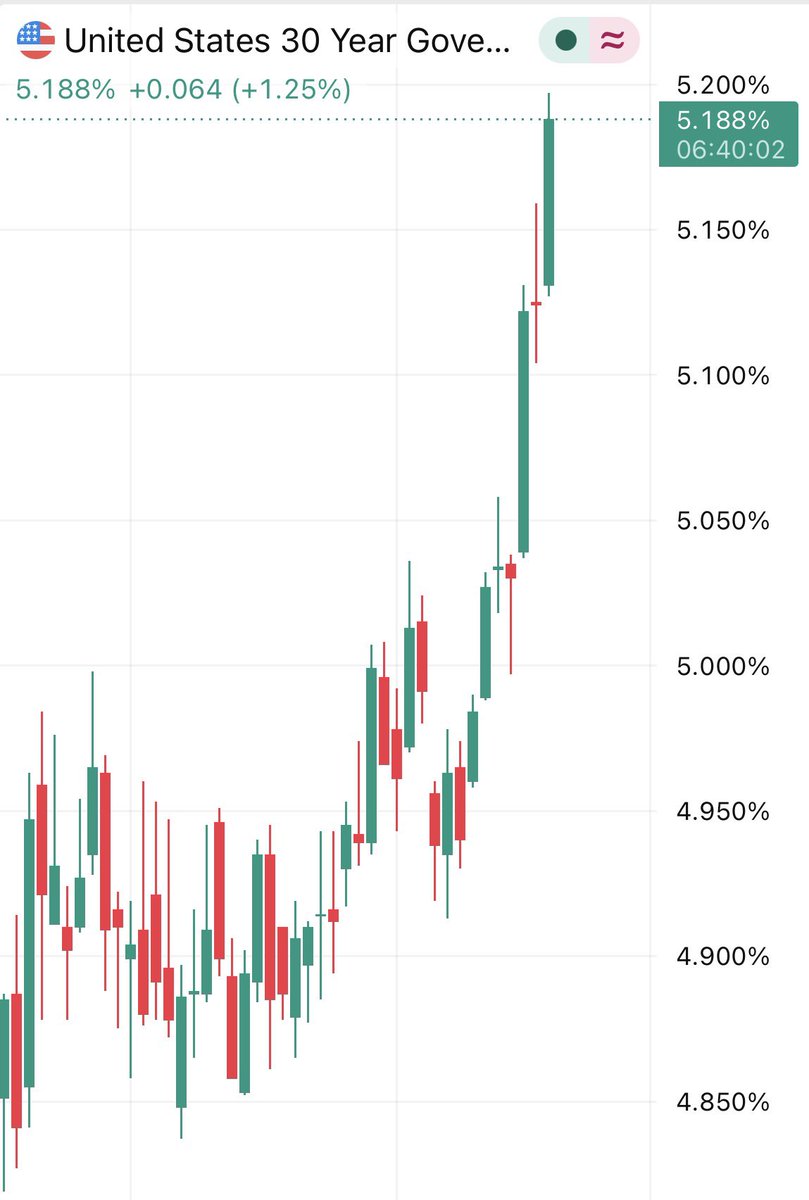
Inflation is screaming and debt buyers are demanding higher yields to compensate. If the Fed doesn’t raise rates they’re knowingly forcing negative real rates to help the gov’t inflate their debt away. “Treasury/dollar holders, thx for donating your purchasing power.”
@NoLimitGains Inflation is screaming and debt buyers are demanding higher yields to compensate. If the Fed doesn’t raise rates they’re knowingly forcing negative real rates to help the gov’t inflate their debt away. “Treasury/dollar holders, thx for donating your purchasing power.”
@Lifeinvestmoney Because inflation is higher than 5% annually, so you’d be willingly giving extra purchasing power to the government. You’d get more dollars but they could buy less.
I have no way to prove it but I’m 💯 certain the Fed or Treasury is printing money to push markets higher after the market drops.
This isn’t a natural rally.
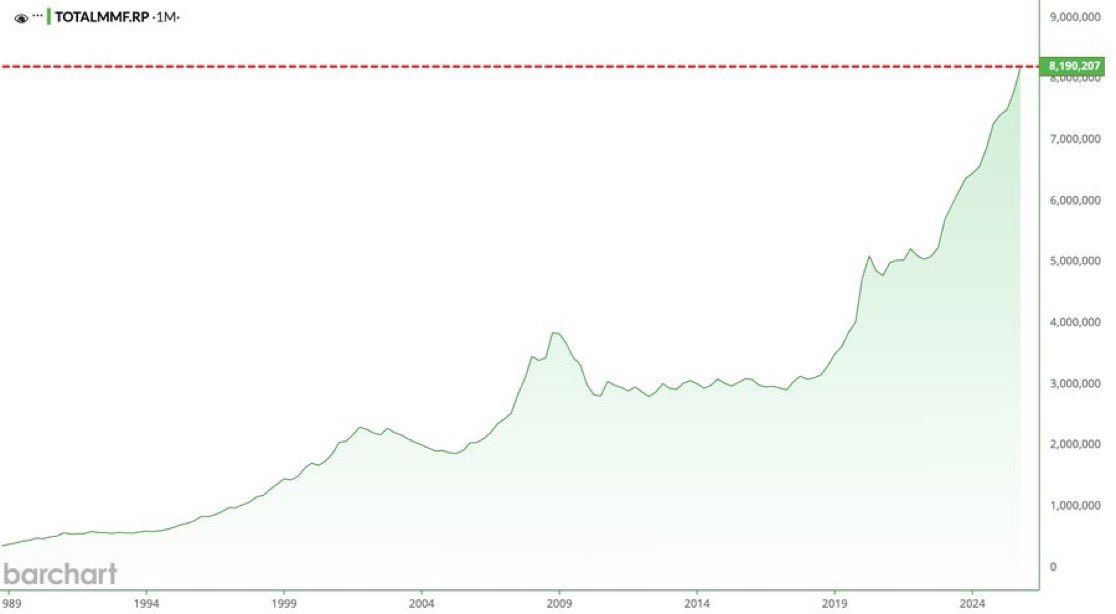
M2 keeps rising.
The whole thing seems RIGGED!