$PONVIX is live.
CA: 0x77fad62496e584928bce42c4a0b908fc94e8cdfd
You lock @ponsdotfamily tokens in the pool and draw ETH against them, or take a tokenized stock in the same signature.
Interest ticks per second, nothing is due on a date, and the collateral stays yours while the position covers the debt.
It buys three upgrades inside the protocol and burns on use.
https://t.co/JaQ0F5lIIy
Most launchpad tokens cannot be burned. They ship without burnFrom, so no contract can take supply out of your wallet, whatever the button promises.
We do it in two moves. Ask the token to burn. If it refuses, send the same amount to 0x…dEaD.
totalSupply falls on the first move only. We subtract the dead balance, so the counter on /token reads the same either way.
The tokens are gone in both cases.
Wealthy people stopped selling a long time ago.
They borrow against what they own and buy more with it. The asset stays where it is and keeps working.
Your bag can do the same thing now.
Lock it, draw ETH, keep building the position.
Thats how you become wealthy, not rich.
Long day.
What landed:
Token live, nine markets open for lock, listing poll running, first burns on chain, and Pons creator fees now supplying the lender side.
Two updates written, waiting on one row each.
The list ahead is longer than the list behind.
More markets, the rest of the updates.
Locked in.
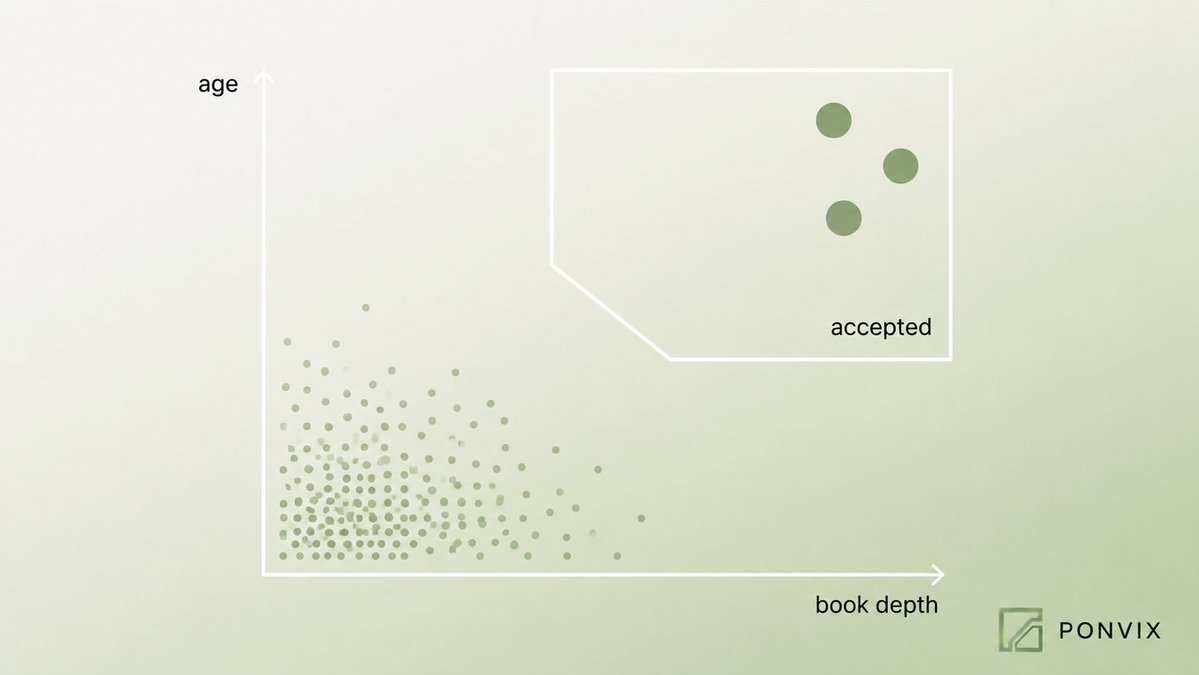
Large money markets take assets with deep books and years of history.
A token that launched on Tuesday qualifies for nothing.
That describes most of what people actually hold on a launchpad chain.
Rotation is the tax nobody prices in.
You want the next thing, so you sell the thing you hold to pay for it.
Every rotation closes a position you were fine keeping.
Streamflow solved locking.
Put tokens under a schedule, anyone can verify it, and they sit still until the date.
Locked value staying idle is the point there.
We lock for the opposite reason - collateral that works while it sits.
Listing poll is open. The next collateral gets picked by burning.
One wallet, one vote, 1,000 PONVIX destroyed per vote. They go to the dead address and stay there, and a second burn from the same wallet adds nothing.
On the ballot: TRIPLET, LOCK, TYGR, FONZ, NILF. Two signatures to vote, the second one costs nothing. Anyone can recount the tally straight from chain.
Closes 2 Sep, 00:00.
https://t.co/AhXF1OJrTe
Update: interest discount.
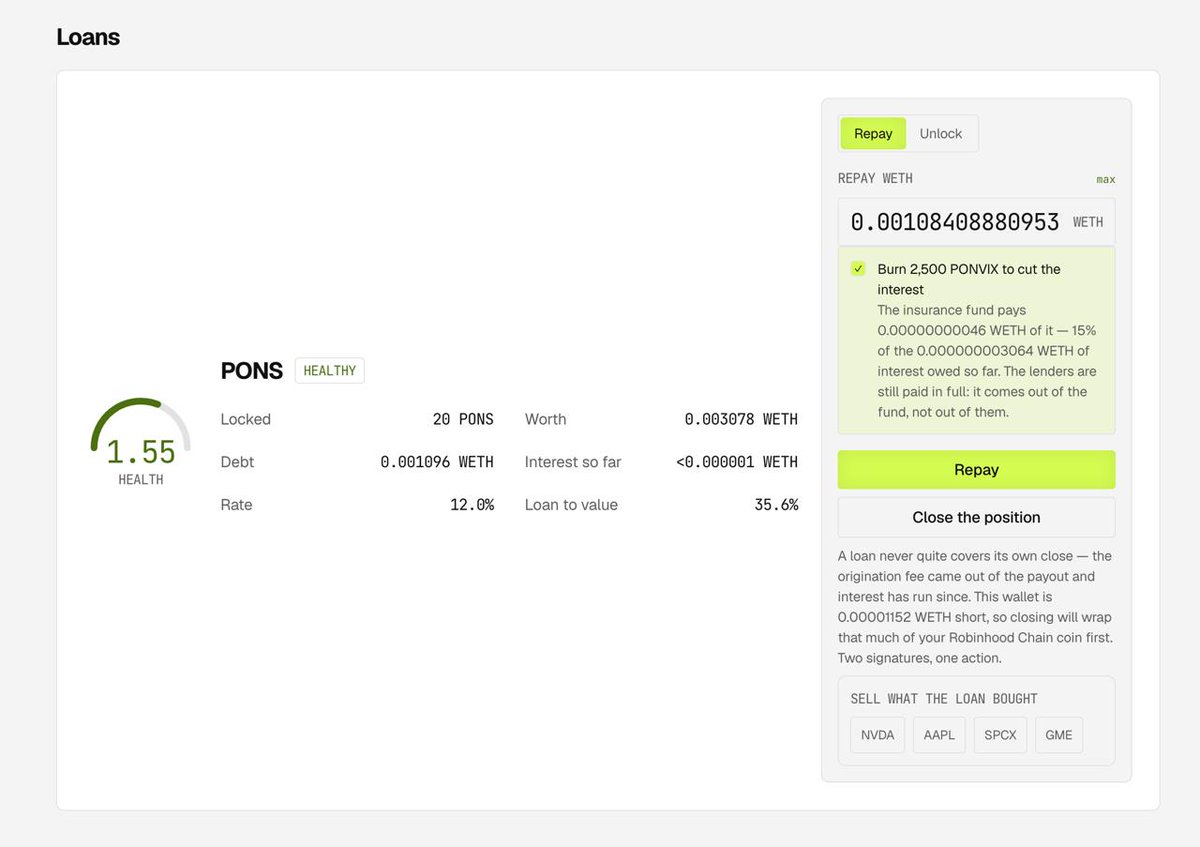
Burn 2,500 tokens when you repay, the insurance fund pays 15% of your interest. Interest only, one repayment at a time, and lenders still get theirs in full.
That fund also covers bad debt, so every discount thins it.
https://t.co/jOQjt76vHT
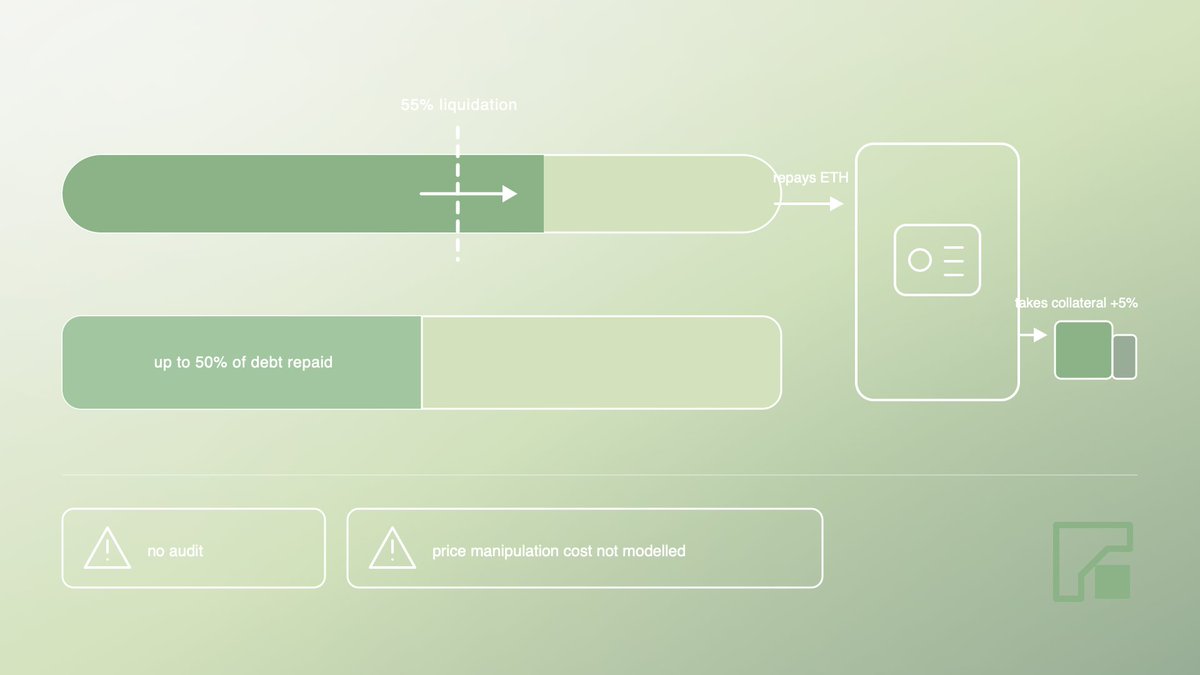
Cross 55% and anyone can repay up to half your debt and take collateral at a 5% premium.
That is the whole enforcement mechanism.
The contract has no audit yet, and we have not modelled the cost of pushing the pool price around.
Both sit in the docs.
https://t.co/5ycApunAfA
Hello, @MEADGod - short note on where PONVIX sits next to Pons.
Today a trader who wants the next launch sells the bag he already holds to pay for it. That sell pressure lands on your charts every time someone rotates.
PONVIX gives him another route: lock the bag at 40% LTV, borrow ETH against it, buy whatever he wanted with the loan. The collateral stays in the pool and never reaches the market.
Nine Pons tokens are already accepted as collateral, and Pons creator fees supply the lender side. Your launches keep their holders.
https://t.co/JaQ0F5lIIy
One position, start to finish.
Anon locks a 1,000 ETH bag and draws 300. One signature, and it comes out as tokenized NVDA.
His liquidation line sits at 545 ETH of collateral, so the bag has room to fall 45%.
Three weeks later he sells the stock, repays, and the bag walks back into his wallet.
https://t.co/JaQ0F5laT0
Another ETH of Pons creator fees went into the pool.
That makes ETH supplied from fees so far, sitting on the lender side. Fees come in, they go here, and borrowers draw against them.
https://t.co/FiA0V49aFG
Update: priority liquidator.
Burn 500,000 tokens once, seize at 7% instead of 5% on every liquidation that wallet ever does. One address, forever, no resale.
Anyone can still liquidate. The bonus is the only difference.
https://t.co/V0wq7uXsGO
Update: priority liquidator.
Burn 500,000 tokens once, seize at 7% instead of 5% on every liquidation that wallet ever does. One address, forever, no resale.
Anyone can still liquidate. The bonus is the only difference.
https://t.co/V0wq7uXsGO
Someone has to lend it, and that side is plain.
Supply ETH, hold a share of the pool, and the share price moves with the interest borrowers pay.
The rate follows utilization:
12% / 28% / 65% as the pool empties.