Very few cultures take food seriously.
The Persians do. The Indians. The French.
No wonder French food is the best in the world.
Obsession breeds creativity and attention to detail.
So-so cuisines: Italian, Mexican, Chinese, Thai.
Worst food: German, British.
i feel so lucky to be a founder in the us. in singapore, if your startup fails you can go bankrupt. your parents and friends think you’re crazy. here, people just go “oh cool what are you building” and if you fail, you’re more hireable than if you never tried.
Peter Thiel might be onto something here…
https://t.co/tvymtPvKVr
FWIW I think he’s missing important dimensions like desire for human connection, empathy, shared understanding, which will be important for the future of jobs in healthcare, education, etc.
something interesting we found with Hyperliquid market data, including HIP-4:
opening several WS connections gets you the same update sooner than relying on one.
1/ try a few connections
we tested conns side by side. some stayed 10–65 ms behind others, with occasional gap
vouvray/ anjou underrated regions near loire , overshadowed by more famous pouilly-fumé and sancerre. have preferred good botrytis chenin > sauternes, but maybe have not had sufficient exposure to upper echelons of sauternes yet
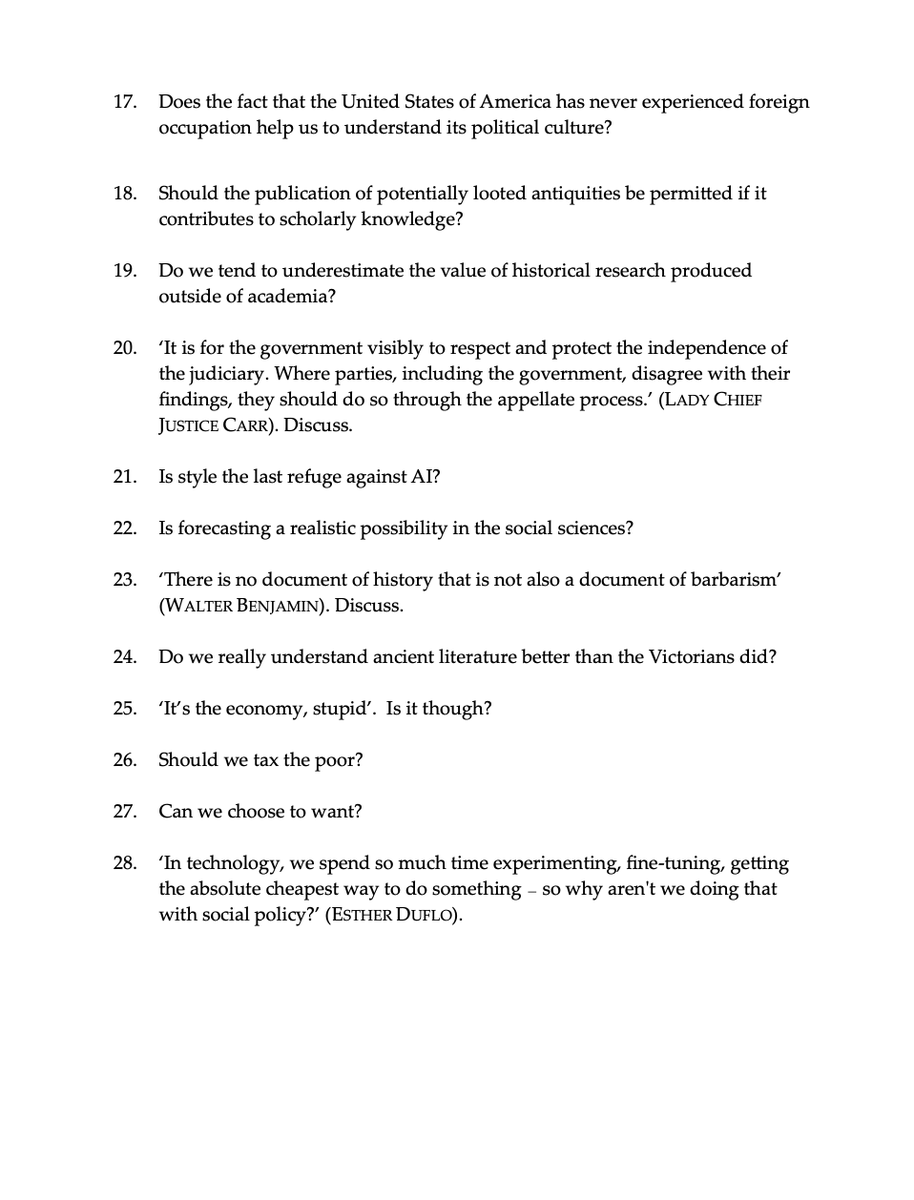
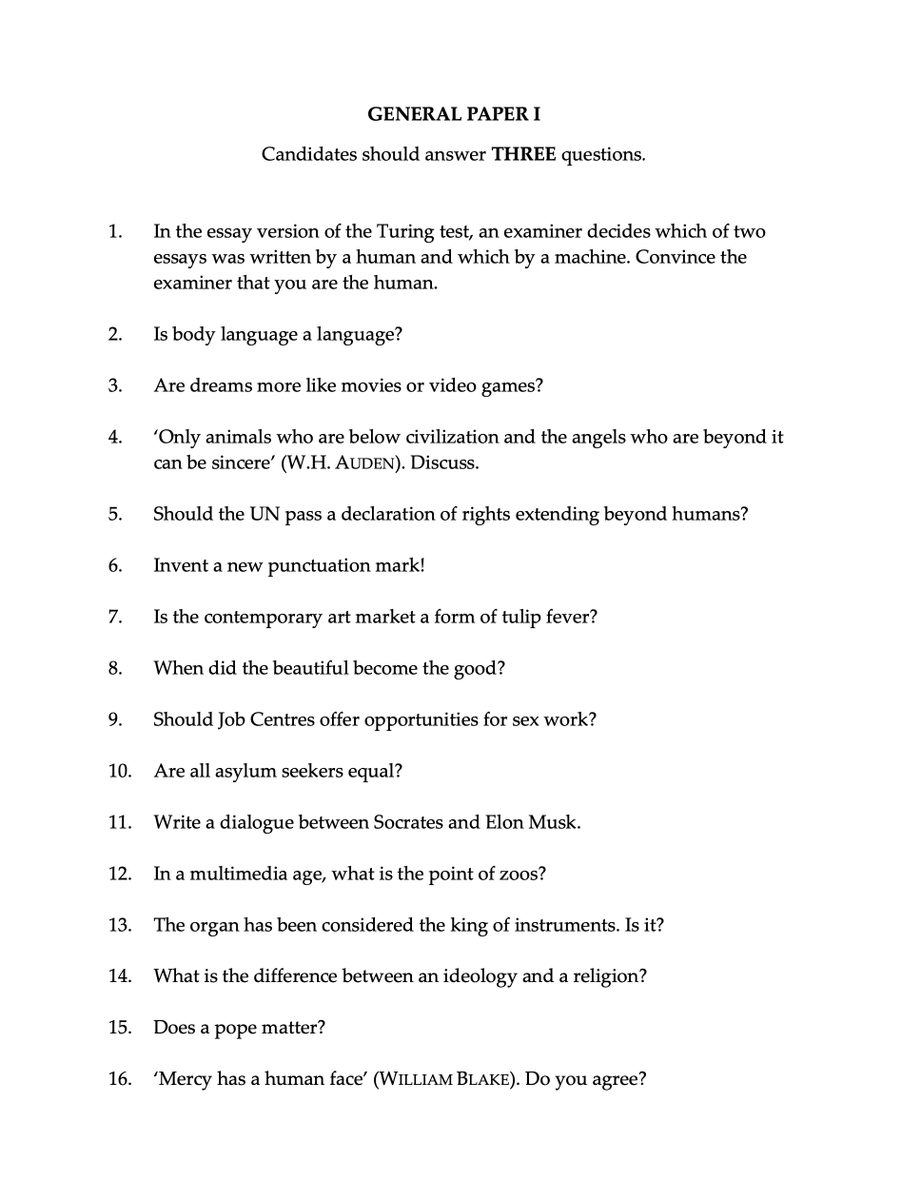
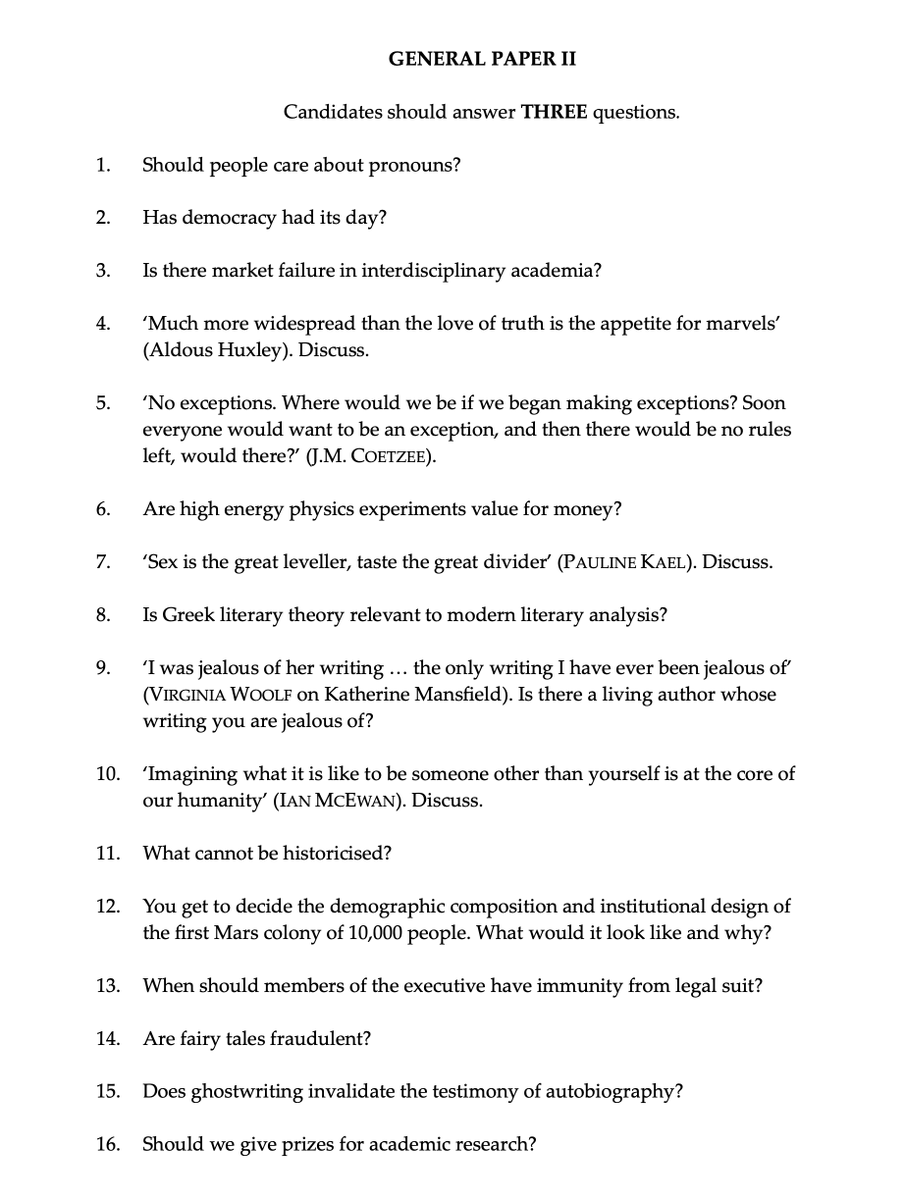
Today I learned about the All Souls examination, which is reputed to be the hardest exam in the world.
To even be considered, you need to have a degree from, or be a current graduate student of Oxford.
Hundreds of people sit and only two people pass every year.
Attached is last year's general exam.
Before I saw it, I wondered, how hard could it be.
Well, it turns out…it's "Defend ghosting.", "Does a pope matter?", and "Is body language a language?" hard:
We co-hosted a boutique event last night in Singapore. Just PM traders, builders, deployers and friends.
For us, being based a bit far away (Australia), having that time to meet people IRL and discuss the projects we spend all our time on is super valuable.
The backgrounds of people entering the space are increasingly diverse. Not many are purely “on-chain”. Most are coming from major American and Asian funds, trading desks and traditional financial markets.
There’s seems to be a growing sense that “crypto” is a useful part of the stack, rather than an ideological pursuit in itself.
@functionspaceHQ