@johnhenry92 There was an influencer “incident” at Crail a little while ago where the “creators” got hammered drunk and posted. Crail had them take it down and I don’t think they’re allowed back.
"Shareholder value" is the wrong consideration. I can create shareholder value by lobbying for a regulatory moat that keeps my competition away. I am benefitting myself and hurting society, because I am taking something valuable that was cheap and plentiful and making it expensive and scarce.
Conversely, I can destroy shareholder value by investing in biotechnology under a legal environment where IP protection is weak. I might end up curing cancer, but under conditions that allow my competitors to copy me, such that I make no money. I would by hurting myself (and my fellow shareholders), and yet benefitting society immensely, by creating something extremely valuable that was previously unavailable (or infinitely expensive) and making it available (and cheap).
People work best under a selfish motivation, so shareholder value is a carrot or reward that we have to build into (or allow to exist in) our economic system if we want people to use their time, energy and capital to create real economic value. That's why, in the area of medicine, we need to intervene on the system with special government rules (enforceable patent protections) to ensure that people's innovations are able to generate a sufficiently high profit for a sufficiently long period of time to make the whole proposition worth it (with the frequent failures included).
Just as we sometimes have to intervene on the system to make profits (and shareholder value) higher than a free market would produce, we also have to sometimes intervene to prevent them from becoming excessive, in areas where competition fails or is unable to occur. There are many of these areas, and as a society, we're not very good at building the consensus to fix them.
Buffett is a specialist in finding areas of the economy where market competition is broken or impaired or hindered, leading to unusually high profits and rents that never get competed down, but where the government is not able to do anything about it, or decides not to, given political gridlock, or (often valid) concerns about collateral effects, or because the rent extraction is not so high that the intervention is deemed worth the trouble. This allows the business to extract abnormally high rents indefinitely. There's certainly value for shareholders in finding and investing in those businesses (or engineering them from scratch). But the value for society as a whole is highly exaggerated.
Musk isn't playing the same game. He's trying to create innovative things (like space travel to save the species) because he thinks those things are important in themselves, separate from and in addition to whatever profit they generate for him.
Maybe it's all a gimmick, and he's just playing the same "maximize my monetary number" game that the rest of us are playing. But what cannot be denied is that, so far, in his efforts, he has created orders of magnitude more value for society than Buffett could ever dream of. And that would be equally true whether Spacex IPO'd at the value of its paid-in capital (say ~$12B), creating no millionaires or billionaire shareholders, or at ~150x of that value, creating literally thousands of them, as it actually did.
As a links ticket holder who has taken dozens of players of the singles queue on the Old…my advice no matter what your handicap is play fast, have fun, don’t ask for a read on every putt. I’ll take a perfectly framed photo of you on the Swilken. You’ll know we enjoyed your company if we invite you for a pint.
@HedgeDirty I agree but I’m lucky in that I got an allocation to xai last year so now SpaceX. I’ll be on the rollercoaster of volatility in the coming months.
@UpslopeCapital He makes a sound argument but GQG has been so wrong the past two years we’ve had to reduce our exposure to them almost entirely. He’ll be right eventually, but clients only have so much tolerance for sustained underperformance.
@vaypor@BowTied_Golfer What are you talking about?
A little bump up of turf for a squeeze trap yields a slight divot if anything, It’s a few square inches at worst.
Misc signs of a stick:
1. Taps ball on tee with driver to move it down .0007 inches
2. Tees up 3 wood with foot and club. Saw this for the first time in years on Friday.
@BowTied_Golfer@shallowedout Same process to tee up driver when practicing off mats with the rubber tees. Pure efficiency of movement, no wasted energy.
@BrianKirschner_ I’m a scratch and ProV1s are my gamers.
I keep Kirklands in my bag for days when I’m wild off the tee or when I’m gonna send it over a long forced carry. If I rip a sleeve of ProV1s into the junk on the first few holes I’m switching to back up balls for the rest of the round.
@EddyElfenbein The problem is guys like him enter a cycle of double downs that could last a decade and then we get to the end of the secular bull and they claim vindication saying “I was right, just early”.
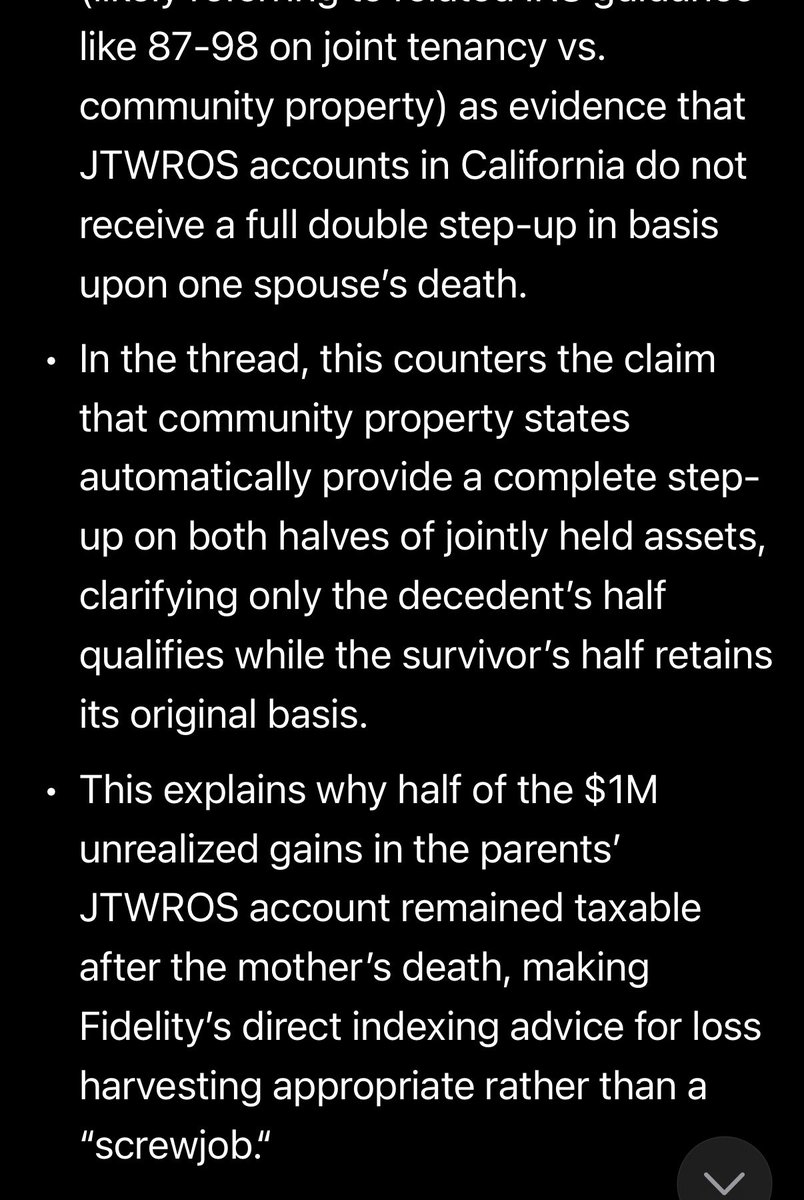
@Rick_Ferri Not sure this is entirely wrong IF: Existing account is concentrated, AND
Son has POA and will need to sell stock to pay for care of father, AND DI account is titled in father’s name.
Regarding “double step up”-