one of the biggest surprises i’ve had in defi is realizing that knowing what to do is rarely the hard part.
the hard part is doing it consistently.
positions need rebalancing. fees need collecting. opportunities appear and disappear while you’re asleep.
that’s the execution gap.
and it’s exactly the problem @builderfiHQ is built to solve. 🔻
someone just reached out and offered me $10K per post.
feels incredible to get this far as a creator and be offered such a huge opportunity.
grateful for everyone here who's supported me.
all I have to do now is attend a zoom meeting with the link they've sent 🙏
free $20+ from MEXC 🔥🔥🔥
> go to MEXC
> navigate to “Events”
> look for Win a Trip to FIFA World Cup
> register for the event
> head back to your dashboard
> open your profile and go to Security
> click Third-Party Account Login
> link your Telegram (use a VPN if it doesn’t load)
> return to the event page
> enter the event
> you’ll get 2 free tickets in a few seconds
> use the tickets to spin
> whatever you win is yours
> rewards will be distributed 14 days after the event ends
Less than 2 days left.
The hardest problem in crypto isn’t finding information.
It’s separating signal from noise.
AI just changed how that battle is fought.
Here’s the workflow I use to break down ecosystems like @Mantle_Official and extract real insight in minutes. 🔻
Most onchain games launch with hype…
Then slowly fade once attention disappears.
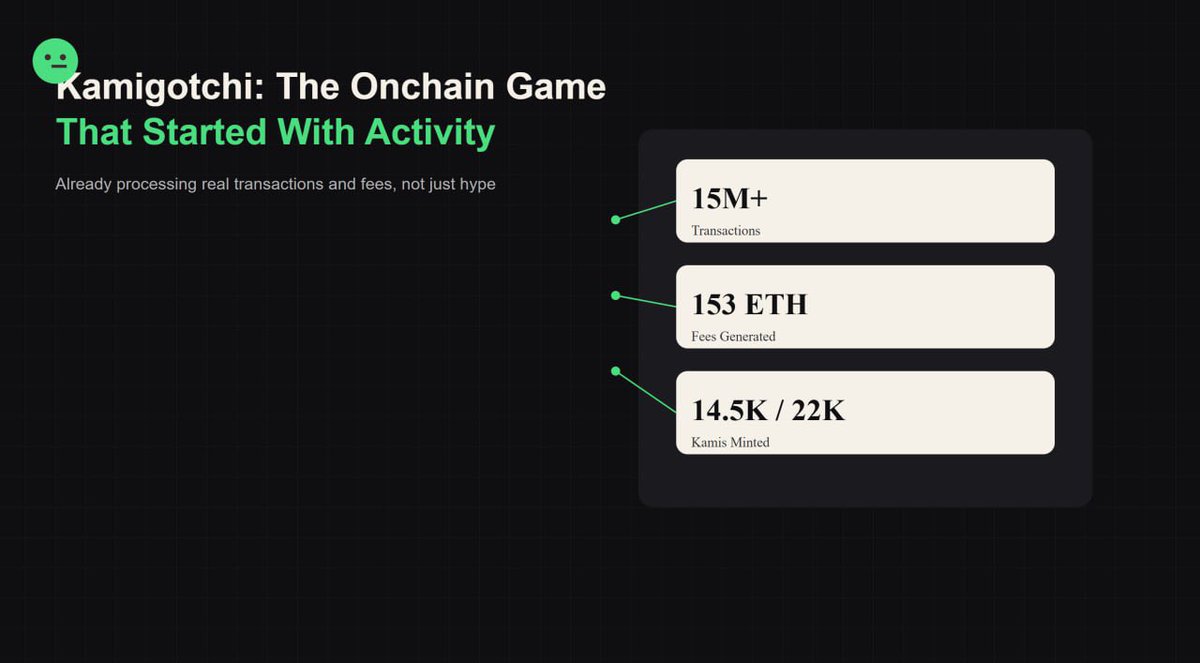
But @kamigotchiworld didn’t start that way.
It started with activity.
15M in-game transactions.
153 ETH generated in fees.
Before most people even noticed it existed.
Walk with me ↓ 🧵
In 2016, @mewe launched as a social network focused on privacy and real connections.
At first, it felt like a small alternative to Facebook and Twitter.
Who knew that a platform with no ads, no tracking, and no algorithms could grow to 21 million users?
That’s how social networks evolve. Often quietly, then all at once.
Today, the way we interact online is changing faster than platforms can control.
That’s why we have @BuildonSoshi.
But before diving in, it’s important to understand the problems most social networks still haven’t solved.🔻
Who Is Superform Actually For? A Persona-Level Breakdown
First, What Is Superform?
Superform is a user-owned neobank built to make onchain yield structured instead of fragmented.
It aggregates deposits into SuperVaults that route capital across lending, staking, and other DeFi strategies, while funds remain in user-controlled smart contracts.
Instead of handing assets to a centralized intermediary, users interact directly with programmable vault infrastructure.
— — —
Why A Persona Breakdown Matters
Not all capital behaves the same.
Retail savers, crypto natives, treasuries, and businesses each have different needs.
Superform isn’t built for “crypto users” in general.
It’s built for specific capital profiles.
Let’s break them down.
— — —
Persona 1: Crypto Natives
How Superform Fits:
Crypto natives understand DeFi, but fragmentation slows them down.
•Bridging across chains
•Rotating between protocols
•Monitoring multiple dashboards
SuperVaults reduce that friction by routing capital through structured vault frameworks.
Instead of chasing yield manually, capital is deployed through coordinated infrastructure.
The result:
Better capital efficiency.
Less operational overhead.
More structured yield exposure.
— — —
Persona 2: Everyday Savers
How Superform Fits:
Traditional savings accounts underperform inflation.
But many savers avoid DeFi because it feels technical and risky.
Superform simplifies the experience:
•Clear “earning” vs “not earning” asset visibility
•Single-signature deposits
•Mobile-first interface
It reframes DeFi yield as a smarter savings architecture, without surrendering custody.
— — —
Persona 3: Treasuries & DAOs
How Superform Fits:
Idle capital on balance sheets represents inefficiency.
Treasuries need:
•Systematic capital deployment
•Risk-aware allocation
•Transparent routing
SuperVaults allow structured yield strategies without building internal DeFi risk infrastructure from scratch.
It becomes institutional-grade yield automation.
— — —
Persona 4: Businesses & Fintechs
How Superform Fits:
Fintechs want embedded yield.
But building vault infrastructure internally is complex.
Superform aims to become:
Plug-and-play yield rails.
Businesses can integrate vault-based yield into their own products, expanding revenue models without custody risk.
This is where crypto expands its total addressable market.
— — —
What Connects All Four?
Ownership.
Superform isn’t just offering yield access.
It embeds governance, alignment, and long-term parameter control through $UP.
The model shifts from:
“Trust the platform.”
To:
“Interact with programmable infrastructure.”
— — —
Why This Matters
DeFi won’t scale by serving one type of user.
It scales when infrastructure adapts to different capital profiles.
Superform’s strength isn’t just APY.
It’s structural alignment across user types.
And that’s what defines a user-owned neobank.
— — —
If you want to understand where Safe DeFi is heading, start by asking:
Which persona are you?
@scribble_dao || #WWF