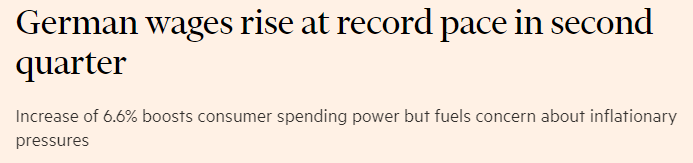
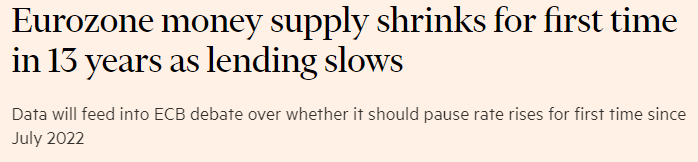
@ojblanchard1 Central banks in practice prefer to use 'the counterparts approach' to understand broad money changes rather than the multiplier.
The competing approaches explained here: https://t.co/0qA8ZGlDrF
Chart from ECB:
As significant as the Inflation Reduction Act but discussed hardly as much. EU's carbon border tax and updated emissions trading system takes another step forward. https://t.co/0C0OrFkneb
Interesting Tenreyro speech. Key message is that central bankers and academics are still allergic to any mention of broad money/money supply despite increased attention from investment commentary and financial press
https://t.co/9nU2pZcWlF
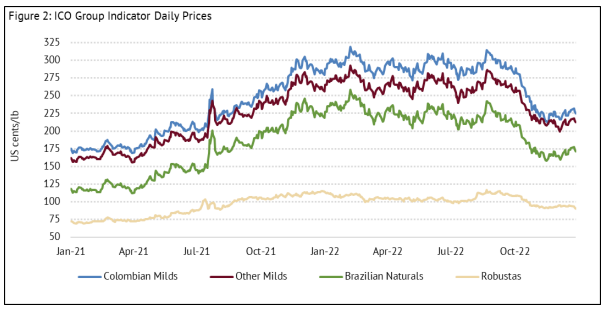
In case you're wondering why your flat white has been getting worse, it's because arabica beans nearly doubled in price and are being replaced/cut with cheapo robusta. Some hope in recent price falls.
Why would anyone want to leave Canary Wharf? It's got security, the Liz line, is shaking off its soulless business district vibe, and even has a Greggs.
https://t.co/pfZs31DZ9e
Potentially better mon pol approach: pick a yield curve you like, set a corridor around it, offer to always buy at the ceiling and sell at the floor. Lift/steepen curve to tighten policy, steepen if market converts too much long debt to short. Merge central banks & debt managers
I think I recall Gertjan Vlieghe saying in a BoE Q&A that high public & private debt => rates wouldn't need to rise as much in tightening cycle. Shame he left.
Monetary aggregates fell out of fashion during the 1990s due to a loss of usefulness and associations with the free market politics of monetarism, but have proved a reliable indicator of demand and inflation over the 2010s, more so than the labour market https://t.co/0qA8ZGmbhd
The Bank of England has sneakily got back its pre-1997 powers - financial supervision and now debt management - but managed to keep its independence. Too much power for an independent institution? https://t.co/IlgozXmuEh
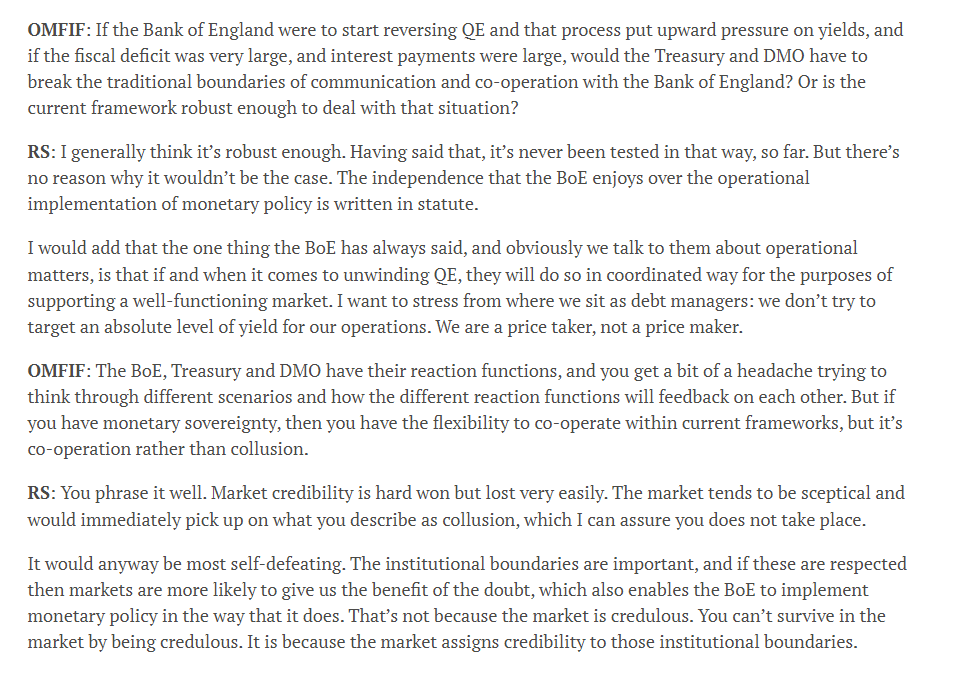
In 2020 I asked Sir Robert Stheeman, who manages the UK's national debt, whether the UK's macro framework could handle an environment like the current one. Here's what he said:
https://t.co/g7JqLXIiXj via @OMFIF
In 2020 I asked Sir Robert Stheeman, who manages the UK's national debt, whether the UK's macro framework could handle an environment like the current one. Here's what he said:
https://t.co/g7JqLXIiXj via @OMFIF
Obviously the fiscal mishap is important, but the Bank of England's abrupt ending of unofficial yield curve control was always going to cause problems in the gilt market
I think I recall Gertjan Vlieghe saying in a BoE Q&A that high public & private debt => rates wouldn't need to rise as much in tightening cycle. Shame he left.
@Gilesyb Related point - the BoE has got back the powers it lost
in 1997: fin supervision and debt management, but managed to keep its independence. Sneaky.
"bond markets are set for trouble" - 16th September, a week before the maxi budget, on problems with the UK's macro framework https://t.co/IlgozXmuEh via @CapX
The Bank of England doesn't appear to have done many speeches/papers on the financial stability impact of a rapid rise in long-term yields. Seems like an obvious thing to have done.