health, security, personal growth are areas where people are willing to invest time and attention in exchange for meaningful improvement.
These domains also generate the rich, personal data that enables AI systems to become truly personalized over time.
For 100 years, we gave machines a soul (software). For the next 50, we are giving software a body (hardware).
The smartphone was just the beta test for how we will build the entire physical world.
For 100 years, we gave machines a soul (software). For the next 50, we are giving software a body (hardware).
The smartphone was just the beta test for how we will build the entire physical world.
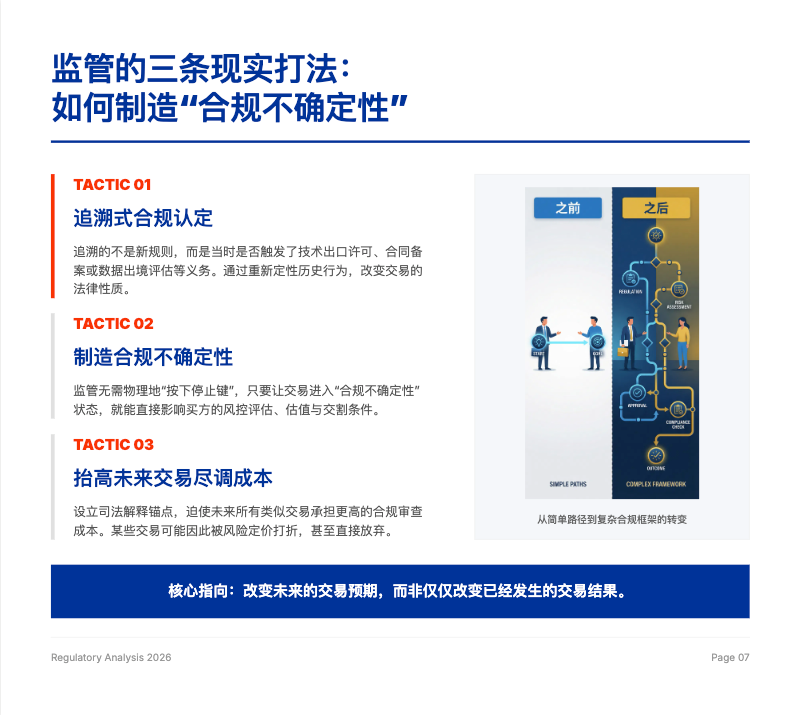
leverage through uncertainty: regulators making the asset “compliance-contested” can reprice risk and slow future transactions.
The “demo effect” point is high-signal: the real target is the playbook (“move first, sell later”), not necessarily Manus itself.
The tension is obvious: milestone or endgame signal?
As “general agents” get more compute- and infra-intensive, the endgame looks like a Big Tech scale war.
For startups, PMF may increasingly mean: “you become a platform module.”
The most shocking AI “blitzkrieg” of 2025 wasn’t a model launch — it was Meta buying Manus.
Not buying a product. Buying an operating system for delivery: productized agent execution + subscription ARR + real task traces.
Models set ceilings. Delivery wins markets.
The overlooked point: Meta didn’t buy “an Agent.”
It bought a delivery system: task decomposition, recovery, permissions, browser/local environments, eval + regression loops.
The moat isn’t the demo. It’s the SOP.