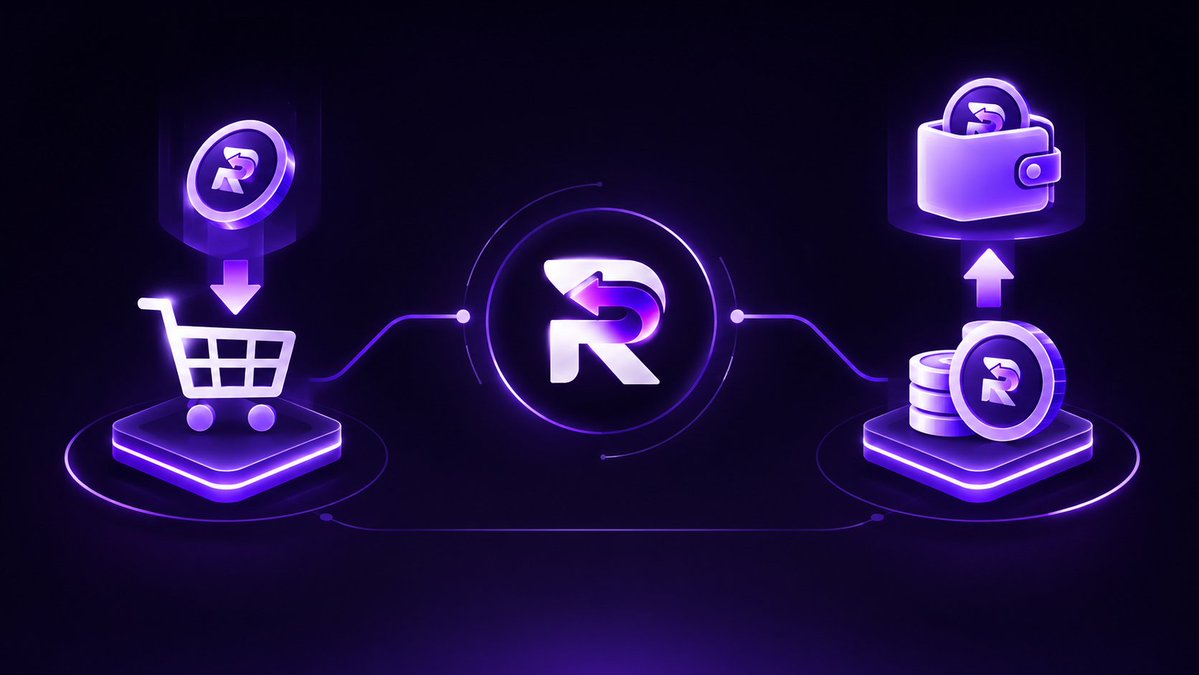
Launching a token is only the beginning. The real challenge for creators starts after distribution.
On @RebateLaunch , creators can configure buyer bonuses, holder payouts, and other launch parameters. But even a well designed reward structure cannot guarantee long term success.
After launch, creators still need to focus on building genuine community engagement, communicating transparently, developing real utility, and supporting a healthy market environment.
They also need to pay attention to liquidity, trading activity, and how the token's ecosystem evolves over time.
I believe creators should not measure success only by how many tokens reach the market. A stronger measure is whether they can build something people have a genuine reason to participate in beyond the initial incentives.
Rebate Launch can help structure the launch. Building a sustainable ecosystem is a responsibility that continues long after it goes live.
Good afternoon @RebateLaunch Fam
Cross Chain Token Launching: Opportunities and Challenges
Blockchain ecosystems often operate separately, which can make moving assets between networks inconvenient for users.
Rebate Launch takes a cross chain approach by operating across Robinhood Chain, HyperEVM, and Elysium. Its cross chain functionality also allows users to purchase Elysium launched tokens using supported assets from networks including Solana, Ethereum, Arbitrum, Base, Robinhood Chain, and HyperEVM.
This creates an interesting opportunity: users can access launches without first manually moving their funds through multiple bridging steps.
But cross-chain accessibility also brings challenges. Routing reliability, transaction costs, settlement time, liquidity, and asset compatibility all matter.
My perspective is that supporting multiple networks is not just about expanding reach. The real value comes from making interactions between ecosystems simpler and more reliable.
Cross-chain access can reduce friction, but execution quality is what makes the experience useful.
Good Evening @RebateLaunch Fren
Reward distribution and sustainable token economics are not the same thing.
On Rebate Launch, buyer bonuses and holder payouts create an incentive structure that can make token participation more attractive. But distributing rewards is only one part of building a healthy token ecosystem.
Long-term sustainability depends on much more: genuine demand, useful token applications, sufficient liquidity, consistent market activity, and responsible token design.
A project can distribute rewards successfully and still struggle if its underlying economics cannot support long-term participation.
My perspective is simple: rewards can encourage people to participate, but real value is what gives them a reason to stay.
Rebate Launch makes reward mechanisms part of the launch process, but sustainable growth still depends on the strength of each token's broader ecosystem.
The Economics of Pair Asset Payouts
One interesting part of @RebateLaunch is that holder rewards are distributed in the token's pair asset rather than simply paying holders in the same token they own.
Why does this matter?
Because the reward asset can influence how participants evaluate the value of their payouts. Instead of receiving more of the token they are already holding, eligible holders receive payouts in the associated pair asset.
This creates a different reward experience and adds another dimension to the platform's token economics.
However, receiving payouts in a pair asset doesn't automatically mean guaranteed profit. The actual value still depends on market conditions, eligible trading activity, and the applicable payout rules.
I think this is an important design choice because reward distribution is not just about how much users receive, but also about which asset they receive it in.
The reward amount matters, but the reward asset matters too.
Fixed Reward Rates: Transparency or Limitation?
One interesting design choice in @RebateLaunch is that buyer bonus and holder payout rates are established before a token launch and cannot be changed afterward.
The biggest advantage is transparency. Participants can review the reward conditions before joining, without worrying that the announced rates will be adjusted later.
However, fixed rates also create limitations. Market conditions, trading activity, and liquidity can change over time, while the original reward structure remains the same.
This means a rate that looks attractive at launch may not produce the same economic value throughout the token's lifecycle.
In my opinion, fixed reward rates are a positive step toward predictable launch conditions, but transparency alone cannot guarantee sustainability.
A fixed reward structure creates clarity, but its long term value still depends on market activity and real demand.
Understanding the Relationship Between Buyers and Holders
A token economy needs both participation and holding activity to create a balanced ecosystem. @RebateLaunch approaches these two sides through separate but connected reward mechanisms.
On the buyer side, participants can receive additional tokens through the buyer bonus mechanism when purchasing eligible tokens. This creates an extra incentive for people entering a new launch.
On the holder side, eligible participants can receive payouts in the token's pair asset. These payouts depend on factors such as holding amount, holding duration, and eligible trading activity.
What makes this model interesting is how both mechanisms operate within the same token economy. Buyers receive an additional token incentive, while holders have an opportunity to receive activity based payouts.
However, neither mechanism guarantees profit. Token prices, liquidity, and trading activity can all influence the actual economic value participants receive.
In my view, the strength of this design lies in recognizing two different types of participation rather than treating every user the same.
Buyers contribute to market participation, while holders engage with the token over time. Rebate Launch connects both through its reward structure.
Explore Rebate Launch: https://t.co/Q9g0T9MHTc
Why Active Referrals Matter More Than Numbers?👀
In referral based ecosystems, it's easy to get impressed by big numbers. Hundreds of invitations, thousands of registrations, and a growing referral network can look like signs of success.
But there is one important question that often gets overlooked
How many of those referred users are actually using the platform?
For @Hypesium , this distinction matters because its referral model is connected to trading activity, not just user acquisition.
Imagine two different referral networks. The first has a large number of registered users, but most of them rarely interact with the platform. The second has a smaller audience, but its members regularly use Hypesium to access trading opportunities on Elysium or HyperEVM.
From an economic perspective, the second network may generate more meaningful activity despite having fewer participants.
This is where Hypesium's referral structure becomes interesting. Referrers can receive up to 45% of eligible trading fees generated by their referred users. In other words, the potential reward is connected to actual trading activity rather than simply the number of people who joined through a referral link.
It changes how referral growth should be evaluated.
Instead of asking only how many people someone has invited, it becomes more useful to consider whether those users understand the platform, find its features valuable, and continue participating.
There is also a broader ecosystem perspective. Active users contribute to measurable platform usage, while a large number of inactive registrations may create very little ongoing economic activity. For a referral-driven model, the quality of participation can therefore be more meaningful than the size of the audience alone.
However, activity should not be confused with guaranteed revenue. The 45% figure represents a share of eligible trading fees, not trading volume or a fixed return. If referred users generate fewer eligible fees, referral rewards may decrease. Trading activity can also fluctuate depending on market conditions and user behavior.
My view is that sustainable referral growth should be built around relevance, not just reach. Introducing Hypesium to people who genuinely understand trading and have a reason to use the platform is more meaningful than chasing registrations for the sake of a bigger number.
A referral leaderboard might show who has invited the most people, but the real economic picture depends on what those users actually do afterward.
Because a growing community is measured by more than how many people join. Its real strength comes from how many people actively participate.
That's why active referrals matter more than numbers in Hypesium's referral ecosystem.
🌐 Website: https://t.co/EU9ZwpU0Qi
In a fast changing world where technology is taking the Center stage, don't be conservative or opposed to changes, be open minded, in that way, you will not be left behind.