Regional worlds, EEG, GVC, GPN, embeddedness, value capture trajectories and anything bringing more letters in. Political and Economic Geographies (PEG)
The EU’s #SRIP2026 is out and is a monster of a report—in the best sense: rigorous, well built and alive to challenges far beyond #innovation itself.
Innovation is not the whole story, but Europe will solve very little without it.
https://t.co/SxjbOQTjGY
The era of place-blind #development policy is over.
Territorial #inequality isn't just an economic inefficiency—it’s a serious political hazard.
Regional #prosperity flows not from scale alone, but from #governance, context & local agency.
The map matters.
https://t.co/RUvjo8yV9M
The ERSA Prize goes to Michael Storper—a scholar who has made cities legible, regions intelligible, and theory usable.
Few have married rigour and relevance with such grace. Fewer still are as admired in print as they are in person. A richly earned honour.
https://t.co/BEKHooAd5U
Metropolitan areas and capital #cities in the #EU are, in general, less vulnerable and more adaptable to the #GreenTransition.
Many lagging-behind regions emerge, by contrast, as far more vulnerable in the short-term to the European #GreenDeal.
https://t.co/zZ4gurOAn6
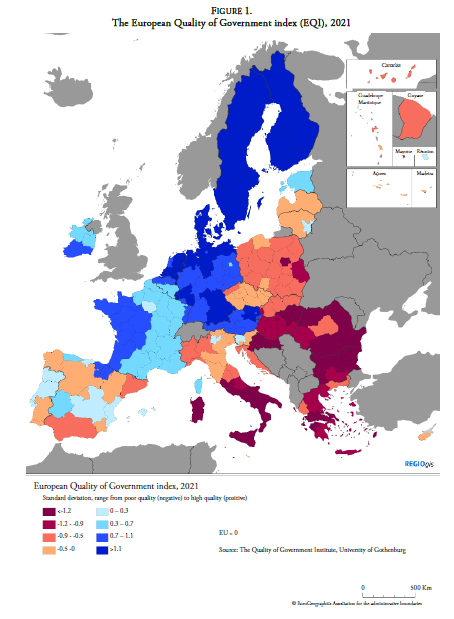
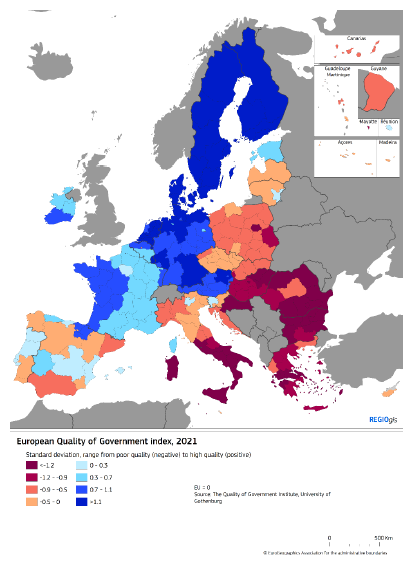
Regional quality of #government in #Europe changes over time.
Biggest improvement, in certain eastern European #regions
Biggest decline, in the south of the #EU
New & very interesting paper by Charron, @VictorLapuente, Bauhr & @AnnoniPaola in @JRR_InvRegs
https://t.co/2UMePizivS
The #development of #periphery areas may appear a never ending and discouraging story regarding Cohesion and Smart #European policies. But the extreme #Voting and #protestations behaviors prone us to take more care of their wills and their peculiarities
https://t.co/fs45rv9zix
WHAT COMES NEXT?It seems that the basic difference between "before" and "aftermath" is that one cannot avoid to raise that question now.What we supposed to know as (one possible) "statu-quo" has been blown-up.And whatever analysis based on that risks to be just sand to the wind..
12 facts about the economic geography of Ukraine uncovered by @FrankNeffke, Mattee Hartog and @Yang_Li_GL. Huge and changing differences in production and trade within 🇺🇦 and with the East and West. Worth a look: https://t.co/gfaCpDcIZH
On next 10.2 EU Commissioner for Cohesion and Reforms Ferreira will present the 8th report on economic, social and territorial cohesion at the EP's REGI Committee. Here are the findings, including 16 Staff Working Documents: https://t.co/LFThD8too4 #post2020regions#harvestivgdev
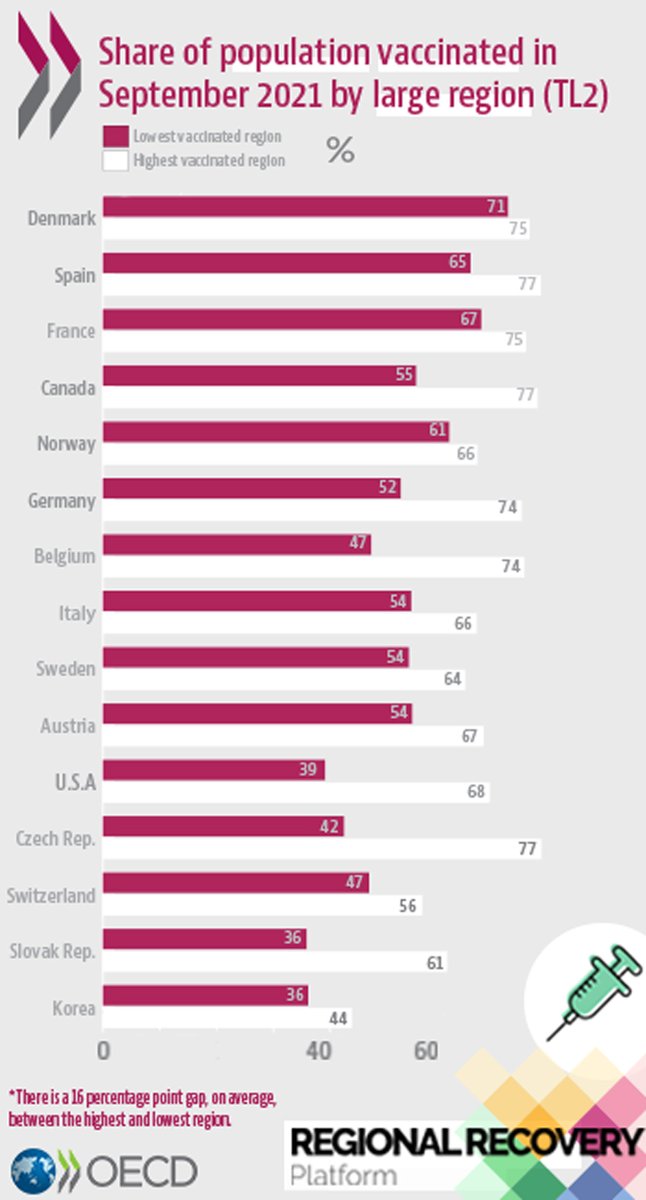
#DidYouKnow? Some countries have more than a 2️⃣0️⃣ percentage point difference in vaccination rates between #regions.
Check out our Regional Recovery Platform, which contains internationally comparable regional data on the #COVID19 crisis & #recovery.
🔵https://t.co/lQ6bBSjsJc
It took four years, but for for the first time we have an instrument in the EU to promote smart specialisation investments across borders and encourage participation in GVCs. A big thanks to the regional policymakers, researchers and innovators who helped us to put it in place!
This book on culture and development by Bob Klitgaard is a great read and very informative. Beyond arguing culture matters, it shows how it can be taken into account in policy. https://t.co/YmMSWRKYI4
For the first time, EU Cohesion Policy will have a workable definition on what is a area facing #Depopulation. One that can now be used to target at local level (NUTS3 & LAU) ERDF investments incl. dedicated axis/OP.
Very proud to see something I drafted makes it into final deal.
As the #8thCohesionReport gets underway, questions for EU & national regional policies from this @WorldBank paper by @kilroyisnt & #RobertoGanau on NUTS3 growth pathways (this map for GDP pc 2003-17), highlighting growing intra-regional inequalities https://t.co/atdw3RHzrG
New Year = New Start ... and New Risks.
Our #TopRisks2021 report is here!
Get the full rundown, and follow the #thread for a snapshot of the dangerous year that lies ahead. 👇 https://t.co/BJygT0EWOg
Excellent news! The ERDF regulation establishes a new interregional (I3) instrument with EUR 500m to help build new European value chains on the basis of smart specialisation strategies and help integrate less developed regions. Preparations on the work programme start now.
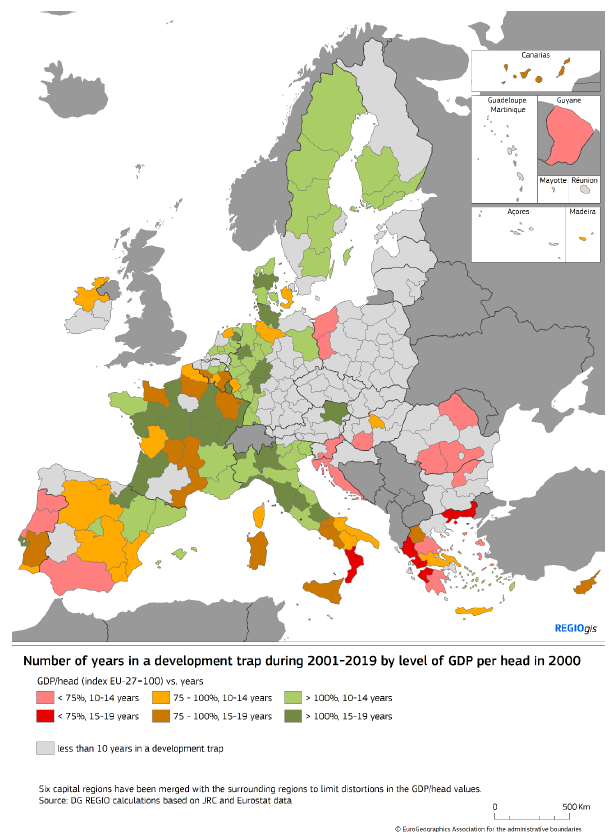
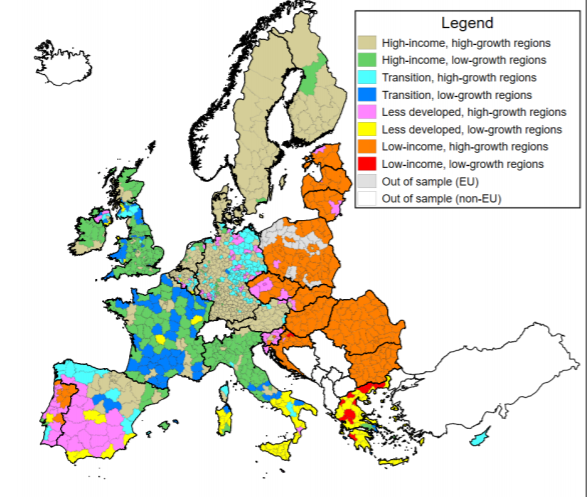
Current approaches to identifying the "lagging regions" of the EU are flawed. Ongoing transitions, including COVID-19 pandemic, are accentuating challenges and exacerbating existing internal divergence within the EU. This study proposes a new typology 👉
https://t.co/Ysv2pu4log