A vendor just emailed us an invoice.
Right logo. Right project. Right invoice number. New bank account.
If we had paid it, $50K is gone. No recovery. No insurance. Just gone.
We got an email a few days later that the vendors email had been hacked.
This is happening to businesses every single day. And it's about to get much worse.
AI is an incredible tool when it's used for good. But it is also a weapon. The same technology helping us underwrite deals and manage portfolios is helping criminals build perfect fraud at zero cost and infinite scale.
The "Nigerian Prince" is dead. He's been replaced by AI that sits inside your vendor's email for months. It watches your payment cycles. It learns your controller's name. It waits for the perfect moment to swap banking info on a real invoice.
It requires vigilance and good processes to not get fooled.
Here are a few basic things we do:
1. Banking info changes = full stop. No exceptions. We stop and we call.
2. Never call the number on the new email. That's the hacker's number. We dig up the old contact info and call someone we already know.
3. Hold payment if there is a bank change. Every updated account gets a mandatory hold and a voice callback to the vendor.
Two-minute phone call costs you nothing. One bad ACH is an expensive mistake.
What else should we be doing?
Possibly the most incredible Beethoven Ode to Joy flashmob by the Philharmonic Orchestra of Nuremberg and the Hans-Sachs-Choir in front of the St. Lorenz Church in Nuremberg, Germany.
[📹 Evenord-Bank eG-KG]
https://t.co/mgFU1WLzty
A young statistician saved their lives.
His insight (and how it can change yours):
During World War II, the U.S. wanted to add reinforcement armor to specific areas of its planes.
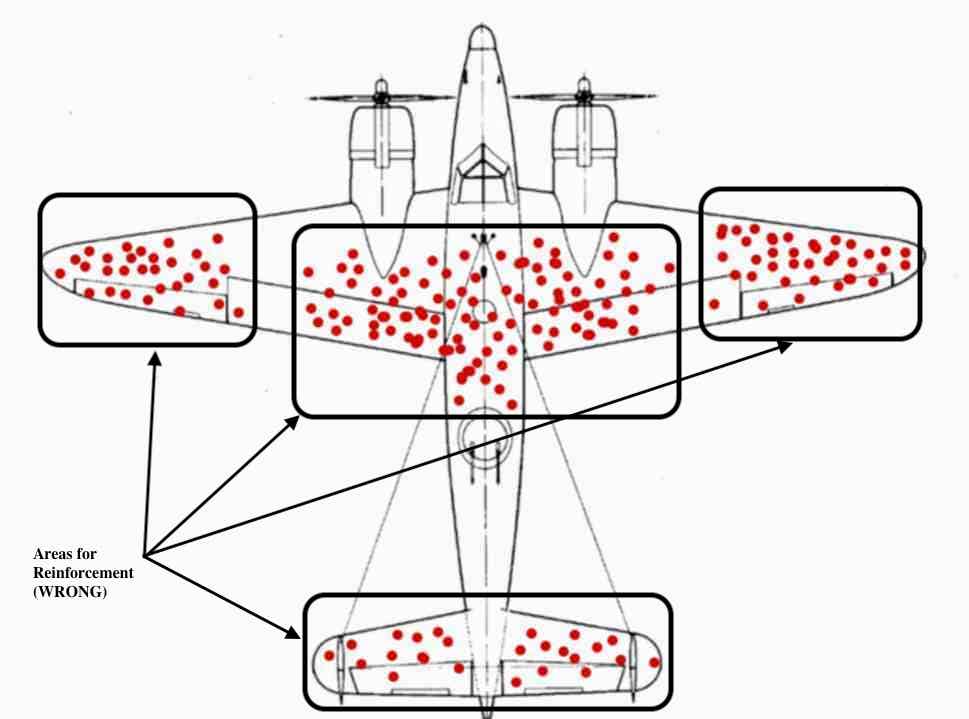
Analysts examined returning bombers and plotted the bullet holes and damage on them (as in the image below).
Based on this analysis, they came to the conclusion that adding armor to the tail, body, and wings would improve their odds of survival.
But a young statistician named Abraham Wald noted that this would be a tragic mistake.
By only plotting data on the planes that returned, they were systematically omitting the data on a critical, informative subset:
The planes that were damaged and unable to return.
Abraham Wald recognized a key fact:
• "Seen" planes had sustained damage that was survivable.
• "Unseen" planes had sustained damage that was not survivable.
Wald concluded that armor should be added to the *unharmed* regions of the returning planes (the areas without bullet holes on the image below).
His profound logic:
Where the survivors were unharmed was actually where the planes were most vulnerable.
Based on his insight, the military reinforced the engine and other vulnerable parts, significantly improving the safety of the crews during combat and saving thousands of lives.
Abraham Wald had identified a cognitive bias called "Survivorship Bias":
The error resulting from systematically focusing on survivors (successes) and ignoring casualties (failures) that causes us to miss the true base rates of survival (the actual probability of success) and arrive at flawed conclusions.
We see examples of Survivorship Bias all around us:
1. We read books on the common traits of successful people, but fail to consider all of the unsuccessful people who possessed those same traits.
2. We applaud the belief when we hear that an entrepreneur took out a second mortgage and succeeded, but fail to consider all of the entrepreneurs who did the same and went bankrupt.
3. We study the cultural strategies of the most successful companies, but fail to consider all of the companies that followed those same strategies and fell apart.
When we fail to consider the range of outcomes and the hidden evidence, we develop a skewed (and often incorrect) view of reality.
It cannot be avoided altogether, because the vast majority of books and history are written by and about the survivors and victors, but wherever possible, consider the unseen evidence.
Remember: What is unseen often has just as much value as what is seen.
***
If you enjoyed this or learned something, follow me @SahilBloom for more in future!
Thirty-eight years into being a stand-up comedian, Jerry Seinfeld was asked how his daily work routine has evolved over the years.
“It’s the exact same,” he said. “I do the exact same now as I did when I was 21 in 1975.”
He sits down with a yellow legal pad, he said, and
"my writing technique is just: You can’t do anything else. You don’t have to write, but you can’t do anything else.”
That’s your day? the interviewer asks. That’s what you’ve done every day for thirty-eight years? That, to me, sounds torturous.
“It is,” Seinfeld admits. “But you know what? Your blessing in life is when you find the torture you’re comfortable with…Find the torture you’re comfortable with, and you’ll do well.”
Takeaway 1:
To most, what Jerry Seinfeld does every day sounds like torture. But Seinfeld loves what he does. "I love my big, yellow legal pad," he said. "Once I get that pad open, I can’t stop…the next thing I know, the day is gone.”
Paul Graham has a great essay on this imbalance.
"My father is a mathematician," Graham writes. "To me the exercises at the end of each chapter in a math textbook represent work...To him the problems [are] the reward."
"It seemed curious that the same task could be painful to one person and pleasant to another."
If what is torturous to other people is rewarding to you, Graham writes, "that's something you're well suited for."
Takeaway 2:
In the early 1980s, the sociologist Daniel Chambliss spent 5 years studying swimmers at every level of ability.
In 1989, he published his research in a paper, “The Mundanity of Excellence.” Essentially, Chambliss found that Olympic champions don’t train more than the average swimmer. Instead, they train differently. In particular, they do “what others see as boring.”
Chambliss tells the story of a group of coaches from around the world visiting a U.S. Olympic Team practice. “The visiting coaches were excited at first…then soon they grew bored, walking back and forth, glancing down at their watches, wondering, after the long flight out to California, when something dramatic was going to happen.”
“They all have to come to see what we do,” the U.S. Olympic Team coach said. “They think we have some big secret.”
There is no secret. There is only the doing of the mundane, boring, torturous work, day after day.
Find the mundane, boring, torturous work you like, as Seinfeld said, "and you’ll do well."
- - -
"Your blessing in life is when you find the torture you’re comfortable with." — Jerry Seinfeld
Follow @bpoppenheimer for more content like this!
What if I told you there is a billionaire who controls your medical records.
She started Epic Systems in a Wisconsin basement in 1979.
And now she's the richest woman you've never heard of.
10 matter-of-fact messages from the Midwest billionaire, Judy Faulkner:
1. “If you see a snake, kill it; don’t form a committee on snakes.”
2. “What you put up with is what you stand for.”
3. "One of the things that made Epic strong when I wrote the original code was that it never occurred to me to do anything other than put the patient at the center. I developed a clinical system at a time when the health care world had pretty much only billing and lab systems available."
4. “I have never had any personal desire to live lavishly. I’m probably among the billionaires who are indifferent to the lifestyle that great wealth can buy. There is no apartment in New York or Paris. There is no ranch in Aspen. There are no private or even corporate jets.”
5. “I was a programmer, I thought it was fun. I’m not sure in the beginning I felt that I’m here to save lives. Why do you come to work? For the paycheck? For something interesting to do? For customers? For the competition? For the mission? If I had to circle one reason, it’s for my customers.”
6. “Programming is a mix of language, math and art, and I remain a software developer at heart. And I have no plans to retire or even slow down.”
7. “[On living in Wisconsin] The first thing you’ve got to like is the people. It’s the Midwest work ethic, the Midwest nice. I was just in an area with gated communities. I do like the Midwest where there is much more a feeling of… we trust each other.”
8. “I think it’s very interesting, the difference between ‘thank you’ and ‘congratulations.’ To me, ‘thank you’ makes it a personal thing, like you did it for me, and I don’t like to take that from a person unless it was something they did for me. So, I prefer to congratulate them on a job well done if that was something they did themselves.”
9. “Many years ago I asked my young children what two things they needed from their parents. They said ‘food and money.’ I told them ‘roots and wings.’ My goal in pledging 99% of my assets to philanthropy is to help others with roots – food, warmth, shelter, health care, education – so they too can have wings.”
10. “I took the route of higher education and took a risk starting a business. My success didn’t happen overnight, but over time with steady improvement.”
***
Remember: It's never too late to turn your dream idea into your dream business.
***
That's a wrap. Hope you enjoyed these matter-of-fact messages from Judy. If you did:
1. Follow me @arjunmahadevan for more like this (and for more on how to turn your dream idea into your dream US business with @doolaHQ)
2. RT this, if you can, to share these messages with a friend
You cannot be healthy with unhealthy mitochondria.
Yet no one pays attention to the health of their mitochondria.
These cellular powerhouses are crucial for
• Energy
• Longevity
• Metabolism
• Reducing oxidative stress
Here are 12 ways you can optimize your mitochondria:
In tech, sales cycle length has increased over the past 5 months:
Under $5K deals: increased by 9.2%
$5K to $10K deals: increased by 4.7%
$10K to $25K deals: increased by 3.9%
$25K to $50K deals: increased by 4.0%
$50K to $100K deals: increased by 2.1%
$100K to $200K deals: increased by 2.1%
$200K and higher deals: increased by 0.6%
Larger AOV deals have always been scrutinized. Now the smaller deals are now getting the CFO/procurement treatment. US only data, AE data only, only tech industry, last 5 months, current employees only. Data from all the largest tech/saas/IT players. N>12,000.
GPT (Generative Pre-trained Transformers) is taking the world by storm. This has sparked, among other things, a wave of commentary about the need to regulate #AI. While legitimate in its own right, I fear it might be distracting us from the main event. https://t.co/JSCDmqE2yS
A NUCLEAR POWERED COAL PHASEOUT
The CANDU nuclear Pac Man (green) gobbles up coal (black) in Ontario.
North America’s greatest green house gas reduction 90% enabled by CANDU.
54 smog days —> zero
1000’s of lives saved.
Graph by @cadlam
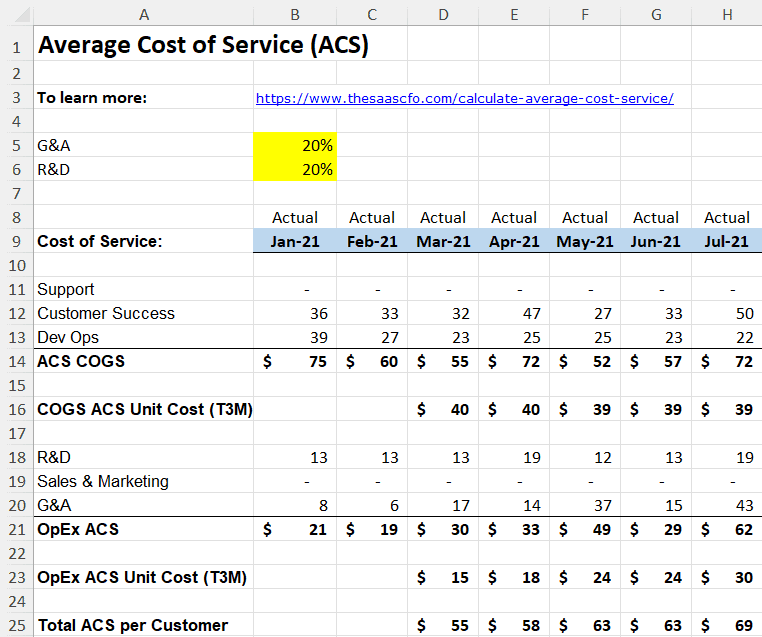
Is your SaaS struggling with scale? Do you have low gross profit or low/no bottom-line profitability? Well, the Average Cost of Service metric may help!
This is an obscure but essential metric for your SaaS company. It's more applicable for later-stage or mature SaaS profiles.
I use this often when we are struggling with pricing decisions, creating cheaper pricing plans, and/or heavily discounting our product.
If you have ever told Sales that "we will never make money if we price at $X or below," then this is your metric.
It attempts to quantify the cost of serving an existing customer. What resources are needed for that? And how does it compare to our ARPA? It's a key question to answer when scaling your SaaS company.
Learn more here: https://t.co/WuE9058mKm. Excel template available. #saas #cfo #metrics
Credit: I believe that I originally read about this on Joel York's blog. I've expanded it a bit.
There are great sculptors, and then there are those whose abilities to transform stone border on the divine.
These are 15 of the most astonishingly lifelike marble sculptures ever created 🧵
Statistics can never be completely objective.
This is not just my opinion. It's a *mathematical* fact.
Read on if you want to learn a deep fundamental truth about data and its relationship to the universe we live in.







![bpoppenheimer's tweet photo. Thirty-eight years into being a stand-up comedian, Jerry Seinfeld was asked how his daily work routine has evolved over the years.
“It’s the exact same,” he said. “I do the exact same now as I did when I was 21 in 1975.”
He sits down with a yellow legal pad, he said, and
"my writing technique is just: You can’t do anything else. You don’t have to write, but you can’t do anything else.”
That’s your day? the interviewer asks. That’s what you’ve done every day for thirty-eight years? That, to me, sounds torturous.
“It is,” Seinfeld admits. “But you know what? Your blessing in life is when you find the torture you’re comfortable with…Find the torture you’re comfortable with, and you’ll do well.”
Takeaway 1:
To most, what Jerry Seinfeld does every day sounds like torture. But Seinfeld loves what he does. "I love my big, yellow legal pad," he said. "Once I get that pad open, I can’t stop…the next thing I know, the day is gone.”
Paul Graham has a great essay on this imbalance.
"My father is a mathematician," Graham writes. "To me the exercises at the end of each chapter in a math textbook represent work...To him the problems [are] the reward."
"It seemed curious that the same task could be painful to one person and pleasant to another."
If what is torturous to other people is rewarding to you, Graham writes, "that's something you're well suited for."
Takeaway 2:
In the early 1980s, the sociologist Daniel Chambliss spent 5 years studying swimmers at every level of ability.
In 1989, he published his research in a paper, “The Mundanity of Excellence.” Essentially, Chambliss found that Olympic champions don’t train more than the average swimmer. Instead, they train differently. In particular, they do “what others see as boring.”
Chambliss tells the story of a group of coaches from around the world visiting a U.S. Olympic Team practice. “The visiting coaches were excited at first…then soon they grew bored, walking back and forth, glancing down at their watches, wondering, after the long flight out to California, when something dramatic was going to happen.”
“They all have to come to see what we do,” the U.S. Olympic Team coach said. “They think we have some big secret.”
There is no secret. There is only the doing of the mundane, boring, torturous work, day after day.
Find the mundane, boring, torturous work you like, as Seinfeld said, "and you’ll do well."
- - -
"Your blessing in life is when you find the torture you’re comfortable with." — Jerry Seinfeld
Follow @bpoppenheimer for more content like this!](https://pbs.twimg.com/media/F6Zhkp1W4AA3vX4.jpg)
![ArjunMahadevan's tweet photo. What if I told you there is a billionaire who controls your medical records.
She started Epic Systems in a Wisconsin basement in 1979.
And now she's the richest woman you've never heard of.
10 matter-of-fact messages from the Midwest billionaire, Judy Faulkner:
1. “If you see a snake, kill it; don’t form a committee on snakes.”
2. “What you put up with is what you stand for.”
3. "One of the things that made Epic strong when I wrote the original code was that it never occurred to me to do anything other than put the patient at the center. I developed a clinical system at a time when the health care world had pretty much only billing and lab systems available."
4. “I have never had any personal desire to live lavishly. I’m probably among the billionaires who are indifferent to the lifestyle that great wealth can buy. There is no apartment in New York or Paris. There is no ranch in Aspen. There are no private or even corporate jets.”
5. “I was a programmer, I thought it was fun. I’m not sure in the beginning I felt that I’m here to save lives. Why do you come to work? For the paycheck? For something interesting to do? For customers? For the competition? For the mission? If I had to circle one reason, it’s for my customers.”
6. “Programming is a mix of language, math and art, and I remain a software developer at heart. And I have no plans to retire or even slow down.”
7. “[On living in Wisconsin] The first thing you’ve got to like is the people. It’s the Midwest work ethic, the Midwest nice. I was just in an area with gated communities. I do like the Midwest where there is much more a feeling of… we trust each other.”
8. “I think it’s very interesting, the difference between ‘thank you’ and ‘congratulations.’ To me, ‘thank you’ makes it a personal thing, like you did it for me, and I don’t like to take that from a person unless it was something they did for me. So, I prefer to congratulate them on a job well done if that was something they did themselves.”
9. “Many years ago I asked my young children what two things they needed from their parents. They said ‘food and money.’ I told them ‘roots and wings.’ My goal in pledging 99% of my assets to philanthropy is to help others with roots – food, warmth, shelter, health care, education – so they too can have wings.”
10. “I took the route of higher education and took a risk starting a business. My success didn’t happen overnight, but over time with steady improvement.”
***
Remember: It's never too late to turn your dream idea into your dream business.
***
That's a wrap. Hope you enjoyed these matter-of-fact messages from Judy. If you did:
1. Follow me @arjunmahadevan for more like this (and for more on how to turn your dream idea into your dream US business with @doolaHQ)
2. RT this, if you can, to share these messages with a friend](https://pbs.twimg.com/media/F2OQi0bXgAApZoB.jpg)