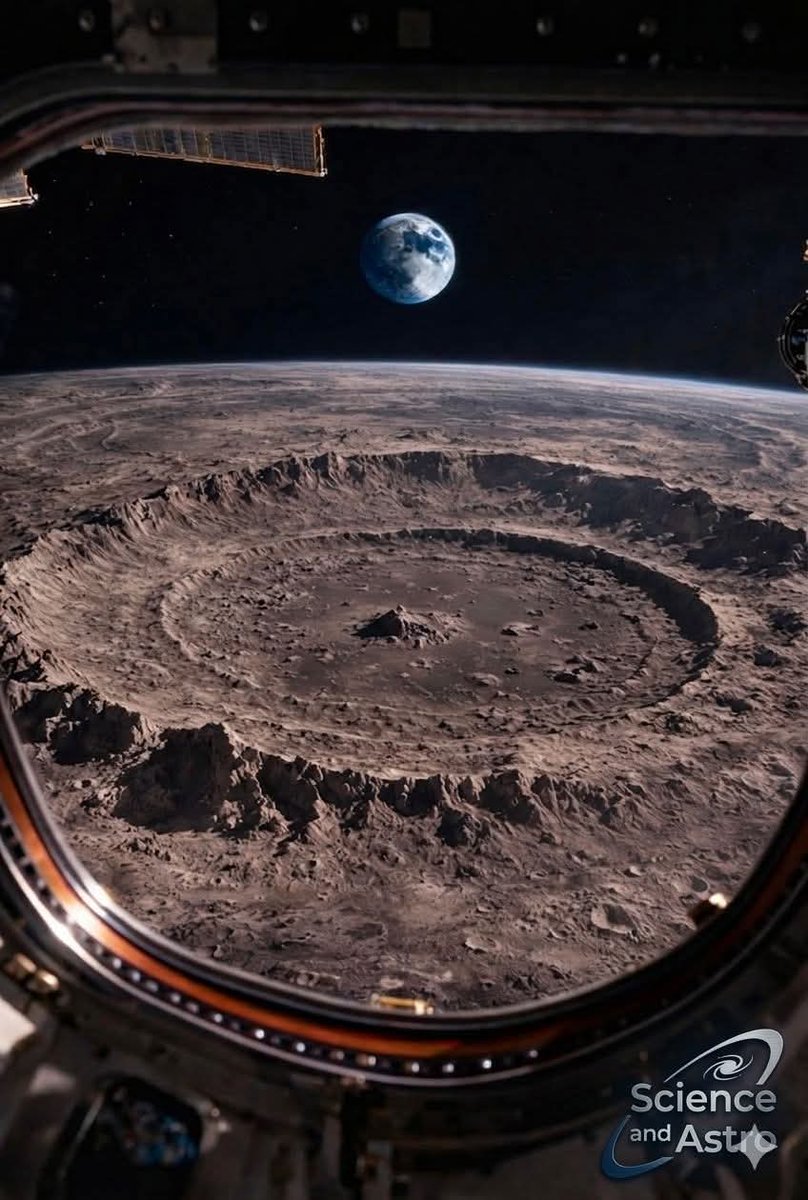
Historic First: Artemis II Crew Becomes the First Humans to Witness the Orientale Basin in Its EntiretyBREAKING: In a stunning milestone for deep-space exploration, the Artemis II astronauts have captured the first-ever view of the Moon’s Orientale Basin with human eyes — seeing its complete, majestic structure for the first time in https://t.co/PDp5ThIn0L the Orion spacecraft swept past the lunar limb during its historic flyby, the crew photographed the entire basin in one breathtaking frame, with Earth hanging beautifully in the black void beyond.A 930-Kilometer Cosmic BullseyeThe Orientale Basin is one of the Moon’s most impressive geological features — a massive multi-ringed impact structure roughly 930 km (580 miles) across. Formed about 3.8 billion years ago by a colossal asteroid or comet strike, its concentric rings ripple outward like frozen waves from a stone dropped into a cosmic pond.The outermost Cordillera ring forms the dramatic outer rim, while inner rings (the Rook mountains) mark zones of dramatic crustal rebound and collapse after the initial impact. Because Orientale straddles the Moon’s near and far sides near the southwestern limb, it has always appeared severely foreshortened and partially hidden from Earth-based telescopes and earlier missions. Only now, from Orion’s unique vantage during the flyby, has the full scale and symmetry been revealed directly to human observers.The Shot of a LifetimeThe image was taken through an Orion window as the crew passed over the site at just the right moment — with perfect illumination highlighting every ridge, ring, and shadow. It’s not just a photo. It’s a pivotal new dataset that complements decades of orbital data from Lunar Reconnaissance Orbiter, GRAIL’s gravity maps, and earlier probes.Entering the Zone of SilenceAs Orion continues its trajectory around the Moon, the crew is now heading into the most isolated phase of the mission: loss of signal. For roughly 40 minutes, the bulk of the Moon will completely block all radio communication with Earth, leaving Reid Wiseman, Victor Glover, Christina Koch, and Jeremy Hansen in profound solitude on the far side.They are venturing where only a handful of Apollo astronauts have gone before — deeper into cislunar space, pushing the boundaries of human exploration farther than any crew since 1970.The Moon is yielding its secrets once again… and humanity is watching live.This is what returning to the Moon — and preparing for Mars — truly looks like.
Insane footage as passenger on a bus records going over the Panama Canal as fuel tanks explode
Confirmed authentic footage by our team on the ground in Panama
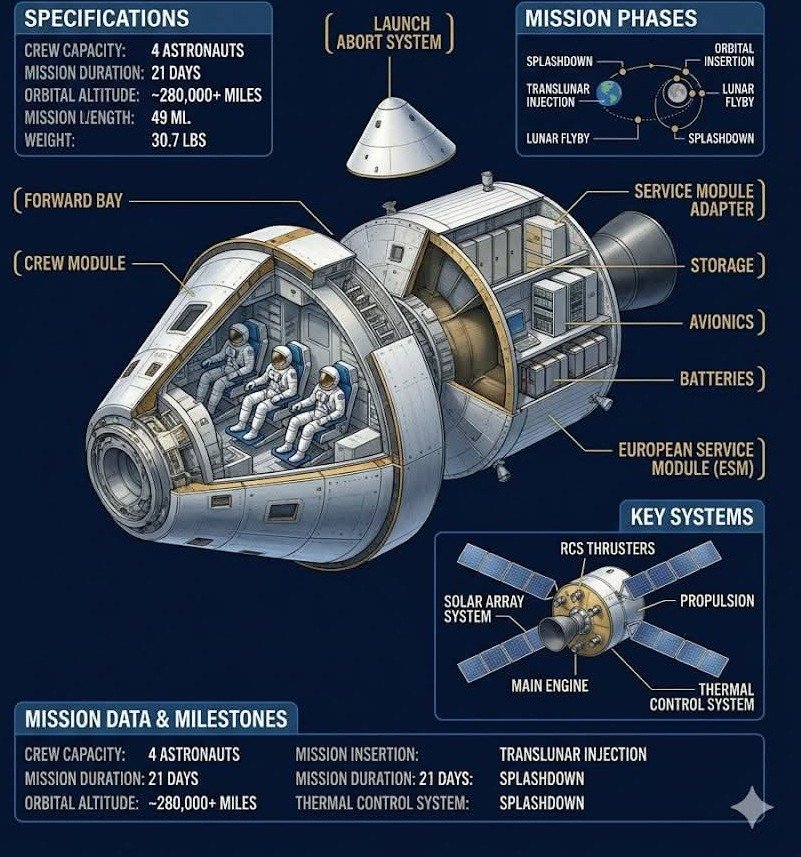
:A true masterpiece of human engineering. The Orion spacecraft is far more than just a capsule — it’s a sophisticated, fully integrated lifeboat designed to carry humans safely through the deadliest environment we’ve ever dared to enter: the void of deep space. Every inch of Orion has been engineered with one goal in mind — https://t.co/2iqjF4rlLF features a state-of-the-art life support system that recycles air and water with remarkable efficiency. Its massive heat shield is built to withstand blistering temperatures of nearly 2,800°C (5,000°F) during the fiery plunge back through Earth’s atmosphere — hotter than the surface of the Sun. Powered by the European Service Module, Orion unfurls vast solar arrays to drink in sunlight for energy, while its powerful engines perform the delicate, life-saving maneuvers required in the unforgiving expanse between Earth and the Moon.This machine represents decades of relentless innovation, international collaboration, and pure human ambition.Orion isn’t merely a https://t.co/Y56Pwmn97N is humanity’s boldest bridge yet — carrying us back to the Moon, onward to Mars, and ultimately toward the stars beyond.
Dozens of fishermen end up losing body parts to wolf fish.
This is because many people don't realize that even after being "dead" and without a body, it is still capable of this.