$RKLB — Bloomberg Interview
Q1. Can you clarify the confusion about Neutron? Yesterday, it seemed like you were pushing back the launch date a little bit. Is Neutron still on track to launch from its launch pad in 2026?
Peter Beck: I think the headlines overblew it a little bit. What I said is that it's getting a little tighter to get a launch away this year. That's just being honest and transparent.
It's a rocket program. These are very difficult and complex programs. Our intention is to push hard and try to get the first flight away this year.
But I think the real question that should be asked is: What about the 10th flight?
The first flight is obviously important, but flight number 10 is really important because that shows you've reached scale, cadence, and reusability. That's the most important thing for the whole program.
Q2. You mentioned cadence. Tell us a bit about how you're thinking about cadence going forward. Is there a viable path to getting to a regular cadence?
Peter Beck: If you look at our current vehicle, Electron, we actually scaled that faster than any other rocket in history. We went from zero to 50 flights in the shortest time in history, and we're on track to get to 100 flights in the shortest time in history with that vehicle as well.
So we know a thing or two about taking a rocket, putting it on the pad, and flying it over and over again.
Neutron is really important for a few reasons. A lot of people focus on it filling a gap and providing competition for Falcon 9, which is an important part of its job.
But Rocket Lab is an end-to-end space company. We build satellites both for ourselves and for other people. With the pending acquisition of Iridium, we really need a rocket to launch our own satellites.
At least 50% of Neutron's capacity is going to be consumed by ourselves.
Q3. SpaceX was able to raise a huge amount of cash recently. How do you intend to continue raising cash to fund some of these expensive endeavors?
Peter Beck: I think we're a little different from SpaceX. Elon has very grand aspirations that require a lot of cash.
For us, we're in the business of getting to cash-flow positivity as quickly as we can. If you look at some of the acquisitions we've done in the past and those we're about to do, they put us in that realm very quickly.
We have a very different profile from the other big rocket companies. I'm certainly not one of the richest people in the world, and our competitors have a totally different cost and sense of capital.
We've always been the rocket company that has had to be very commercial from day one. We're focused on building a good, solid business and a commercial enterprise that's enduring and making money.
Q4. I look at the reported backlog of $2.36 billion with 90-plus launches. How should investors look at that backlog? At what point does it become something that should raise concern if it gets too large?
Peter Beck: Everybody loves a great big backlog. Between the last quarter and now, we added nearly $1 billion of backlog to the company.
Backlog is a great metric, but execution is the true measure.
If you look at the company, I think we've established ourselves as very strong executors. Throughout our history, we do what we say we're going to do.
Q5. The Iridium deal, which is pending completion, potentially opens the door for direct-to-device products. How do you see that opportunity, particularly against competitors?
Peter Beck: I've been saying this for many years, and I think evidence from other companies has proven it out: the really large space companies of the future are going to look a little bit the same.
They're going to have the ability to build satellites at scale, launch their own satellites with their own rockets, and have a communications business.
Iridium is the entry point for us. It's by no means the endpoint.
One of the reasons we like the Iridium platform so much is that it has a very unique spectrum. Its L-band spectrum allows you to do very unique things.
Iridium has built an amazing business around safety-critical, defense-critical, and critical-infrastructure applications. That's something that will continue to grow.
I don't think you're going to see us going head-to-head in the broadband market. That's very well served and is a tough place to be.
But I think there's a tremendous opportunity in some of these more discrete and unique areas of the communications market.
Q6. Talk to us about the Kepler deal, which you announced yesterday. Kepler Communications purchased a dedicated Neutron launch for no earlier than 2028. How important is that to the business?
Peter Beck: It's funny because naturally a lot of people would expect that we should sell all of the rockets we have for eternity.
If we were just a rocket company, that would be a great assumption. But we have to make sure that we have rockets left in production and available to launch our own missions, as well as for some of our defense customers who need assured access to space.
Right now, I've never seen the rocket and launch industry so constrained.
For us, we're extremely selective about who we give this very valuable Neutron capacity to.
It was great to have the Kepler team on contract. We've known that team for a very long time.
But it is a very constrained environment right now, and we have to navigate it carefully.
Q7. What's the detailed plan for getting to cash-flow positive? Is it just a matter of time?
Peter Beck: Yes, absolutely.
Neutron, after we have the first flight and then move into commercial flights, is a huge inflection point for the company.
And, of course, an acquisition like Iridium would do that immediately.
So we have a fairly short time horizon to reaching cash-flow positivity.
Q8. Looking at the acquisitions of Mynaric, Motive, and Iridium, are you hungry for more deals, or is there a pause in terms of the company's acquisitive stance?
Peter Beck: Never done, never done.
All of those acquisitions have been very strategic. I think launch creates a tremendous moat, and everybody can see that. It's the big show in the sky.
But actually, we've acquired a whole bunch of component companies and scaled those. Components are just as much of a moat.
No matter how much capital you have, if you just turn up and say, "I want to build a thousand satellites," you can't, because there isn't a supply chain there to provide all of the components for the spacecraft.
For us, that's not a constraint, of course. But for other people entering the market, it's a huge constraint.
So you'll continue to see us tackling those smaller deals on the side.
Deals like Iridium certainly aren't going to be the last. And you shouldn't think of us as the L-band communications company.
This is the first of many, I would say.
Government shutdown is officially over.
President Trump signed the bill to reopen the government and federal workers can finally return to work and receive their back pay.
Elon Musk said he’d like to thank $GOOGL Waymo for paving the regulatory path.
He also added that $TSLA should be able to deploy every Cybercab it produces noting it will be difficult for regulators to object once Tesla logs billions of safe autonomous miles.
AI is now an industrial story where every layer here shows how the physical economy is being rebuilt to power intelligence.
$NBIS, $IREN & $CIFR are turning megawatts into rentable GPU capacity by selling compute by the hour like utilities once sold power by the kilowatt.
$OKLO, $VST & $CCJ are the fuel since AI runs 24/7 & you need baseload that never shuts off.
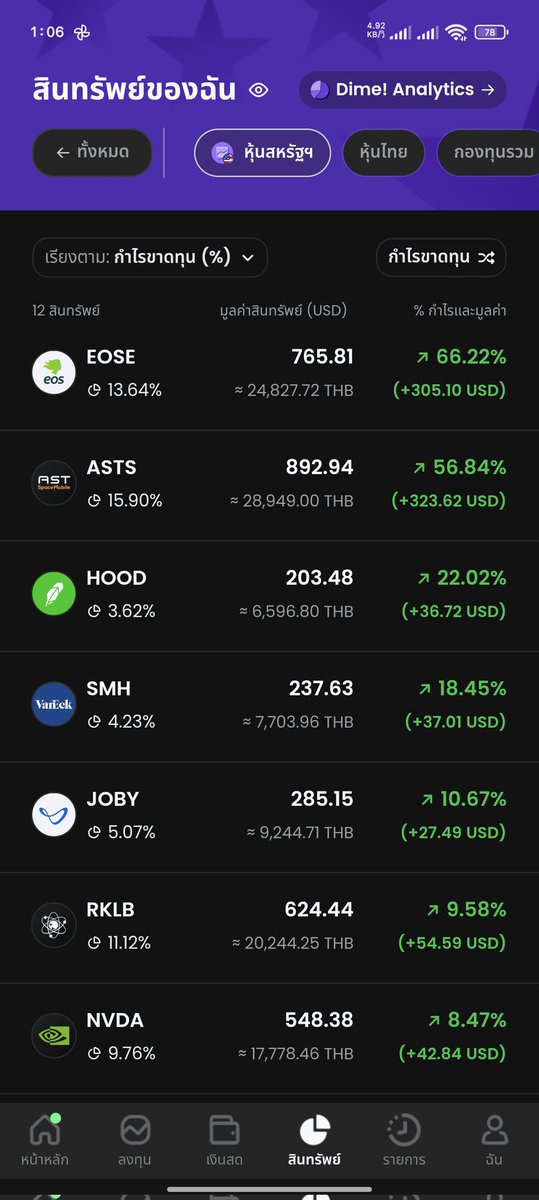
$EOSE, $FLNC & $NEE are solving the balance problem on how to store, shift & dispatch energy when AI loads never shut off.
The last layer that most people overlook is space since ground fiber can’t reach everywhere or update globally in real time. Space fills that gap. $RKLB & $ASTS are my favorite names for that theme.
$NVDA just put out a new post on data centers & energy storage.
They’re calling long duration battery systems essential for managing AI power swings.
That’s exactly where $EOSE fits in.