i'm becoming an AI engineer in 2027.
here's the order i'm following:
1. software engineering
2. ai primitives
3. ai systems from scratch
4. frameworks
5. production ai
Full roadmap below.
Want free, structured resources for each step? let me know. https://t.co/52GDgc7kn7
Great conversations around AR, tech, AI and politics. Chala kotha vishayalu nerchukunam
Join aina andhariki thanku my dear gundekais.
Special thanks to @shivasirimalla and @directorAshoka for sharing their experiences and insights.
Looking forward to more such conversations.
"Why has it taken you nine years, rather than nine months, to deliver this rallying cry for startups?!"
I have been wanting to answer a version of this question in public for some time. I'll also share some insights from building a life for myself in India as a Canadian.
Firstly, @AaryamanVir and I started RuntimeBRT in July of 2025, so we've only really been at this for ~15 months (a short while in the grand scheme). But what we've been able to pull off together has been nine years in the making.
When I first moved to India in 2017, I didn't realise I was moving here properly. It was not supposed to be a permanent move. I didn't know I'd meet the love of my life in India (she's from Mizoram, which is why I live in Aizawl), I didn't know I'd father two wonderful children here, and I certainly could not have predicted the direction my career has taken.
In 2017, I had just dropped out of college. I was studying photography, which is one of the few things in life that has ever really captivated me. Not because I wanted to monetise it — I do not come from a business family and never knew any entrepreneurs growing up — but because it served as a creative outlet through which I was able to explore the world around me.
I quit my professional photography program because I knew if I didn't quit — if I graduated and got a certificate — that I'd probably use that certificate to get a semi-normal job. Doing so would have been the path of least resistance, but I didn't want a normal job. I didn't want a normal life. I was terrified of the boredom that seemed to pervade the careers of so many adult professionals. I intuitively understood that a large majority of people are not satisfied by their careers, and I was deeply determined to avoid falling into that same trap.
I probably would have gravitated towards startups, had I know what a startup was. At the age of 20, I don't think I'd ever heard the word before.
However, the alternative of working a normal job for a normal salary was a life of uncertainty. That was scary too. Very scary. So scary that the fear of not knowing what to do with one's life actually fuels a large part of the postsecondary education industry (in my opinion). Many kids go to college not because they intrinsically want to, but because they don't know what else they'd do. Even if they do have a dream that deviates from the well-trodden path, they may not have enough self-confidence to go all-in on that dream. They're young, inexperienced, and "that's not how the world works kid!"
In spite of my inexperience and uncertainty, I burned the bridge to a degree by dropping out. I wasn't running towards anything in particular. Rather, I was running away from convention. And to a 20-year-old from Canada, India was textbook unconventional. I moved here with my DSLR and a tiny portfolio of photographs. I spent a lot of time doing street photography in and around Delhi. Much of 2017 and early 2018 consisted of me putting myself in uncomfortable social situations with strangers to see if I could capture moments with my camera that felt deeply human.
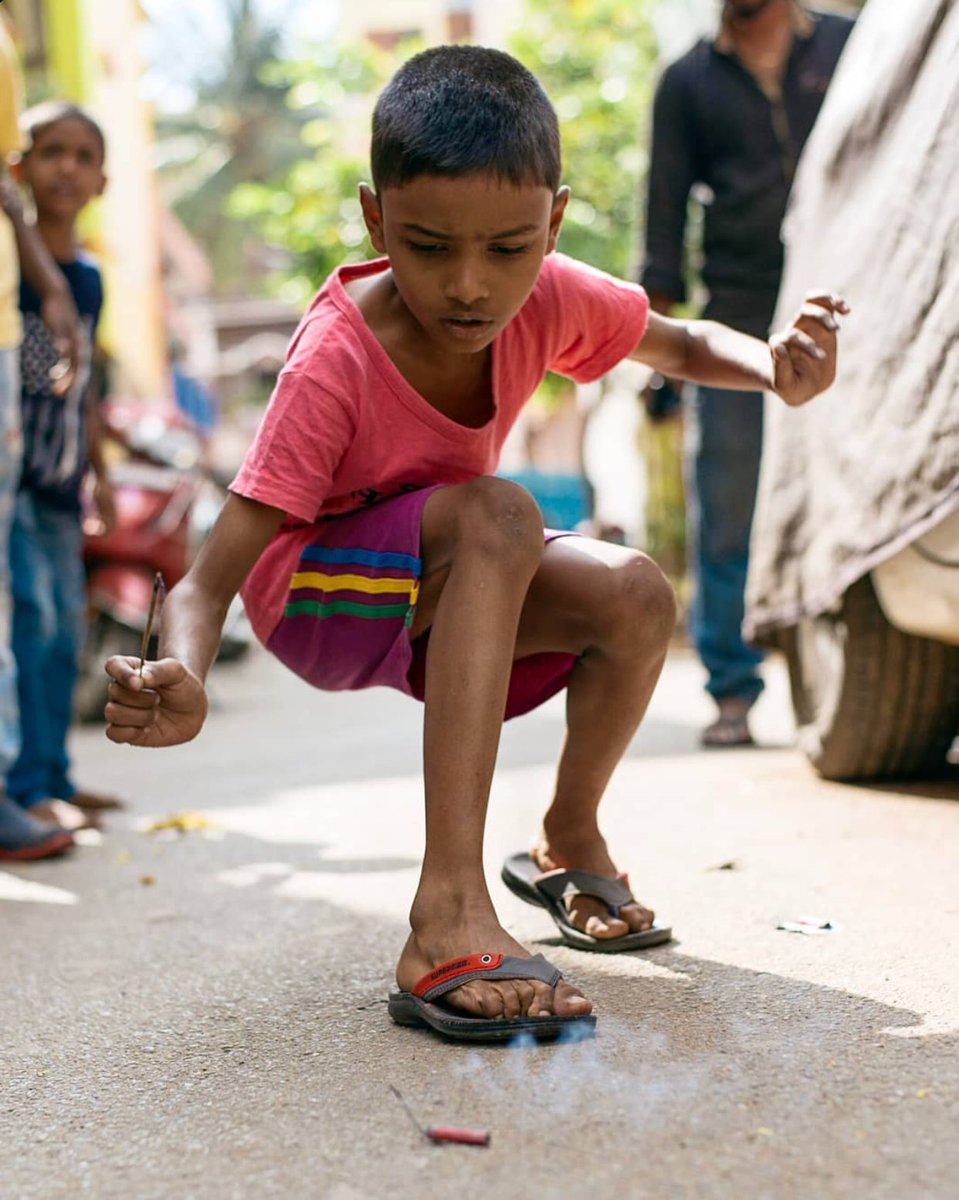
These street photography outings were where I first fell in love with India and its people. Reinterpreting your note about how picture abhi baaki hai, I have attached some pictures that I took during this chapter of my life.
My photography eventually led me to a wedding in Rajasthan where I was the unofficial photographer. I met my former co-founder at that event. He saw me taking pictures and asked me if I had videography experience too. I told him that I did. That's when he shared one of his dreams with me: he wanted to build a YouTube channel celebrating Indian startups. He wasn't very good with cameras though and needed someone who could help with shoot and editing. I didn't even know what a startup was. I had never heard of Bengaluru. I was totally oblivious to the thriving ecosystem of young people in India who were trying to create value from scratch. But I said yes, and that yes fundamentally altered the trajectory of my life.
We launched that YouTube channel, Backstage with Millionaires, on January 1st of 2019, and spent the next six years growing it to a million subscribers.
I'd like to think that I'm a fairly hardworking, stubborn person. When I put my mind to something, nothing can stop me. Some of you reading this are probably aware of other life stories of mine that prove this point. But building a social media brand to 1M+ followers was, hands down, one of the hardest things I've ever done, and I don't think I would have been able to pull it off without a mission.
Here's what that mission was, and here's how it found me.
Through my videos, I kept meeting young Indian men and women who wanted to build things. They had been told by their parents, teachers, and society at large that "that's not how the world works kid!" But rather than listening to the voice of authority, they had forged an alternative path for themselves by getting into business. "If that's not how the world works, then I'm going to change the world." What audacity! I didn't (and still don't, really) have any business experience, yet I found that these entrepreneurs were just like me! Rebels. Dreamers. Risk takers. Idealists. Hard workers. I was incredibly inspired by their stories. India ain't Canada or the States! Choosing to build here takes guts.
These founders were living life on their own terms. I realised that my mission was to help them actualise their vision in any way I could.
Initially there wasn't much I could do to assist them. We ended 2019 with a very small audience of ~2,000 subscribes. But as the years went on, and as we got better at making content, and as the audience grew, I began to realise that the videos my team and I were making were having a meaningful impact! Founders from the furthest corners of India would reach back out after a video went viral and thank us for helping them to reach investors, hire talent, and sell their products to customers.
I was helping them, in a small way, to change the world. And this work felt very important to me. There is no greater purpose in life (in my opinion) than serving others. It may be the entire point of life, actually.
Starting up is also one of the hardest things you can do. It takes everything to build a business. Everything. It's especially hard in India. Founders face many unique obstacles in this subcontinent that they probably wouldn't need to face elsewhere. Being able to ease that burden a bit by giving them visibility was and is very fulfilling for me.
Aaryaman and I reconnected in early 2025. He and @RahulSanghi1 had been building Tigerfeathers for a couple of years at that point. We shared a mission, even though we had been working in isolation.
We all believe that India's Age of Audacity is upon us. We also believe that the disruptive companies this age is ushering in aren't being talked about enough by India's existing news media industry (who seem laser-focused on politics, conflict, Bollywood gossip, and other TRP-friendly topics).
Aaryaman suggested that by joining forces, we could better-fulfil the duty that the press had failed in. I agreed.
We started @RuntimeBRT in July of 2025 and have grown our audience to ~3 lakh collective followers in 15 months. We don't use gimmicks or growth hacks. We show it how it is. What we have found is that there's a real hunger for candid, informative, dense videos about what's actually happening in Indian tech.
I'm immensely grateful to Aaryaman for his belief, support and vision. As many have said in their replies to your post, he is indeed the goat.
I'm also thankful to you, @anandmahindra, for spotlighting our work at RuntimeBRT and giving oxygen to so many hardworking Indian founders and teams. Your support is invaluable. India needs more people of your stature to take an active role in fostering technological innovation.
Indeed, the picture isn’t over yet! India's Age of Audacity has only just begun, and it's being led by her youth.
Me: Based on the personal experience while talking to me, please name a telugu movie character who resembles me.
Chatgpt: Prashanth from Pelli Choopulu
deepseek deserves the love it gets.
they share their research, open up their models, and now even the infrastructure running them in production.
meanwhile, the big US labs barely show what's under the hood.
🚀 Introducing DeepInfer, our in-house inference framework, now fully open source!
Powering DeepSeek-V4.1-Flash at scale with high throughput and low latency. We’re sharing our production stack to help the community lower compute costs, reduce energy use, and make AI more affordable.
🔗 https://t.co/JGAik1kgk0
1/4
it's easy to make life sound beautiful when everything stays theoretical.
some people don't even realize they're suffering because they've spent their whole lives putting responsibilities before themselves.
they just numb the pain, sleep, and wake up to the same reality.
the real world has a way of testing everything you thought you understood.
some people have the privilege of figuring out how to heal. others have been surviving for so long that they don't even know they're bleeding.