Part of the Protect Oldhouse Warren campaign to prevent the destruction of this ecologically precious place by a proposed Center Parcs leisure development.
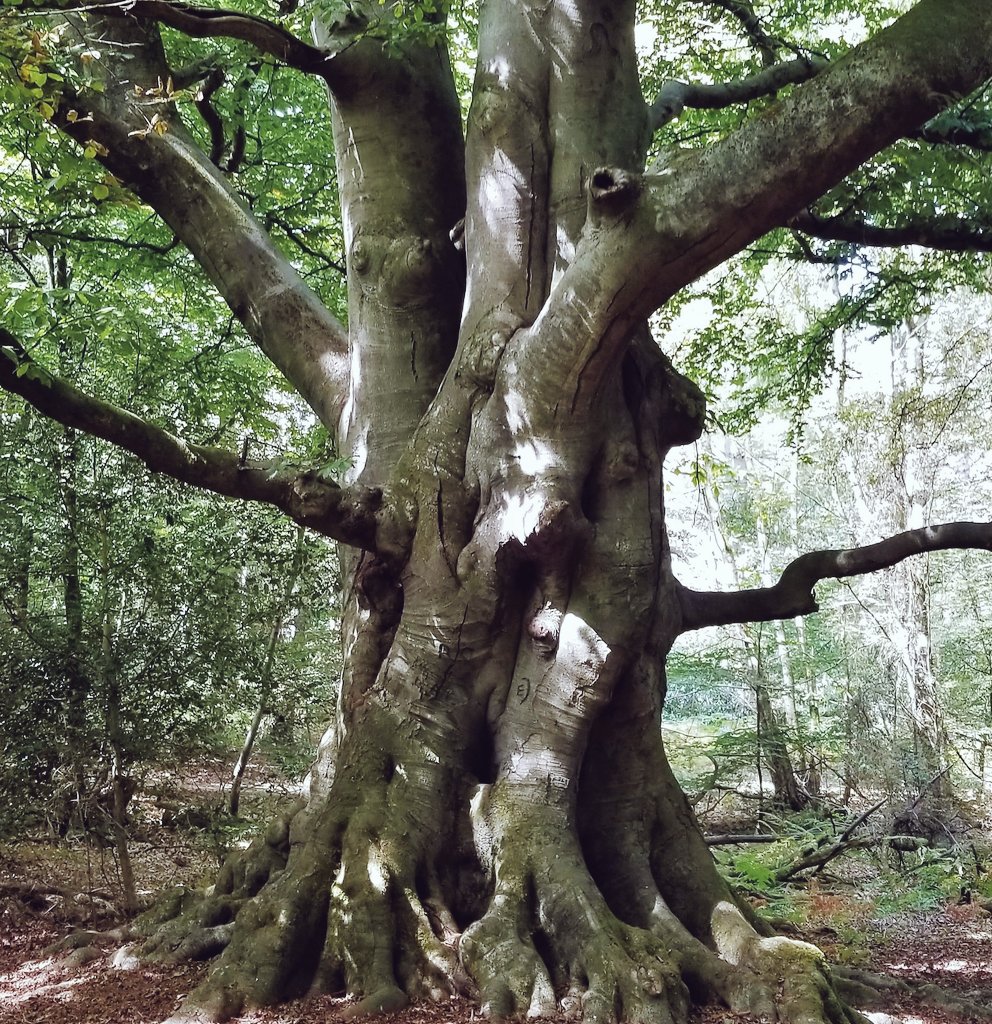
Another extraordinary Beech. It shows some signs of pollarding, but also of being a bundle planting with grown-together stems reaching up from ground level.
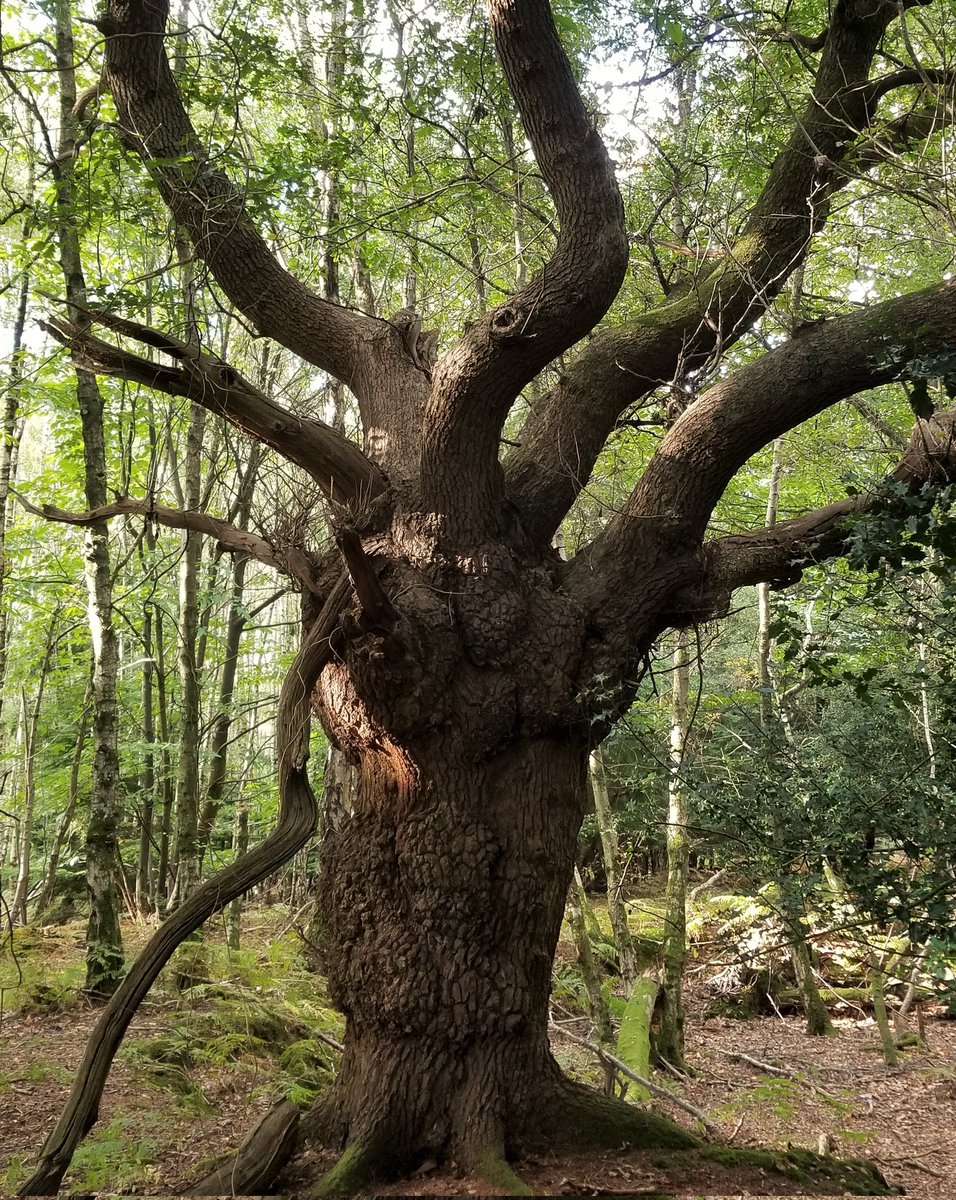
The sun comes up on a fine Oak stub pollard, which guards the southern entrance to the Cowdray Forest / Oldhouse Warren landscape. Without expert management, it is easy to see how this tree may struggle to hold up the huge stems which resulted from its last pollarding.
WE WON! Center Parcs have caved in, and will not be building in Oldhouse Warren. An almost incredible result! Last week's tree makes its feeling known...
A classic veteran Oak pollard, cut at about head height to frustrate browsing animals. Pollards were cut on a rotation, either 2-6 years for leafier animal fodder, or 8-15 years for wood for all manner of construction, farm implements & vehicles, boat-building & other uses.
Another huge Beech on the old hollow way bank (now the B2036). Where do all the stems originate? I always assumed bundle planting (there seem to be too many to be an open-grown 'heath Beech'). However, perhaps trees like this may have started as a quickly outgrown coppiced tree.
Another great Oak pollard, this one has at least three diagnostic signs of moving into its 'ancient' phase of life (which can still last for hundreds of years!). It was only discovered after a recent health-related felling of a dense stand of Norway Spruce planted around it.
A European Larch framed by two Beech stub pollards. The Larch was introduced to Britain from South-Central Europe in the 1620s and now grows commonly and happily anywhere there is drier soil. It has been planted commercially in Oldhouse Warren, but this pretty one is self-seeded.
OLDHOUSE WARREN TREE OF THE WEEK -
BEECH
One of the odder-shaped veteran Beeches of the Warren. How did it get this way? Maybe bundle-planted, the stems forcing themselves apart? Animal damage splitting a young leader stem? No real signs of pollarding. Wonderful though!
OLDHOUSE WARREN TREE OF THE WEEK
A huge Beech on the bank of the hollow way parallel to the B2036. Probably a 'bundle planting' (several infant saplings put into the same planting hole), pollarded close to ground level. A classic boundary marker tree.
An Oak pollard,probably the best-known in Oldhouse Warren. This one may well have been cut on a short 'rotation' (the amount of time between cuts) and the new growth used as fodder for the warren rabbits in winter.
OLDHOUSE WARREN TREE OF THE WEEK
BEECH POLLARD
Cropped quite low on the trunk, so a 'stub' or 'cant' pollard. Stubs were often used as markers on banks and boundaries. They cannot be used where the trees are browsed by animals, as the new shoots are below the browse line.