Ursula Andress’s white bikini entrance in DR. NO (1962) became one of the most iconic moments in cinema. Andress said the scene “made” her career, while the swimsuit itself went on to become one of cinema’s most legendary costumes
In 300 (2006), Gerard Butler was told to say “THIS IS SPARTA!” calmly. He tried it, but it felt wrong.
He asked Zack Snyder for one take where he screamed it.
After, Butler asked, “Too much?” Snyder laughed: “Yeah… but it was awesome.”
It’s the 35th anniversary of Robin Hood: Prince of Thieves.
Kevin Costner was the star, but Alan Rickman ran away with the movie. He turned the Sheriff down twice, then demanded full creative control. Once he got it, he went all-in and made a top-tier ’90s villain. Legend.
Le preguntan a #Spielberg con qué director del pasado (vivo o muerto 🤷🏻♂️) se sentaría a cenar si tal cosa fuera posible...
Contesta antes de ver el video y seguro que lo aciertas 😉😂😂
#VanityFair
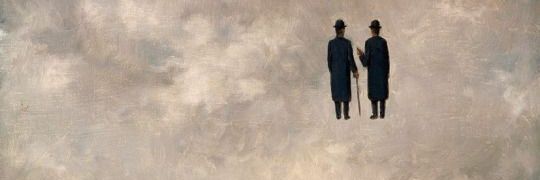
It's the opposite. During the mid- to late-19th century, suits were the uniform of clerks and administrators. Those higher on the social and economic ladder — such as lawyers, doctors, and politicians — wore the more "gentlemanly" frock coat with a silk top hat. In fact, Labour Party founder Keir Hardie caused quite a stir when he showed up to work on his first day as a Member of Parliament while wearing a tweed suit to show his allegiance to his working-class constituents. The press was shocked, noting that he wore a "cloth cap in Parliament" (a tweed deerstalking cap, rather than the silk top hat).
With time, everyone wore the suit. By the early 20th century, those who owned the means of production wore the same uniform as those who managed them. Blurring this distinction can seem meaningless today, but it was quite a big deal in the early 20th century. Even manual laborers who wore more utilitarian clothing to work — chambray shirts, blue jeans, chore coats, etc — had a suit for religious services on Sunday. Thus, the suit was not a symbol of domination, but rather hid class markers.
To be sure, there were distinctions in how people wore suits and where they bought them. In London, businessmen could be distinguished by whether they bought their clothes from a "City tailor" or a "West End tailor" (the West End being the higher-grade option reserved for those with money). But these were relatively minor and only for the trained eye. Relatively speaking, class symbols today are significantly more obvious not only through the different grades of quality, but also logos and general aesthetics. Hence, to some degree, why fashion changes so rapidly today — people are constantly shifting their social position.
Tomorrow Never Dies tower jump: storyboard vs final cut.
Storyboard sells it as one continuous, rappel down a glass wall.
The film chops it into quick cuts, masking the height, body doubles and two locations, then caps it with a joke: “Next time I’ll take the elevator.”