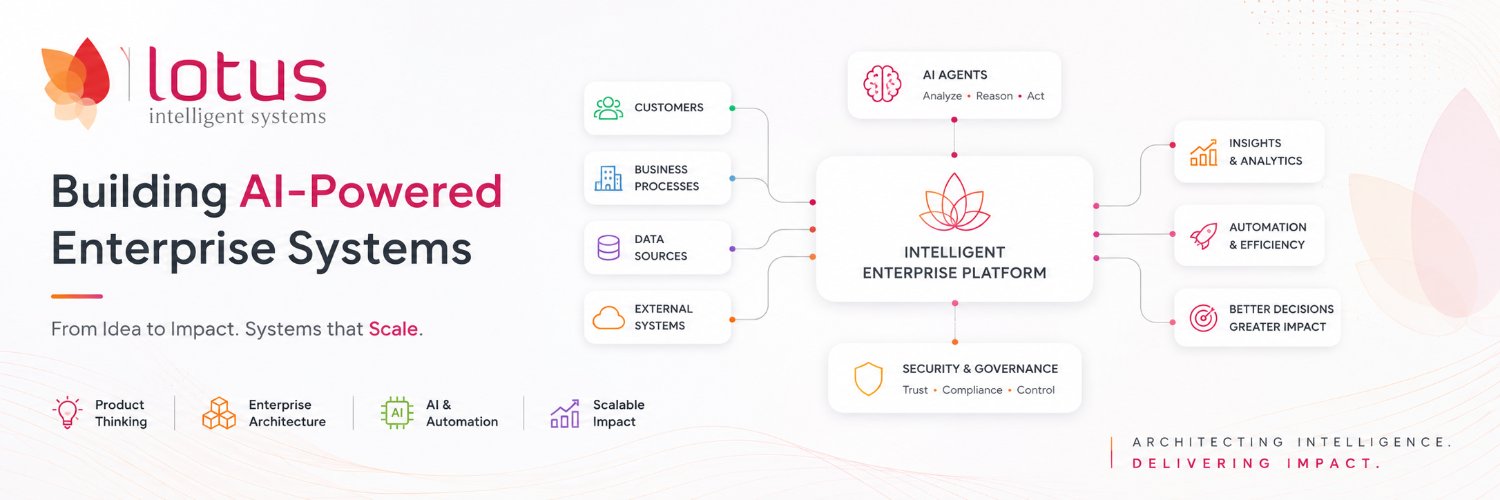
Most AI discussions focus on chatbots.
I'm focused on something bigger:
AI-native enterprise software.
I'm Prathamesh, founder of Lotus Intelligent Systems.
Sharing:
• Enterprise architecture
• AI products
• Founder lessons
• Building in public.
Let's connect
Which makes me wonder whether we sometimes frame the ambition incorrectly.
Instead of:
“How do we build a product for the global market?”
Perhaps the harder question is:
“What capabilities must we build as a company to repeatedly create products worthy of a global market?”
I don't have the complete answer yet.
But that's a question I want to keep exploring.
I’ve been thinking about what it actually takes to build a global product company from India.
Not simply export software.
Not have customers in 20 countries.
Not manufacture for global brands.
But build a product that people around the world actively choose.
What has to be true for that to happen?
Then there is organisation.
One successful product can be timing.
Building several successful products requires something repeatable inside the company:
talent, culture, R&D, product judgment, distribution and the ability to keep learning.
The company itself eventually becomes the product-building machine.
Projects now run from one conversation, starting in Claude Code. You describe what needs doing, and Claude directs parallel threads that keep working after you close your laptop.
In beta today for select Pro and Max users in cloud sessions; coming to all Claude users soon.
Most companies that rolled Claude out to everyone this year got exactly what they paid for: a chat subscription.
I sat with a CFO last month who'd done it by the book.
Company-wide licenses, twenty people using it daily, two or three of them sharp enough to build real tools. Then he described what they'd built: "Very capped. Very brittle. It would not stand up to putting that in front of a customer. It barely stands up to the five people using it."
Before him, the same company had tried building a sales agent on Claude and burned through tokens so fast they pulled the plug and started shopping for a cheaper model. That's the part that matters. They diagnosed a model problem when the model was fine.
Our delivery architect looked at the same wreckage and named it in one line: no harness, no guardrails. Nothing was wrong with what the model produced.
There was no evaluation set to say what a correct output looked like, no cost governance, no data layer with agreed definitions, no feedback loop, no human approval on the actions that mattered. Every prompt started from zero and every answer was somebody's opinion.
A model is an engine. What they had was an engine sitting on a garage floor, and they were comparing engines.
The harness is what turns it into something a customer can touch. A golden set of twenty cases with the expected answer, so you know when it's right. A judge that runs those cases on every change. Token caps per user and per workflow.
A read-only data path with a dictionary the agent can reason from. Reversible actions with an approval step. Tracing on every call so you can find the bad one.
None of that is exotic. It's the same discipline as shipping any production system, applied to a component that happens to be probabilistic.
That's why the first thing we build for a client is the harness, and the first agent goes on top of it in month one.
The rollout most companies did in January was step zero.
The work starts when you decide what right looks like and build the machinery to hold the model to it.
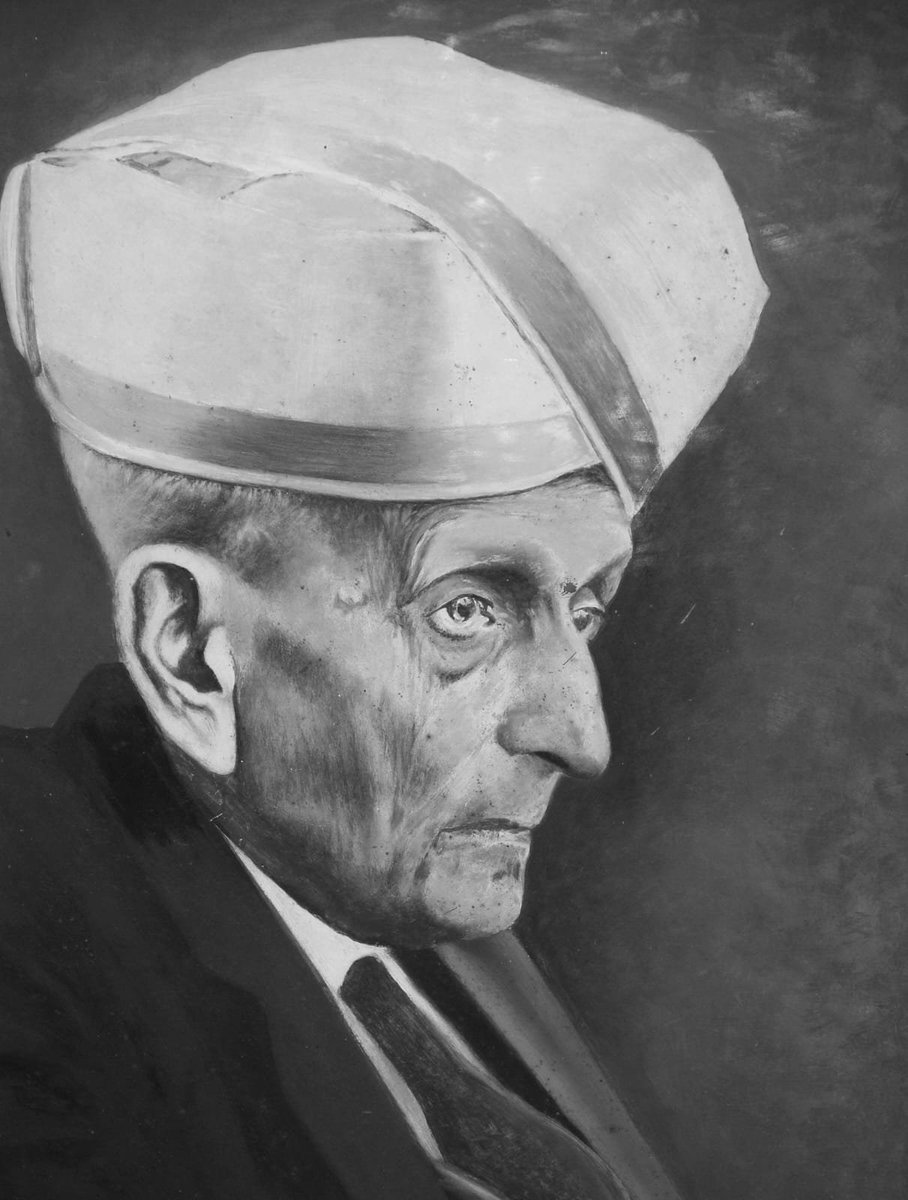
Sir M Vishveshwaraih born in Muddenahalli, a village very close to our ancestral home. An inspiration to every Engineer. Engineering skills are vital for creating a Bhavya Bharat. May we grow many more great engineers. 🙏🏽 - Sg #EngineersDay
@mardehaym An intelligent model alone cannot build software—it needs information, actions, boundaries, feedback, and a way to know whether it succeeded. “Harness” is simply the engineering of those surrounding conditions.