Special compliments to the Prosecution Team - Special Public Prosecutor Team conducting trial: -
(1) Pallab Kataki, Special Public Prosecutor,
(2) Pankaj Protim Dutta, Additional Public Prosecutor,
(3) Samudragupta Dutta, Additional Public Prosecutor.
Special Public Prosecutor during investigation till framing of Charge -
1.Prodyut Kr. Bora, Special Public Prosecutor
2.Pankaj Protim Dutta, Assisting Counsel
3.Fakharuddin Ali Ahmed, Assisting Counsel
4.Hasemuddin Ahmed, Assisting Counsel
Special Public Prosecutor during investigation:
1.Bijan Mahajan, Special Public Prosecutor
2.Partha Pratim Baruah, Special Public Prosecutor
3.Makhan Phukan, Addl. Public Prosecutor.
@BansuriSwaraj You have missed to quote #APSC#CASHFORJOB scam occured during congress regime in the year 2015-2016 where many candidates got selected with fake answer scripts. Many other candidates got selected by enhancing their marks in the final merit list than originally secured marks.
This is the situation even today. If you can't take proper steps, we ll be compelled to lodge appropiate complaint before @assampolice@GhtyTrafficPol as well as @gmc_guwahati .
@ppd_ghc Hi Pankaj, we understand the inconvenience this has caused and apologise sincerely. The store owner in your neighbourhood has been notified, and they are taking immediate action to resolve the parking issues. Thank you for bringing this to our attention.~AU
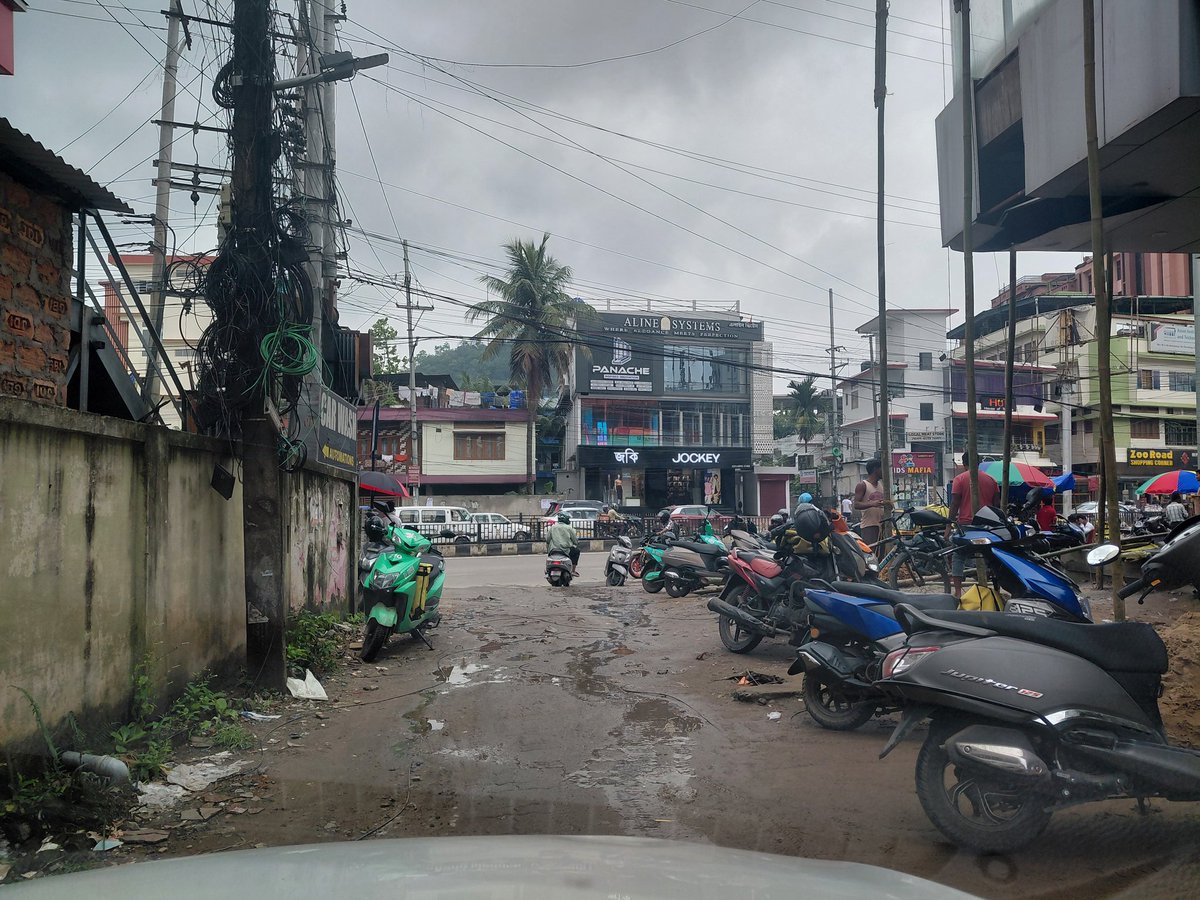
Hi @letsblinkit@letsblinkit please look at the chaos 8nspite of your assurance. Haphazard parking, entry from wrong side by bikes not only create serious inconvenience to the local residence, but also occured 2 to 3 accident already. Hope @gmc_guwahati authority will intervene.
@ppd_ghc Hi Pankaj, we understand the inconvenience this has caused and apologise sincerely. The store owner in your neighbourhood has been notified, and they are taking immediate action to resolve the parking issues. Thank you for bringing this to our attention.~AU
@ppd_ghc Hi Pankaj, we understand the inconvenience this has caused and apologise sincerely. The store owner in your neighbourhood has been notified, and they are taking immediate action to resolve the parking issues. Thank you for bringing this to our attention.~AU
@GhtyTrafficPol This is the common chaotic situation from Blinkit delivery boys at the starting point of Shraddhanjali Flyover, Zoo Road Tiniali Commerce College side. Bikes are parked blocking the bye lane. Manager, Blinkit store, Zoo Road Tiniali paid deaf ear to our request.🙏
How Central Guwahati Changed And Why We Must Stop Blaming “Outsiders”
My grandfather, sometime in the 1950s, bought land in Central Guwahati from one Bhatti Babu, who local people say was among the biggest landowners in the city. Some even say Sarabbhati gets its name from him. He was the local dealer of liquor made in the area and had huge stretches of land, reportedly given to him during the British period. My grandfather also bought a piece of land in Fancy Bazar and set up a shop there. That shop still exists under our family, though barely. At one point, our family had a real economic stake in the heart of Fancy Bazar.
During the Assam Agitation, my grandfather was deeply moved by Prafulla Kumar Mahanta. He would collect money and resources for the student movement through the businessmen of Fancy Bazar. He used to call PK Mahanta “Mahapurush.” Even when the darker truths about Mahanta slowly began to emerge, my grandfather refused to believe them. He lived in denial. Looking back now, I sometimes feel that denial was not just his personal flaw. It was a symptom of something much larger in Assamese society.
Cut to the 21st century, my father moved the family to Dispur. Today, we are voters of the Dispur constituency. Our shop in Fancy Bazar is merely surviving, and none of us ever really wishes to return to that ancestral part of the city. The old property has been rented out to non-Assamese traders who now do business ironically in Fancy Bazar. That, in many ways, is the reality of Old Guwahati. The part of the city that was once the entry point for migrants into Guwahati and once held so much Assamese economic presence, is no longer aspirational to the next generation of Assamese families.
And that did not happen overnight. It happened because the reason people came to Guwahati changed. Once upon a time, migrants came here largely for business. But after the Assam Agitation, the Assamese middle class increasingly began to see government jobs as the highest form of security, prestige and power. Slowly, our collective obsession shifted from trade and enterprise to bureaucracy. The dream was no longer to build a business in the city. The dream became to secure a government post, enter the system, and occupy the machinery of the state. In many ways, filling the bureaucracy became the only socially respectable way to assert hegemony.
Meanwhile, commerce was quietly abandoned.
The same story repeats on my maternal side in Bharalumukh, where our family has roots linked to Rohini Kumar Choudhury, one of Assam’s tallest nationalist leaders. Today, most of those ancestral lands have been handed over to builders. Apartments stand where old homes and family legacies once did. The buyers are mostly from the business class, and yes, many of them are non-Assamese. Except for our ancestral home, much of that old world is gone.
The reason is not very complicated. Assamese families in Central Guwahati simply could not keep pace with the business class. They could not compete with communities that treated business not as an individual hustle but as a collective family project, where each generation protected and expanded what the previous one built. For many Assamese families, the easiest way to generate wealth and sustain status became monetising land. Sell the land. Rent the shop. Give the plot to a builder. Move out. Ask the children to study for APSC, bank exams, engineering or an MNC job in Bangalore. That became the new model of success.
I still remember buying sweets from Choudhury Sweets near Fatasil Ambari, an Assamese-owned sweet shop that was part of the memory of that old Guwahati. By the time I reached middle school, it was gone. And that story is not unique. The Assamese owned businesses in Panbazar from where I used to buy cakes and chocolates, are all gone! None of the uncles are chewing paanon the footpath anymore.
Many Assamese-owned shops across Central Guwahati were either sold off or rented out because the next generation simply did not care to take over. They had other aspirations. But not the kind that allowed us to retain a stake in the economic core of our own city.
And now, to hide from our own failures to remain relevant as a business community, the easiest thing for us to do is to blame the “Baniya” class. That has become our comfort zone. But the truth is far more uncomfortable. What we are seeing today is also the fallout of a short-sighted Assamese nationalism that taught us how to identify outsiders, but not how to build lasting economic power. It gave us slogans, sentiment and suspicion, but it did not build a strong entrepreneurial culture. It made many of us emotionally defensive and economically fragile.
As a student of Don Bosco, Panbazar, another institution rooted in Central Guwahati, I grew up with non-Assamese friends. Many of them came from families where business was protected like an inheritance and expanded like a duty. They worked together as a family unit. They have also created employment for Assamese youths and I myself have worked under them and learnt a lot about professionalism and work culture.
In our Assamese family setups, often the first thing we do after marriage is divide the household into another kitchen. More separation. More expenses. Less pooling of resources. Less collective planning. Less continuity.
This write-up is not to justify a non-Assamese person becoming the next MLA of Central Guwahati. That is not the point. The point is that if we are serious about understanding how Central Guwahati changed demographically, commercially and politically, then we must first have the courage to perform a postmortem on ourselves.
Because communities do not lose space only because others enter it. Sometimes, they lose space because their own next generation no longer wants to stay, build, compete and preserve what was once theirs.
And unless we are willing to confront that truth, we will remain stuck in the same victim complex, forever blaming the outsider for what was also, in no small measure, our own failure
@airindia Nice experience throughout the journey from Del to Gau. Maintained proper timing. Ground staff and crews are really helpful and provided wonderful service. Deserve appreciation.