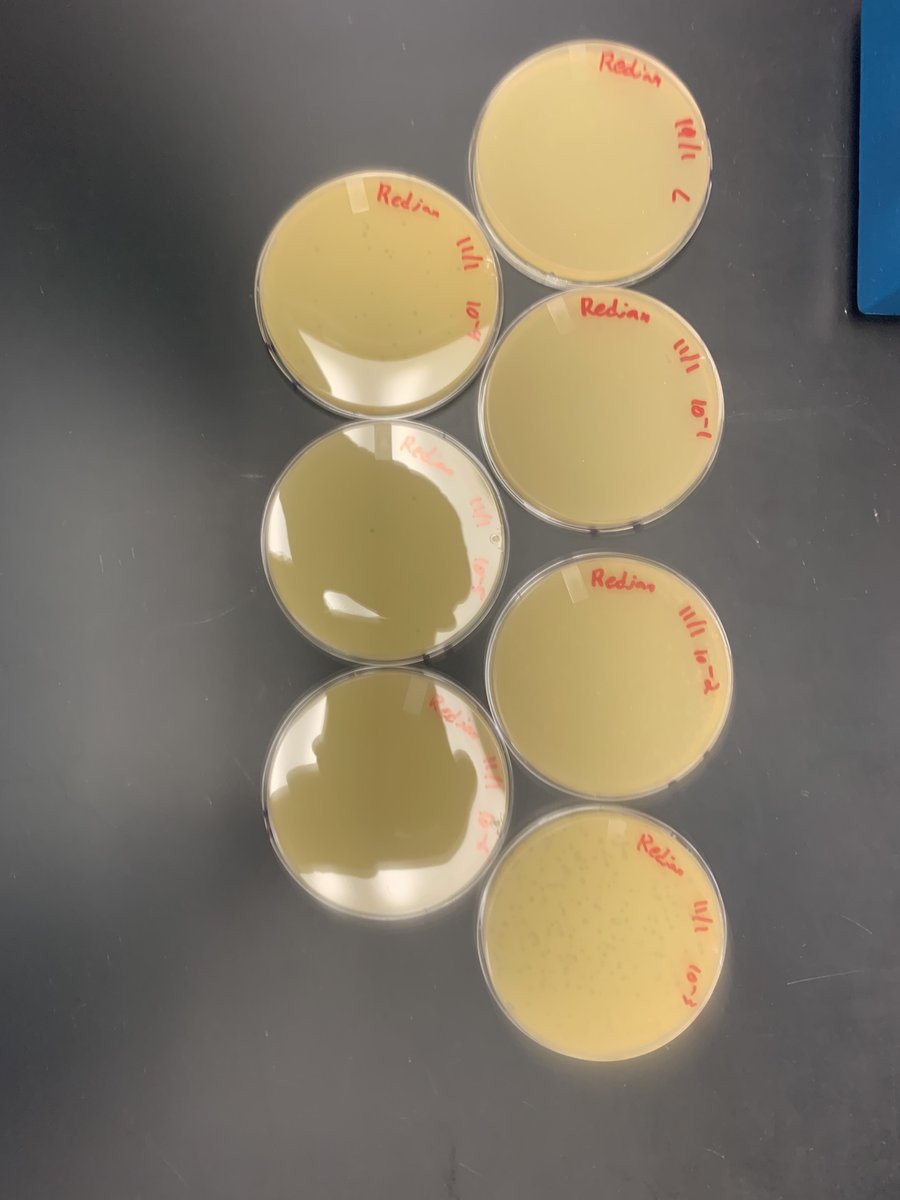
Recently in the phage lab, we tested to see if our phases could survive on other bacterial hosts! Unfortunately, as the pictures show, my little guy doesn’t have a huge host range. (My phage is the one in the section labeled SK). - Sarah K.
Witness the destruction wrought by Clementinius, a novel bacteriophage unearthed recently in a wildflower field.
This is a completely lysed plate, where Clementinius invaded m. folorium cells, harnessed the bacteria’s own machinery to replicate itself, and then destroyed it.
For the past few weeks in the phage lab we have been working on purifying the bacteriophages. This process has helped to bring us closer to characterize our phage and also discover its biological properties. As you can see from my images throughout the weeks you can see from my
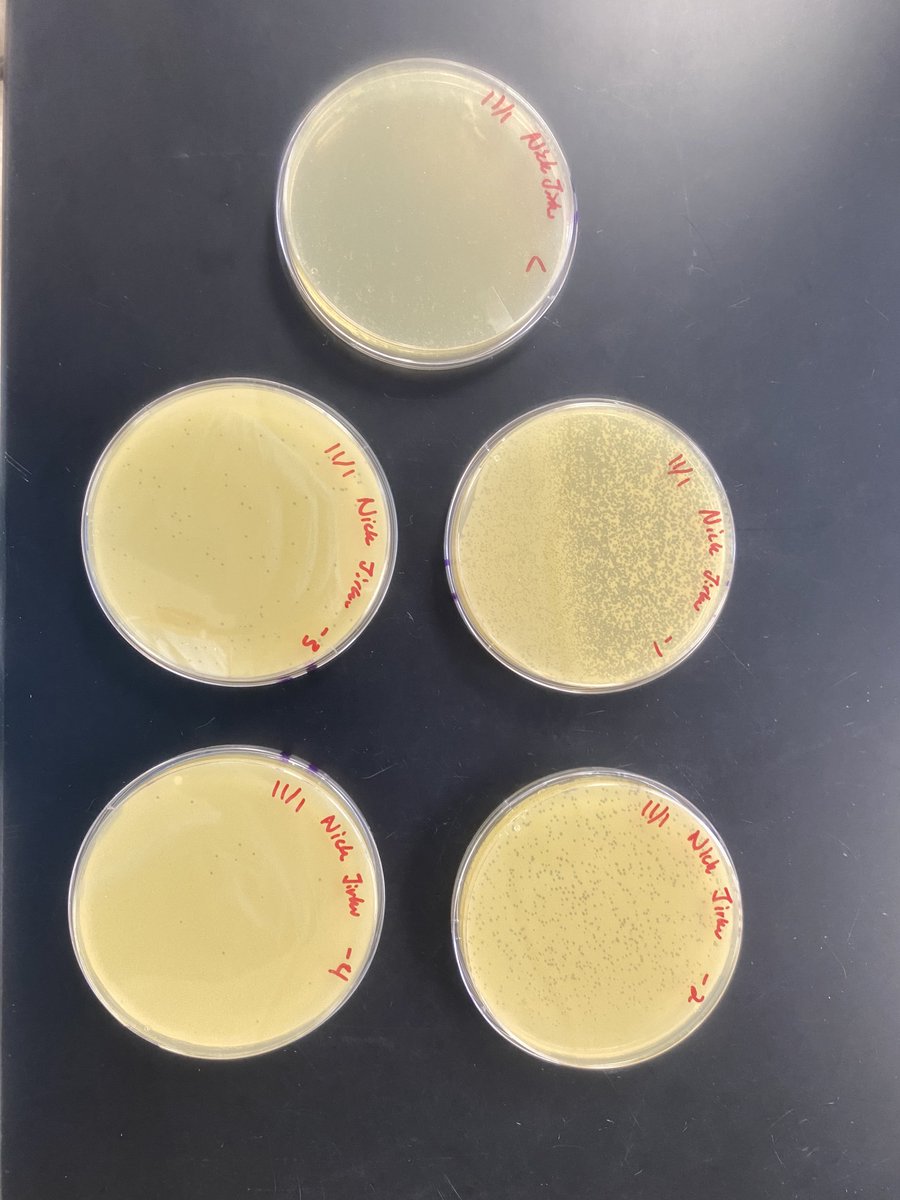
In class this week, we created more dilutions up to a 10^-4 dilution from a combination of 12 new plaques (I accidentally created more but that's alright). Let's see if any of these yield any good webbed plates! 😁
In class on Wednesday 10/27, we completed a full plate titer to try to isolate our plaques so that we can move on to find potential lysogens. Below are my results that did not come out exactly how I wanted them to. -Trystan Randazzo
Throughout the week we’ve been picking plaques and preparing for creating webbed plates. Dilutions were created up 10^-4. Based on the results of the plates, I’ll be going with my Lysate plate to create my webbed plates. - Nick Jirku
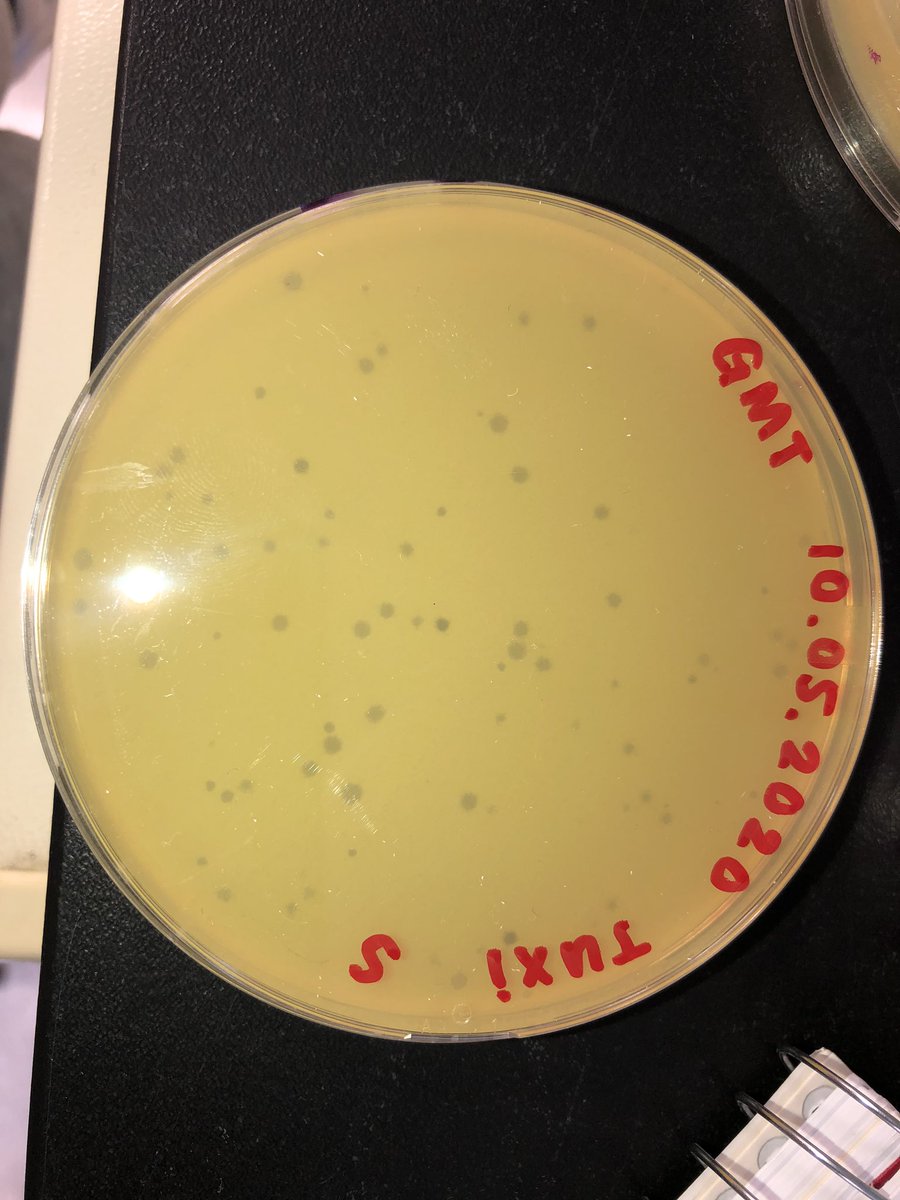
2/2: For comparison, here is a less concentrated sample- the custard yellow is m. foliorum bacterial culture grown on molten top agar; the circular clearings (plaques) are where bacteriophages have lysed M. foliorum bacterial cells – my favorite #microwar
We successfully managed to work throughout the semester and stay safe. Now having finished our PhagesDB work we all managed to extract DNA from our phages and see them under an electron microscope. Also congratulations to Sydney Gray for her phage being chosen for sequencing!
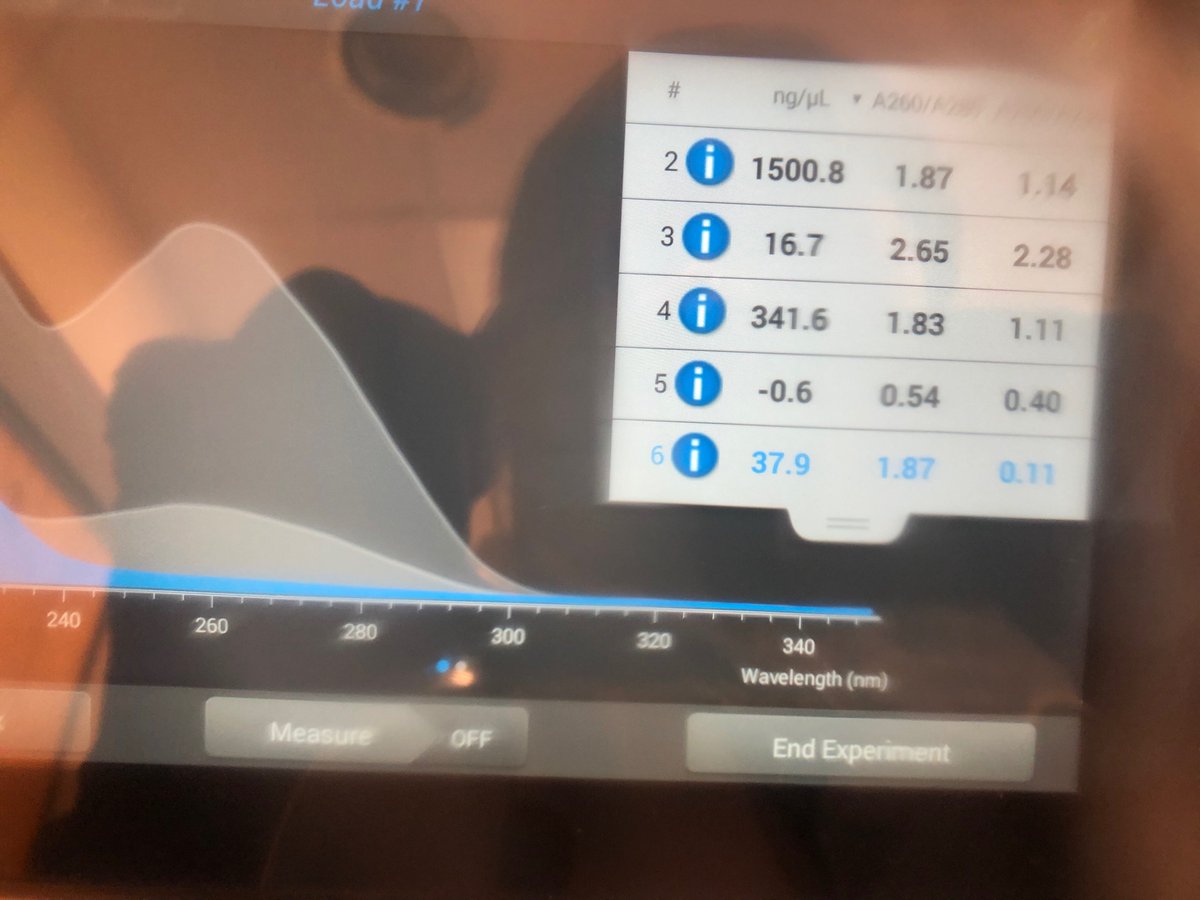
We recently performed DNA extraction! We tested the purity of the phage; I had a pretty average concentration of DNA which was 37.9 ng/microleters. However my phage was purity was pretty decent with a number of 1.87.
This week the phage lab at UCONN worked on phage amplification! We are attempting to create webbed plates so we can collect enough phage to run tests 🤓 My phage has lost infectivity over time, so this is the closest I have gotten to a webbed plate! Wish me luck next week! -Gabby