Prisión provisional para un marroquí acusado de agresión sexual a una niña ceutí de 16 años.
No habrá condena de Ana Redondo.
Ni concentración feminista.
Ni lo verás en los canales oficiales.
Hay que taparlo para que el Gobierno venda su falsa normalidad
https://t.co/VL8nbcz56D
Un alcalde de Junts cierra su discurso con un “puta Espanya”. La normalización de la que algunos presumen: la normalización del odio a España. Si esto lo hiciera un alcalde castellano o andaluz con Cataluña, se armaría la de Dios, y con razón. Pero con España, todo vale. Gentuza.
🔴 VÍDEO | La fiesta de anoche de los invasores de Marruecos en los campamentos de Ceuta.
Tu abuela lleva un mes sin poder salir de casa a comprar el pan mientras ellos disfrutan de las atenciones del Gobierno de España y se pasan las noches de farra.
AHORA SÍ !!
Ha estado 8 años informándose y AHORA SÍ que considera que el acceso a la vivienda es un problema y se van a poner a solucionarlo.
Y ustedes, criticando...
@carlos_cuerpo Es maravilloso el estado de los servicios públicos y de las carreteras. También es maravilloso ver la subida de precios en el supermercado o la gasolinera. Todo maravilloso. No tenéis vergüenza.
@Josepablo_ls@JesusCintora@estherpalomera@MananerosTVE Madre mía. Dos personas de conocida independencia 🤭. Seguro que le pondrán en aprietos con sus preguntas y no dejarán pasar ninguna mentira de nuestro amado presi.
La victoria de AfD en Sajonia-Anhalt es un peligro para la democracia en Alemania.
No como la invasión de 80.000 marroquíes, que refuerza la paz y fortalece la convivencia en las calles de Ceuta.
La pregunta no es por qué crecen partidos como la AfD, el Frente Nacional o Vox, sino por qué la izquierda prefiere que crezcan estos partidos antes que rectificar en un solo milímetro su política migratoria.
As a Dutchman, Spain occupies a strange and wonderful place in our history.
We fought an Eighty Years' War against the Spanish Crown, built part of our national identity around that struggle, and still teach names like William of Orange, Philip II and the Duke of Alba in school. You would think that might make Spain the historical villain in the Dutch family story.
Instead, I feel an enormous affection for the country.
Spain is one of Europe's great civilisations. Romans and Visigoths, centuries of Islamic rule, the Christian kingdoms and the Reconquista all left their marks there. Then came the Spain of Columbus, Magellan's expedition, conquistadors and an empire that connected Europe with the Americas and Asia on an extraordinary scale.
Spanish influence is still visible across much of the world. Hundreds of millions speak the language. Cities thousands of kilometres from Madrid carry Spanish names. Spanish architecture, religion, law, food and customs crossed oceans and became woven into entirely new cultures.
And then there is Spain itself.
Old plazas that come alive in the evening. Churches and cathedrals standing where generations before us worshipped. Families taking their time over food. Tiny bars where several plates somehow become dinner. Football treated with the seriousness of a minor religion, local festivals that can involve anything from solemn processions to people being chased through streets, and villages that still seem intensely proud of being that particular village.
I admire that.
The Dutch and Spanish have a particularly interesting relationship because our histories are tied together through both conflict and exchange. The Habsburg Netherlands were ruled by the same monarchy that ruled Spain, and our revolt against Philip II eventually became the long struggle from which the independent Dutch Republic emerged.
There was terrible violence on both sides. Spanish troops sacked cities in the Netherlands, while the Dutch revolt produced its own brutality. Our ancestors weren't especially talented at conducting polite disagreements.
Yet the story didn't end in 1648 when Spain finally recognised Dutch independence.
Over the centuries that followed, Dutch and Spanish merchants continued doing business, diplomats maintained relations and our countries gradually went from old enemies to European neighbours, partners and friends. Today thousands of Dutch people travel south every year, while Spaniards live, work and study here. What was once a relationship shaped by armies and dynasties is now so ordinary that most of us barely think about how remarkable that transformation is.
I also think our differences make the relationship more enjoyable.
The Dutch schedule dinner. The Spanish appear to regard our dinner time as a late lunch.
We like directness, planning and knowing approximately when something will end. Spain has taught generations of Dutch holidaymakers that an evening can simply continue until everybody decides it has finished.
But underneath those differences I recognise something familiar: attachment to family, region, local traditions and a strong sense that culture belongs to the people who inherited it.
That is why I want Spain to remain unmistakably Spanish.
I want Andalucía to feel different from Galicia, Catalonia different from Castilla, and a Spanish town to offer something that could never be recreated perfectly in Amsterdam. Europe becomes poorer when those differences disappear.
Our ancestors spent eighty years fighting over who would rule the Netherlands.
More than four centuries later, I can look south and feel no need to diminish Spain to celebrate Dutch independence. In fact, understanding what a formidable civilisation our ancestors were fighting makes our own history more interesting.
Spain helped shape us partly through friendship, partly through exchange and, admittedly, for quite a long time by trying to prevent us from leaving.
Families can be complicated like that.
But after centuries of shared European history, Spain doesn't feel distant to me.
It feels like one of those relatives with whom we once had an absolutely spectacular argument, eventually made peace, and somehow never stopped being connected.
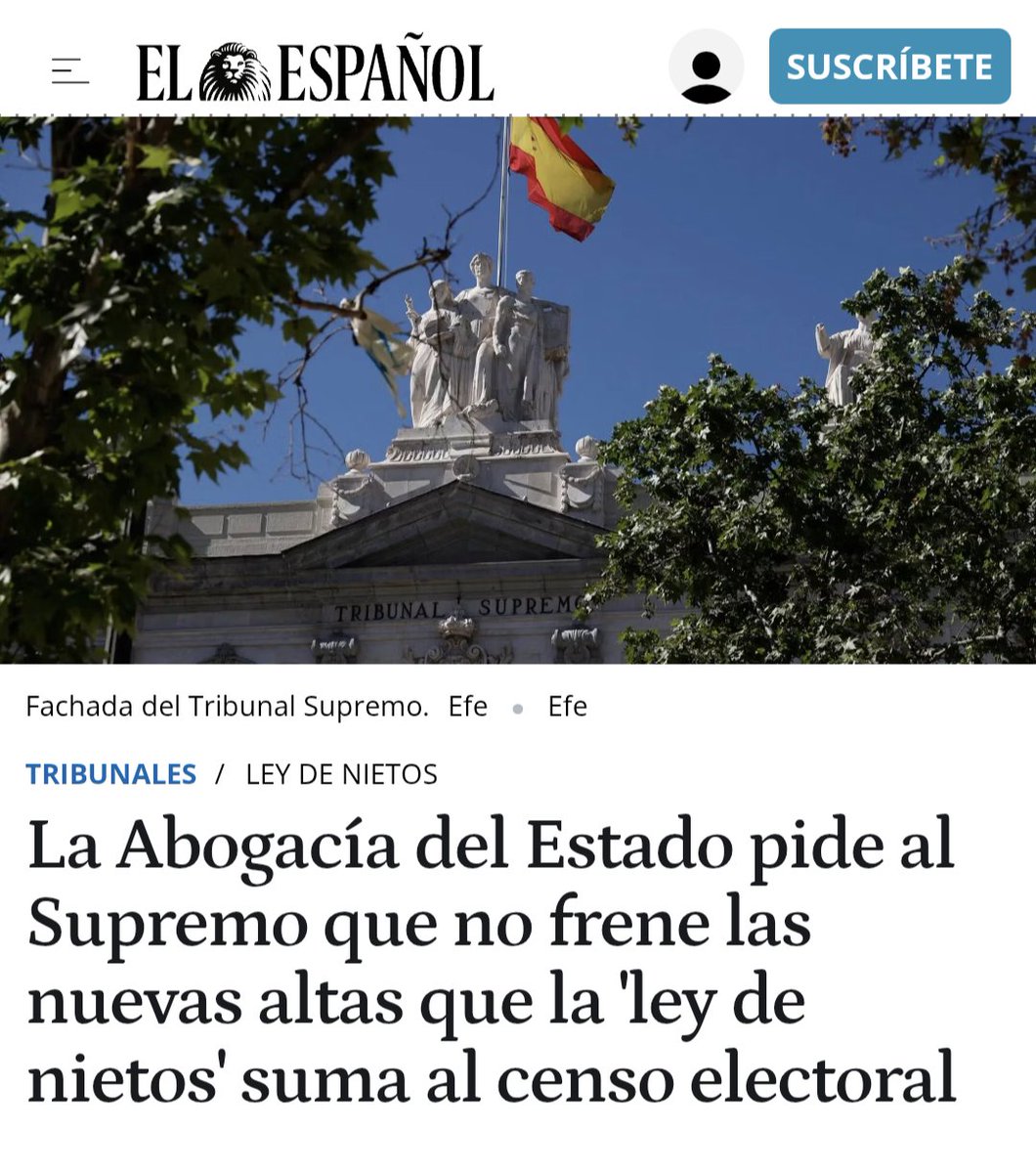
💥 Luis María Pardo está haciendo lo que ningún político fue capaz de hacer: plantar cara a la Ley de Nietos y a sus efectos electorales. Y con resultados.
Lo está haciendo con todo el Gobierno en contra y con la oposición a remolque.
La batalla que está librando por la transparencia electoral ya es histórica.
Francia abolió la votación por correo en 1975, porque era susceptible a fraude electoral, manipulación y violaciones del secreto del voto.
SÉ COMO FRANCIA