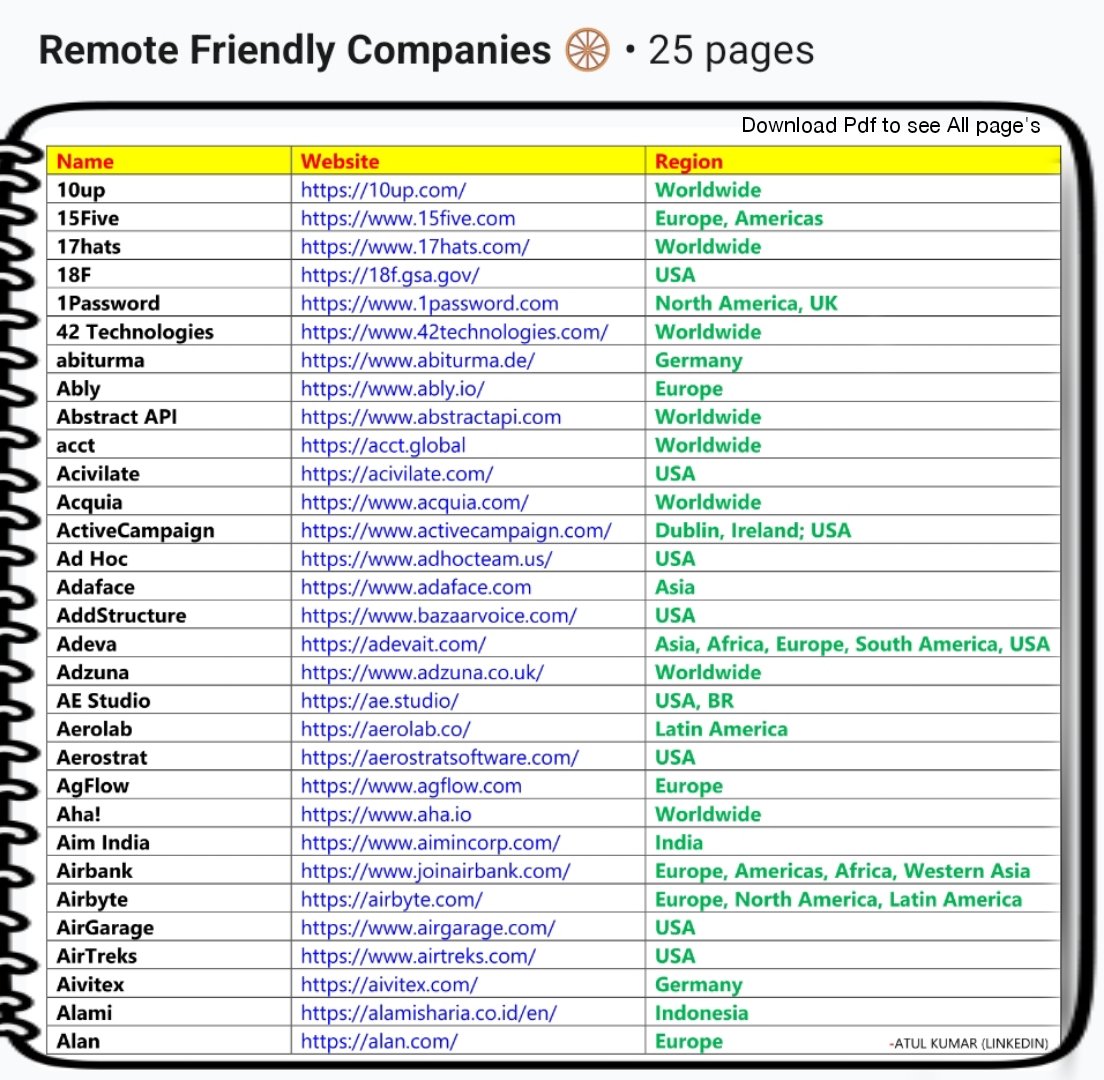
Freelancers are making $10,000 in a month 🔥🚀
700. Fiverr
699. Toptal
698. Jooble
697. Freelancer. com
696. Upwork
695. Flexjobs
694. SimplyHired
693. Linkedin ......
Choose the right platform & start earning in $DOLLARS 💰🤑
Simply:
1. Follow so I will Dm 📥
2. Like and Repost
3. Comment “send” to receive your copies!!
Data cleaning is one of the most important skills for a Data Analyst.
Not Excel.
Not SQL.
Not PowerBI
Without clean data, any analysis done is unreliable.
Here's my Data Cleaning 101:
𝙏𝙧𝙖𝙙𝙞𝙣𝙜 𝙄𝙣𝙙𝙞𝙘𝙖𝙩𝙤𝙧 के 𝘽𝙖𝙨𝙞𝙘 𝙐𝙨𝙚--
📍 MACD- बहुत सारे लोग इसका उपयोग Buy/Sell के लिए करते हैं ।
📍 RSI- इसका उपयोग लोग Stock के Overbought/Oversold को पता लगाने के लिए करते हैं ।
📍 BOLLINGER BAND- इसका उपयोग Volatility Level को Check करने के लिए करते हैं ।
📍 9 EMA- इसका उपयोग ज्यादातर लोग Short Term का Trend जानने के लिए करते हैं और साथ ही TSL के लिए भी उपयोग करते हैं ।
📍 20/21 EMA- इसका उपयोग बहुत सारे लोग Support/Resistance की तरह भी करते हैं जहाँ 20/21 EMA पर आने पर Buy/Sell की Opportunity खोजते हैं ।
📍50 SMA- इसका उपयोग लोग Trend Check करने के लिए करते हैं ।
📍 50 EMA- इसका उपयोग ज्यादातर लोग अपनी Position से Exit करने के लिए करते हैं ।
📍 200 EMA- इसका उपयोग ज्यादातर लोग Long Term के Trend को जानने के लिए करते हैं और कई लोग अपनी Position भी Higher Time Frame पर यहां पर Entry/Exit करते हैं।
📍 VWAP- इसका उपयोग लोग Support/Resistance की तरह करते हैं और ये सबसे ज्यादा उपयोग होने वाले Indicators में से एक है।
📍 ADX- इसका उपयोग लोग Trend की Strength जानने के लिए करते हैं ।
इस पोस्ट को #BookMark कर लें जिससे बाद में Revision करते Time आसानी हो..साथ ही ज्यादा से ज्यादा #Retweet करें जिससे ज्यादा से ज्यादा लोगों तक पहुँच सके ।
जय केदार..कृपा अपार 🖤
#TradingStrategy #Learning
@MyntraSupport Hi team
I have placed few product for return. but no delivery partner contacting me for return pickup and its rescheduling with false statement like "we are unable to reach you". after few follow up call they are cancelling the pickup. need help or guidance
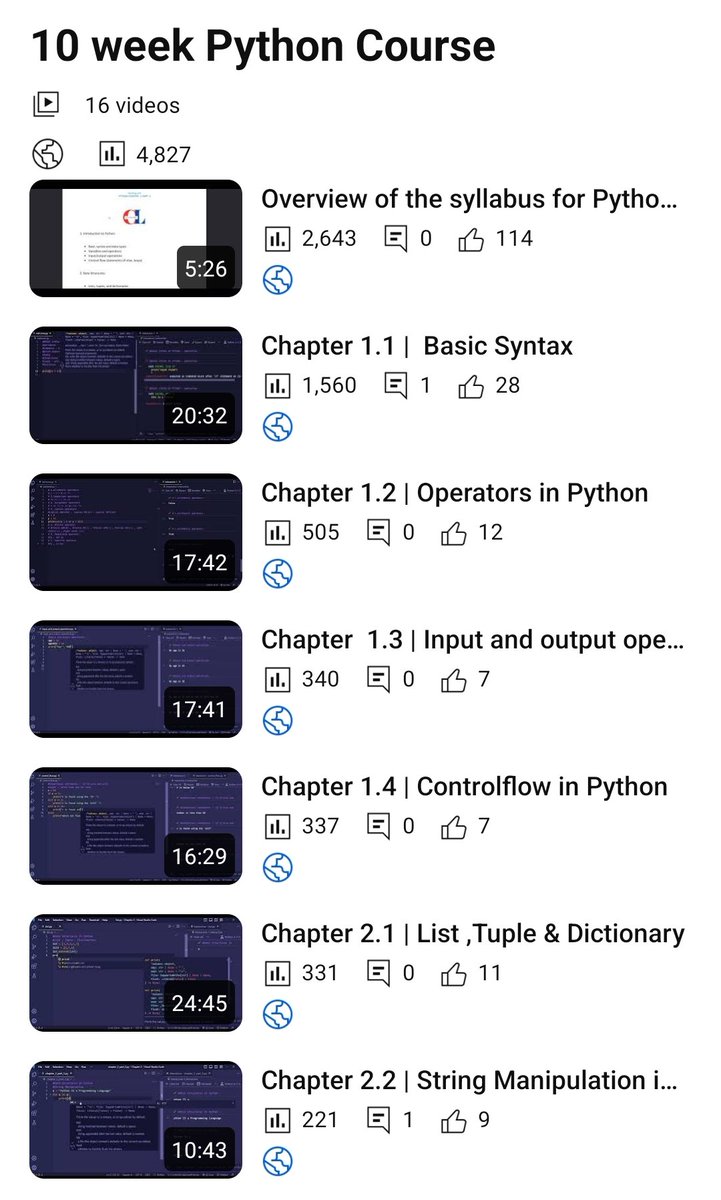
Five courses that will help you to learn Python:
1. Learn Python
Learn the basics of the Python programming language, and why it's taking over in popularity. You'll get hands-on practice with all the building blocks to ensure you excel as a Pythonista.
🔗 https://t.co/AO7UblqBwg
2. Learn Object-Oriented Programming
Build a link analyzer in Python that creates an internal linking profile of any website.
🔗 https://t.co/uPzGft9cW5
3. Learn Algorithms
Big-O complexity is arguably the most important concept students learn in a formal CS degree. This Python course will give you the foundation you need to start your career off on the right foot.
🔗 https://t.co/GZhwZbs1hI
4. Learn Data Structures
If you've had trouble getting past a hard whiteboarding session, this course is for you. You'll build data structures from scratch in Python and improve your problem-solving skills.
🔗 https://t.co/FloPJOahpv
5. Learn Advanced Algorithms
Learn everything you need to ace tough technical interviews. This Python course covers graph theory, dynamic programming, and linear programming.
🔗 https://t.co/ClyIekW9nw
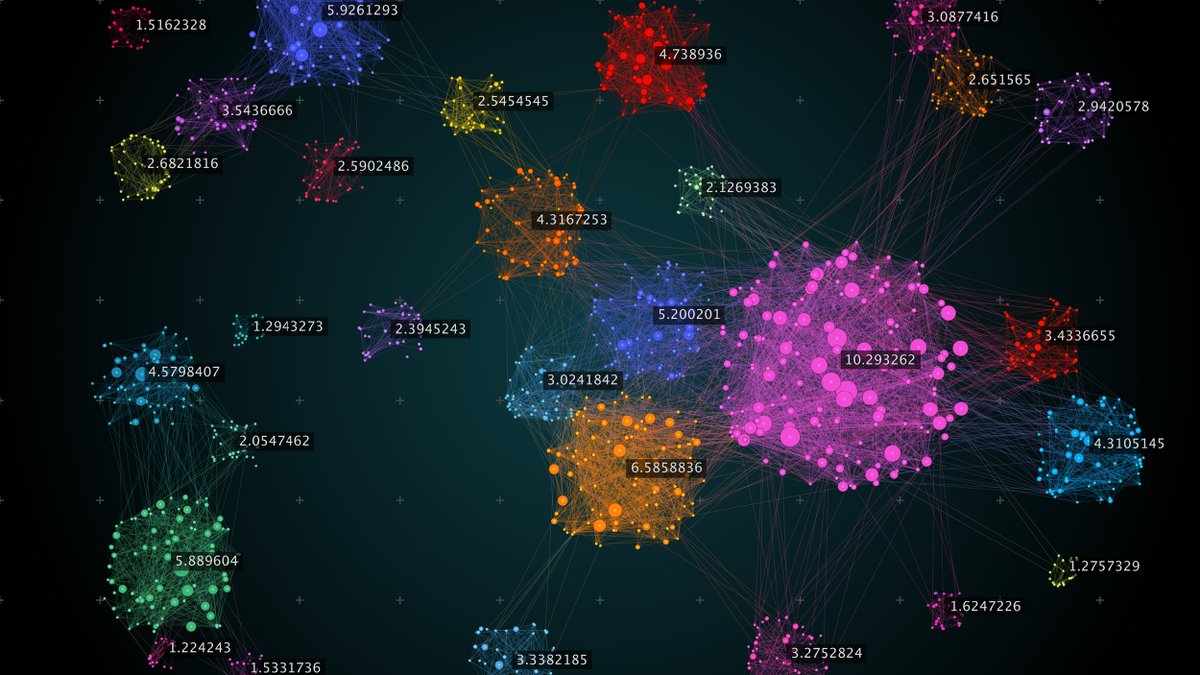
Clustering is a superpower.
Learn it and you're an unstoppable force.
Use these 5 powerful tricks to master clustering in 10 minutes:
#datascience#python#rstats
Anyone with an Internet connection can learn Data Analysis for free:
Excel - Microsoft Training Videos
https://t.co/PPcI4atZwV
SQL - Mode
https://t.co/cWkJX7Zx2G
PowerBI - Udemy Course
https://t.co/Fpj5s0ipV5
Python - Google Classes
https://t.co/BgIRYkp7Jc
No more excuses.
It's time to upgrade your LinkedIn profile.
Forget about ChatGPT.
You can use Leap AI (@leap_api) to generate your professional headshot in less than 10 minutes.
Here's how to do it for free:
Don't pay ridiculous amounts of money to study Python, Data Science, and Machine Learning.
Learn from the experts at Google, IBM, Stanford, MIT, and Harvard universities for FREE.
(A thread) 👇 📌
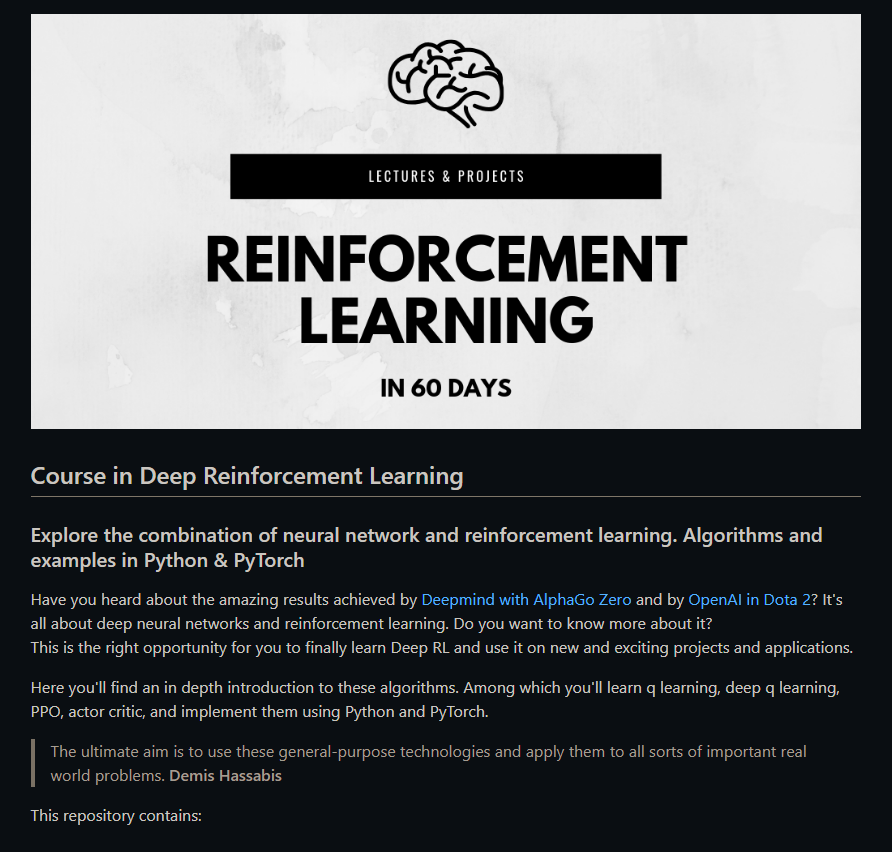
🤖 60 Days Of Deep Reinforcement Learning
In this repo, You'll find everything well arranged from articles, tutorials, youtube videos, papers implementations, projects and codes.
🔗 https://t.co/3eVOJQj8NT
Prepare for your next job interview with AI:
1: Mock interview with AI
https://t.co/aQjtNpXprR
2: Interview questions
https://t.co/UlCDFdxFS5
3: Interview notes
https://t.co/LR8fPP4sLb
4: Resume scan
https://t.co/M6mupD1h6A
5: Job search
https://t.co/MmYuyhVgLn
6: Apply automatically
https://t.co/clqJj3RQcs
7: Resume to jobs
https://t.co/cBGbFVJqsC
You can now fine-tune an LLM without writing a single line of code!
A breakthrough in the open-source LLM space that can increase the speed of AI development and adoption by an order of magnitude.
Let me start from the beginning:
A Large Language Model comes out of the factory knowing many things but with little expertise.
Take GPT-4, for example. It can speak without pause about mathematics but struggles to solve most problems. It knows about photography but not about my photos. It knows about business but can't say a thing about yours.
Fortunately, we can teach these models specialized knowledge. For example, we can force a model to always answer in a specific way or show it facts about a domain it didn't know before.
We call this process "fine-tuning."
For many use cases, fine-tuning a model is the difference between getting mediocre answers or feeling the tool is pure magic.
While OpenAI's models attract much attention, many companies use open-source models like LLaMA and Falcon. This gives them more control over their data, expenses, and how the model responds.
Unfortunately, fine-tuning a model is neither a simple process nor cheap. It takes a lot of time and GPU computing. It's also hard to find experienced people who know how to work with these models.
While you can choose your adventure and do everything yourself, the @monstersapi team released the ability to fine-tune a Large Language Model without writing any code. You can use it with any of the following models:
• LLaMA 7B, 13B
• Falcon 7B, 40B
• OPT 125m, 6B
• GPT J 6B
• Stable LM 3B, 7B
• GPT 2 XL
Besides the obvious advantages of not dealing with code, complexity, or hardware, using their no-code tool will also let you fine-tune a model at a fraction of the cost! Their secret is using a decentralized GPU platform, which makes the process much more cost-efficient.
There's a simple step-by-step demo you can follow that will show you how simple the process is. Link in the next tweet.
You can try their platform with 5,000 free credits using the code SANTIAGO.
Google is offering a Generative AI Learning Path with 10 courses for FREE!
- Intro to Generative AI
- Intro to LLMs
- Intro to Image Generation
- Encoder-Decoder Architecture
- Transformer Models and more
A Thread 🧵👇
This Google drive contain training materials on
- Linux and AWS Training
- DevOps
- Git
- Maven
- Jenkins
- Ansible
- Docker
- Kubernetes
🖇️
https://t.co/nTkiNsWotN
What are the most common 𝗨𝘀𝗲 𝗖𝗮𝘀𝗲𝘀 𝗳𝗼𝗿 𝗞𝗮𝗳𝗸𝗮?
We have covered lots of concepts around Kafka already. But what are the most common use cases for The System that you are very likely to run into as a Data Engineer?
𝗟𝗲𝘁’𝘀 𝘁𝗮𝗸𝗲 𝗮 𝗰𝗹𝗼𝘀𝗲𝗿 𝗹𝗼𝗼𝗸:
𝗪𝗲𝗯𝘀𝗶𝘁𝗲 𝗔𝗰𝘁𝗶𝘃𝗶𝘁𝘆 𝗧𝗿𝗮𝗰𝗸𝗶𝗻𝗴.
➡️ The Original use case for Kafka by LinkedIn.
➡️ Events happening in the website like page views, conversions etc. are sent via a Gateway and piped to Kafka Topics.
➡️ These events are forwarded to the downstream Analytical systems or processed in Real Time.
➡️ Kafka is used as an initial buffer as the Data amounts are usually big and Kafka guarantees no message loss due to its replication mechanisms.
𝗗𝗮𝘁𝗮𝗯𝗮𝘀𝗲 𝗥𝗲𝗽𝗹𝗶𝗰𝗮𝘁𝗶𝗼𝗻.
➡️ Database Commit log is piped to a Kafka topic.
➡️ The committed messages are executed against a new Database in the same order.
➡️ Database replica is created.
𝗟𝗼𝗴/𝗠𝗲𝘁𝗿𝗶𝗰𝘀 𝗔𝗴𝗴𝗿𝗲𝗴𝗮𝘁𝗶𝗼𝗻.
➡️ Kafka is used for centralized Log and Metrics collection.
➡️ Daemons like FluentD are deployed in servers or containers together with the Applications to be monitored.
➡️ Applications send their Logs/Metrics to the Daemons.
➡️ The Daemons pipe Logs/Metrics to a Kafka Topic.
➡️ Logs/Metrics are delivered downstream to storages like ElasticSearch or InfluxDB for Log/Metrics discovery respectively.
➡️ This is also how you would track your IoT Fleets.
𝗦𝘁𝗿𝗲𝗮𝗺 𝗣𝗿𝗼𝗰𝗲𝘀𝘀𝗶𝗻𝗴.
➡️ This is usually coupled with ingestion mechanisms already covered.
➡️ Instead of piping Data to a certain storage downstream we mount a Stream Processing Framework on top of Kafka Topics.
➡️ The Data is filtered, enriched and then piped to the downstream systems to be further used according to the use case.
➡️ This is also where one would be running Machine Learning Models embedded into a Stream Processing Application.
𝗠𝗲𝘀𝘀𝗮𝗴𝗶𝗻𝗴.
➡️ Kafka can be used as a replacement for more traditional messaging brokers like RabbitMQ.
➡️ Kafka has better durability guarantees and is easier to configure for several separate Consumer Groups to consume from the same Topic.
❗️Having said this - always consider the complexity you are bringing with introduction of a Distributed System. Sometimes it is better to just use traditional frameworks.
--------
Follow me to upskill in #MLOps, #MachineLearning, #DataEngineering, #DataScience and overall #Data space.
Also hit 🔔to stay notified about new content.
𝗗𝗼𝗻’𝘁 𝗳𝗼𝗿𝗴𝗲𝘁 𝘁𝗼 𝗹𝗶𝗸𝗲 💙, 𝘀𝗵𝗮𝗿𝗲 𝗮𝗻𝗱 𝗰𝗼𝗺𝗺𝗲𝗻𝘁!
Join a growing community of Data Professionals by subscribing to my 𝗡𝗲𝘄𝘀𝗹𝗲𝘁𝘁𝗲𝗿: https://t.co/qgNCnGtF4A
Fundamentals of event-driven architecture
Here are some thoughts I have been diving deep into this year, with things I learn about EDA I wanted to group them into three areas I think can help when you build EDA applications.
Identify and design
Like most things I think you have two options here, start implementing or stop and understand behaviour of your system. Previously I used to just dive in, but now understanding domain-driven design, event-first thinking it's important to map domains, highlight boundaries and design events before diving deep.
Collection of patterns
Once domains are identified, understanding messaging/event patterns can really help. Here we talk about integration patterns (e.g Claim check, splitter, message translator), just having an understanding of what patterns there are, can really help you map these patterns to various uses cases you will come across.
Operational and maintenance
Often overlooked, but how do you keep your EDA applications successful in 12-24 months? Should you be documenting your events/producers/consumers? What about standards in your events/architecture? What about distributed tracing for your events? These things need to be considered to make sure you have a high chance of success.
If you want to learn more I have a visual and extra resources for you 👇
https://t.co/POBQg6XTru