Why did India award her with PADMA SHRI?
The video is about Yanung Jamoh Lego (born 9 July 1963), a real and well-documented traditional herbalist from Pasighat, East Siang district, Arunachal Pradesh, India. She belongs to the Adi tribe and is widely known as the "Queen of Herbs" or "Adi Queen of Herbs."
He studied philosophy. Dropped out of MBA. Started working at 15 to help his family.
Today Meta hired him to lead WhatsApp globally.
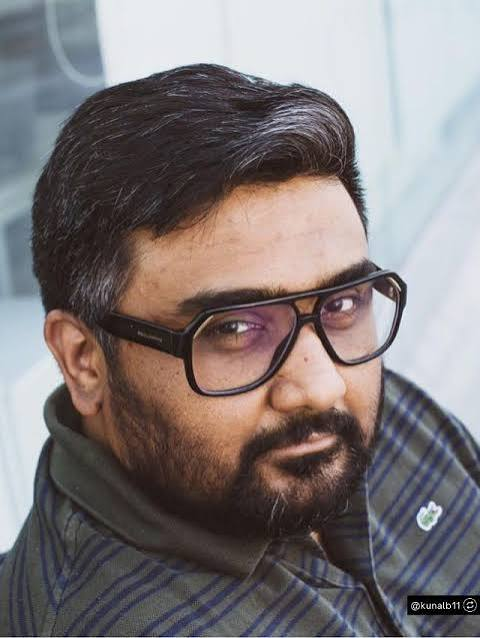
Meet Kunal Shah — the architect of India's fintech revolution.
> Born May 20, 1983 in Mumbai to a Gujarati family.
> Father was a small businessman.
> When his family faced financial crisis at 14.
> he started working at age 15.
> Studied philosophy at Wilson College.
> Dropped out of MBA at NMIMS.
> Chose learning over credentials.
> 2009 — Founded PaisaBack. A cashback rewards platform for retailers.
> Profitable from day one.
> But he saw the market was fragmented. Pivoted.
> 2010 — Founded FreeCharge with Sandeep Tandon.
> 2015 — Snapdeal acquired it for ~$400 million.
> Made digital payments mainstream in India.
> Then stepped back.
> Spent years observing.
> Learning.
> Investing in 200+ startups.
> 2018 — Founded CRED. A rewards platform for credit card bill payments.
> CRED has 17 million monthly active members.
> Processes 40% of India's credit card bill payments.
> Processes ₹8.5 lakh crore in annual payment value.
> TODAY — June 22, 2026.
> Meta invests $900 million in CRED at $4.5 billion post-money valuation.
> But that's not the headline.
> Kunal Shah is stepping down as CRED CEO to become Global Head of WhatsApp at Meta.
> Succeeding Will Cathcart. Leading WhatsApp's next phase globally.
> He retains his personal shareholding in CRED.
> The founder walked away from his own company.
> At the moment of its biggest inflection.
Why?
> "The delta between WhatsApp today and its full potential is massive."
> That's his quote.
> 1.7 billion users. Underdeveloped. Untapped.
> He saw an imbalance he couldn't ignore.
> Philosophy major.
> MBA dropout.
> Two billion-dollar exits (FreeCharge, CRED).
> 200+ angel investments.
> Now — global head of the world's biggest messaging app.
> On his failures: "We should celebrate entrepreneurs who take risks. In the AI-driven world, being a job seeker may be riskier than being an entrepreneur."
> This is the philosophy graduate talking.
Not the billionaire.
From Mumbai middle-class kid to shaping India's fintech.
From CRED founder to WhatsApp's global boss.
In one day.
Absolute legend.
🚨Millions use VLC every day.
Almost none know about this.
It can stream 1,500+ TV channels and hundreds of live sports channels from around the world.
Here's how (using safe and public links only): 👇
🚨 JAPANESE SCIENTISTS DEVELOP A DEVICE THAT GENERATES ELECTRICITY FROM HUMIDITY
Researchers in Japan have created a compact generator, about the size of a matchbox, that can produce electricity by capturing moisture from the air. Unlike conventional power sources, it does not rely on sunlight, wind, fuel, flowing water, or batteries.
The technology uses advanced materials that interact with water molecules present in the atmosphere, continuously generating a small but steady electric current around the clock. Scientists believe it could one day power low-energy electronics, sensors, and smart devices without the need for traditional energy supplies.
As the technology advances, atmospheric moisture may become a valuable and sustainable source of clean energy for future applications.
Source: National Institute for Materials Science (Japan) – Humidity-powered energy generation research.
His name is Animesh Kujur.
Six years ago, he was a footballer in Ghuitangar, a small village in the Jashpur district of Chhattisgarh, a remote forested region not known for producing sprinters.
Around 2020, during the lockdown, he was jogging with army aspirants to stay fit when someone suggested he enter a local race.
He turned up without a coach and without formal training, not even knowing the race was a national qualifier.
He outran almost everyone there.
A coach named Martin Owens saw the raw talent and took him on. Animesh moved to the Reliance Foundation high performance centre in Bhubaneswar and started again from the basics.
The results arrived quickly.
In 2025, he broke the national record in the 200 metres and won bronze at the Asian Athletics Championships.
Then, in July, at a meet in Greece, he ran the 100 metres in 10.18 seconds and became the first Indian man ever to go under 10.20 seconds.
He became the first Indian male sprinter to qualify for the World Athletics Championships and lined up at the Monaco Diamond League against some of the best young runners in the world.
He is now the fastest man India has ever timed.
He is twenty three years old.
A boy who was kicking a football in a village field six years ago now holds the country’s sprint records going into a season that includes the Asian Games.
Follow for stories India deserves to remember.
This is India's first commercial 3D bioprinter.
The machine that prints living human tissues.
And it was built by @AvayBiosciences.
But their ultimate goal is to 3D print human organs.
A 19-year-old student from China, Zhang Wei, developed an AI radar and sold it to Hong Kong for $550,000
He created it using Claude, spending just $20 and a month on development
He walked into the Hong Kong administration office with a flash drive and asked for just 5 minutes of their time. 30 minutes later, he walked out with a check for $550,000
The code, connected to a camera, detects speed in real time. If the speed exceeds the limit, Claude takes a video clip and identifies the owner by the car's license plate. The video and the fine are then automatically sent to the owner's email address
Unlike a conventional radar that only takes a photo and doesn't always work, this AI radar eliminates disputes because it captures video and makes the process fully autonomous by sending out the fines on its own
The article includes the ready-to-use configurations.
A Made in Mysuru product that can turn your regular bicycle into an electric one in 5-10 minutes!
When we visited SJCE STEP in Mysuru for our meetup two weeks ago, we happened to meet Nishanth Patel, the founder of Karnad Engineering.
What Nishant and his team had built was fascinating. They had developed an small tiny apparatus that can be plugged into a regular bicycle and turn it into an electric bicycle in 5-10 minutes! What made it even more remarkable was that the entire product had been engineered, built, and assembled in Mysuru. They are a proud startup incubated at SJCE Science & Technology Entrepreneurs Park (STEP) led by @shivashankar_10.
Nishant's story was so compelling that we immediately decided to do a short recording with him, turn it into an Instagram reel, and publish it on Mundhe Banni Instagram profile.
The response was unbelievable.
Within just two days, the reel had grossed nearly 500,000 views, and Nishant's inbox is flooded with more than 200+ product inquiries.
Yesterday, Nishant messaged me saying that just a week earlier, the team had been feeling low. But suddenly, after receiving 200 plus inquiries, the entire team's energy had changed. They were excited, motivated, and ready to push harder than ever before.
The video also caught the attention of several founders in our network. @vivekanandahr of Bounce reached out and asked to be connected with Nishant. We happily did that.
Moments like these strengthen my belief that there is immense talent, ingenuity, and capability spread across Tier 2 and Tier 3 India. There are people building world class products and breakthrough technologies far away from the traditional startup hotspots. What many of them lack is not talent. What they lack is visibility, exposure, access, and sometimes the cultural confidence to believe that they belong in the same conversation.
Given the right platform and support, they too can build great companies and create meaningful impact at scale. I am 100% sure of that.
And if, in our own small way, we can help accelerate that journey, create a few opportunities, make a few introductions, or shine a light on a deserving founder, there is a deep sense of satisfaction in that. 🫶
Unlocking the potential in tier2/3 India requires a very different approach. It cannot be done through the conventional playbook alone. The realities, aspirations, constraints, and strengths of these entrepreneurs are different. There is also a huge role of language and cultural context involved in bridging the confidence gap. The support systems we build for them must be different too.
That belief is at the heart of why we are building @mundhebanni.
A fine job of storytelling by my colleagues @Shishir_S_U and Daniel naik
@akaranth
I ran across this video a few days ago and couldn’t stop watching it.
It’s about something ordinary & boring, a plastic gas lighter. But it changes how one thinks about manufacturing.
That lighter in so many of our homes, holds pressurised gas. It has over 30 microscopic parts, has to pass international safety codes, & travel 10,000 miles by sea, & the total cost of doing all that, materials, labour, freight, every middleman along the way, comes to fifteen U.S cents.
So how does anyone make money on this?
Turns out almost the entire world’s supply comes from one place: a county called Shaodong, in China’s Hunan province.
It wasn’t always there.
But today, Shaodong has 114 lighter-related companies packed into the place & between them they source more than 200 different components from each other, all within a 20-kilometre radius. They supply something like seventy percent of the world’s disposable lighters. And the industry alone employs over 80,000 people locally.
Nobody there is winning on cheap labour anymore. They’re winning by shaving a thousandth of a cent off the thickness of a plastic wall, or redesigning a base so a few thousand more units fit into the same shipping container.
It took my thoughts back to an old professor of mine, Michael Porter.
His 1980 book, Competitive Strategy, is still the 1st book most MBAs read, the one that gave the world the Five Forces and basically invented modern strategic thinking.
But there’s a quieter piece of his work, on industrial clusters, that never got nearly the same attention, and it is the one that explains exactly what is happening in Shaodong.
His argument was that nations and regions rarely win because of cheap inputs. They win when rival firms and specialist suppliers crowd into the same small geography for long enough that they keep pushing each other past what any one of them could manage alone. He found it in the Swiss watchmaking towns of the Jura, in the German printing press industry and in Italy’s ceramic tile and footwear districts (interestingly, it’s the SAME blueprint which built Morbi, in Gujarat, into the world’s second-largest ceramic cluster, now outproducing Italy by volume. I have posted before, about Morbi)
None of these started out as giants. The neighbourhood made them giants.
Which is exactly why it’s so relevant to India’s climb up the global manufacturing table
I’ve also attached a slide with this post that I saw recently and which shows us breaking into the top 5 manufacturing globally. (A quick reference check told me that we may not have overtaken Korea yet, but the trajectory’s clear)
That climb has happened on the back of scale: bigger plants, bigger parks, more FDI.
I should declare an interest here, because the Mahindra Group set up 2 of India’s first integrated, plug-and-play business cities, in Chennai in 2002 & Jaipur in 2006.
Both have been extremely successful. Chennai’s business zone alone today employs 45,000 people..
But I admit that we need to think differently.
A park brings in investors and hands them a ready plot, power, water & roads
A cluster is a completely different animal: hundreds of small, specialised suppliers, each obsessed with doing a tiny thing better than anyone else, feeding off each other’s presence for years until no outsider can compete with the whole.
I think that’s the work ahead of us now.
Not just more factories, and not just more parks.
Policymakers & developers like us need to start consciously pulling as many of the inputs and resources a sector needs, the toolmakers, the component suppliers, the testing labs, the logistics specialists, into the same neighbourhood.
Shaodong and Morbi both got there by accident, one town stumbling onto a way to shave a thousandth of a cent off a lighter wall, the other discovering it had the clay and, later, the gas pipeline for tiles.
We don’t have the luxury of waiting for accidents anymore.
We need to do it on purpose
When I was in uni I was travelling to Kerala from Delhi by train. In the entire AC coach I was the only passenger. After the train left New Delhi station, a man in his 20s, came and sat in front of me. In an empty coach, why sit near the only other person? That got my antenna up. Plus, he didn't look like he could afford AC. After the train passed Mathura, this guy opened his briefcase and took out a paper pouch in which there was an off white powdery substance. I was quite alert now and looking intently at what he was going to do next. He held the pouch open with both hands which was quite weird because if he wanted to pour the powder into his mouth he should have held it using just the one hand. I was getting freaked out but I didn't let it show. I casually got up and stretched my arms and walked towards the exit. When I looked back I saw that he had started folding the pouch, and kept it back in his briefcase. A few minutes later the man walked away.
Never be trustful of co-passengers. Never accept prasad ever - not just in trains. Some weirdos give prasad to transfer their bad karma onto you. I'm not sure that works but why give them the satisfaction of taking their ill intentioned offerings.
At a media office in Delhi, there was this fat guy who gave boondi to everyone in the office every Tuesday after visiting the Hanuman mandir on Khadag Singh Marg. Everyone was too polite to say no; I would take it, and once he was gone, I'd wrap it in paper and throw it into the paper bin.
Don't be afraid of offending people.
In this clip, a gang of two women and a man work as a team to drug a woman waiting at a bus stop and decamp with her jewellery, mobile phone and purse. She was lucky they didn't carry her away too for organ harvesting, human trafficking, ransoming, prostitution or serial killing.
Esto es espectacular como se movió Marruecos defensivamente. Esto se entrena. No es aleatorio. Tremendo bloque corto defensivo. Imposible de entrar sin alguna magia o pase filtrado con extrema exactitud. Por eso Brasil se la pasó lateralizando.
A roadmap for learning robotics! 🔥
📌 If you’re self-learning robotics, this is genuinely one of the better repos to save for later!
This GitHub repo is basically a curated learning map for anyone trying to get into robotics without drowning in random bookmarks.
SOOOOO many free courses on almost every topic related to robotics, 5k ⭐️ on GitHub says it all...
If I had had this list during my studies, my career might have turned out differently.
But I didn't, so I the only thing I can do is to recommend it and give it to you now...
It’s a structured collection of links to:
→ robotics courses (online + university)
→ ROS / embedded / hardware basics
→ math & algorithms that actually matter for robots
A clean, opinionated list that helps you go from “where do I start?” question as I had after graduating :D
And it’s open-source, so you can contribute resources too.
🔗 Try it out here: https://t.co/qUME6mJCzZ
Do you have an awesome resource to learn AV and robotics? Share it with me, and I'm happy to put it on the spotlight.
~~
♻️ Join the weekly robotics newsletter, and never miss any news → https://t.co/GoA3ZuwoPB