I live in Japan and practice two quiet disciplines every week:
tea ceremony and kyudo.
I write short notes from inside daily practice.
Not to teach.
Just to notice.
If modern life feels loud,
this may feel like another rhythm.
→ Substack:
https://t.co/ZgVQhVFYYr
"I want to die beautifully."
That was my reason for starting kyudo at 40.
Not competition. Not fitness. Not nostalgia.
A bow, an arrow, and the question of how to live — and end — with dignity.
https://t.co/0ImEsnXsXO
I lost last Saturday's tournament.
Not because of my technique. Not because of my bow.
Because I could hear the conversation happening behind me — and I let it in.
There is a saying in kyudo: when you miss, do not blame those more skilled than you. Turn the cause back upon yourself.
I wrote about what that actually feels like. The moment you realize you lost to yourself before anyone else had a chance to beat you.
Full piece ↓
Thursday. Work, then the dojo.
I'm at the age where life starts folding back on itself. In my twenties, I ran forward without looking. Now I find myself turning around — looking at where I've been, where I am, whether any of it was right.
There's something I'm carrying right now that I can't talk about here. Personal. But my body has been honest about it: I haven't been sleeping. A few nights ago I fell asleep at eleven and was awake again by one, staring at the ceiling until morning.
The mind can tell itself many things. The body just tells the truth.
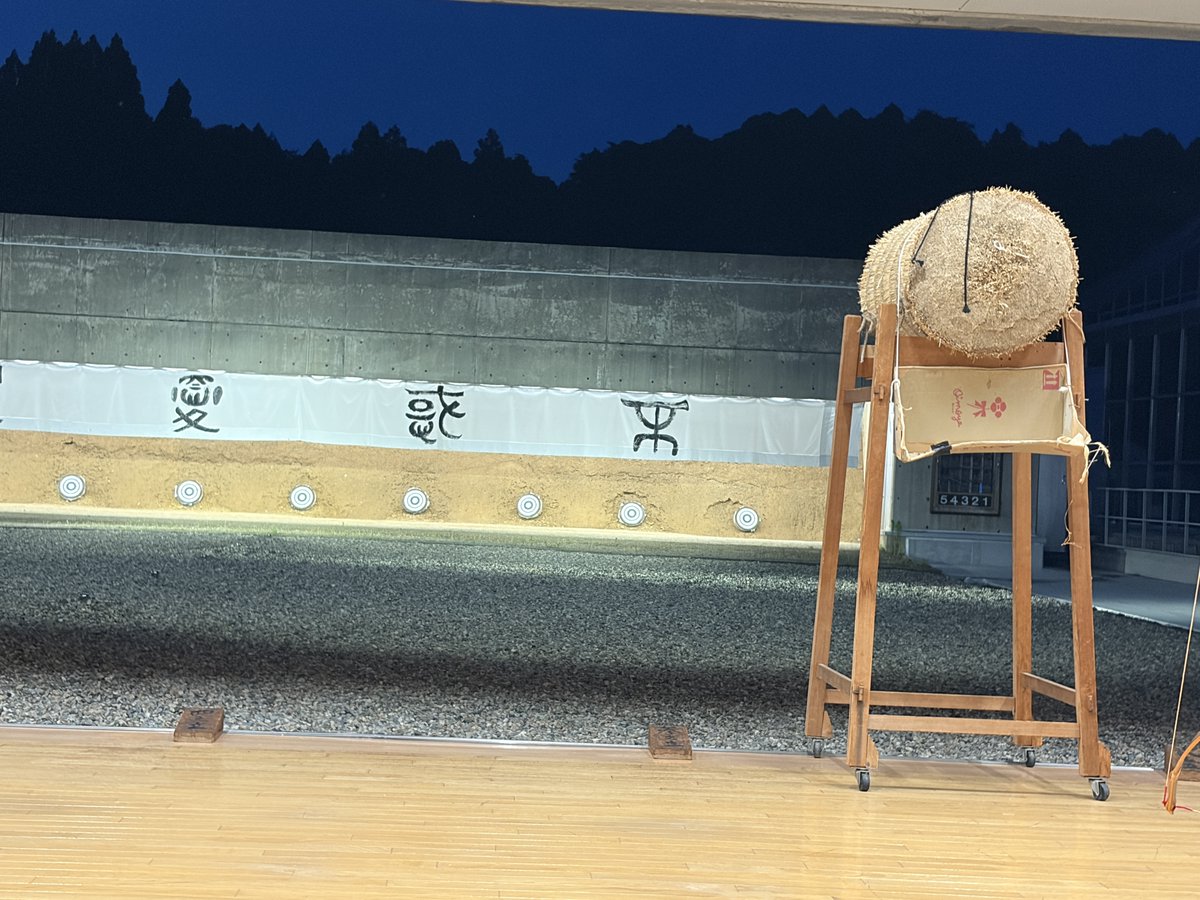
And yet — I put on my dogi. I walked to the shooting line. I drew the bow.
Whatever had been turning over in my mind was gone. Not resolved. Just — gone. There was only the bow, and me, and the next arrow.
I think that's the purest I ever am.
Afterward, walking home, the same questions came back. They always do. But something had shifted — just enough.
I don't know what I'd do without this practice. Some nights, I think I'm keeping it going. Other nights, I know it's keeping me.
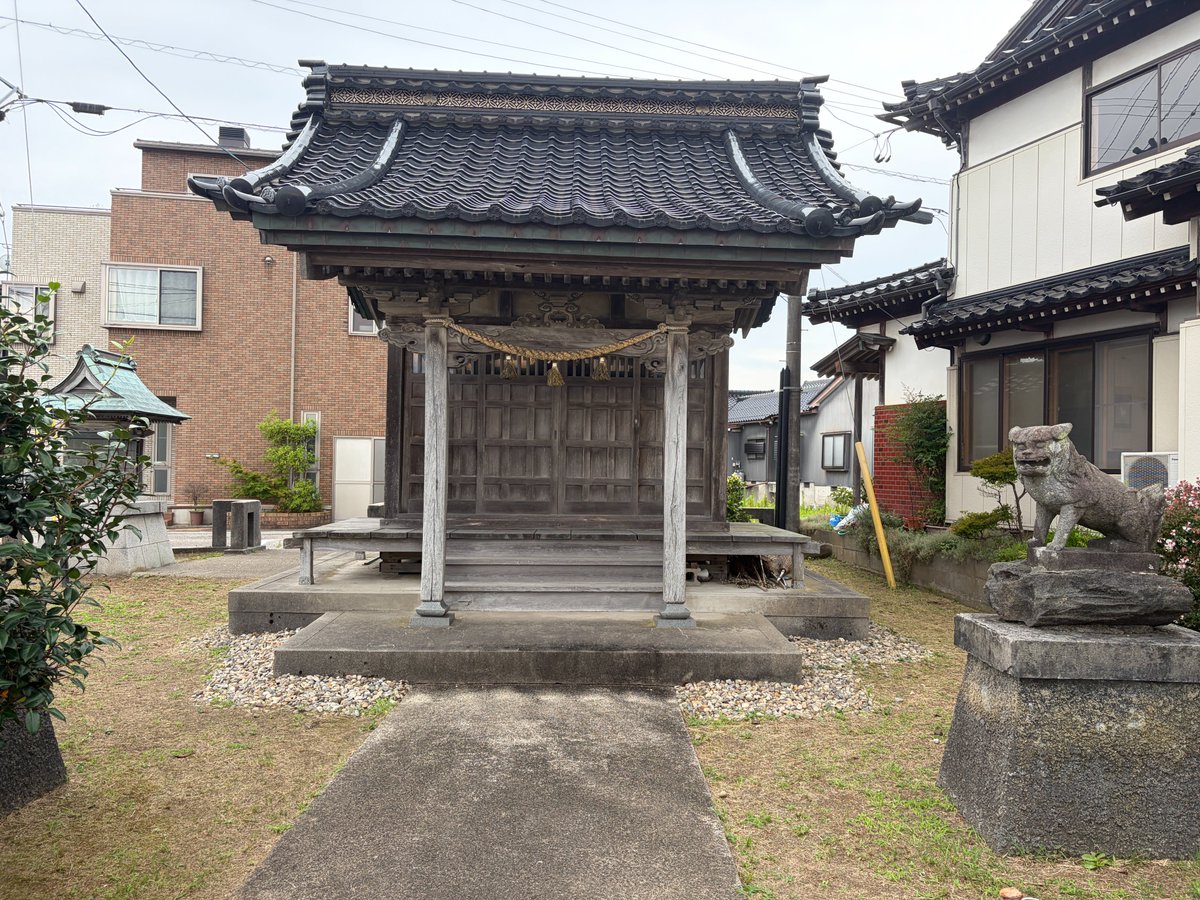
Temples and shrines exist outside of Kyoto and Nara.
They exist here, in my small town, along the roads I walk every day.
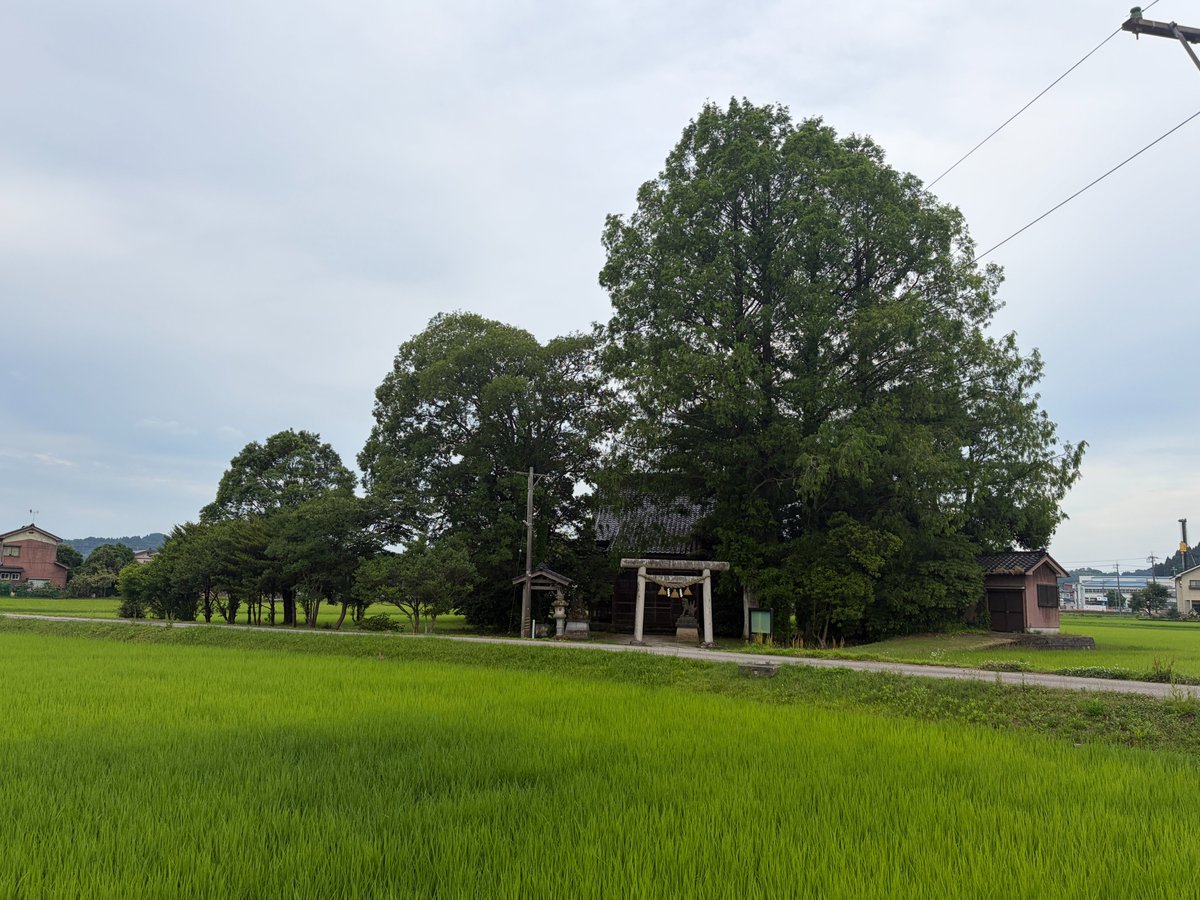
This one is called Uotori-sha — a shrine dedicated to the god of abundant fishing. I pass it on my morning walks. There's another one further along, standing alone in the middle of a rice paddy.
Today I ducked under the torii gate, stepped into that quiet space, and prayed.
I don't know if anyone was listening. But I left feeling like the day had become, somehow, slightly better. That's enough for me.
You don't need to go to Kyoto. In this country, the gods are everywhere. You just have to notice them.
A note to everyone reading: I started sharing these small observations — things I think about on walks, things I feel but rarely say out loud — and somehow, over the past month, so many of you have received them with such warmth.
I read every comment. Every one.
Thank you for finding this, among everything else you could be reading.
I found out at yesterday’s exhibition.
A former colleague’s father had passed away recently.
He joined the company after me and left before me. His sales ability was something to behold — the kind of person everyone naturally took to, the kind who stood out in any room. For someone like me, quietly introverted, solving things through effort rather than charm, I always envied that about him. (Though he had his own anxious streak too.)
It’s been five years since he moved on.
Read the full text at the link.👇
I spent 23 years selling agricultural machinery. I went to this exhibition every single year — same show, same machines, same faces. Always in the company uniform. Always on the selling side.
Today, I went as a customer. For the first time.
I wasn't really there for the machines.
The moment I walked in, former colleagues came over smiling. Old clients stopped mid-conversation to say hello. "When are you coming back?" someone joked. Then another person. Then another.
One by one, people I'd worked with for decades pulled me aside: "We'd hire you tomorrow. Just say the word."
I didn't know my leaving had been noticed that widely. I didn't know that the work I'd done quietly, year after year, had landed the way it did.
I stayed for five hours. The show runs 9:30 to 4. I arrived first thing and left at 2:30.
One machinery maker has a line called "JAPAN" — their flagship series, built for the demands of narrow Japanese fields. Strength and durability, distilled into a name. I always admired that. A machine that knows exactly what it is.
I missed kyudo practice. Tomorrow is the Toyama prefectural tournament.
I don't regret it.
In kyudo, we say that right action returns to you as a clean result. The arrow doesn't lie. Today, all those people gave me the same answer the arrow gives — quietly, without argument.
Yes. What you did mattered.
A note: I wrote about the moment I decided to leave that company — after 23 years — in an earlier post. Japanese thinking, and something of my life, is in that piece. I'd be glad if you read it.👇
In Japan, there is a tradition of owning just one truly excellent item rather than a number of merely adequate ones.
You treat a single bow with great care; it is like a partner to you. Sometimes it is temperamental, or perhaps it is simply not performing at its best. Each time this happens, you adjust or even repair it—you do not simply buy a new one. This is especially true if the bow was not one you chose yourself, but a gift from a master who saw something of value within you.
You learn the bow. You come to know its weight, how it reacts to the summer heat, and the way it softens and seems to ask something of you.
Yet, a bamboo bow is alive. It changes with the seasons; it cannot remain static. You, too, are constantly changing.
And in time, it will become a part of your own body.
5:30 this morning. Still dark enough to feel it.
Our neighborhood association cleanup — everyone out pulling weeds along the roads. Grandparents, parents, kids. About thirty people in total.
Nobody complained. Nobody checked their phone. They just pulled weeds.
This happens a few times a year. No payment. Just people who live here, keeping the place they live in clean.
I don't have a bigger point to make. I just think there's something in that — thirty people, early on a Sunday, doing a small thing together without being asked twice.
In kyudo, you don't switch bows often.
You find one. You learn it. You spend years understanding how it bends, how it forgives — and how it doesn't.
There's a word for this in Japanese life. And it has nothing to do with minimalism.
My teacher gave me a bamboo bow. I didn't choose it.
It chose me.
Three years later, we have changed together. That cannot happen with things you don't stay with long enough to know.
I didn't know this word until I began practicing kyudo.
And even after I learned it, I misread it for years.
Issha zetsumei — 一射絶命. Four characters. When I first saw them, I assumed it meant killing the other. Some martial ultimate. The arrow that does not miss.
I was wrong.
The one who dies is yourself.
After I understood that, my practice changed. I stopped counting arrows. I started asking how much I could pour into a single one. The exhaustion after one shot. The strange fullness that came with it.
This was no longer practice. It was something closer to discipline.
I wrote about it. If it reaches you, I'm glad.
This is the house where I was born. My parents live here now, but we’ve planned to air out the tatami mats from this room outside this summer. In the past, we used to air out all the tatami mats in the house every summer, but we did it less frequently as the years went by. So, this year, my siblings and I are gathering around the time of Obon to hold an event where we air them out. This house hasn't changed since the day I was born. I want to continue cherishing it alongside my parents. That, too, is a way of preserving tradition. That holds true in any country, doesn't it?
Practice today. For the first stretch, everything was sharp — center of gravity, breath, the line of the arrow, all of it aligned. And then, at some point, the focus simply broke.
I can't tell if it was the fatigue of a full day's work catching up with me, or if I'd simply pushed concentration to a place the body couldn't sustain. Probably both.
Strange thing is, I'm not sure which one to call it — exhaustion, or a practice so full it used up everything I had.
Maybe there's no difference.