This chart illustrates why Indonesia's biggest labor market challenge is no longer creating jobs, but creating quality jobs. On the surface, Indonesia's unemployment rate is relatively low at just 5%, suggesting the labor market is healthy. However, a closer look reveals that employment quality remains weak, with informality dominating much of the workforce and leaving millions without adequate income security or social protection.
Of Indonesia's 144 million workers, only 64 million are wage earners. Even within this group, fewer than half have written employment contracts. More concerning, having a formal contract does not necessarily guarantee decent employment. Among workers with written contracts, half still earn below the minimum wage, while among those without written contracts, more than 80% earn below the minimum wage. Low wages therefore remain a widespread problem even for many who are technically employed.
Social protection is equally uneven. Workers with written contracts who earn above the minimum wage generally enjoy relatively good benefit coverage, with over 90% receiving at least one employment benefit. However, coverage deteriorates rapidly outside this group. Workers earning below the minimum wage are significantly less likely to receive benefits, while those without written contracts are overwhelmingly excluded from unemployment protection, retirement benefits and workplace insurance. Millions therefore remain highly vulnerable to economic shocks despite participating in the labor force.
The picture is even more striking among Indonesia's 54 million self-employed workers. Only around 17% pay income tax, implying that the vast majority operate outside the formal tax system. Pension participation is extremely limited, with only around 8% of taxpayers contributing to a pension scheme, while among those who do not pay tax, pension participation falls to just 4%. Insurance coverage is similarly low. This highlights the sheer size of Indonesia's informal economy, where businesses remain small, largely unregistered and disconnected from both the tax system and social security network.
These structural characteristics have important macroeconomic implications. A highly informal labor market suppresses productivity because firms tend to remain small, invest less in technology and employee training, and face greater barriers to accessing formal financing. At the same time, a narrow tax base limits government revenue, reducing the state's ability to fund education, healthcare, infrastructure and comprehensive social protection. Weak social protection then discourages both firms and workers from entering the formal economy, creating a self-reinforcing cycle of informality.
This is why Indonesia's long-term challenge extends well beyond attracting foreign investment or achieving higher GDP growth. Sustainable prosperity ultimately depends on expanding productive formal employment. Policies that simplify business formalization, reduce the cost of hiring formal workers, strengthen vocational education, improve labor market flexibility, broaden the tax base and enhance the value of social protection will likely generate greater long-term economic returns than focusing solely on headline investment or growth figures.
Indonesia's Golden 2045 vision will therefore be determined not simply by how many jobs the economy creates, but by how many workers transition from low-productivity informal employment into higher-productivity formal jobs that provide stable incomes, stronger social protection and rising living standards.
One of Indonesia's biggest long-term economic challenges is not simply generating more growth, but improving the quality of that growth. The World Bank's analysis highlights a structural problem that is often overlooked: Indonesia has become an upper middle-income country while retaining one of the region's most informal labor markets. Fewer than one in five workers are employed in the formal sector according to internationally comparable measures, far below what is typical for countries at Indonesia's income level.
This matters because informal jobs tend to be less productive, pay lower wages, offer limited opportunities for skills development and innovation, and provide little or no access to unemployment insurance, paid leave or retirement benefits. A labor force dominated by informal employment inevitably limits productivity growth, and the numbers already reflect this. Output per worker has reportedly fallen from US$7,530 in 2015 to US$5,336 in 2023, an alarming reversal for an economy aspiring to become a high-income nation by 2045.
The problem extends well beyond the labor market. A highly informal economy naturally produces a narrow tax base because businesses and workers operating outside the formal system contribute less to government revenue. Indonesia's tax-to-GDP ratio has declined from around 17% in 1980 to just above 10% today, one of the lowest among major emerging economies despite decades of economic growth. This leaves the government with fewer resources to invest in infrastructure, education, healthcare and social protection, while simultaneously making it more difficult to provide the very benefits that encourage workers and firms to formalize in the first place. It becomes a self-reinforcing cycle where weak social protection discourages participation, which in turn weakens fiscal capacity even further.
This also helps explain why Indonesia can simultaneously attract robust foreign direct investment while domestic consumption, wage growth and household purchasing power remain under pressure. Investment builds factories, smelters and data centers, but unless those projects generate large numbers of productive formal jobs, the benefits remain concentrated and do not fully translate into stronger household incomes or a broader expansion of the middle class.
The government's Golden Indonesia 2045 vision ultimately depends less on attracting additional capital and more on dramatically improving labor productivity and formal job creation. Indonesia's working-age population is expected to expand by more than 15 million people over the coming years. If current trends persist, only around one in five of those new workers is expected to obtain a formal job, and for women the figure could be as low as one in ten. That would make achieving high-income status substantially more difficult.
The policy implication is clear. Indonesia does not simply need faster GDP growth, it needs growth that creates productive formal employment. Improving regulatory certainty, lowering the cost of formalization for SMEs, reforming labor regulations, broadening the tax base, strengthening vocational education and increasing the value of social protection are likely to be far more important than pursuing headline investment figures alone. The next stage of Indonesia's development will ultimately be determined not by how much capital enters the country, but by how many workers transition from low-productivity informal employment into higher-productivity formal jobs.
And no, UAE still pulls behind with Visma despite having Adam ahead. I think the 2 riders woke up by the vampires in the middle of the night are angry, made an alliance and will go for it today.
#TDF2026
bruh the regime is so stupid not only in policy making, but even in political survival 😭
why would you manufacture a new class of constituent out of thin air, when they are expensive to maintain (MBG budget) while delivering insignificant future votes???
the only way you survive is by purging coalition member so you have a lot of wealth so share within political insiders (classic despot), or you bring broad-based development & welfare to all citizens. instead you use limited national resource to reward buffoons that are useless to your own political survival!
Prabowonomics is essentially an economic strategy in which the state aggressively crowds out the economy by diverting scarce capital toward the least productive, least sustainable, and poorly planned programs, optimized for rent-seeking rather than growth or equality.
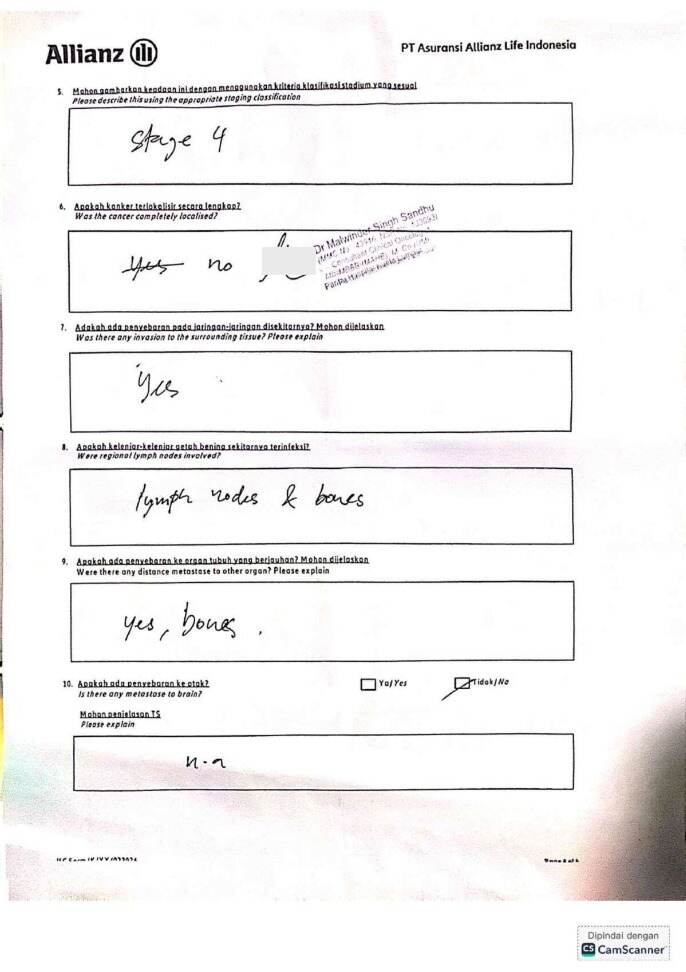
Seorang nasabah Allianz mengajukan klaim katastropik Rp500 juta untuk ibunya yang didiagnosis kanker lambung stage 4 pada 30 Desember 2025. Selama hampir 6 bulan, klaim tersebut mengalami 7 kali pendingan dengan permintaan berulang untuk hasil Patologi Anatomi, padahal dokter spesialis di Pantai Hospital KL sudah menyatakan biopsi ulang tidak diperlukan karena hasil pemeriksaan sudah jelas menunjukkan metastase. Pada 8 Juli 2026 pukul 19.30, sang ibu menghembuskan napas terakhir di Siloam Dhirga Surya, tepat di hari yang sama ketika surat pendingan ketujuh dari Allianz dikirimkan. Keluarga yang merupakan nasabah Platinum dengan 22 polis ini masih menanti kejelasan klaim di tengah duka. 😢
Ini gak salah baca kan? KICKBACK SETERANG INI!!
... Guna mendapatkan 30% revenue Google untuk membayar gaji tim tech, yang diperoleh dari pembayaran Kemdikbud RI atas pengadaan ...
BREAKING: The upcoming US-Iran talks in Switzerland have now been completely canceled due to yesterday's attacks in the Strait of Hormuz, per i24News.
This follows Iran's IRGC declaration that US strikes "violated Article 1 of the Islamabad Memorandum of Understanding" and "will result in a total halt of all processes."