@dhwaninanavati They do not!! At least not always. I think honesty and integrity might be sometimes about getting positive outcomes but mostly they are about staying true to yourself.
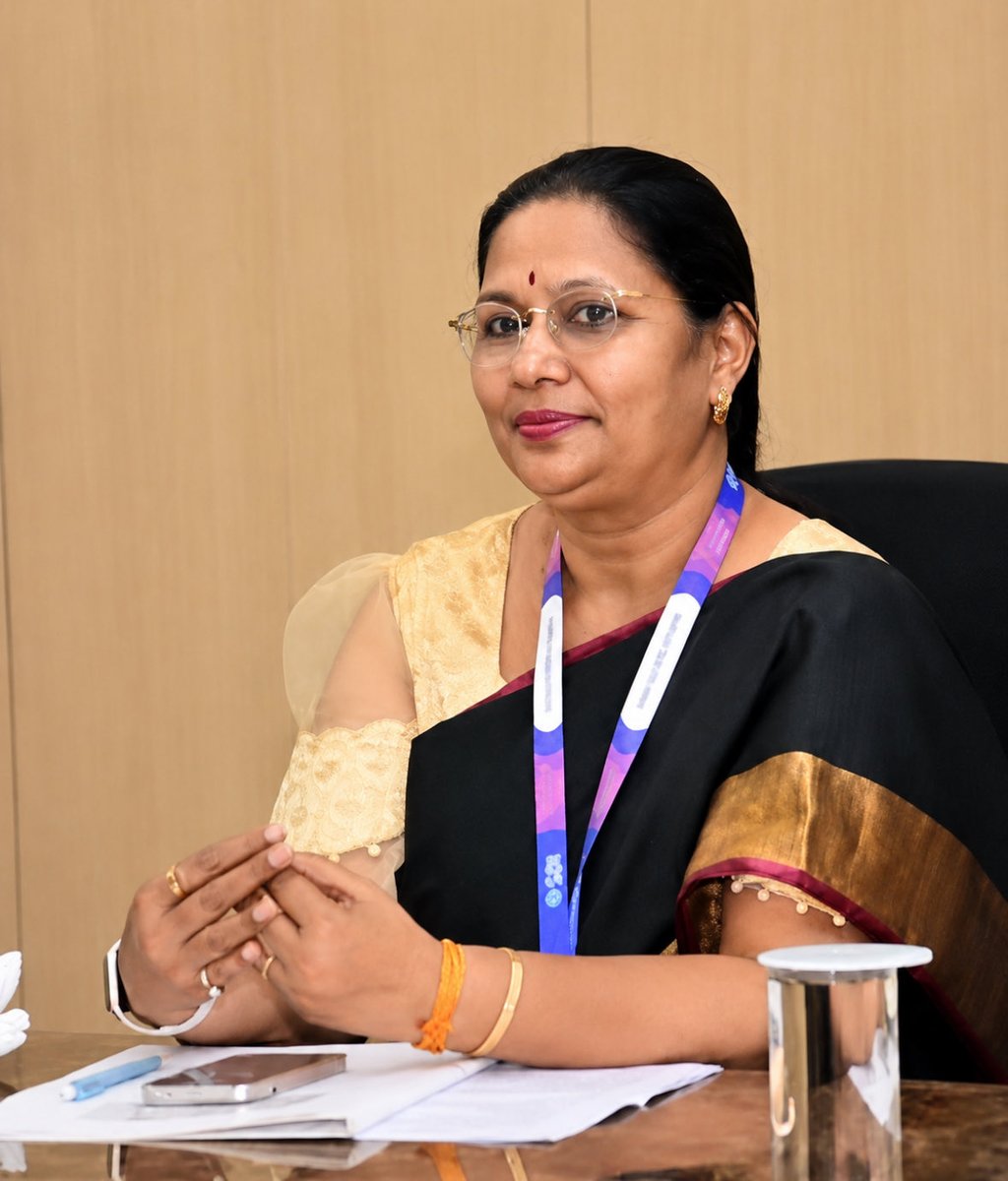
Her name is Pratiksha Tondwalkar.
She was born in 1964 in Pune into a Scheduled Caste family.
When she was in Class 7, her father decided to pull her out of school and get her married. Her teacher begged him to let her continue. She even offered to pay for Pratiksha’s education herself. Her father refused.
She was married at 17. Her husband Sadashiv Kadu worked as a bookbinder at a Mumbai branch of the State Bank of India.
When she was 20, he died in a road accident. She was left with a two year old son and no education.
She walked into the same SBI branch to collect her late husband’s dues. She told the bank she needed any job they could give her.
They gave her a broom.
She swept floors. She dusted furniture. She cleaned restrooms. She earned Rs 65 a month.
She said in an interview whenever my son asked for a packet of biscuits I would get off the bus one stop early just to save the fare money to buy them for him.
After work, she enrolled in night college in Vikhroli. She completed Class 10 with first class marks. Then Class 12. Then a psychology degree. Bank colleagues helped her study whenever they could.
Her parents pressured her to remarry immediately. She refused until she had graduated.
She was promoted from sweeper to messenger to clerk.
She remarried in 1993. Her husband Pramod Tondwalkar encouraged her to take the banking officer exams. She cleared them.
She rose from trainee officer to Scale 4 to Chief General Manager.
In 2022, she became Assistant General Manager of the State Bank of India.
The same bank where she once cleaned restrooms for Rs 65 a month gave her its highest management honour 40 years later.
Follow for stories India deserves to remember.
I was in fifth grade when I learned to read my parents' silence.
They were talking in the kitchen, late at night, in that particular hush that parents use when they think children are asleep. I caught fragments. Bombay. Tests. Something about a doctor. The next morning, everything was normal. Chai, school, the shop. But I had heard the frequency shift.
It was 2004. My father was 39. We had just moved out of the room behind our kirana store—a chawl on the outskirts of Panaji—into a proper apartment. Our first EMI. Things were looking up in the way they do for Indian middle-class families who have spent years looking at the same ceiling: slowly, carefully, one calculated risk at a time.
Then the diagnosis. Stage 3 follicular lymphoma.
I didn't know what lymphoma meant. There was no internet to tell me, no Google to spiral into. Cancer was a word from movies—something that happened to people in cities, in dramatic hospital scenes with violins. Not to shopkeepers in Goa. Not to fathers who opened shutters at 7 AM and counted change at night.
They kept me in the dark. The logic was simple: don't disturb the boy's studies. So I went to school. I came home. I did homework. And in the margins of this ordinary life, my father was taking buses to Mumbai for chemotherapy.
I still don't fully understand how he did it. A biopsy, then a bus. Chemo, then the overnight journey back. Tata Memorial to Kadamba bus stand. The same man who winced when he cut his finger slicing onions was now traveling eight hours each way with poison in his veins, because what else was there to do? Goa didn't have the facilities. We didn't have the money for flights or hotels. So he sat on buses, probably in pain I can't imagine, probably next to someone complaining about the AC being too cold.
My mother ran the shop. Not "helped out"—ran it. Wholesale orders, inventory, customers, credit books, all while her husband was in the jaws of something that might kill him. New scans kept showing the cancer spreading. The word "spreading" did a lot of work in those days.
And I? I was a child. Which means I was selfish in the way only children can be—not out of cruelty, but out of not knowing. My father was alive and not going bald like he did so I assumed things were now fine. I was still in the dark.
I remember crying for days because I wanted a geared cycle. All my friends had them. The fancy ones with the grip shifters. I needed it for school, I argued. I needed it because everyone else had one. I remember my parents' faces when I wouldn't let it go—that particular exhaustion of people who cannot explain why they're saying no, because the explanation would break something.
Every rupee mattered. I didn't know that yet. I didn't know that they were borrowing money from friends, from family, sometimes from customers at the shop—the same aunties who haggled over soap prices were quietly lending us cash to keep my father alive. That's the thing about the Indian middle class: the safety net is made of relationships. Of people who've known you long enough to trust you'll pay them back, eventually. No paperwork. Just faith, and shame, and gratitude all mixed together.
My father then spent 40 days in Mumbai for radiation. He stayed with my aging grandparents in a small flat while I finished my exams and my mother kept the shop open. I don't know what those 40 days were like for him. He never talked about it. Men of that generation don't. They just endure, and then they come home, and life continues as if nothing happened.
The magnitude of what was happening to my family didn't hit me until years later. No health insurance, of course—it was unheard of for people like us. The treatment, the travel, the lost income from the shop, the interest on loans that weren't from banks. It drained us completely. Not metaphorically. Actually. The kind of drained where you stop going to movies. Where eating out becomes a memory. Where "vacation" is a word other families use.
Miraculously—and I use that word carefully—things stabilized. By 2007, the cancer was in remission. Whether it was the radiation, the medication, or the wheatgrass cow dung milk ayurvedic concoctions my mother sourced from god-knows-where, I don't know. Probably all of it. Probably none of it. Cancer does what cancer does, and we tell ourselves stories about why.
But remission doesn't mean freedom. It means waiting. It means every annual checkup is a held breath. It means the knife never really leaves—it just hangs higher for a while.
It took us until 2015 to recover financially. Eleven years. A whole decade of my adolescence spent in the aftermath of something that happened in three months. That's the part nobody tells you about illness: the medical crisis has a timeline, but the financial crater doesn't. It just sits there, and you fill it in slowly, one repaid loan at a time, one favor returned, one customer you finally pay back.
In 2012, I got admits to colleges abroad. Good ones. The kind of opportunity that I'd dream about for my children.
My mother sat me down and gently suggested I reconsider. She didn't say "we can't afford it." She said: "What if it comes back?"
The knife, always dangling.
She was right to think it. I knew she was right. So I gave the BITSAT, got into BITS Pilani with a generous scholarship from the Goa government, and made it through. It was the practical choice. The safe choice. The choice you make when you've learned that life can pivot on a diagnosis.
It did come back. In 2022, the lymphoma transformed—DLBCL this time, more aggressive—and everything we'd feared for eighteen years arrived all at once. My father went through treatment again. CAR-T therapy, a clinical trial. Brief remission. Then not.
He passed in 2023.
But the thing I think about now, the thing that connects that fifth-grade boy crying about a cycle to the man I became: when it came back, I was ready.
Not emotionally—you're never ready for that.
But financially. I could go all out. Best doctors. Best facilities. No borrowed money from customers. No buses to Mumbai. When the bill came, I could pay it.
The CAR-T didn't work. Cancer won anyway. But I sleep at night. I sleep because I know I did everything that could be done. There's no version of me lying awake wondering: what if I'd had more? What if I could have afforded that other treatment? That guilt would have eaten me alive. It would have been worse than grief.
I think about this when people ask me why I care so much about money. Why I write about financial security. Why I'm building what I'm building.
It's not ambition. It's not greed. It's not even wisdom.
It's trauma response.
The boy who cried about a geared cycle grew up to understand something about money that no finance book teaches: it's not about the stuff. It's about what happens when the phone rings and someone says the word "biopsy." It's about having options when you have no good choices. It's about not borrowing from the aunty who buys soap from your shop.
My father ran a kirana store. He woke up early. He counted change at night. He took buses to chemo because that's what was available to him. He never complained. He came home and opened the shop the next day.
I don't know what he would think about me writing this. He wasn't the type to share. But I think he'd understand why I'm sharing it: because somewhere, there's a family in a small town, getting a diagnosis, doing the math, realizing the numbers don't work.
I want them to know they're not alone. And I want the version of me that comes after them—the child who doesn't fully understand yet—to grow up in a world where this story is a little less common.
That's all. Now go, get some insurance and take your parents out for dinner while they're still around.
IF I GET DEMENTIA…..
I’d like my family to hang this wish list up on the wall where I live. I want them to remember these things.
1a. Every time you enter the room announce yourself. “Hi Dad - it’s Amanda.”
NEVER ask- Do you know who I am??? That causes anxiety.
• If I get dementia, I want my friends and family to embrace my reality.
• If I think my spouse is still alive, or if I think we’re visiting my parents for dinner, let me believe those things. I’ll be much happier for it.
• If I get dementia, don’t argue with me about what is true for me versus what is true for you.
• If I get dementia, and I am not sure who you are, do not take it personally. My timeline is confusing to me.
• If I get dementia, and can no longer use utensils, do not start feeding me. Instead, switch me to a finger-food diet, and see if I can still feed myself.
• If I get dementia, and I am sad or anxious, hold my hand and listen. Do not tell me that my feelings are unfounded.
• If I get dementia, I don’t want to be treated like a child. Talk to me like the adult that I am.
• If I get dementia, I still want to enjoy the things that I’ve always enjoyed. Help me find a way to exercise, read, and visit with friends.
• If I get dementia, ask me to tell you a story from my past.
• If I get dementia, and I become agitated, take the time to figure out what is bothering me.
• If I get dementia, treat me the way that you would want to be treated.
• If I get dementia, make sure that there are plenty of snacks for me in the house. Even now if I don’t eat I get angry, and if I have dementia, I may have trouble explaining what I need.
• If I get dementia, don’t talk about me as if I’m not in the room.
• If I get dementia, don’t feel guilty if you cannot care for me 24 hours a day, 7 days a week. It’s not your fault, and you’ve done your best. Find someone who can help you, or choose a great new place for me to live. With a bus and activities!!
• If I get dementia, and I live in a dementia care community, please visit me often.
• If I get dementia, don’t act frustrated if I mix up names, events, or places.
Take a deep breath. It’s not my fault.
• If I get dementia, make sure I always have my favorite music playing within earshot.
• If I get dementia, and I like to pick up items and carry them around, help me return those items to their original place.
• If I get dementia, don’t exclude me from parties and family gatherings.
• If I get dementia, know that I still like receiving hugs or handshakes.
• If I get dementia, remember that I am still the person you know and love.”
ᴄᴏᴘʏ ᴀɴᴅ ᴘᴀsᴛᴇ in Honor of someone you know or knew who has dementia. In Honor of all those I know and love and lost who are fighting Dementia/Alzheimer’s.
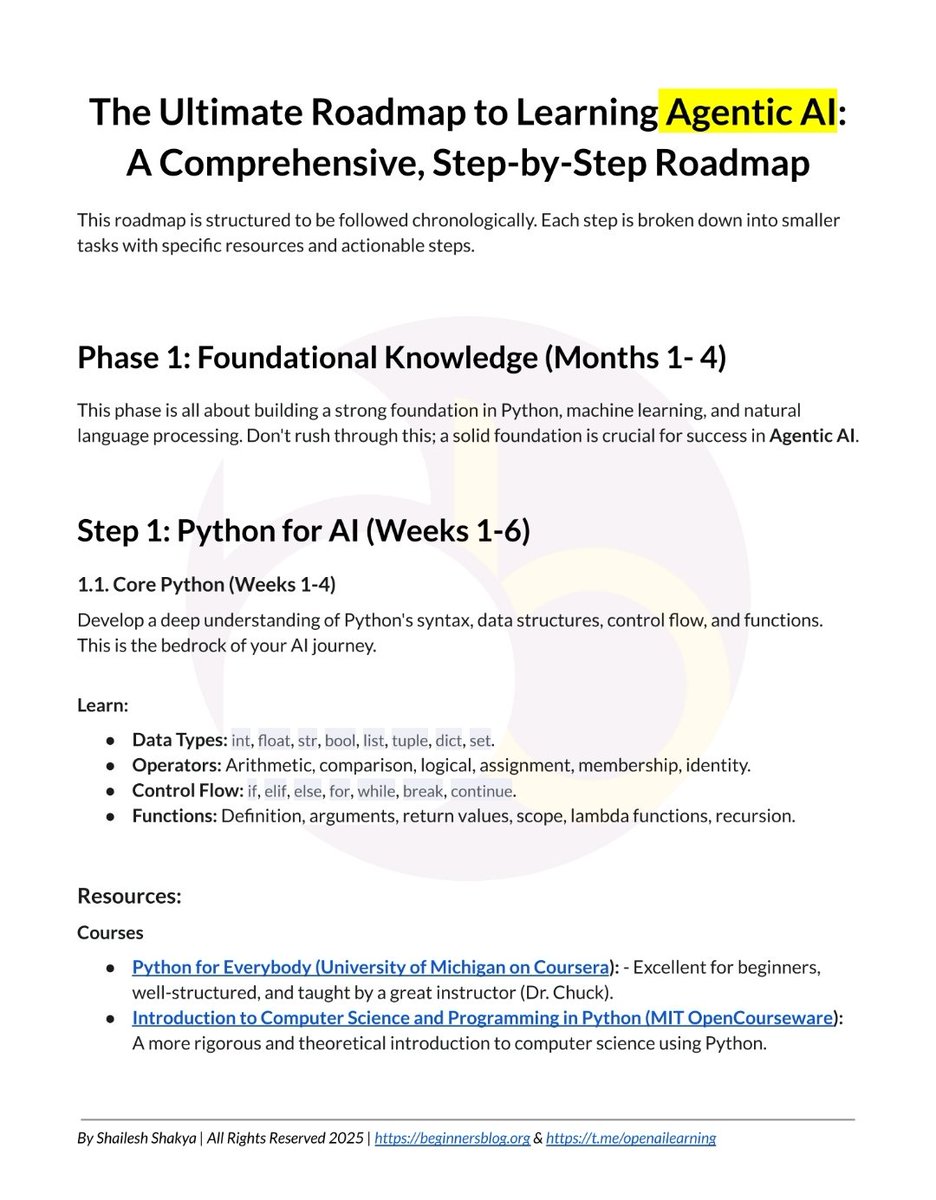
Agentic AI is an emerging career that you can start to make up to $130,000 per year.
You can learn Agentic AI.
I have a detailed ROADMAP that cover everything from steps, resources and courses you need to take to get started.
It's 100% FREE for 24 hours To get this, Follow
@beginnersblog1
Like & RT Comment "Agentic AI"
I'll send you the link to the PDF...
Read More below👇👇👇
.
.
.