India–France Space Partnership: Advancing Strategic, Industrial and Global Opportunities
Bringing together distinguished industry leaders and experts from India and France, Session 1 is now underway.
#IISC2026#ISpA
SBI is offering a salary package of up to ₹1.6 crore annually to hire a Chief AI Officer (CAIO), highlighting the bank's push to strengthen its AI capabilities.
BREAKING: A cholesterol shot taken just twice a year cut the risk of heart attacks, strokes and other major heart events in a large Oxford-led Phase 3 trial.
I am so intrigued by @davewiner's vision of a Markdown web for readers and writers
So I made my blog work with his new browser, BonBon
I've served md in parallel for ages. It was only a small lift to add auto-discovery + some extra metadata
Start here
https://t.co/ZNeUOrJl2a
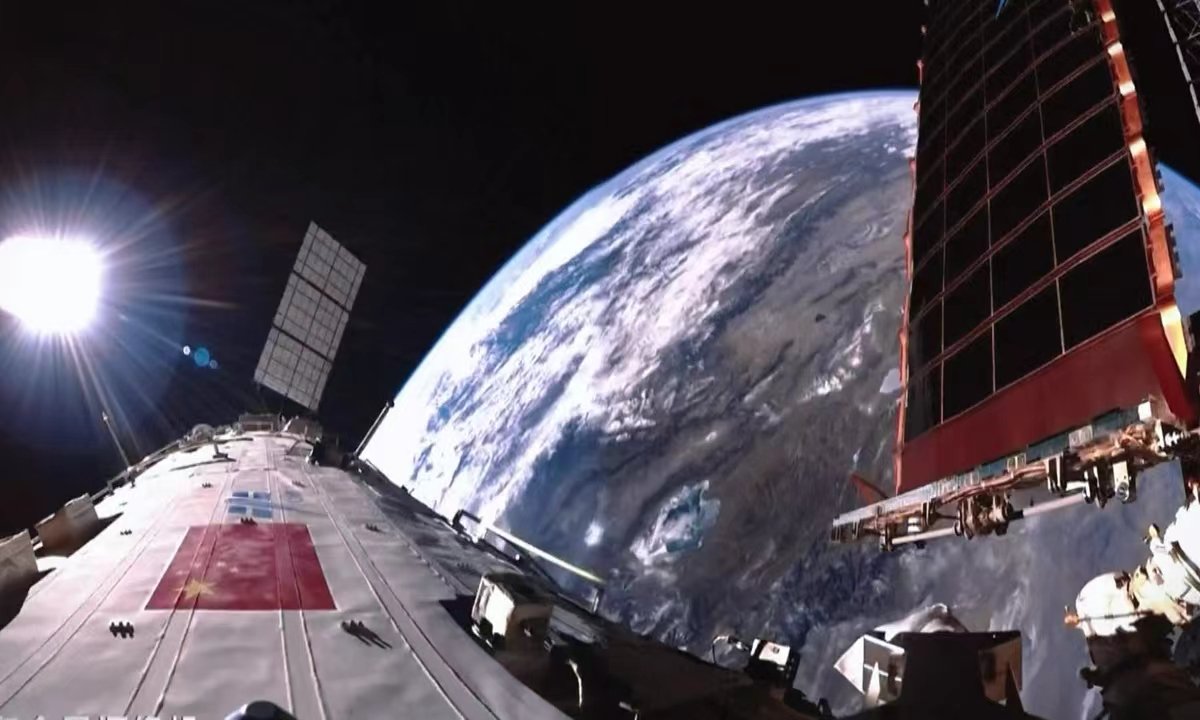
Shenzhou-23 crew are busy preparing for the arrival of the Shenzhou-24 crew, including two Chinese astronauts and a Pakistani astronaut as a payload specialist.
They organize supplies, prepare sleeping space and check station facilities to accommodate six astronauts.
We were promised flying cars and colonies on Mars.
Instead, we're still waiting weeks to manufacture a simple metal part.
Somehow, the world has accepted this as normal. We think it's absurd.
At @antropirobotics , we're building autonomous factories to make hardware at software speed.
https://t.co/npS1ipRdea
Looking for a freelancer to edit my videos and plan & publish posts.
First, watch how I talk about investing and life over the long run (non click-bait). https://t.co/JFUwfDjSzt
Email [email protected] with a short bio, a video you’ve edited, and your rates. Thank you.
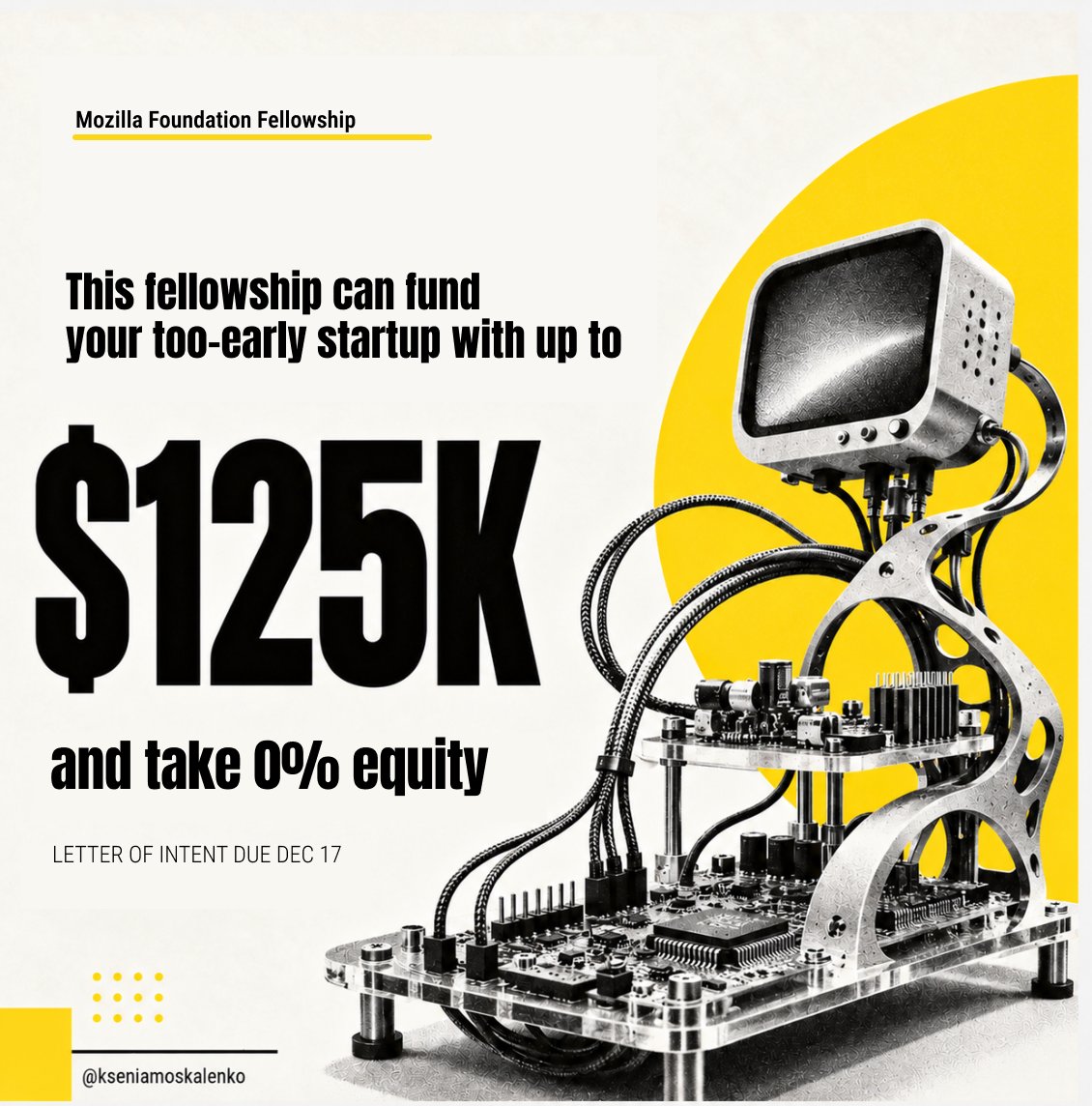
FELLOWSHIP‼️: Working on tech that's too early or too weird for VCs? Mozilla Foundation is giving up to $125,000. No equity.
This is @Mozilla Foundation Fellowship 2027.
What you get:
- $100K stipend + $25K project budget
- 12 months, starts June 1
- only 10 fellows
- 200+ fellow alumni network
What they want:
- neurotech, biotech, physical AI
- compute, energy, quantum
- business models for the agentic web
- security tools for small orgs
Who qualifies:
- individual builders, apply directly
- building alternatives, not polishing the status quo
- host-nonprofit track pays $100K
The catch: it backs a person and a project, not your cap table. Letter of intent first, and only a small shortlist gets invited to a full application in February.
Deadline: letter of intent Thu Dec 17, 11:59pm PT
🖇️ Apply → https://t.co/KYfr0H1tqv
P.S. Keep your project, traction and links in one place before you go out & raise → @ThePageform
Amazon vs Starlink:
The space internet race, explained.
What is this race?
Both want to beam internet down from thousands of satellites in low Earth orbit. Starlink belongs to SpaceX. Amazon's version is Amazon Leo, earlier called Project Kuiper.
How far apart are they?
Starlink: 11,203 satellites in orbit, 13.6M home and small business subscribers in 174 markets
Amazon Leo: nearly 400 launched, no public service yet, only a test with some business customers
Why such a gap?
SpaceX started early, about seven years ago, and flies its own rocket, Falcon 9 (now Starship too), and reuses it. Amazon started late, about three years ago, and has to rent rides from other companies.
And rides can fail. On 15 November, a Vulcan rocket from ULA (United Launch Alliance) failed, and all 40 Leo satellites on it were lost. ULA's early data points to too little fuel reaching the engines.
Which rockets does Amazon use?
Atlas V and Vulcan from ULA, Europe's Ariane 6, SpaceX's Falcon 9, and Blue Origin's New Glenn. Refer to the image for more details.
New Glenn is from Blue Origin, Jeff Bezos' rocket company. It hasn't flown for Amazon yet.
Today's there was a launch planned for 36 more Amazon Leo satellites, on Ariane 6 rocket, but it was halted by a ground equipment issue. Next try: no earlier than 24 Nov.
While it may look like a race, the reality is much different: SpaceX is orders of magnitude ahead, both in terms of number of satellites and customers, while Amazon does not yet have a public service.
My prev SMS Organiser tweet (unexpectedly) led to an outpouring of personal stories and experiences. Its clear the product had excellent product market fit, solved a real pain point, and was used widely.
It also turns out this app grew out of some kind of internal project at MSFT India's Hyd center (I wasn't aware of this). Not something that came down organically from Microsoft's international product suite or the India gameplan. But unfortunately beyond a point it didn't fit into the company's core strategy, was probably a distraction and hence needs to be shut down (this part I am guessing... folks pl give me some rope here).
Why wouldn't Microsoft India just sell it to a willing buyer in India... maybe a tech company that takes on the project going forward as a core business? The product base already exists, the market is huge and they already have distribution (something most new products struggle with)? That's a much better outcome for the ecosystem than shutting it down.
Notwithstanding Whatsapp, SMS is a core mobile service, and has immense value - in a country like India where spam, fraud, hoax messages etc are so widespread, you really need a reliable SMS app that people can trust.
I guess this may have something to do with the lack of maturity in the Indian product ecosystem. If this was some umpteenth e-commerce app, or food delivery, or short drama app... I'd bet there would be tons of suitors lining up outside Microsoft India's doors ready to open their coffers. But a core product that needs platform thinking, scale and investment... we have no takers for this?
Disappointing... for the ecosystem as a whole!
@satyanadella@MicrosoftIndia@Microsoft@microsoftidc
A Kerala-registered startup raised $3M from Rainmatter by Zerodha and Unicorn India Ventures.
Venttup helps companies in defence, aerospace, EV, and energy develop and manufacture specialised components.
Watch the video. Which Kerala startup should we feature next?
The #Archtop 🎸🛰️ Story
Look closely at OptoSAR. Between Optical and SAR sits an "O", and it stands for Octave.
Octave is our proprietary sensor of @GalaxEye. It brings optical detectors and radar receivers onto the same board, and eventually onto a single chip.
In music, an octave is two notes, one at exactly twice the frequency of the other. Different, yet so perfectly in tune that they sound as one. That's what Octave does with light and radar: two very different frequencies, captured together as one.
Every harmony needs an instrument. In jazz, octaves ring out on the archtop guitar.
So when we built the satellite bus that carries Octave to orbit, the name chose itself.
Octave is the music. Archtop is the instrument.
OptoSAR is the Sensor. Archtop is the Bus.
#Archtop #OptoSAR #Octave #SpaceTech
We fired a satellite thruster on the show floor in Bremen.
At @spacetechexpo Europe 2026, industry peers gathered at Booth V18 to watch our ARKA Hall-effect thruster fire live. One reaction we heard from several visitors stayed with us. Even after decades in the space industry, this was their first time seeing a Hall-effect thruster fire in person. They were thrilled to finally see it happen.
One question came up after the demo. How did we get ARKA to the point where it could fire so smoothly right on a trade show floor? That question opened up some of our most productive conversations of the show, from the engineering behind the demonstration to where ARKA could fit into future missions.
Over three days, we reconnected with familiar faces, met new teams, and heard directly from satellite builders and operators about the missions they’re planning and what they need from their propulsion partners.
Thank you to everyone who came to see ARKA fire, asked a question, or shared what they’re working on. We’re looking forward to picking up those conversations.
#BellatrixAerospace #SpaceTechExpoEurope #ARKA #ElectricPropulsion
During training in Russia aboard the Il-76MDK parabolic aircraft, the #Gaganyaan crew experienced "sub-gravity" tweaked flight paths simulating Lunar (18%) & Martian gravity (38% of Earth's). Even cooler than zero-G!
Exclusive: More evidence on how satellites were used to plan and execute the Pahalgam attacks. An assessment confirms that 37 unusual manoeuvres by Chinese sats were observed leading up to the attacks on April 22. This was done to focus on Pahalgam (1/2)
https://t.co/9lwZCYNMSg